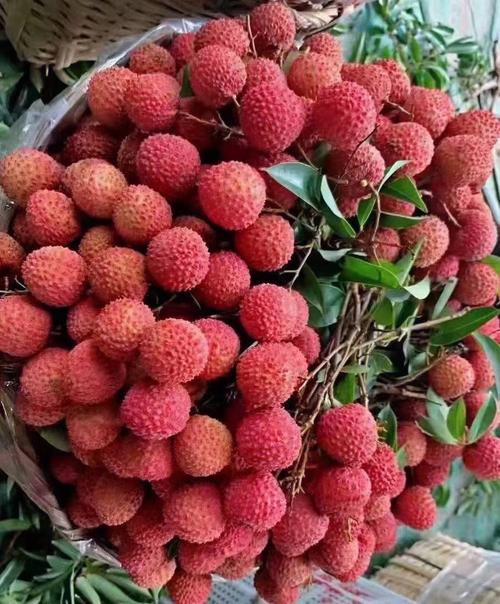
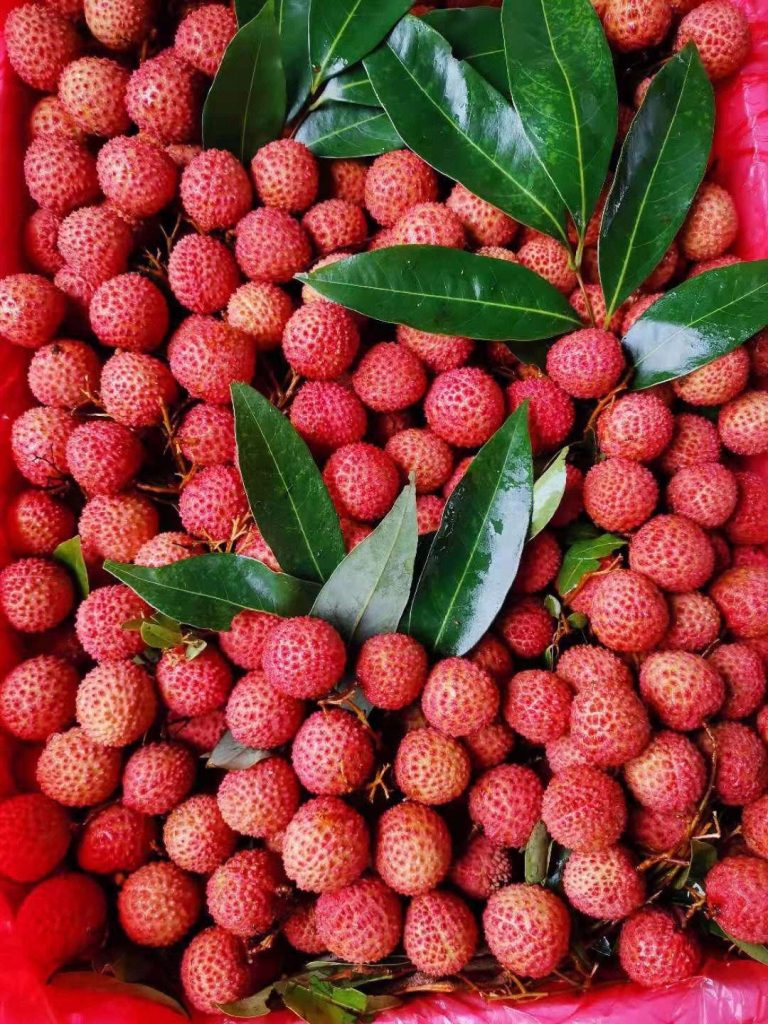
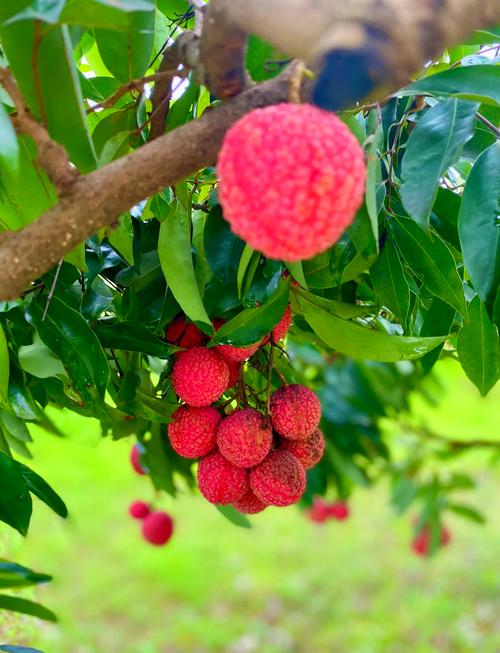
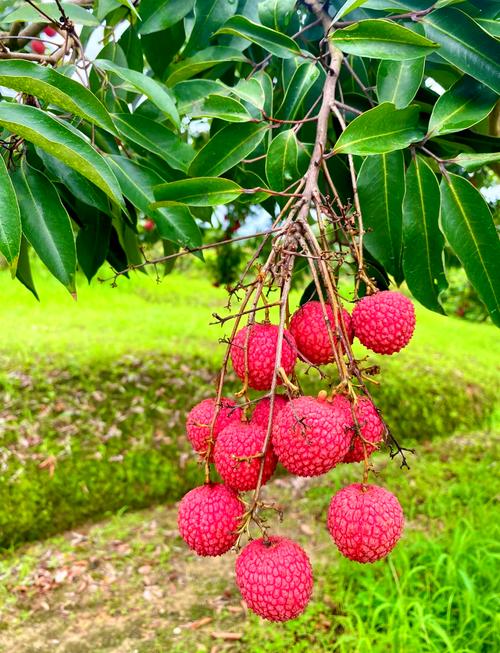
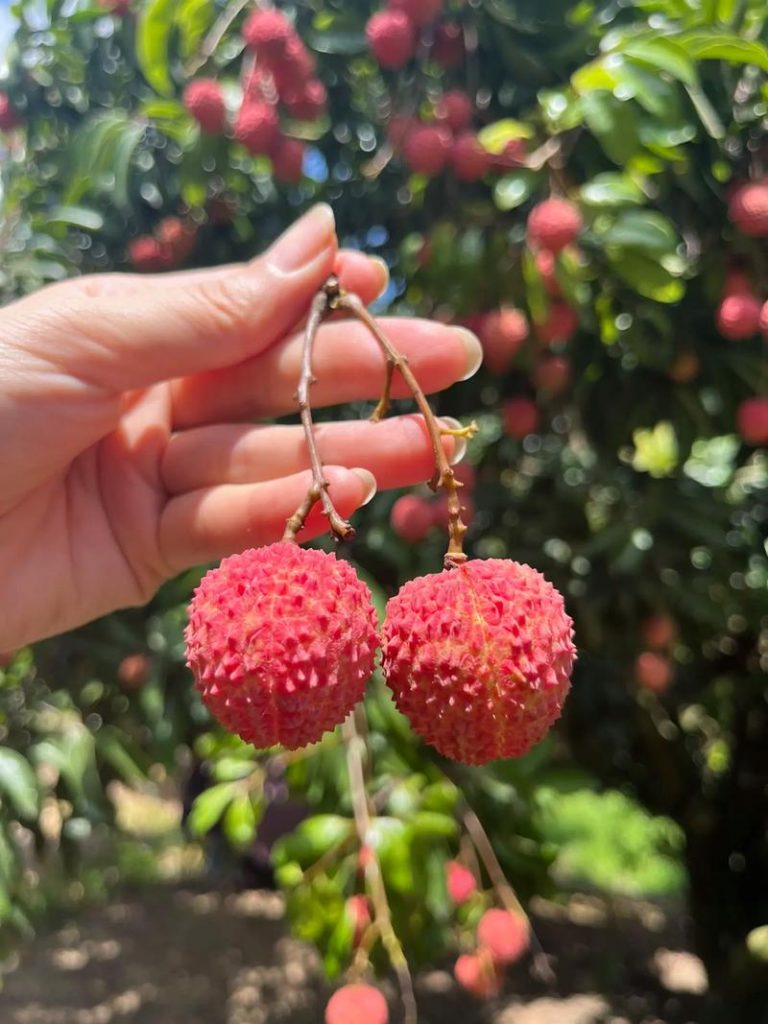
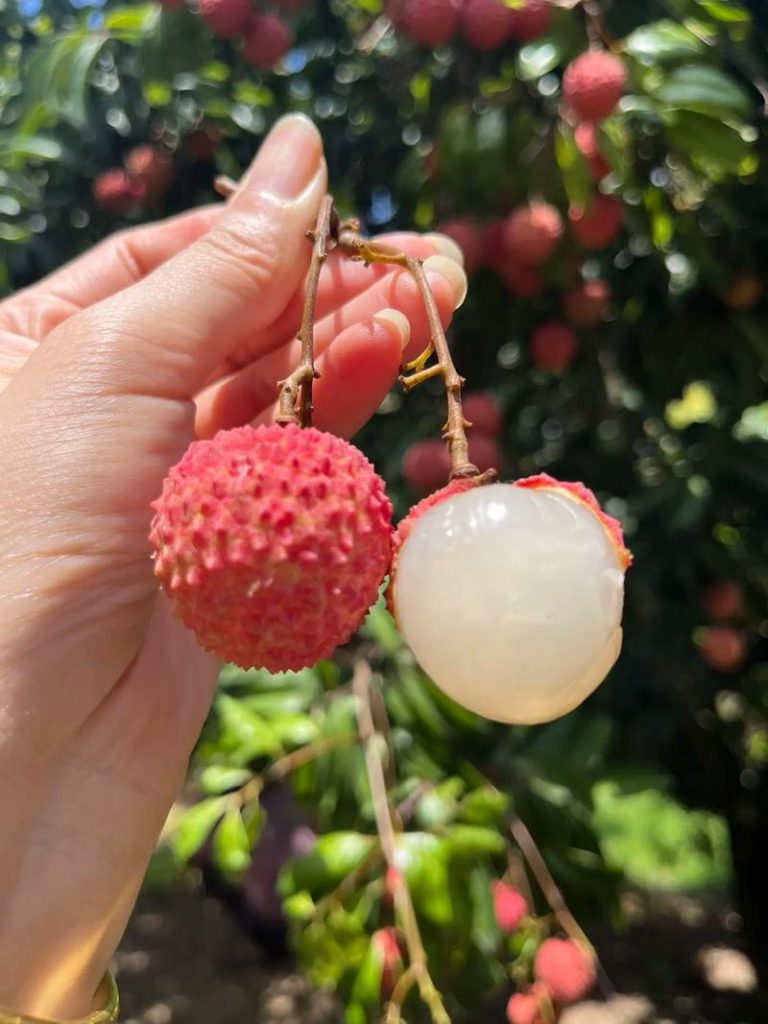
 Importing lychee from China can be highly profitable, but it requires careful planning and execution. This guide walks international buyers through the entire procurement and logistics process, helping you avoid common pitfalls and ensure high-quality fruit delivery.
🌱 Step 1: Understand Chinese Lychee Production
China is the largest lychee producer globally, with specialized orchards in Guangdong, Guangxi, and Hainan. Each region differs in harvest timing, variety, and flavor profile.
| Region | Feature | Harvest Time |
|---|---|---|
| Guangdong | Premium taste, export-focused | May–July |
| Guangxi | Large-scale, cost-effective | June–July |
| Hainan | Early-season fruit | April–May |
📌 Knowing the region helps buyers plan purchase timing for early, peak, or late-season supply.
🍒 Step 2: Choose the Right Variety
Selecting the right variety is critical to satisfy your market and maintain quality.
| Variety | Key Feature | Ideal Market |
|---|---|---|
| Feizixiao | Sweet & juicy | SEA, Middle East |
| Guiwei | Balanced flavor | EU, Japan |
| Nuomici | Thick flesh, small seed | Australia, Singapore |
🍯 For premium buyers, Nuomici often offers the best consumer appeal.
🧪 Step 3: Assess Supplier and Quality Control
Quality and reliability depend on selecting experienced suppliers with export certification and quality management.
Key Supplier Checks:
- Export experience to your country
- Orchard ownership or contract stability
- Cold-chain storage capacity
- Willingness to provide sample shipments
- Certificates: Phytosanitary, HACCP, ISO
📄 Always confirm residue testing results and batch traceability.
📦 Step 4: Decide on Packaging
Packaging protects freshness and enhances retail or gifting appeal.
| Packaging Type | Weight | Best Use |
|---|---|---|
| Foam box + ice gel | 2–5 kg | Air freight |
| Carton + MAP | 5–10 kg | Sea freight |
| Retail gift box | 1–2 kg | Supermarkets |
🎁 OEM packaging allows buyers to build brand recognition and differentiate from competitors.
✈️ Step 5: Choose the Shipping Method
Lychee is perishable, so shipping decisions are crucial.
Air Freight
- Transit: 1–3 days
- Pros: Maximum freshness, low spoilage
- Cons: Higher cost per kg
Sea Freight
- Transit: 10–18 days
- Pros: Cost-effective for bulk
- Cons: Requires MAP/CA technology
| Mode | Cost | Freshness |
|---|---|---|
| Air | High | Excellent |
| Sea | Medium | Good (with CA/MAP) |
📊 Many buyers mix air and sea shipments to balance cost and freshness.
🌡️ Step 6: Manage Cold Chain
Proper temperature management ensures lychee quality.
- Optimal temperature: 2–5°C
- Humidity: 90–95%
- Avoid temperature breaks during customs
- Track shipping data using temperature loggers
📉 Neglecting cold chain is the most common reason for customer complaints.
💰 Step 7: Calculate Total Import Costs
Understanding the cost breakdown helps in pricing and margin planning.
💵 Components:
- Orchard/farm purchase price
- Packaging & ice gel/cartons
- Pre-cooling & cold storage
- Freight (air/sea)
- Customs clearance & import duty
💡 Bulk contracts and repeat orders often reduce unit cost by 5–15%.
🤝 Step 8: Plan for Risk Management
International fruit imports carry risks such as delays, customs rejection, or spoilage.
Risk Mitigation Tips:
- Choose experienced exporters with strong track record
- Insist on full documentation and certificates
- Request sample air shipment before scaling
- Use temperature monitors during transport
- Have contingency storage options at destination
🌍 Step 9: Tailor Strategy for Target Markets
Different countries have different requirements.
- 🇯🇵 Japan: Strict residue & traceability standards
- 🇦🇺 Australia: Biosecurity clearance mandatory
- 🇪🇺 EU: Labeling and organic compliance
- 🇦🇪 UAE: Visual quality and air freight preferred
📌 Adapting your supply chain to each market reduces import risk and improves customer satisfaction.
📈 Step 10: Monitor Market Trends
Global tropical fruit demand is growing rapidly. Lychee imports are increasingly influenced by:
- Seasonal gifting demand 🎁
- Preference for branded fresh fruit 🏷️
- Improvements in cold-chain shipping 🚚
- Growing retail and e-commerce sales
China remains the primary source for buyers seeking reliable, high-quality lychee.
✅ Conclusion
Importing lychee from China requires careful attention to supplier selection, quality control, packaging, logistics, and market compliance. Following a step-by-step procurement plan helps international buyers reduce risk, maintain freshness, and maximize profit.
For wholesalers, supermarkets, and distributors, China’s lychee offers a combination of premium quality, stable supply, and scalable sourcing unmatched by other origins.
Article link:https://www.vlefooena.com/%f0%9f%8d%92-step-by-step-guide-to-importing-lychee-from-china-from-order-to-delivery/


No reply content