
Ceramic dolls, those delicate blends of clay, color, and creativity, have long captivated hearts worldwide. More than mere decorative objects, they stand as testaments to human ingenuity, artistic expression, and cultural heritage spanning millennia. From ancient civilizations to modern studios, these handcrafted treasures evolve while preserving the magic of traditional craftsmanship.
Tracing the Historical Roots
The story of ceramic dolls begins in antiquity. In Mesopotamia and ancient Egypt, artisans shaped clay into small, symbolic figures—some for religious rituals, others to accompany the dead into the afterlife. These early dolls were rudimentary yet profound, bridging the material and spiritual worlds.
Fast – forward to the Tang Dynasty (618–907 AD) in China, and ceramic dolls reached new heights of artistry. Tri – colored glazed pottery (Sancai) figures—depicting everything from galloping horses to elegant court attendants—showcased masterful techniques. Clay was mixed with metallic oxides, then fired at high temperatures to create luminous blues, greens, and amber hues. Meanwhile, in Renaissance Europe, Italian majolica workshops crafted doll – like figurines with vivid glazes, merging functionality (as household items) with decorative flair.
By the 18th century, European porcelain factories (e.g., Germany’s Meissen) transformed dolls into luxury commodities. Porcelain maidens in silk – like gowns, with hand – painted faces and intricate coiffures, graced aristocratic collections, symbolizing wealth and refinement.
The Alchemy of Craftsmanship
Creating a ceramic doll is a labor – intensive ballet of skill. Every step—from raw clay to finished masterpiece—demands precision:
-
Shaping: Artisans start with earthenware or porcelain clay, kneading it to remove air bubbles. Forms emerge through hand – building, wheel – throwing, or mold – casting. A doll’s delicate limbs or flowing robes might be sculpted entirely by hand, while mass – produced pieces rely on molds.
-
Drying & Bisque Firing: Once shaped, the clay dries slowly (to prevent cracking). Then, it undergoes a “bisque fire” in a kiln—typically heated to 800–900°C—hardening it into a porous base ready for decoration.
-
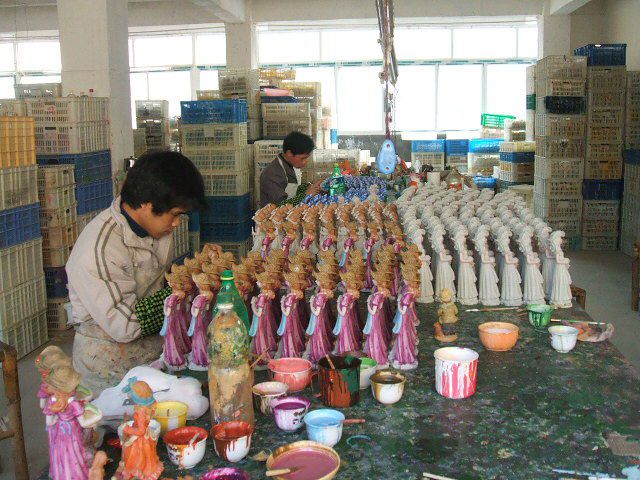
Painting & Glazing: This is where magic happens. Artisans use mineral – based pigments (for permanence) or modern glazes to add color. Techniques range from delicate brushwork (to paint floral patterns or folkloric scenes) to slip trailing (applying liquid clay for raised textures). A final glaze firing (at 1,200–1,300°C) seals the colors, giving the doll its signature shine and durability.
Cultural Storytellers
Beyond aesthetics, ceramic dolls are vessels of collective memory. In Japan, Hakata ningyō (Bunraku – style dolls) wear kimonos woven with stories of Kabuki theater, their painted faces echoing centuries of performance art. In Mexico, “Ánimas” dolls honor the dead during Día de los Muertos, adorned with marigold – hued fabrics and symbolic motifs.
India’s rural artisans craft terracotta dolls (like Tamil Nadu’s Kondapalli bommalu) to depict village life, mythical gods, or harvest festivals—these dolls are both toys and spiritual offerings, passed down as heirlooms. Even in medieval Europe, wooden – bodied dolls with clay heads were used to teach children social roles, blurring lines between play and education.
Modern Rebirth: Tradition Meets Innovation
In the 21st century, ceramic dolls defy categorization. Contemporary artists reimagine them as:
-
Fine Art: Galleries showcase avant – garde pieces—like a doll with a fractured porcelain dress commenting on modern fragility, or minimalist forms inspired by abstract sculpture.
-
Sustainable Design: Makers use recycled clay and eco – friendly glazes, proving craftsmanship can align with environmental ethics.
-
Tech – Infused: 3D printing aids in prototyping complex shapes, yet many artists still hand – sculpt to preserve authenticity. Some dolls even incorporate LED lights or smart sensors, merging old – world charm with futuristic flair.
Why Ceramic Dolls Endure
From ancient grave companions to Instagram – famous artisanal collectibles, ceramic dolls thrive because they are timeless. They bridge utility and beauty, tradition and rebellion, telling stories that transcend eras. Every crack, glaze drip, and painted smile is a fingerprint of human creativity—one that refuses to be confined by trends.
Whether displayed as a family heirloom, a gallery centerpiece, or a quirky gift, a ceramic doll is more than clay and paint. It is a dialogue between past and present, a reminder that art, in any form, is an unbroken thread binding humanity across time.
Article link:https://www.vlefooena.com/ceramic-dolls-timeless-artistry-in-clay/


No reply content