China agricultural product suppliers

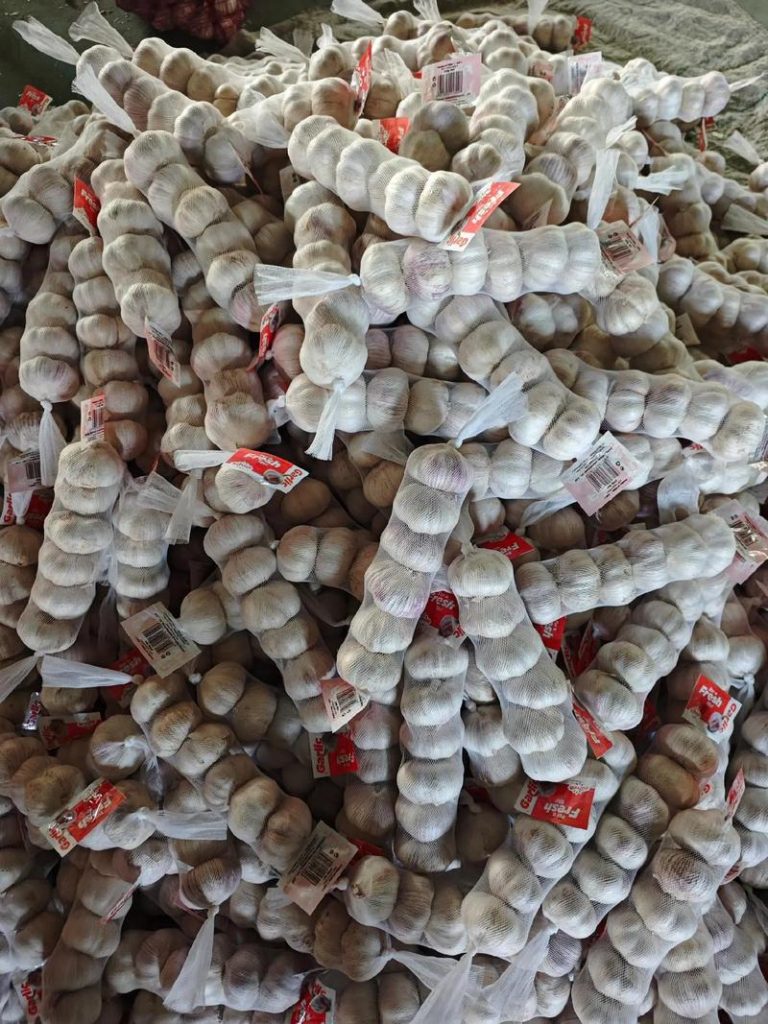
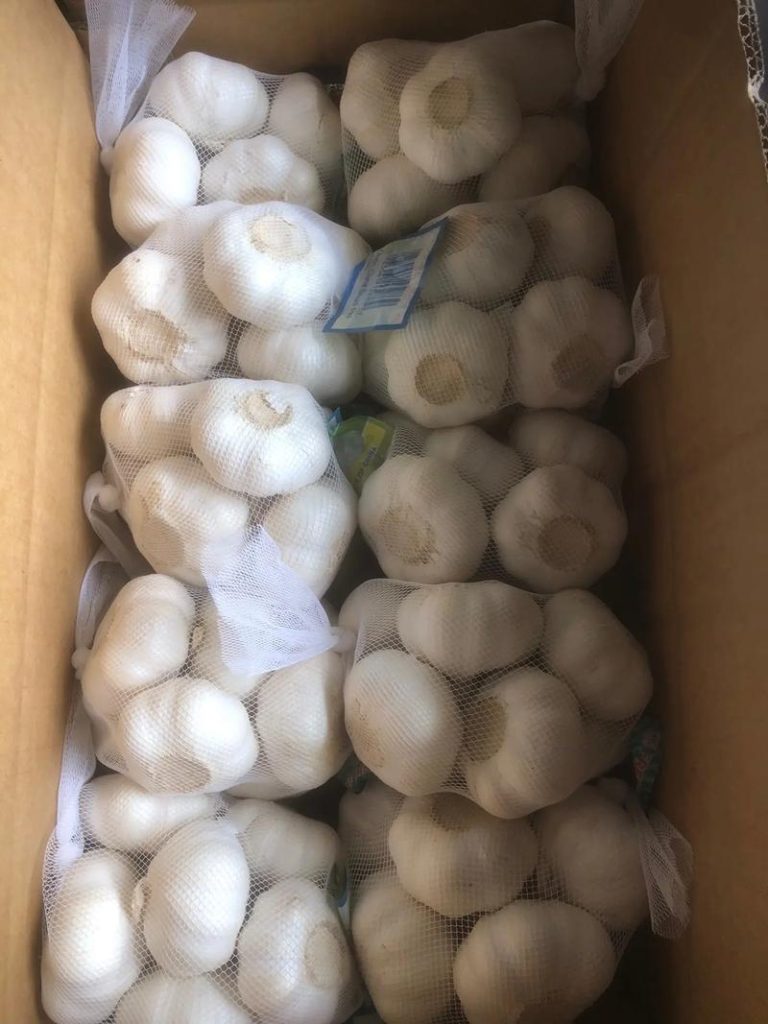
Finding reliable China garlic suppliers is not simply a matter of finding a low price. International buyers need to evaluate the supplier’s business qualifications, garlic specifications, production or sourcing capacity, quality-control process, export experience, packaging options, payment terms, and ability to communicate clearly.
China has a large garlic supply chain serving wholesalers, importers, food distributors, supermarkets, restaurants, food-processing companies, and agricultural-product traders. However, suppliers can differ significantly in product quality, factory or trading-company capabilities, export experience, minimum order quantities, and service.
This guide explains how international buyers can find Chinese garlic suppliers, verify supplier information, compare quotations, confirm product specifications, and reduce common sourcing risks before placing an order.
1. Why Import Garlic from China?
China is an important source for internationally traded garlic because of its large cultivation areas, established agricultural supply chain, processing capacity, and export infrastructure.
Chinese garlic suppliers may offer different varieties and specifications depending on the growing region, harvest season, storage conditions, and target market.
For an importer, the main advantages of sourcing garlic from China can include:
-
Large supplier and production base
-
Multiple garlic varieties and sizes
-
Fresh garlic and stored garlic options
-
Different packaging formats
-
Flexible private-label and customized packaging options
-
Commercial quantities for wholesale buyers
-
Established export and container-loading capabilities
-
Ability to source different grades according to market requirements
However, these advantages do not mean every supplier is suitable for every buyer. Supplier verification remains essential.
2. Where Is Garlic Produced in China?
China has several important garlic-producing areas. Shandong is particularly well known for commercial garlic production and processing, while other provinces and regions also participate in garlic cultivation and distribution.
When contacting a supplier, buyers should not only ask, “Are you a China garlic supplier?”
A more useful question is:
Where was the garlic produced, processed, and stored?
The answer can help buyers understand the supply chain behind the quotation.
Ask the supplier to provide:
-
Main garlic-producing region
-
Processing location
-
Warehouse location
-
Harvest season
-
Storage method
-
Available grades
-
Available sizes
-
Export packaging
-
Current inventory
A supplier may be a factory, processor, exporter, wholesaler, or trading company. Understanding its role is important when comparing suppliers.
3. What Types of Chinese Garlic Can Buyers Source?
Garlic is not a single standardized product. Buyers should specify exactly what they need before requesting prices.
Depending on the supplier and market, buyers may encounter products such as:
-
White garlic
-
Red or purple garlic
-
Fresh garlic
-
Stored garlic
-
Peeled garlic
-
Garlic cloves
-
Garlic for food processing
-
Garlic for wholesale markets
-
Garlic packed for retail sale
Size is also important.
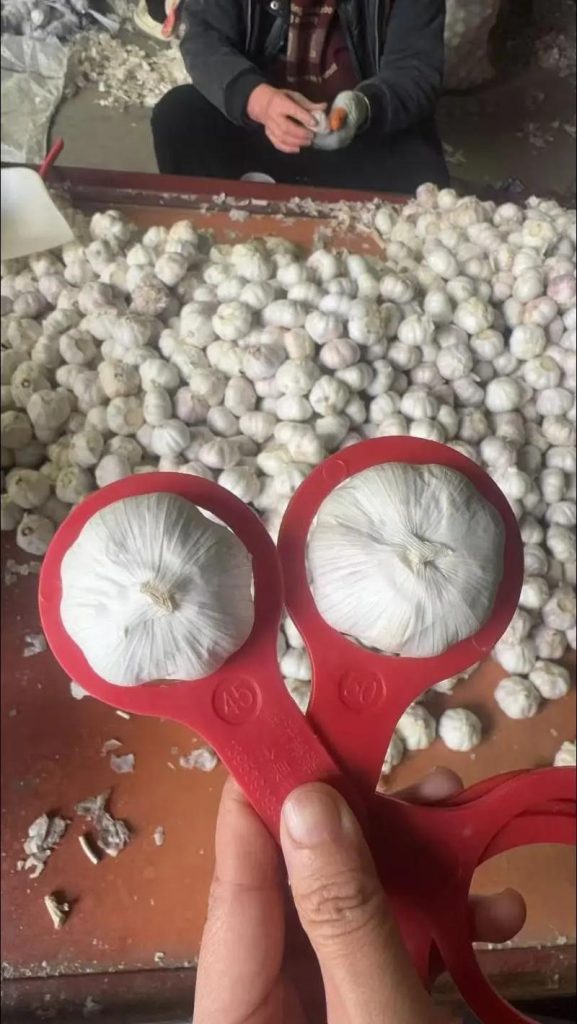
Commercial specifications may be described by bulb diameter or grade. For example, a buyer may request a specific size range such as 4.5 cm, 5.0 cm, 5.5 cm, or larger.
Do not assume that two quotations with the same product name represent exactly the same garlic.
Always confirm the specification in writing.
4. How to Find Reliable China Garlic Suppliers
There are several ways to identify potential suppliers.
B2B sourcing platforms
B2B platforms can be useful for creating an initial supplier list. Buyers can compare company profiles, products, response times, minimum order quantities, and supplier information.
However, a supplier profile should be treated as the beginning of the verification process rather than proof of reliability.
Agricultural trade channels
Agricultural exhibitions, food trade events, import-export directories, industry associations, and professional sourcing networks can also help buyers identify potential suppliers.
Direct supplier research
Searching for manufacturers, garlic processors, exporters, and agricultural-product suppliers can help buyers build a wider supplier pool.
The important point is not to depend on a single supplier.
For a commercial order, it is usually better to compare several qualified suppliers before selecting one.
5. How to Verify a Chinese Garlic Supplier
Supplier verification should happen before the buyer sends a large payment.
Start by collecting basic company information:
-
Legal company name
-
Business registration information
-
Company address
-
Contact person
-
Telephone number
-
Business email
-
Main products
-
Processing capability
-
Warehouse information
-
Export markets
-
Years in business
-
Payment account information
The legal company name on the business documents should be consistent with the company receiving payment.
If the supplier says it operates a processing facility, ask for evidence of the facility and production or processing capability.
If the supplier is a trading company, ask where the garlic is sourced and whether the company works with specific processing factories or farms.
Being a trading company does not automatically mean a supplier is unreliable. The important issue is whether the supplier can clearly explain its supply chain and meet the buyer’s specifications.
6. Factory or Trading Company: Which Is Better?
International buyers sometimes assume that a factory is always better than a trading company.
That is not necessarily true.
A specialized trading company may have access to several processing facilities and may be able to source different garlic specifications.
A factory or processor may have stronger control over processing, grading, packing, and quality management.
The right choice depends on the buyer’s requirements.
A factory or processor may be suitable when:
-
The buyer needs large volumes
-
The buyer requires consistent specifications
-
Customized packaging is required
-
Long-term supply is planned
-
Processing and grading control are important
A trading company may be suitable when:
-
The buyer needs several product specifications
-
Smaller or mixed orders are required
-
The supplier has strong agricultural sourcing relationships
-
The buyer wants assistance coordinating multiple products
Instead of asking only “Factory or trading company?”, ask:
Can this supplier consistently deliver the exact product specification I need?
7. Garlic Specifications Buyers Should Confirm
Before asking for a final quotation, prepare a clear specification sheet.
At minimum, confirm:
Product: Garlic
Origin: China
Variety: Required garlic variety
Size: Required bulb diameter or grade
Quality: Commercial or specific quality standard
Appearance: Bulb condition, skin condition, cleanliness
Moisture: Required level if applicable
Defects: Acceptable defect tolerance
Packaging: Carton, mesh bag, woven bag, or customized packaging
Net weight: Weight per package
Gross weight: Including packaging
Label: Required information and language
Quantity: Total order quantity
Destination: Port or final destination
Incoterm: EXW, FOB, CIF, or another agreed term
The clearer the specification, the easier it is to compare supplier quotations accurately.
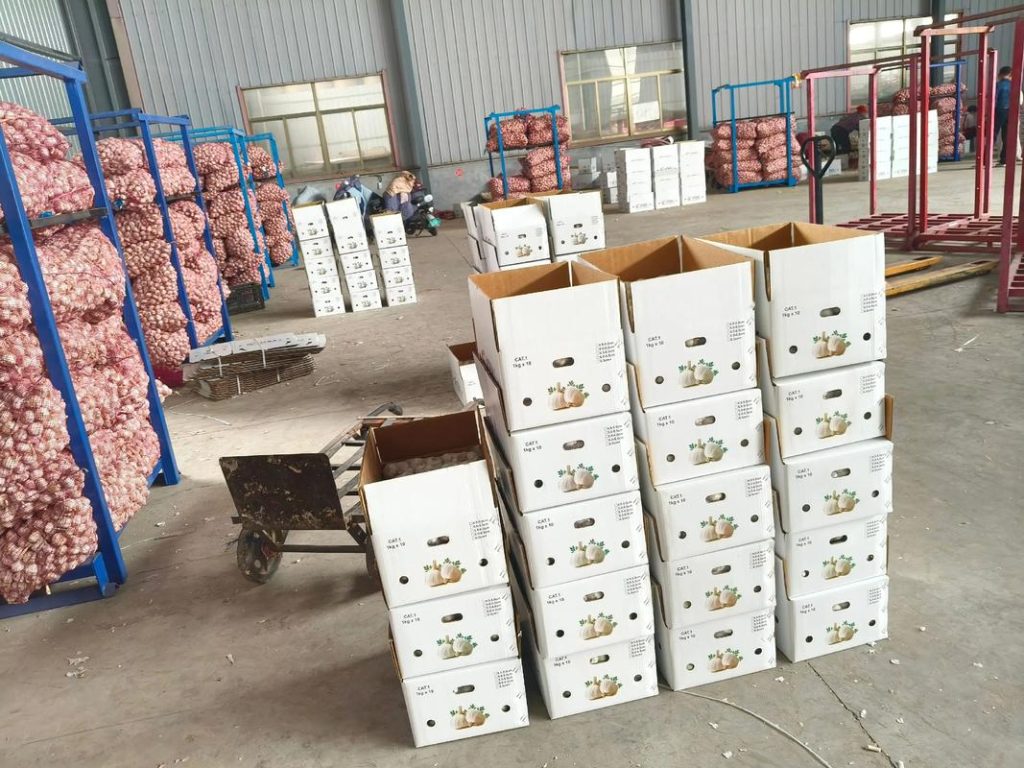
8. Packaging Options for Garlic Export
Packaging affects product protection, handling, labeling, and shipping costs.
Depending on the destination market, buyers may request:
-
Mesh bags
-
Woven bags
-
Cartons
-
Retail bags
-
Customized printed packaging
-
Private-label packaging
Ask the supplier to confirm:
-
Package weight
-
Number of packages per pallet
-
Pallet requirements
-
Carton dimensions
-
Container loading quantity
-
Label requirements
-
Packaging material
-
Whether packaging is included in the quotation
Do not compare prices without comparing packaging specifications.
A lower unit price may simply reflect cheaper or lighter packaging.
9. MOQ for China Garlic Suppliers
Minimum order quantity varies according to the supplier, garlic specification, packaging, season, and whether customized packaging is required.
For bulk commercial garlic, suppliers may quote by:
-
Kilogram
-
Metric ton
-
Carton
-
Bag
-
Container
If customized packaging is required, the MOQ may be higher because printed packaging usually requires additional production arrangements.
When requesting a quotation, tell the supplier your estimated quantity instead of simply asking:
What is your price?
A better inquiry includes the product, size, quantity, packaging, destination, and shipping term.
10. How to Request a Garlic Supplier Quotation
A professional inquiry can save time and reduce misunderstandings.
Include:
-
Product name
-
Garlic variety
-
Required size
-
Required quality
-
Quantity
-
Packaging
-
Destination port
-
Preferred Incoterm
-
Required delivery period
-
Whether samples are required
For example:
We are looking for Chinese garlic for wholesale distribution. Please quote your current price for the required garlic size and quality, including packaging details, MOQ, available quantity, FOB price, estimated loading time, and export documentation.
This is much more useful than sending only:
Please send garlic price.
11. How to Compare China Garlic Supplier Quotes
Never select a supplier based only on the lowest price.
Create a comparison sheet covering:
Item |
Supplier A |
Supplier B |
Supplier C |
|---|---|---|---|
Product specification |
|||
Garlic size |
|||
Quality |
|||
Packaging |
|||
MOQ |
|||
Price |
|||
Incoterm |
|||
Available quantity |
|||
Lead time |
|||
Export experience |
|||
Documentation |
|||
Payment terms |
|||
Sample availability |
|||
Communication |
The cheapest quotation may not be the lowest total procurement cost.
A supplier with better quality consistency, clearer documentation, better packaging, and fewer quality problems can ultimately be more economical.
12. Quality Inspection Before Shipment
For larger orders, buyers should consider pre-shipment inspection.
The inspection scope can include:
-
Product quantity
-
Garlic size
-
Appearance
-
Packaging
-
Labeling
-
Defective bulbs
-
Damaged products
-
Foreign material
-
Product condition
-
Carton or bag condition
-
Loading condition
For food products, buyers should also confirm the destination country’s import requirements before placing the order.
The exact documentation and inspection requirements can vary according to the destination market and product specification.
13. Export Documents Buyers Should Discuss
Before shipment, confirm which documents are required for the destination country.
Depending on the transaction and destination, documents may include:
-
Commercial invoice
-
Packing list
-
Bill of lading
-
Certificate of origin
-
Phytosanitary documentation
-
Inspection or quality documents
-
Other documents required by the importing country
Do not wait until the goods are ready for shipment to ask about documentation.
The buyer and supplier should confirm the documentation requirements during the quotation and order stage.
14. Shipping Chinese Garlic Internationally
Garlic is commonly shipped in commercial quantities by sea, but the appropriate transportation arrangement depends on the product condition, destination, quantity, season, and buyer’s requirements.
When discussing shipping, confirm:
-
Loading port
-
Destination port
-
Container type
-
Estimated loading quantity
-
Shipping term
-
Transit arrangement
-
Required documents
-
Cargo insurance if required
-
Customs requirements at destination
The supplier’s FOB quotation and the buyer’s final landed cost are not the same thing.
The final import cost may also include:
-
Ocean freight
-
Insurance
-
Customs duties
-
Import taxes
-
Port charges
-
Customs clearance
-
Inland transportation
-
Inspection fees
-
Other destination charges
15. Questions to Ask a China Garlic Supplier
Before placing an order, ask the supplier:
Product questions
-
What garlic varieties do you supply?
-
What sizes are currently available?
-
Is the garlic fresh or stored?
-
Where was the garlic produced?
-
What quality grades are available?
-
Can you provide product photos and videos?
Supply questions
-
Are you a factory, processor, exporter, or trading company?
-
What quantity can you supply?
-
What is your MOQ?
-
What is your normal loading time?
-
Can you handle repeat orders?
Packaging questions
-
What packaging options are available?
-
Can you provide customized packaging?
-
What is the net weight per package?
-
How many packages fit into a container?
Export questions
-
Which markets do you currently serve?
-
Which export documents can you provide?
-
Which loading ports do you normally use?
Commercial questions
-
What is your quotation basis?
-
Is the price FOB or CIF?
-
What payment terms are available?
-
Can you provide a sample before a bulk order?
A professional supplier should be able to answer these questions clearly.
16. Warning Signs When Choosing a Garlic Supplier
Buyers should be careful when a supplier:
-
Refuses to provide basic company information
-
Gives inconsistent company names
-
Changes payment-account information without explanation
-
Cannot explain the product specifications
-
Avoids providing samples when samples are reasonable
-
Provides unclear pricing
-
Pressures the buyer to make an immediate large payment
-
Cannot explain where the product comes from
-
Gives different answers from different contacts
-
Cannot provide reasonable evidence of its processing or supply capability
One warning sign does not automatically prove fraud.
However, several unexplained inconsistencies should trigger additional verification.
17. How to Reduce Risk on the First Order
For a new supplier, avoid treating the first transaction as a long-term relationship immediately.
A practical approach is:
Step 1: Identify several potential suppliers.
Step 2: Collect company and product information.
Step 3: Compare specifications.
Step 4: Request samples if appropriate.
Step 5: Verify the supplier’s business information.
Step 6: Confirm packaging and labeling.
Step 7: Confirm documents and import requirements.
Step 8: Agree on payment and shipping terms.
Step 9: Conduct quality inspection when appropriate.
Step 10: Start with a manageable commercial order.
After the first successful shipment, buyers can evaluate quality consistency, communication, delivery performance, documentation, and after-sales handling before increasing order volume.
18. China Garlic Supplier Contact Information: What Should Buyers Collect?
When building a supplier database, collect more than a telephone number.
A useful supplier contact record should include:
-
Company legal name
-
Supplier name
-
Contact person
-
Position
-
Business email
-
Telephone
-
Website
-
Company address
-
Factory or warehouse address
-
Main garlic products
-
Product specifications
-
MOQ
-
Export markets
-
Packaging options
-
Quotation date
-
Payment terms
-
Notes from communication
This makes it easier to compare suppliers and follow up with qualified exporters.
19. How Vlefooena Can Help Buyers Find B2B Suppliers
Vlefooena is a global B2B sourcing and trade platform designed to connect international buyers with manufacturers, suppliers, factories, and trade service providers.
For buyers sourcing agricultural products such as garlic, the objective should not simply be to find the largest number of suppliers. The more important task is identifying suppliers whose products, capabilities, commercial terms, and supply-chain information match the buyer’s requirements.
Buyers can use a structured sourcing process to compare suppliers, clarify specifications, verify company information, and communicate their purchasing requirements before moving toward a commercial transaction.
20. China Garlic Supplier Checklist
Before selecting a supplier, use this checklist:
-
[ ] Company identity verified
-
[ ] Supplier type confirmed
-
[ ] Product origin confirmed
-
[ ] Garlic variety confirmed
-
[ ] Size confirmed
-
[ ] Quality requirements confirmed
-
[ ] Available quantity confirmed
-
[ ] MOQ confirmed
-
[ ] Packaging confirmed
-
[ ] Labeling confirmed
-
[ ] Price basis confirmed
-
[ ] Incoterm confirmed
-
[ ] Loading port confirmed
-
[ ] Delivery schedule confirmed
-
[ ] Export documents confirmed
-
[ ] Destination import requirements checked
-
[ ] Sample evaluated if required
-
[ ] Payment terms confirmed
-
[ ] Inspection arrangement considered
-
[ ] Final order specification documented


