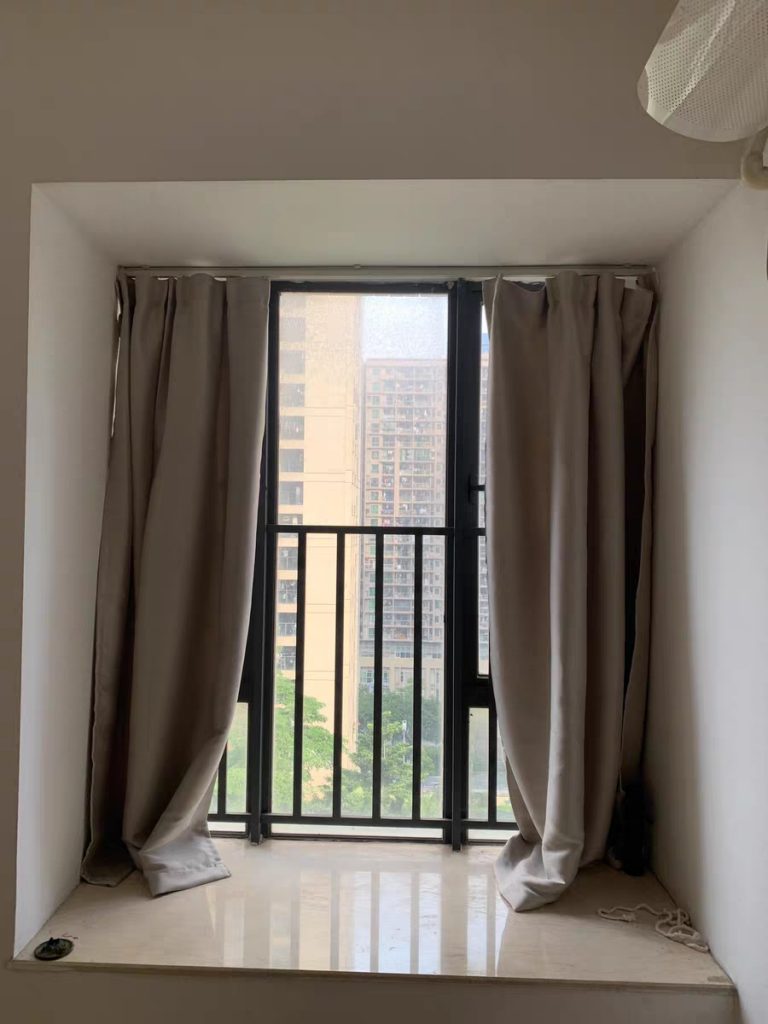
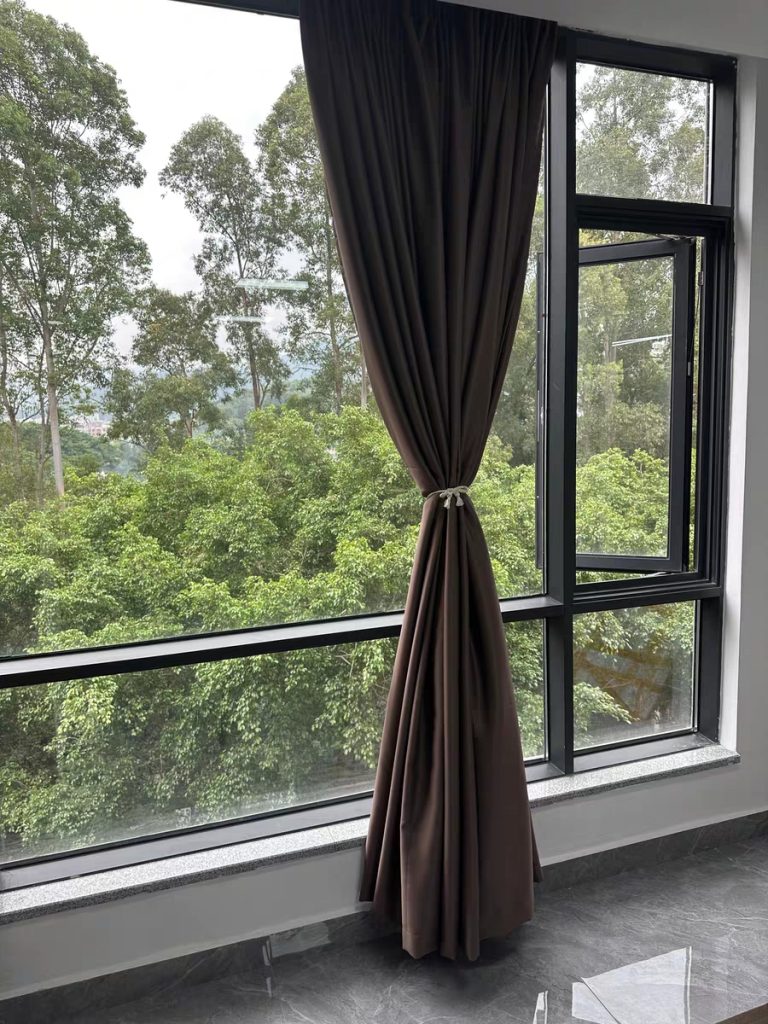
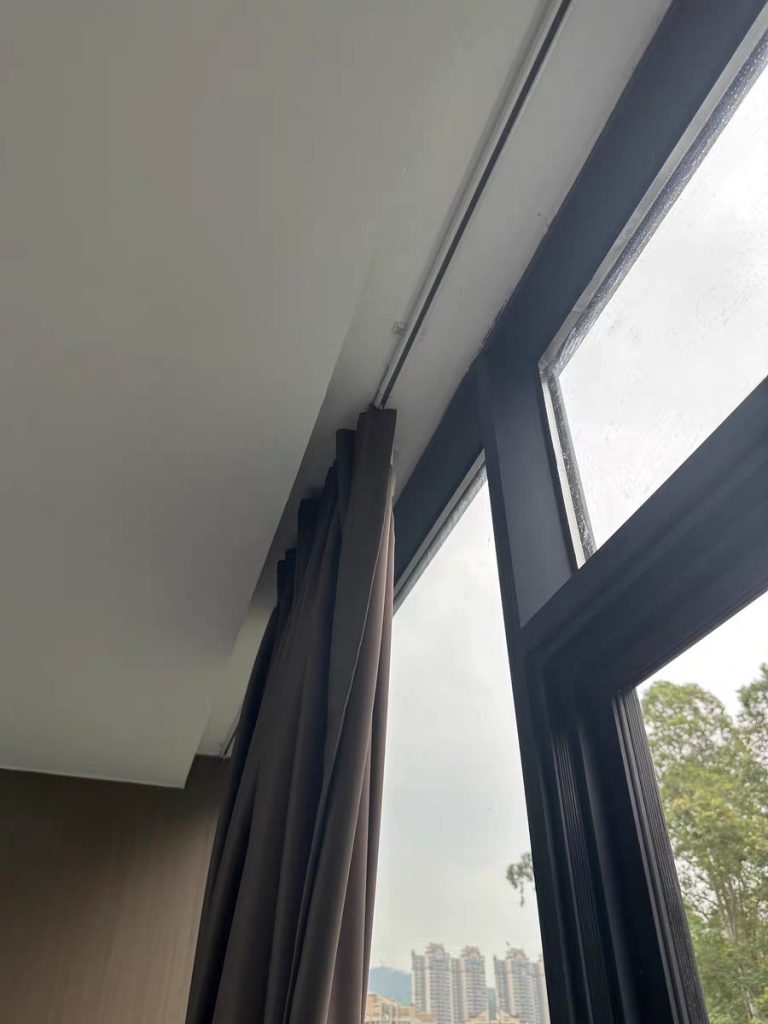
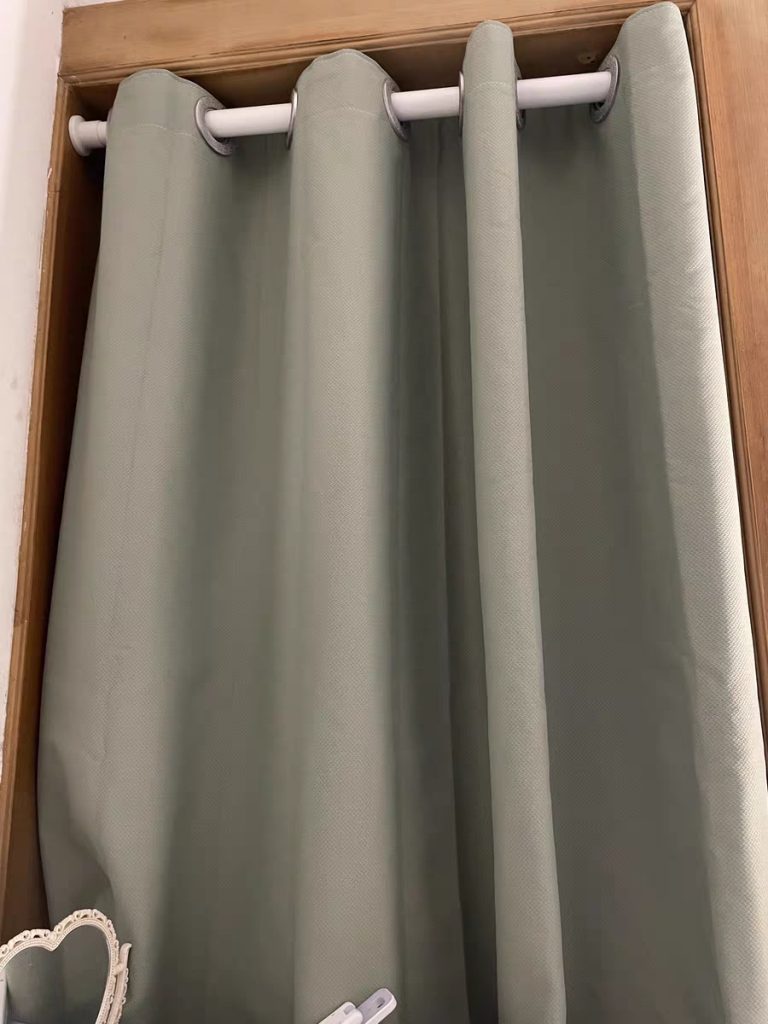
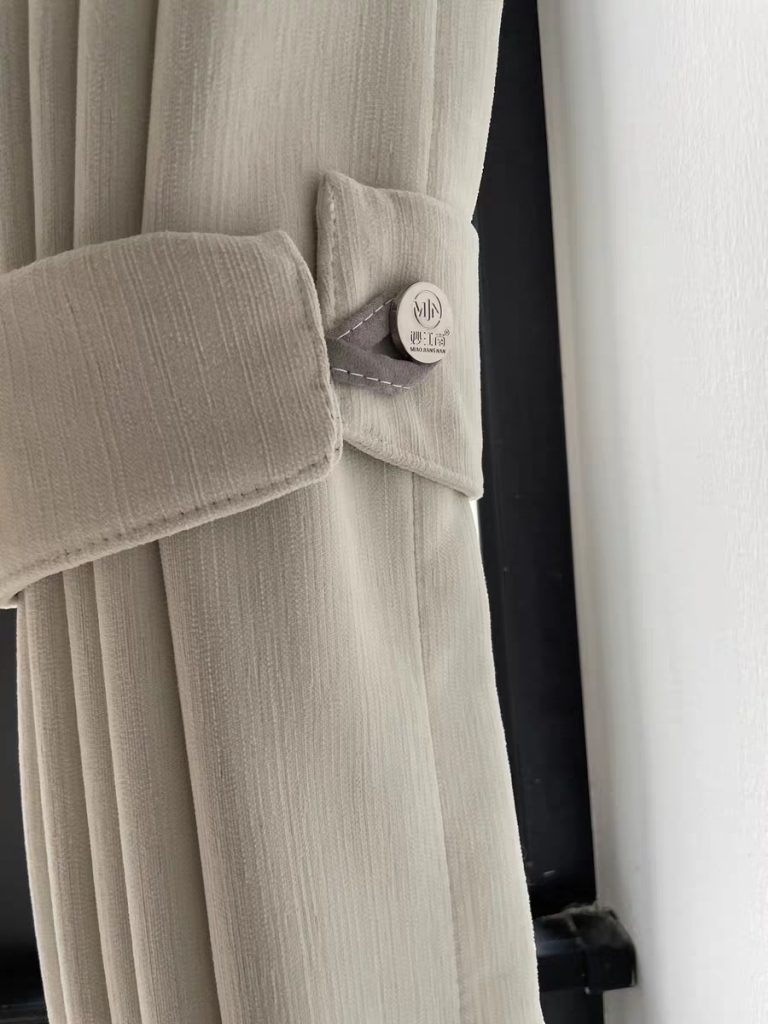
 Walk into any global home decor store, and chances are the curtains on display bear the label “Made in China.” But this label tells only half the story. Far from being a monolith of mass production, Chinese factories have mastered the art of diversity—offering everything from pared-down minimalist sheers to opulent velvet drapes fit for a palace. This range, spanning price points, styles, and functionalities, is what makes China the world’s most adaptable curtain manufacturer.
The image of deep brown curtains paired with ethereal white sheers against a city skyline epitomizes this diversity: the brown drapes could be a luxury velvet piece from a high-end hotel, while the sheers might come from a budget-friendly minimalist line. This article explores how Chinese factories achieve such breadth, examining their product portfolios, material innovations, and strategies for serving clients as varied as IKEA and Dubai’s royal palaces.
1. The Spectrum of Style: From Minimalist to Ultra-Luxe
Chinese manufacturers have segmented the market with surgical precision, offering distinct product lines tailored to different aesthetic and budgetary needs.
A. Minimalist: Functionality Meets Simplicity
Targeting young urbanites and small-space dwellers, minimalist curtains prioritize clean lines, neutral tones, and practicality. Key features include:
-
Materials: Lightweight linens, cotton blends, or sheer polyester in whites, grays, and soft beiges.
-
Designs: Unadorned panels with hidden hems, magnetic closures, or subtle texture (e.g., brushed cotton).
-
Functionality: Blackout linings for apartments, thermal insulation for cold climates, or moisture-wicking fabrics for humid regions.
Example: Hangzhou’s “Pure” Collection by Linhome Textiles offers 50+ minimalist styles, priced at 15–50 per panel. Their bestseller, a white sheer curtain with a micro-perforated wave pattern, sells 1 million units annually to IKEA and Target.
B. Mid-Range: Accessible Elegance
For the mainstream market, Chinese factories balance affordability with elevated design. These curtains often feature:
-
Mixed Materials: Cotton-silk blends for a luxe feel at a fraction of the cost.
-
Subtle Embellishments: Laser-cut patterns, embroidered borders, or tie-dye effects.
-
Versatile Colors: Earthy tones (terracotta, sage green) and soft pastels that complement modern interiors.
Case Study: Guangdong’s “Urban Chic” Line by StyleWeave targets first-time homeowners. A popular model—a taupe linen curtain with a hidden pocket for a curtain rod—retails for 30–80 and is sold in 20+ countries via Amazon and Wayfair.
C. Luxe: Opulence Redefined
At the high end, Chinese factories rival European ateliers, offering bespoke curtains for luxury hotels, villas, and yachts. These pieces are defined by:
-
Premium Materials: Silk velvet, hand-woven brocade, or cashmere blends.
-
Artisanal Details: Hand-embroidery (e.g., phoenix motifs, floral vines), Swarovski crystal trims, or 24-karat gold thread.
-
Customization: Made-to-measure sizing, unique patterns (e.g., client’s family crest), and motorized smart systems.
Example: Suzhou’s “Imperial” Collection by SilkRoad Curtains creates curtains for Dubai’s Burj Al Arab hotel. A single panel—featuring hand-embroidered peacocks on red silk—costs $5,000 and takes 3 months to craft.
2. Material Diversity: Catering to Every Need
What enables this stylistic range? China’s mastery of material innovation. Factories source and develop fabrics that span the spectrum from utilitarian to extravagant.
A. Budget-Friendly Staples
-
Polyester: Durable, wrinkle-resistant, and cheap to produce. Used in 70% of minimalist curtains.
-
Cotton Blends: Affordable yet breathable, ideal for mid-range lines.
-
Recycled Materials: Post-consumer plastic bottles turned into sheers, appealing to eco-conscious buyers.
B. Mid-Tier Innovations
-
Bamboo Fiber: Soft, hypoallergenic, and sustainable—popular in “affordable luxury” lines.
-
Tencel™ Lyocell: Silky smooth, with a low environmental footprint. Used in curtains for brands like West Elm.
-
Linen-Cotton Mixes: Combine linen’s texture with cotton’s durability, priced at 40–120 per panel.
C. Luxury Exclusives
-
Silk Velvet: Sourced from Zhejiang’s silk farms, with a plush pile that absorbs light for dramatic effect.
-
Hand-Woven Brocade: Woven on traditional looms in Jiangsu, featuring intricate patterns inspired by Ming Dynasty textiles.
-
Cashmere-Silk Blends: Ultra-soft and insulating, used in curtains for private jets and luxury yachts.
3. Customization: Turning Visions into Reality
Diversity isn’t just about pre-made lines—it’s about adaptability. Chinese factories excel at tailoring products to unique client needs, whether for a small apartment or a 10-story hotel.
A. Size and Fit
-
Standard Sizes: 84”, 96”, 108” lengths for global compatibility.
-
Custom Measurements: Factories use laser measuring tools to create curtains for odd-sized windows (e.g., arched or bay windows).
B. Design Personalization
-
Pattern Creation: Clients can submit photos or sketches for digital printing (e.g., a family photo turned into a curtain mural).
-
Color Matching: Pantone color-matching systems ensure exact shade replication (critical for hotel chains with brand guidelines).
C. Functional Add-Ons
-
Blackout Linings: For bedrooms or media rooms.
-
Thermal Insulation: Reflective layers to reduce energy bills.
-
Soundproofing: Dense fabrics (e.g., velvet) to dampen urban noise.
Case Study: A U.S. architect commissioned Shanghai Textile Co. to create curtains for a glass-walled penthouse. The factory combined triple-layer blackout fabric with motorized smart controls, delivering a solution that blocked glare, retained heat, and adjusted via voice command.
4. Market Segmentation: Serving Global Tastes
Chinese factories don’t just offer diversity—they localize it, adapting products to regional preferences.
A. Europe: Minimalism and Sustainability
European buyers prioritize eco-friendly materials and understated design. Factories respond with:
-
Organic Cotton Lines: GOTS-certified curtains in muted tones.
-
Scandinavian-Inspired Patterns: Geometric weaves, minimalist stripes.
B. North America: Bold Patterns and Smart Features
U.S. and Canadian clients favor personality-driven designs and tech integration:
-
Bohemian Prints: Florals, paisleys, and tribal motifs.
-
Motorized Curtains: App-controlled for convenience.
C. Middle East: Opulence and Climate Adaptation
Hot, arid climates demand heavy, light-blocking fabrics:
-
Velvet and Brocade: In jewel tones (emerald, sapphire) for luxury villas.
-
UV-Resistant Materials: To prevent fading in intense sunlight.
Example: A Saudi prince commissioned Dubai Textile City (a Chinese-owned factory) to create curtains for his palace. The result: 50-foot-long gold-threaded brocade drapes lined with cooling gel layers, priced at $200,000.
5. The Factory Floor: How Diversity Is Achieved
Behind this product range lies a flexible manufacturing ecosystem:
A. Modular Production Lines
Factories reconfigure machinery in hours to switch between styles. For example:
-
Minimalist Sheers: Use high-speed sewing machines for plain panels.
-
Luxe Embroidery: Switch to hand-operated embroidery machines for detailed work.
B. Vertical Integration
Most factories own or partner with suppliers for:
-
Raw Materials: Cotton from Xinjiang, silk from Zhejiang, dyes from Jiangsu.
-
Dyeing and Finishing: In-house labs ensure color consistency across batches.
C. Design Teams
Large factories employ hundreds of designers fluent in global trends:
-
Trend Analysts: Monitor Pinterest, Instagram, and trade shows.
-
Cultural Consultants: Ensure designs respect local taboos (e.g., avoiding certain colors in Asia).
6. Case Study: A Factory’s Journey from Minimalist to Luxe
Ningbo Curtain Group, founded in 1998, illustrates how Chinese factories evolve with market demand:
-
Phase 1 (1998–2010): Focused on budget polyester curtains for Walmart.
-
Phase 2 (2010–2020): Expanded to mid-range linen blends for Target.
-
Phase 3 (2020–Present): Launched a luxury line with hand-embroidered silk, serving clients like the Ritz-Carlton.
Today, Ningbo produces 5 million curtains annually, with 40% of revenue coming from luxury lines.
7. Challenges and the Future of Diversity
Maintaining such a broad portfolio isn’t easy:
-
Cost Control: Luxury materials (silk, cashmere) strain margins.
-
Inventory Management: Balancing stock for 100+ styles requires advanced forecasting.
-
Skill Gaps: Artisans for hand-embroidery are in short supply.
The Road Ahead
Factories are addressing these challenges with:
-
AI-Driven Inventory: Algorithms predict demand for each style.
-
Training Programs: Vocational schools teach traditional crafts to new generations.
-
Hybrid Lines: Combining minimalist frames with luxe accents (e.g., a simple linen curtain with a silk border).
Conclusion: The Power of “Something for Everyone”
The diversity of Chinese curtain factories—from 10 minimalist sheers to 50,000 luxury drapes—is their greatest strength. By mastering materials, customization, and market localization, they serve everyone from college students to royalty.
In a world where consumer tastes are fragmented, this adaptability ensures China remains the undisputed leader in curtain manufacturing. Whether you seek simplicity, elegance, or opulence, there’s a “Made in China” curtain waiting to transform your space. And as trends evolve, one thing is certain: Chinese factories will be ready—with a design for every dream.
Article link:https://www.vlefooena.com/from-minimalist-to-luxe-the-diverse-curtain-offerings-of-china-factories/


No reply content