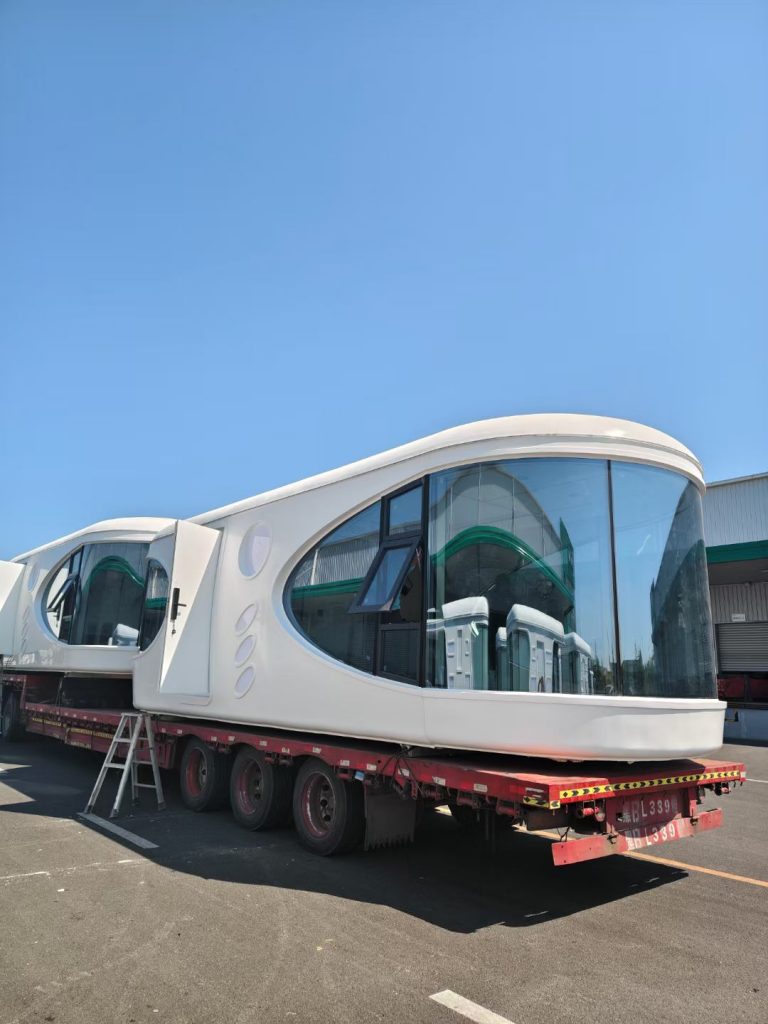
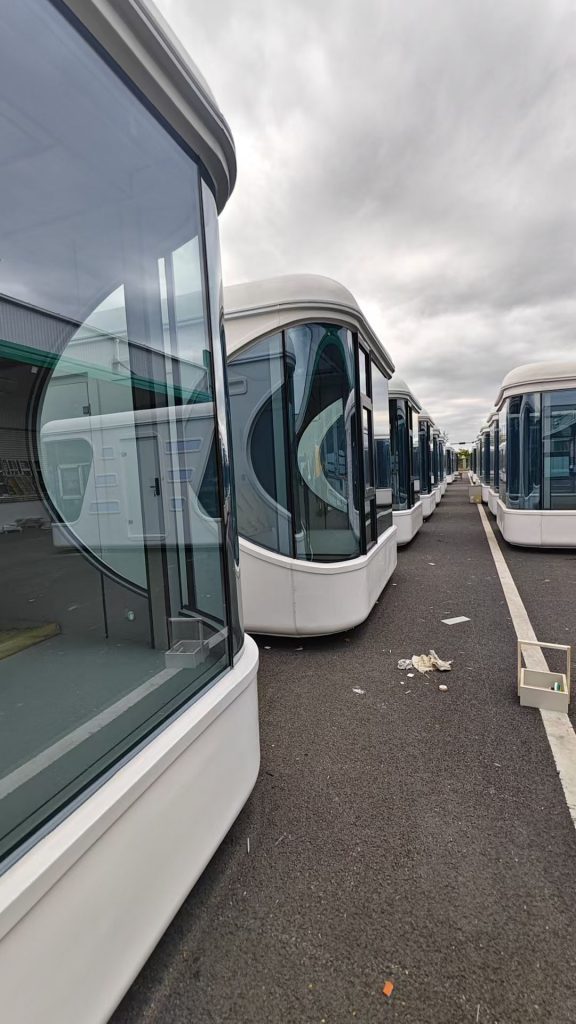
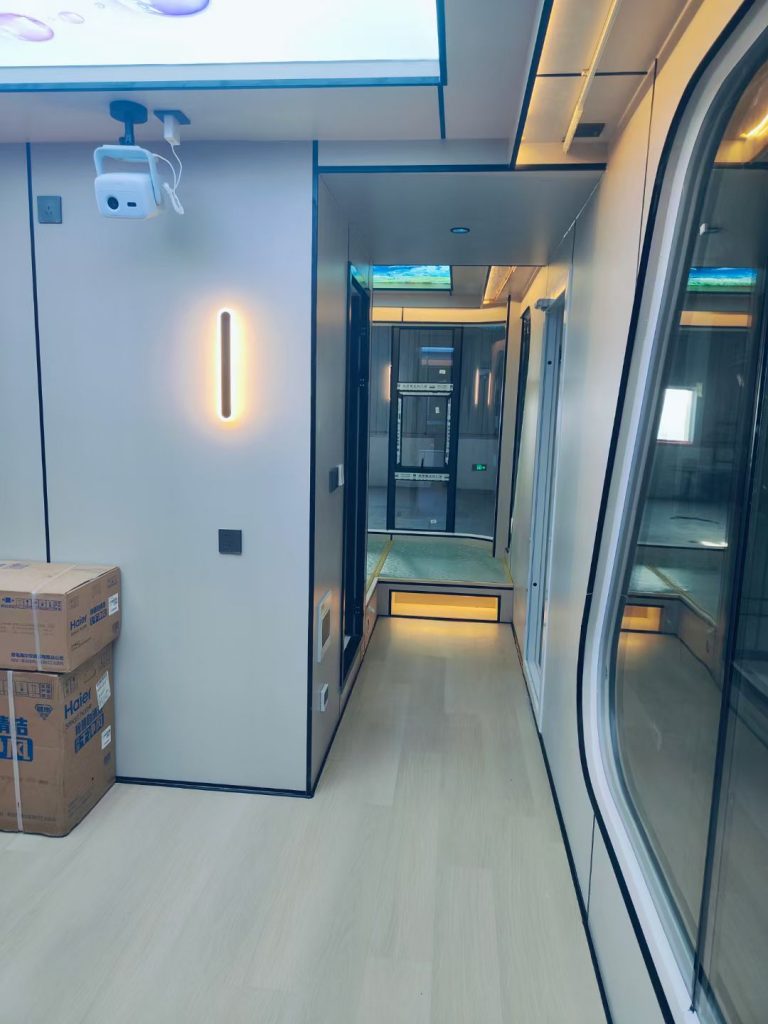
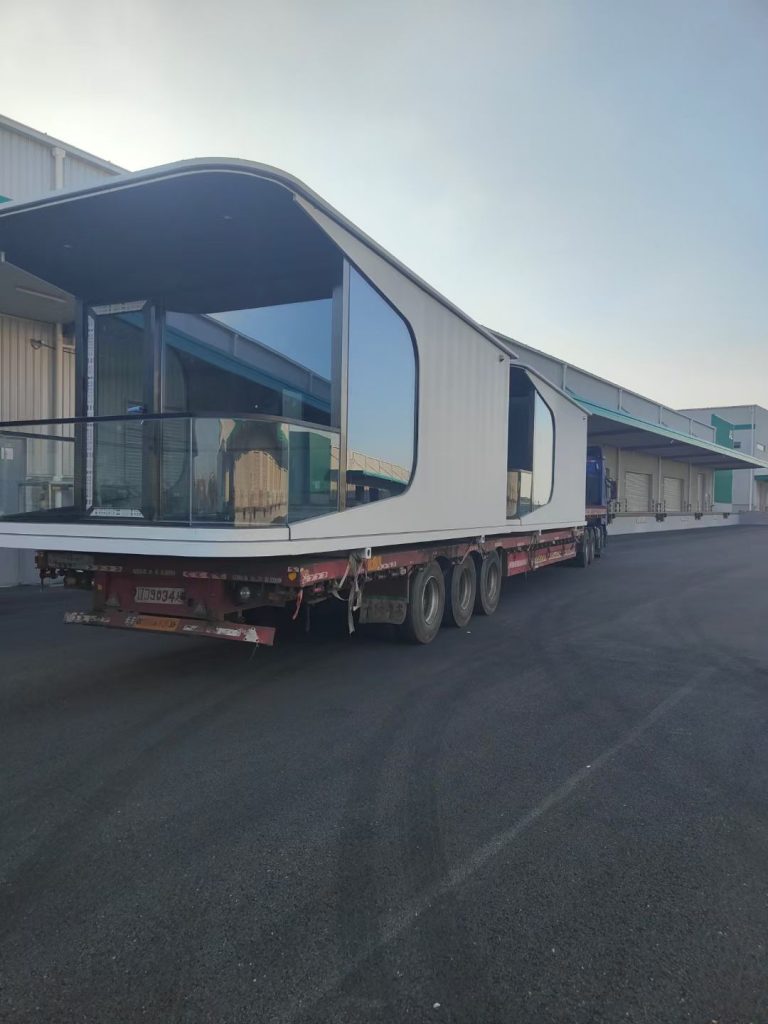
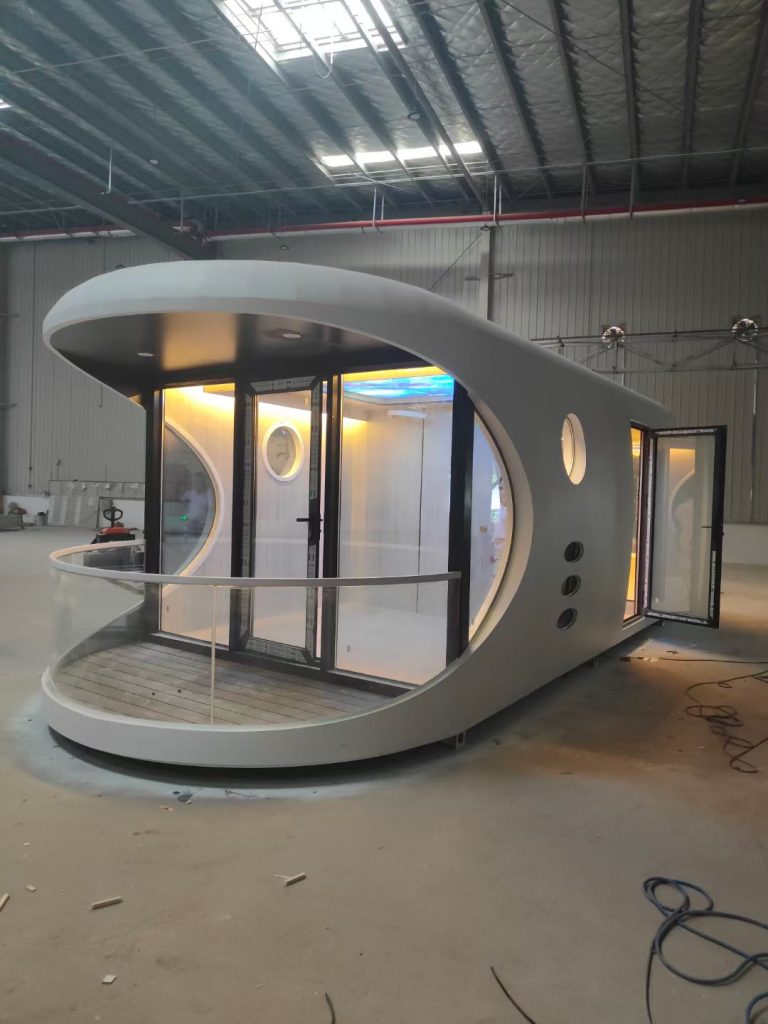
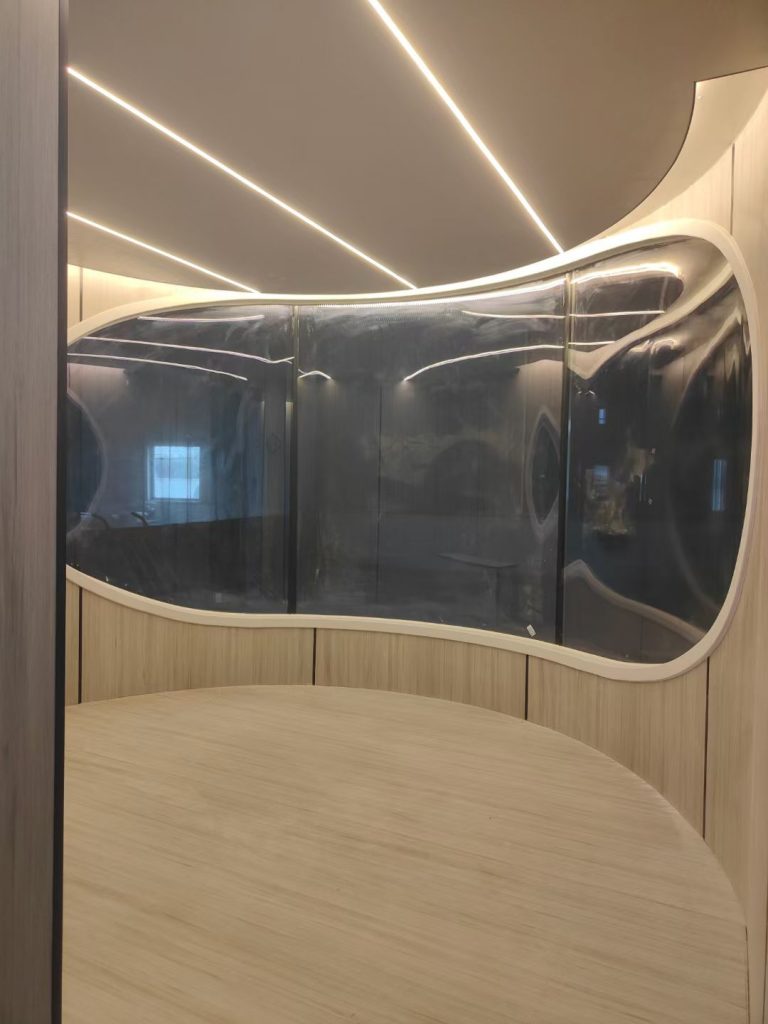
The global demand for agile, scalable, and high-quality infrastructure has propelled factory-built modular capsules into the spotlight of international trade. These compact, self-contained units—engineered in precision-controlled factories—are redefining how businesses and communities access space, from remote research stations to urban pop-up hubs. What sets leading manufacturers apart is their global export expertise: the ability to produce, customize, and deliver these capsules to virtually any corner of the world, navigating logistical complexities, regulatory diversity, and cultural nuances. This article explores the pillars of this expertise, highlighting how factory-built modular capsules are becoming the gold standard for worldwide deployment.
1. Factory-Built Foundations: Precision as a Global Promise
At the heart of global export success lies factory precision. Unlike traditional construction, which is fragmented and site-dependent, modular capsules are manufactured in centralized facilities where automation, standardization, and quality control converge to ensure consistency across borders.
Automation-Driven Uniformity
Leading producers employ robotic assembly lines, CNC cutting machines, and digital twin technology to fabricate components with sub-millimeter accuracy. For example, steel frames are welded by robotic arms that adhere to ISO 3834 standards, eliminating human error and ensuring load-bearing capacity (up to 5 tons per square meter) across all units. This uniformity is critical for export: a client in Norway receives the same structurally sound capsule as one destined for Dubai, regardless of distance.
Rigorous Global Quality Assurance
Every capsule undergoes 25+ inspection stages, including:
-
Stress Testing: Simulating 10x expected wind loads (up to 220 km/h) and seismic activity (8.0 Richter scale).
-
Climate Chamber Trials: Exposing units to -40°C to 50°C extremes to validate insulation and material durability.
-
Certification Alignment: Pre-compliance with international standards (CE, ISO 9001, EN 1090) to streamline import approvals.
This commitment to quality builds trust with global buyers, who rely on consistent performance regardless of destination.
2. Global Delivery Mastery: Logistics Beyond Borders
Shipping a modular capsule from a factory in Asia to a client in South America involves navigating maritime routes, customs protocols, and on-site challenges. Export experts excel here, turning logistical hurdles into competitive advantages.
Optimized Containerization
Capsules are flat-packed into standard 20ft/40ft containers, with 4–6 units per container (depending on size). Lightweight composite materials (e.g., aluminum-steel hybrids) reduce freight weight by 30% compared to traditional building materials, cutting shipping costs by 1,500–2,000 per container. For urgent deliveries, air freight options (via 747 freighters) enable 3–5 day transit times to any continent.
On-Site Assembly Simplified
A 30m² capsule can be assembled by a 4-person team in 48 hours, using pre-installed connectors and alignment guides. No heavy machinery is required for flat terrain; for slopes or rocky ground, adjustable steel legs (0.5–1.5m height adjustment) stabilize units without excavation. In flood-prone areas, hydraulic lift systems raise capsules above rising waters, a feature deployed in Southeast Asian coastal resorts.
Last-Mile Adaptability
Export teams account for local infrastructure limits. In regions with narrow roads (e.g., Himalayan villages), capsules are split into smaller sub-modules for transport, then reassembled on-site. For island destinations, barge-compatible designs allow direct delivery from cargo ships to shore.
3. International Compliance: Speaking the Language of Regulations
Exporting to 50+ countries requires fluency in diverse building codes, safety laws, and environmental policies. Manufacturers with global expertise embed compliance into every stage of production.
Region-Specific Customization
-
Europe: Adherence to EU’s Energy Performance of Buildings Directive (EPBD), with solar-ready roofs and passive cooling.
-
North America: Compliance with International Building Code (IBC) and ADA accessibility standards (ramps, wide doorways).
-
Middle East: Typhoon-resistant reinforcements (UAE) and sandstorm-proof seals (Saudi Arabia).
-
Africa: Enhanced ventilation for tropical climates and malaria-resistant mesh screens.
Documentation and Tariff Navigation
Export experts prepare comprehensive documentation (certificates of origin, material safety data sheets, installation manuals) in multiple languages. They also advise clients on tariff exemptions (e.g., AGOA for African trade) and duty reductions, simplifying customs clearance.
4. Market Adaptability: Tailoring Capsules to Local Needs
Global success hinges on understanding that “one size fits all” rarely works. Export-focused manufacturers offer hyper-customization while retaining core structural integrity.
Cultural and Functional Tweaks
-
Scandinavia: Sauna-ready interiors with cedar wood accents and heated floors.
-
Japan: Compact layouts (15m²) with tatami-mat zones and shoji screen-inspired windows.
-
Australia: Bushfire-resistant exteriors (Class A fire rating) and outdoor deck extensions.
-
Latin America: Vibrant color palettes and open-air layouts to embrace outdoor living.
Industry-Specific Solutions
-
Tourism: Glamping pods with panoramic windows and solar-powered amenities.
-
Healthcare: Mobile clinics with negative-pressure isolation rooms.
-
Education: Modular classrooms with interactive whiteboards and natural lighting.
-
Disaster Relief: Shelters with built-in water purifiers and satellite communication.
5. Sustainability as a Universal Value
Global buyers increasingly prioritize eco-friendliness, and export experts lead with sustainable design.
Circular Materials
-
Steel: 85% recycled content, with frames designed for disassembly and reuse.
-
Insulation: Sheep’s wool and mushroom mycelium composites (biodegradable, non-toxic).
-
Finishes: Low-VOC paints and FSC-certified timber.
Energy Independence
Solar panels (3–5 kWh daily output) and air-source heat pumps enable off-grid operation. A 50-unit resort in Kenya achieved net-zero energy use with this setup, reducing reliance on diesel generators.
6. Case Studies: Global Expertise in Action
-
Arctic Research Station (Norway): 20 capsules deployed in 6 weeks, with reinforced frames (-40°C tolerance) and satellite connectivity for climate studies.
-
Amazon Rainforest Lodge (Brazil): 15 eco-pods with elevated designs (to avoid flooding) and rainwater harvesting, assembled in remote jungle terrain.
-
Urban Pop-Up Mall (Germany): 30 retail capsules delivered in 4 containers, assembled in 72 hours for a temporary holiday market.
Conclusion: The Future of Global Modular Deployment
Factory-built modular capsules, backed by global export expertise, are rewriting the rules of international construction. By merging precision manufacturing with logistical mastery, compliance fluency, and adaptive design, they offer a turnkey solution for clients worldwide—whether building a research outpost in Antarctica or a boutique hotel in Bali.
As urbanization accelerates and climate challenges mount, the demand for agile, sustainable infrastructure will only grow. Manufacturers with proven global expertise will lead this charge, proving that “built in our factory” doesn’t just mean quality—it means access to the world. For businesses and communities seeking to expand globally, modular capsules are not just an option; they are the passport to scalable, resilient growth.
Article link:https://www.vlefooena.com/global-export-expertise-factory-built-modular-capsules-delivered-worldwide/


No reply content