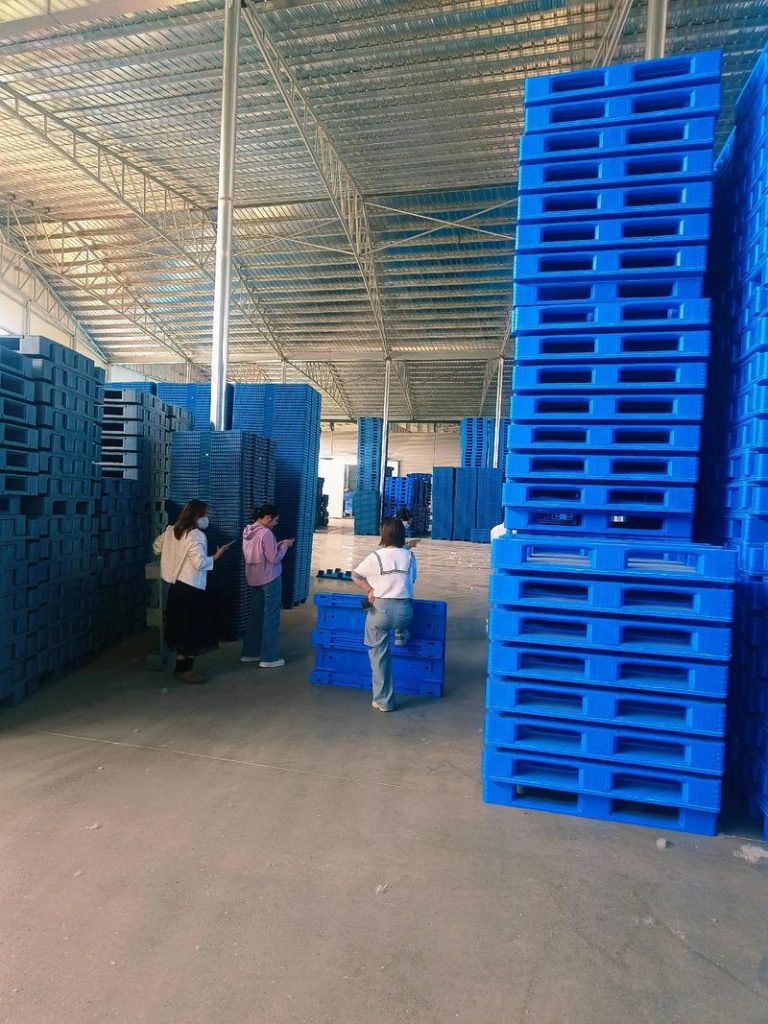
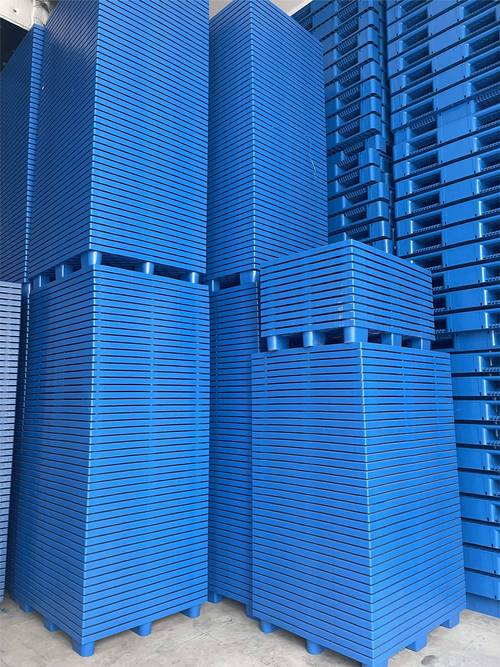
In the high-stakes environment of modern logistics and warehousing, operational efficiency is perpetually balanced between two critical demands: the uncompromising strength required to safely store and move immense loads, and the effortless mobility needed to maintain rapid material flow. A pallet that excels in one area but lacks in the other becomes a bottleneck. The solution lies in integrated design. This article explores the sophisticated engineering behind a specialized class of pallets: the industrial blue plastic pallet featuring reinforced perimeter edges and integrated roller feet. This design is a purposeful fusion of maximum durability and enhanced maneuverability, crafted to withstand rigorous handling while actively improving operational ergonomics and speed in demanding industrial settings.
-
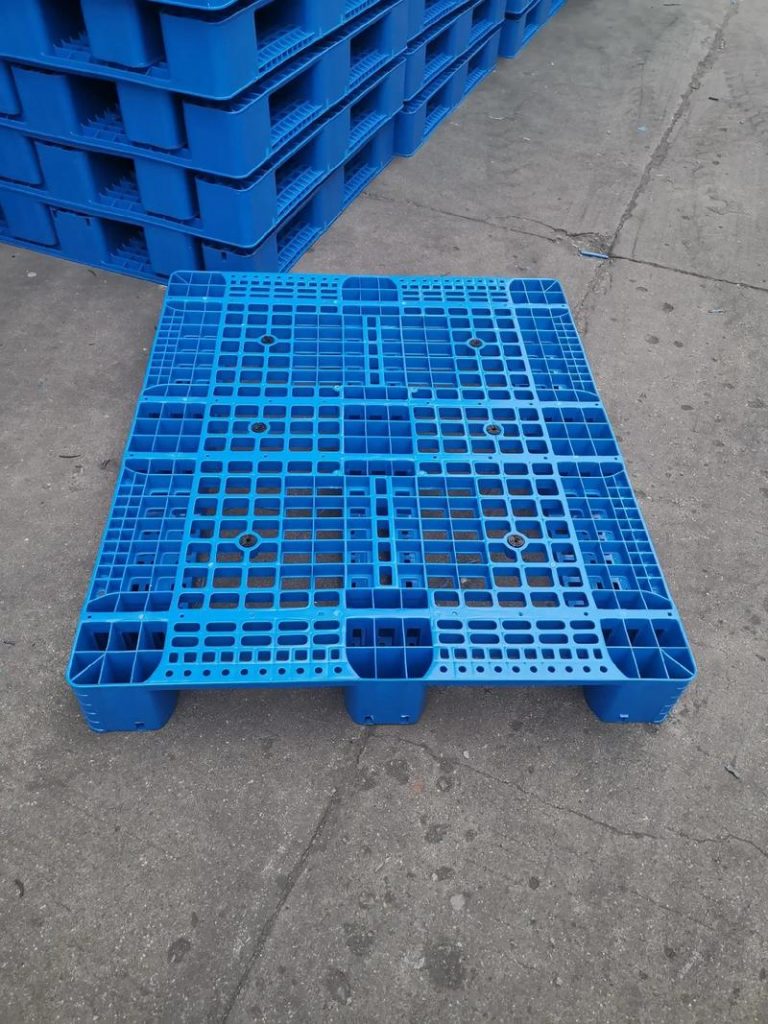
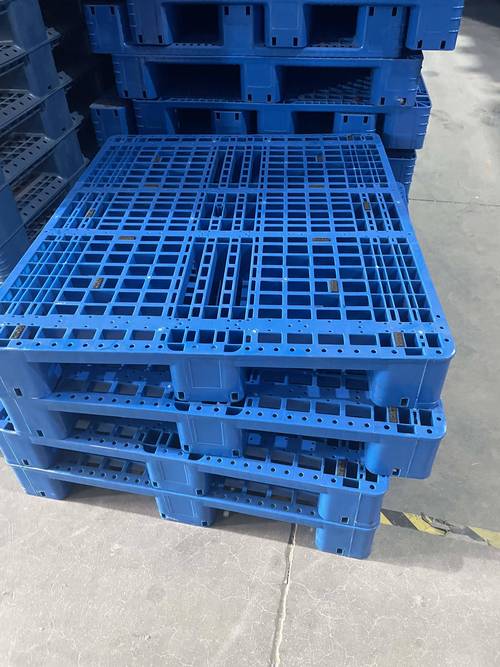
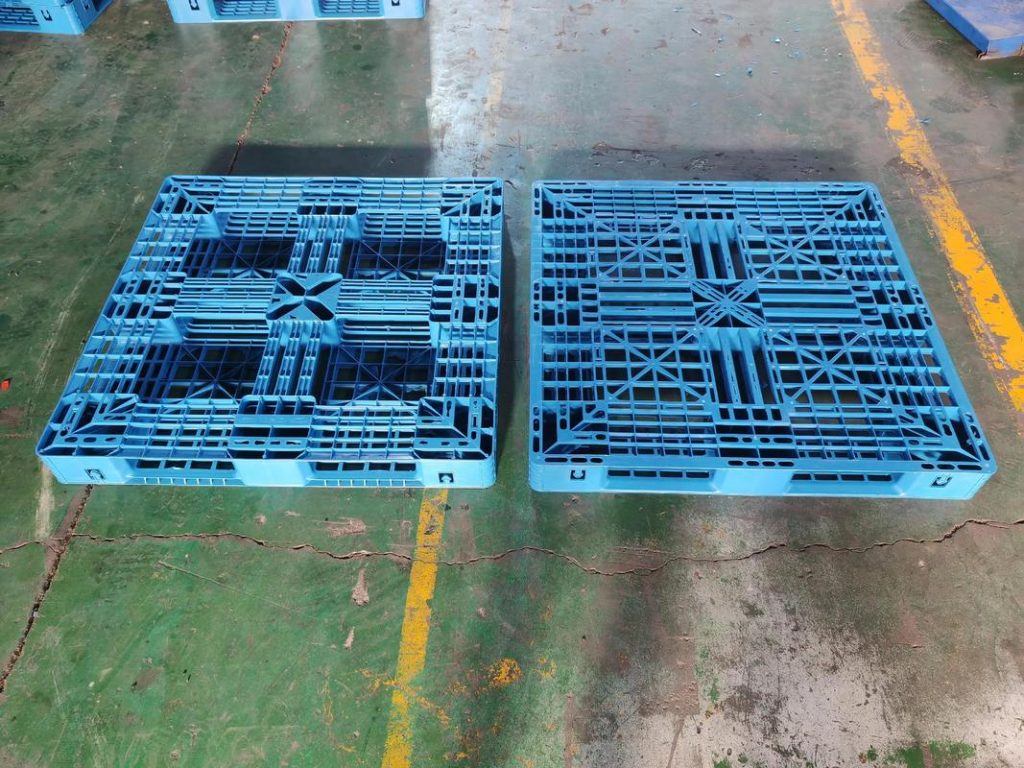
Reinforced Perimeter Edges (The “Bumper” System): The most vulnerable part of any pallet during handling is its perimeter. Impacts from forklift masts, racking uprights, and other pallets are inevitable. This pallet addresses this with intentionally thickened, rib-reinforced edges. This creates a robust “bumper” that absorbs and distributes impact energy, preventing cracks, splits, and deformation. This reinforcement extends the pallet’s service life exponentially compared to standard designs and protects both the pallet’s integrity and the goods it carries from shock damage during transit and handling.
-
Integrated Low-Friction Roller Feet (The “Glide” System): Positioned at key load-bearing points on the bottom deck are molded-in, low-friction glide feet or rollers. These are not add-ons but are monolithic with the pallet structure. Their primary function is to transform static friction into manageable rolling friction. This allows a loaded pallet to be easily and precisely maneuvered, turned, and positioned with minimal force, eliminating the need for a forklift for final placement or micro-adjustments. It reduces physical strain on workers, prevents lower back injuries from dragging, and protects warehouse floors from abrasion.
-
Synergistic Construction: The reinforced edge and roller foot systems are supported by a high-strength grid or solid deck (depending on the need for drainage/ventilation) and a true four-way entry design. The entire structure is typically molded in a single piece from high-performance polymer, ensuring there are no weak points or components to become loose. The standard industrial blue color aids in visibility and inventory management.
-
Dramatically Extended Service Life & Reduced Cost of Ownership: The reinforced edges are the first line of defense against the most common form of pallet damage: impact-related edge failure. By virtually eliminating this failure mode, the pallet’s operational lifespan is significantly extended, reducing replacement frequency and total cost per trip. This durability is essential for closed-loop pool systems and demanding multi-trip applications.
-
Enhanced Worker Safety and Ergonomics: The roller feet system is a powerful ergonomic tool. It allows a single worker to safely and efficiently position a heavily loaded pallet that would otherwise require mechanical equipment or multiple personnel to move. This reduces the risk of musculoskeletal injuries, minimizes pinch-point hazards during manual adjustments, and enhances overall workplace safety.
-
Optimized Workflow and Space Utilization: The ease of manual movement enables faster dock staging, tighter positioning in storage areas, and more efficient truck loading. Pallets can be easily nudged flush against walls or each other, maximizing cubic space utilization in trailers and warehouses. This leads to fewer forklift movements for minor adjustments, reducing traffic, energy use, and the potential for equipment collisions.
-
Superior Performance in Racking Systems: The reinforced perimeter is critical for racking applications, particularly in drive-in or push-back racking where pallets directly bear on the rails. The reinforced edges prevent the pallet from deforming or “dishing” under heavy, concentrated loads, ensuring safe, stable, and reliable storage in high-bay warehouses.
-
High-Density Polyethylene (HDPE) or Polypropylene Copolymer: These materials provide the optimal balance of impact strength, stiffness, and environmental stress crack resistance. They ensure the reinforced edges can absorb shocks without becoming brittle and that the roller feet maintain their shape and low-friction properties over thousands of cycles.
-
Injection Molding Process: The one-piece, monolithic construction is achieved through high-pressure injection molding. This creates a seamless, hygienic product with no voids, seams, or fasteners that could harbor contaminants or become failure points. The process allows for precise control over wall thickness, ensuring the edges and feet are optimally reinforced without adding unnecessary weight elsewhere.
-
Beverage & Food Distribution: Heavy, unstable loads like bottled liquids are common. Reinforced edges prevent damage from frequent impacts during loading/unloading, while roller feet allow for easy movement in coolers and staging areas. The plastic is impervious to moisture and easy to clean.
-
Durable Goods & Appliance Warehousing: Large, heavy items like appliances place significant stress on pallet edges. The reinforced design ensures safe handling, and the roller feet facilitate easy movement on showroom floors or in distribution centers.
-
Automotive Parts Logistics: Heavy metal components and just-in-time delivery requirements demand both durability and handling speed. This pallet survives rough handling in parts yards and allows for quick positioning on assembly lines.
-
Third-Party Logistics (3PL) and Mixed-Use Facilities: Where pallet types and handling methods vary widely, a pallet that is both extremely durable and easy to move manually provides universal utility and reduces product damage claims.
-
Quantify the Load and Abuse: Determine not just the weight, but the type of handling (e.g., frequent forklift impacts, use in push-back racking). This will confirm the need for heavy edge reinforcement.
-
Floor Condition and Roller Type: Assess your warehouse floor. The roller feet are ideal for smooth concrete or epoxy. For very rough surfaces, confirm the specific glide foot design is suitable.
-
Verify Load Capacity Specifications: Pay close attention to both dynamic (for roller-assisted moves) and racking load capacities. Ensure the pallet’s ratings, especially in a racked configuration, far exceed your maximum unit load.
-
Train for the Advantage: Educate staff on the benefits of the roller feet. Encourage them to use the feature for safe manual repositioning to realize the full ergonomic and efficiency benefits.


No reply content