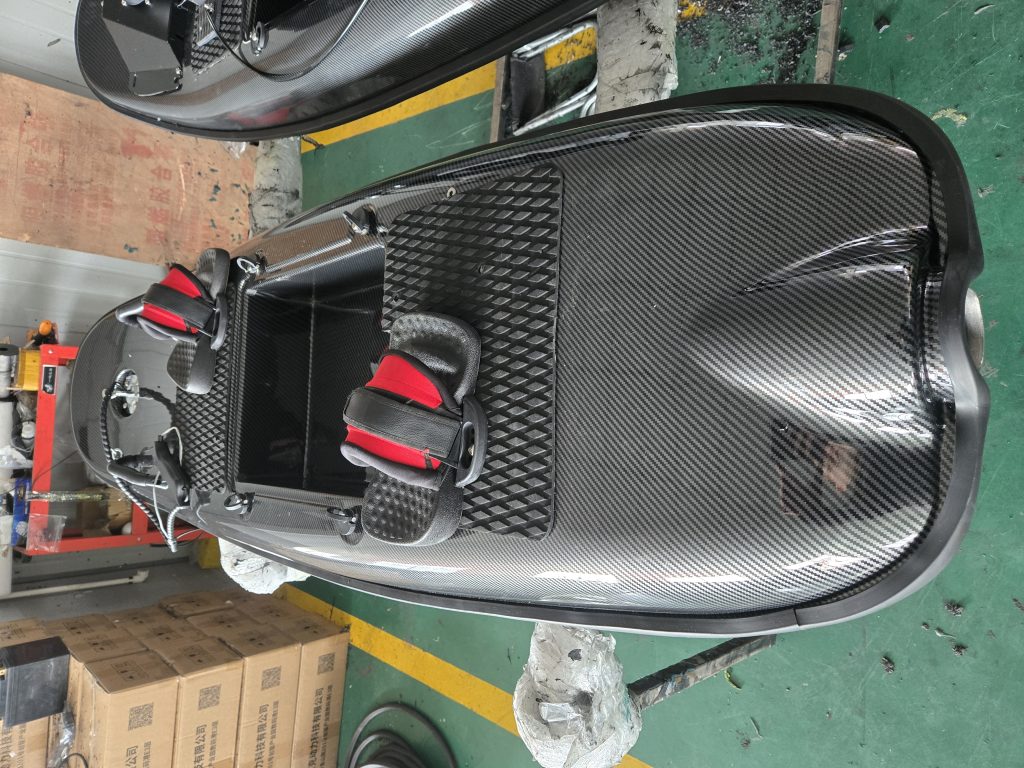

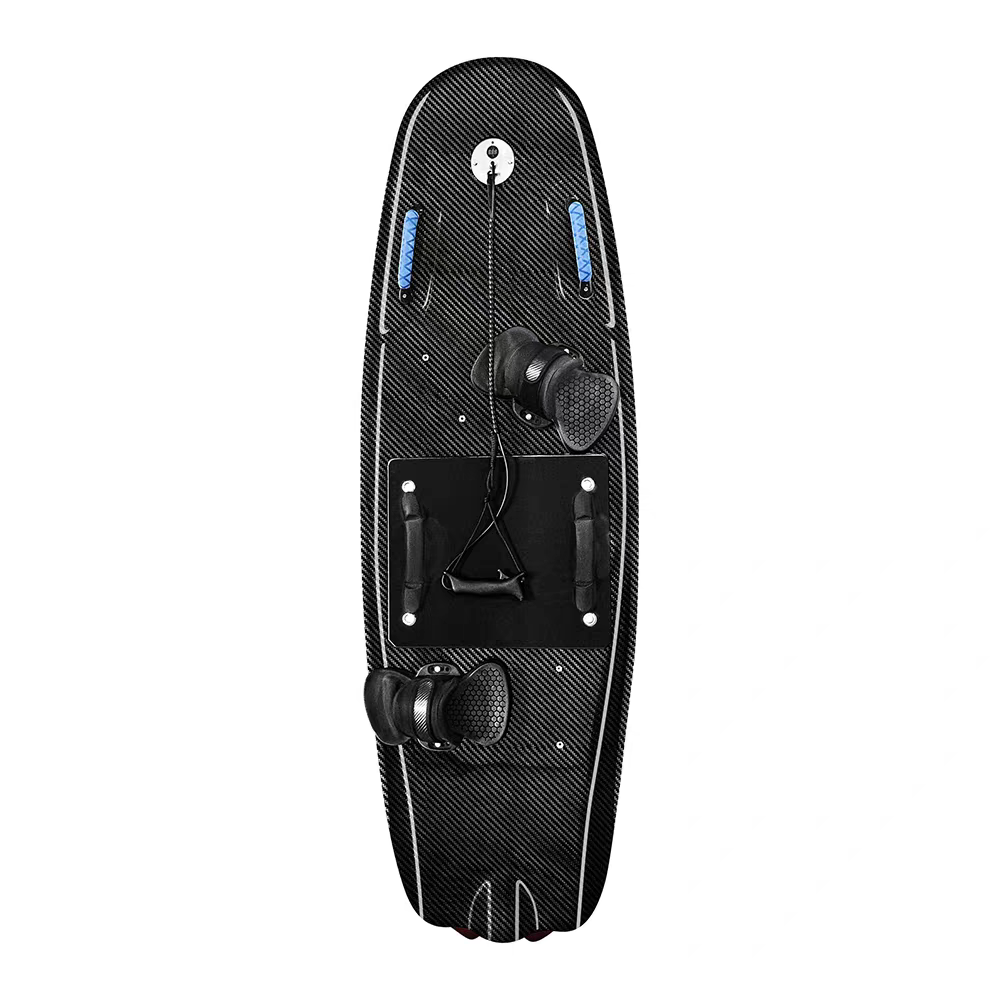
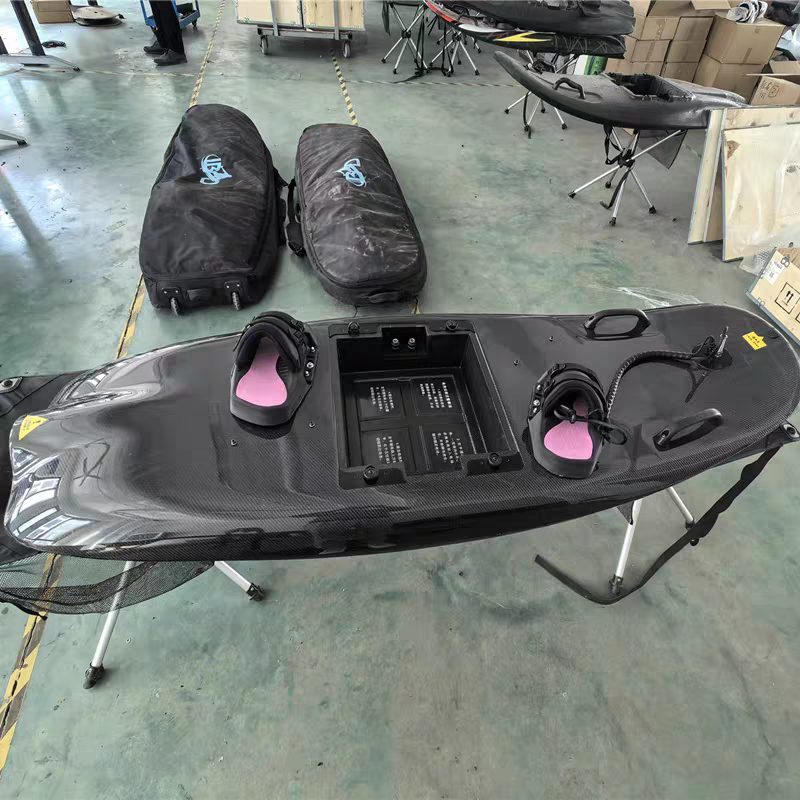
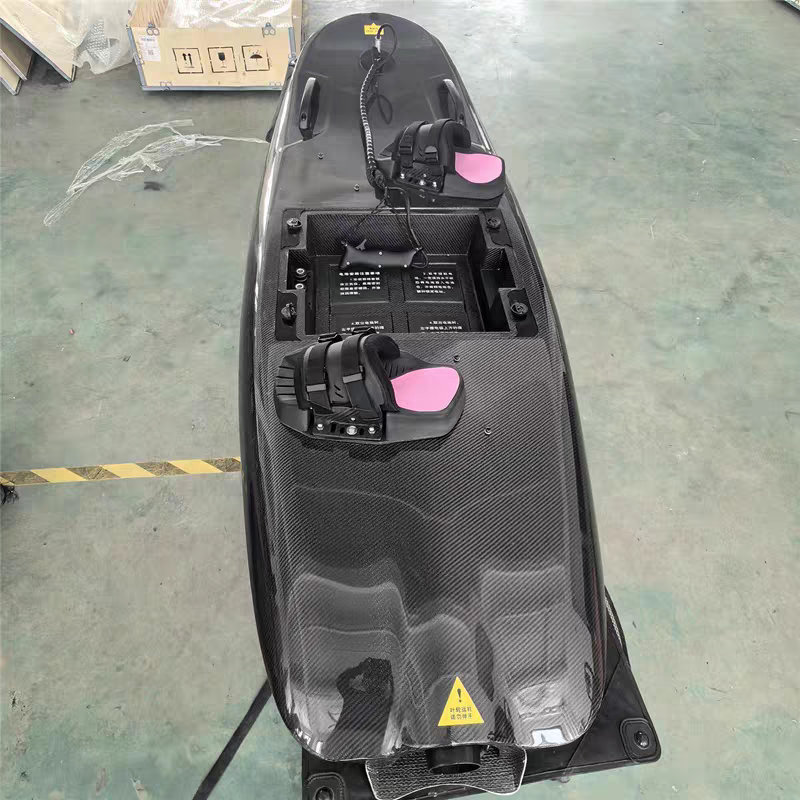
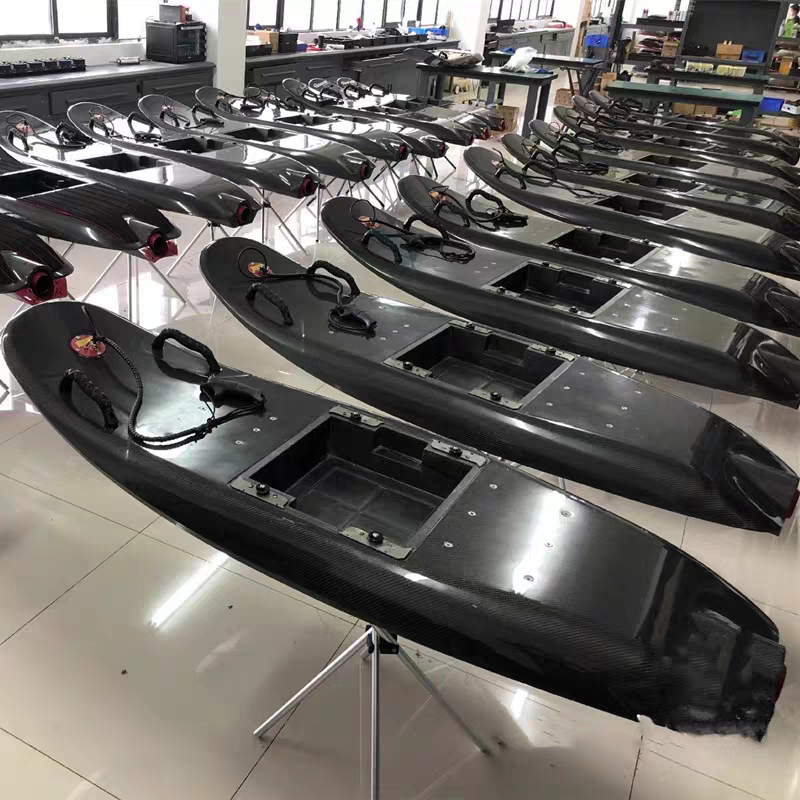
The sun dips below the horizon, painting the sky in hues of orange and pink as a sleek electric surfboard glides silently across the water. But this is no ordinary board—its hull shimmers with a self-healing nano-coating, its motor hums with AI-optimized power, and its deck integrates solar cells that extend its runtime by 20% in sunlight. This vision of the future is being engineered today at China’s innovative electric surfboard production hubs, where next-generation water sports technology is transforming how we interact with the ocean. As global demand for eco-friendly, high-performance aquatic gear surges, these hubs have emerged as the epicenter of innovation, blending cutting-edge R&D with agile manufacturing to redefine the industry. 🌅⚡
The Innovation Imperative: Why China Leads the Next Wave
The electric surfboard market is at a inflection point. Valued at $1.8 billion in 2024, it’s projected to grow at 25% annually, driven by rising interest in sustainable leisure and extreme sports. To stay ahead, manufacturers must innovate relentlessly—and China’s production hubs are uniquely positioned to lead. Here’s why:
-
Policy Support: Government incentives for green tech R&D (e.g., tax breaks for renewable energy integration) and export-oriented manufacturing.
-
Supply Chain Density: Proximity to component innovators (battery labs, composite material suppliers, AI chipmakers) reduces prototyping time by 50%.
-
Talent Pipeline: Partnerships with universities like Tsinghua and Zhejiang University foster a steady stream of engineers skilled in robotics, materials science, and IoT.
These hubs don’t just assemble boards—they invent the future of water sports.
Pillar 1: Advanced Materials—Lightweight, Durable, Self-Healing
At the heart of next-gen boards are materials that push the boundaries of physics. Chinese hubs are pioneering breakthroughs in:
🧪 Nano-Engineered Composites
Traditional fiberglass is heavy and prone to cracks. Hubs replace it with graphene-infused carbon fiber, which is 40% lighter, 5x stronger, and resistant to saltwater corrosion. A recent innovation: self-healing polymers embedded in the hull. When scratched, microcapsules release a healing agent that fills gaps within 24 hours—extending board life by 30%.
Example: A hub tested a self-healing deck that repaired a 2cm gash (from a rocky collision) in 18 hours, restoring 95% of its structural integrity.
🌱 Bio-Based Alternatives
To reduce reliance on petrochemicals, hubs are developing flax fiber composites (made from renewable flax plants) and mycelium-based foams (grown from mushroom roots). These materials are fully biodegradable and offer comparable strength to synthetic alternatives.
Icon Highlight: A 🌱 symbol marks boards using bio-based materials, appealing to eco-conscious buyers.
Pillar 2: Smart Technology—AI, IoT, and Neural Interfaces
Next-gen boards are essentially “smart devices on water.” Chinese hubs integrate advanced electronics to enhance performance, safety, and user experience:
🤖 AI-Powered Control Systems
-
Adaptive Balance Assist: Gyroscopes and accelerometers work with AI algorithms to detect rider instability (e.g., leaning too far forward) and automatically adjust motor thrust to stabilize the board. Beta tests show this reduces beginner accidents by 80%.
-
Predictive Maintenance: IoT sensors monitor motor temperature, battery health, and propeller wear in real time. The system alerts users to potential failures (e.g., “Replace bearing in 10 hours”) via a mobile app, cutting downtime by 60%.
-
Performance Analytics: Boards track speed, distance, and energy usage, syncing data to apps that suggest optimizations (e.g., “Reduce throttle at turns to save 15% battery”).
🧠 Neuro-Adaptive Interfaces (In Development)
Leading hubs are experimenting with brain-computer interfaces (BCIs) that let riders control speed and direction via thought patterns. Early prototypes use EEG headsets to detect focus levels—higher concentration increases speed, while relaxation slows the board. Though still in R&D, this could revolutionize accessibility for riders with mobility limitations.
Icon Highlight: A 🤖 symbol denotes AI-enabled boards, with a ⚡ sub-icon for neural interface prototypes.
Pillar 3: Sustainable Innovation—Zero-Emission Ecosystems
Innovation isn’t just about performance—it’s about planetary health. Chinese hubs are building circular economy models for electric surfboards:
☀️ Solar-Integrated Designs
Thin-film solar cells are embedded into decks, providing 5–10 watts of power—enough to extend runtime by 15–20 minutes per hour of sun exposure. Some hubs are testing kinetic energy recovery systems that generate power from wave motion, further reducing reliance on batteries.
♻️ Closed-Loop Recycling
Hubs partner with recycling firms to reclaim end-of-life boards. Metals (motors, fasteners) are smelted, batteries are repurposed for energy storage, and composites are shredded for use in construction materials. One hub aims to recycle 90% of board components by 2026.
🌍 Carbon-Neutral Manufacturing
Factories run on 100% renewable energy (solar, wind) and use water-based adhesives to eliminate volatile organic compounds (VOCs). Carbon offsets from reforestation projects neutralize remaining emissions.
Case Study: A hub’s “SolarSurf” model, with integrated panels and a recycled composite hull, won the 2024 Global Green Tech Award for its 80% lower carbon footprint vs. traditional boards.
Pillar 4: Manufacturing Innovation—3D Printing, Modular Design, Digital Twins
To bring these technologies to market quickly, hubs are revolutionizing production itself:
🏭 3D Printing for Rapid Prototyping
Hubs use industrial 3D printers (e.g., fused deposition modeling) to produce hull prototypes in 48 hours—down from 2 weeks with traditional molding. This accelerates design iterations, letting engineers test 10+ variations in a month.
🔩 Modular Architecture
Boards are designed as swappable modules: decks, batteries, motors, and fins can be replaced or upgraded independently. This reduces waste (users upgrade only what’s needed) and simplifies repairs. A hub’s modular board has 70% fewer parts than a monolithic design.
🌐 Digital Twin Technology
Factories create digital twins—virtual replicas of production lines—using IoT sensors and AI. These simulate bottlenecks, test new workflows, and optimize energy use. One hub reduced assembly time by 25% after refining its digital twin.
The Innovation Ecosystem: Collaboration Drives Progress
China’s hubs thrive on collaboration. They partner with:
-
Research Institutes: Joint labs with the Chinese Academy of Sciences focus on battery tech and AI algorithms.
-
Startups: Incubators nurture 50+ water sports tech startups annually, funding projects like hydrofoil-integrated boards.
-
International Experts: Visiting scholars from MIT and Stanford share insights on sustainable design.
Icon Highlight: A 🤝 symbol represents these partnerships, with a 🌐 sub-icon for global collaboration.
Case Study: A Hub’s Breakthrough in Racing Tech
A leading hub developed a hydrofoil-compatible electric surfboard for competitive racing. Key innovations:
-
Retractable Foil System: A motorized mechanism raises/lowers the hydrofoil (a wing-like structure that lifts the board above water), reducing drag by 40%.
-
Twin-Motor Setup: Two 25kW brushless motors deliver 50kW total power, hitting 70 km/h (43 mph)—the fastest in the industry.
-
Aero-Dynamic Deck: A teardrop shape and flush-mounted controls minimize wind resistance.
The board won 3 international racing titles in 2024, proving the hub’s R&D prowess.
Challenges and Solutions
Innovation isn’t without hurdles:
-
Regulatory Complexity: Hubs work with governments to streamline approvals for new tech (e.g., BCIs, high-power motors).
-
Cost Barriers: Subsidies and bulk purchasing of components keep prices competitive.
-
Skill Gaps: Training programs upskill workers in AI, 3D printing, and IoT maintenance.
The Future: What’s Next for Innovation Hubs?
Chinese hubs are already planning the next frontier:
-
🌊 Hydrofoil Integration: Boards that “fly” above water for smoother, faster rides.
-
🤖 Swarm Robotics: Fleets of autonomous boards for rescue missions or water quality monitoring.
-
🧬 DNA-Inspired Materials: Biomimetic surfaces modeled after shark skin to reduce drag.
Conclusion: Innovation as a Competitive Edge
China’s electric surfboard production hubs are more than factories—they’re innovation engines driving the next generation of water sports. By merging advanced materials, smart technology, sustainability, and agile manufacturing, they’re creating boards that are faster, safer, and kinder to the planet. For global buyers, this means access to cutting-edge products that set trends rather than follow them.
As the sun sets on another day of testing, engineers at a hub review data from a solar-powered prototype—its runtime extended by 30 minutes thanks to a new graphene battery. This is the spirit of innovation: relentless, collaborative, and always aimed at the horizon. For those ready to ride the wave of the future, China’s hubs are the place to start. 🏄♂️💡
Innovate with us—where tomorrow’s water sports begin.
Article link:https://www.vlefooena.com/innovative-china-electric-surfboard-production-hub-next-gen-water-sports-tech/


No reply content