The global construction industry is at a crossroads, grappling with rising demand for affordable, sustainable, and rapidly deployable infrastructure amid tightening labor shortages and environmental regulations. Enter innovative prefab capsules—compact, modular units manufactured at industrial scale to meet the needs of export markets. These structures blend cutting-edge design with mass-production efficiency, offering a turnkey solution for diverse applications, from remote housing to commercial hubs. By prioritizing standardization, adaptability, and global compliance, prefab capsules are reshaping how nations and businesses approach spatial expansion. This article explores the technological and logistical innovations driving their success in export markets, highlighting their role as a cornerstone of modern, scalable construction.
1. Industrial-Scale Production: Redefining Efficiency
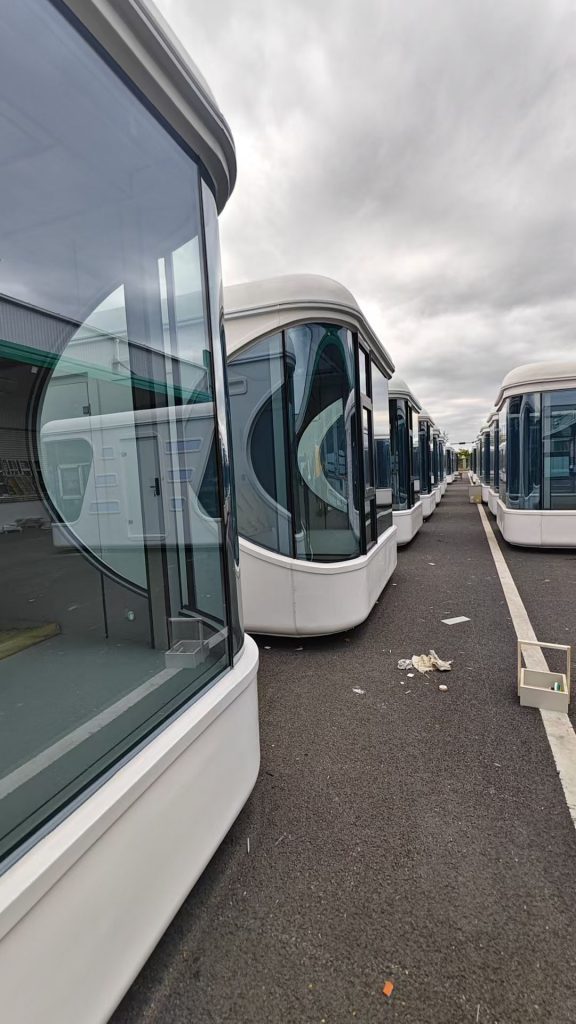
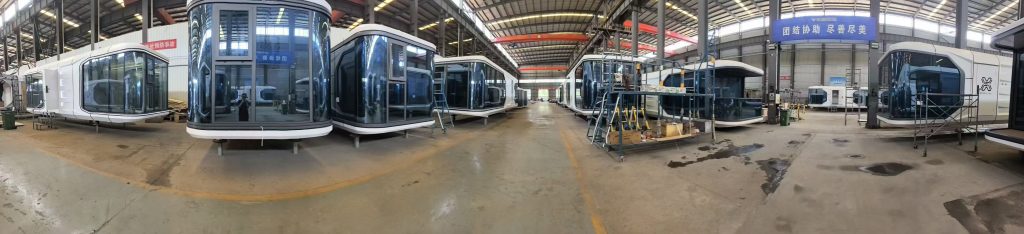
Traditional construction relies on decentralized, labor-intensive processes vulnerable to delays, cost overruns, and quality inconsistencies. Prefab capsules disrupt this model through industrial-scale production, where units are manufactured in centralized, automated facilities designed for high-volume output. This shift transforms construction from a site-based craft into a factory-driven science, unlocking unprecedented efficiency.
Automation and Standardization
At the core of industrial production is automation. Robotic arms weld steel frames, CNC machines cut composite panels to millimeter precision, and conveyor systems assemble components in a continuous workflow. This eliminates human error and ensures uniformity across thousands of units. For example, a single production line can churn out 50–100 capsules monthly, each adhering to identical structural and aesthetic standards.
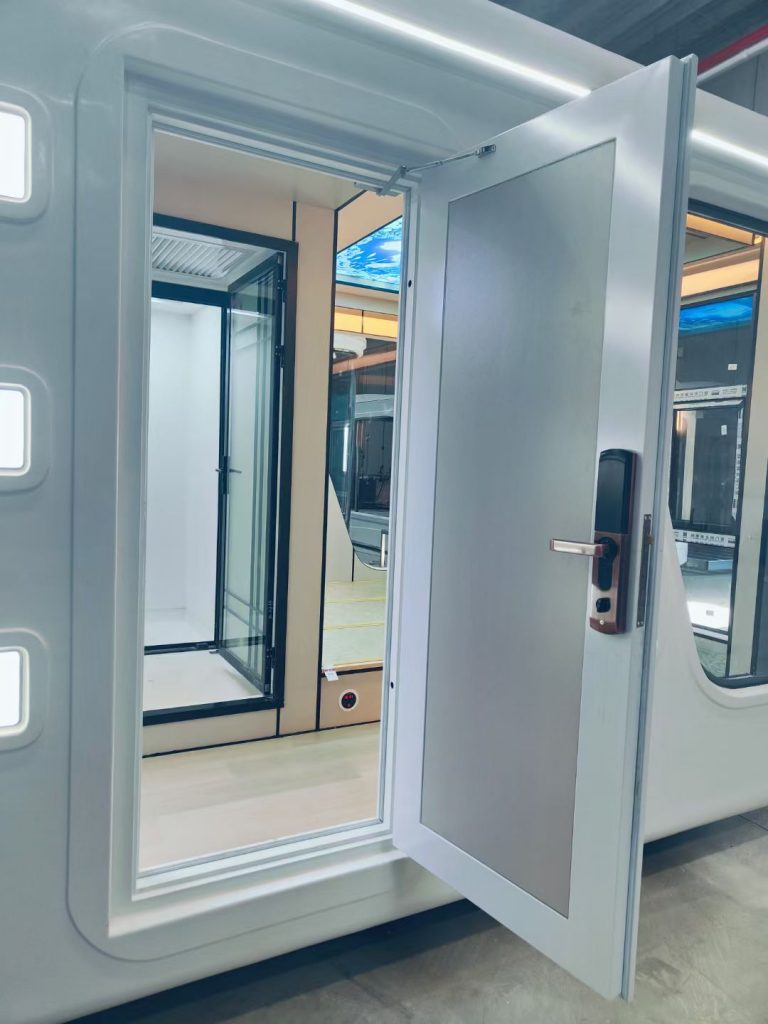
Standardization extends beyond physical dimensions. Electrical wiring, plumbing, and insulation systems are pre-engineered into modular kits, reducing on-site installation time by 80% compared to traditional builds. A 30m² capsule, for instance, arrives at the destination with all internal systems pre-tested, requiring only connection to local utilities.
Cost and Time Savings
Industrial production slashes costs through economies of scale. Bulk purchasing of raw materials (steel, insulation, composites) lowers per-unit expenses, while reduced labor needs cut operational overhead. A 2023 industry analysis found that prefab capsules cost 30–40% less than equivalent site-built structures, with project timelines shortened by 50–60%. For export clients, this means faster ROI and greater budget predictability—critical factors in volatile markets.
2. Innovative Design: Form Follows Function, Globally
Prefab capsules are not one-size-fits-all; their innovation lies in adaptive design that balances standardization with customization. Manufacturers achieve this through modular architecture, where core components (frames, panels, systems) are universal, while exteriors, interiors, and functions are tailored to regional needs.
Modular Versatility
Capsules are built around a grid system, allowing easy expansion or reconfiguration. A base 15m² unit can be combined with add-on modules (kitchens, bathrooms, workspaces) to create 30m², 45m², or larger structures. This flexibility suits diverse applications:
-
Residential: Solo traveler pods, family units, or senior living suites.
-
Commercial: Pop-up retail stores, mobile offices, or co-working hubs.
-
Specialty: Medical clinics, educational pods, or disaster-relief shelters.
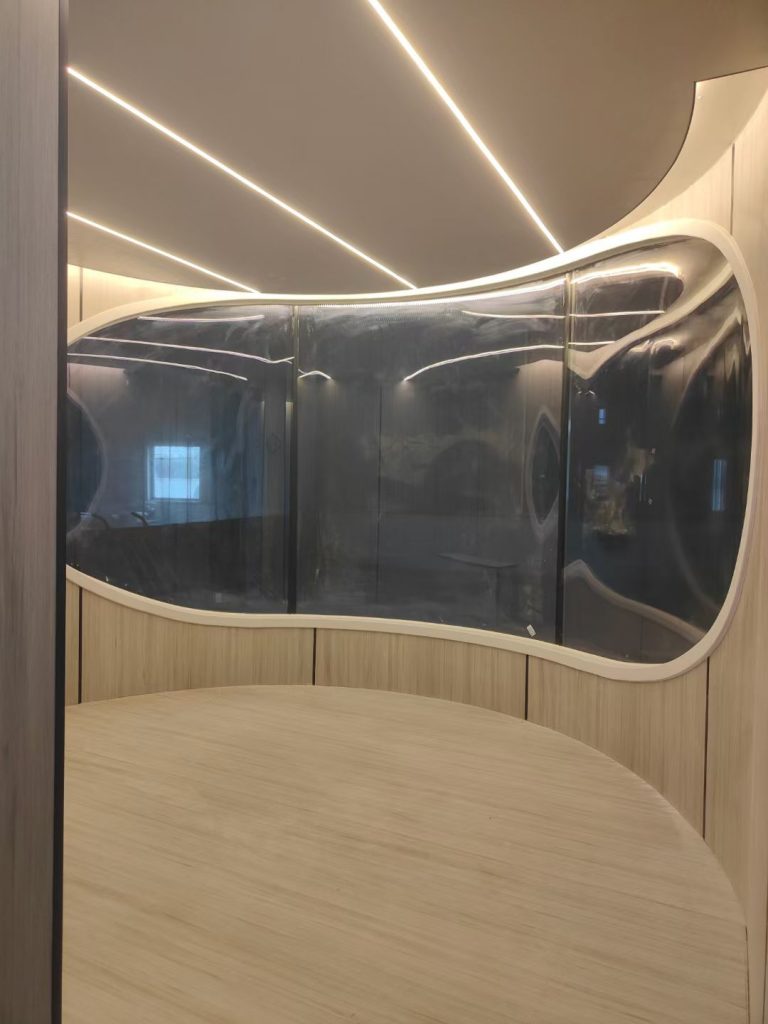
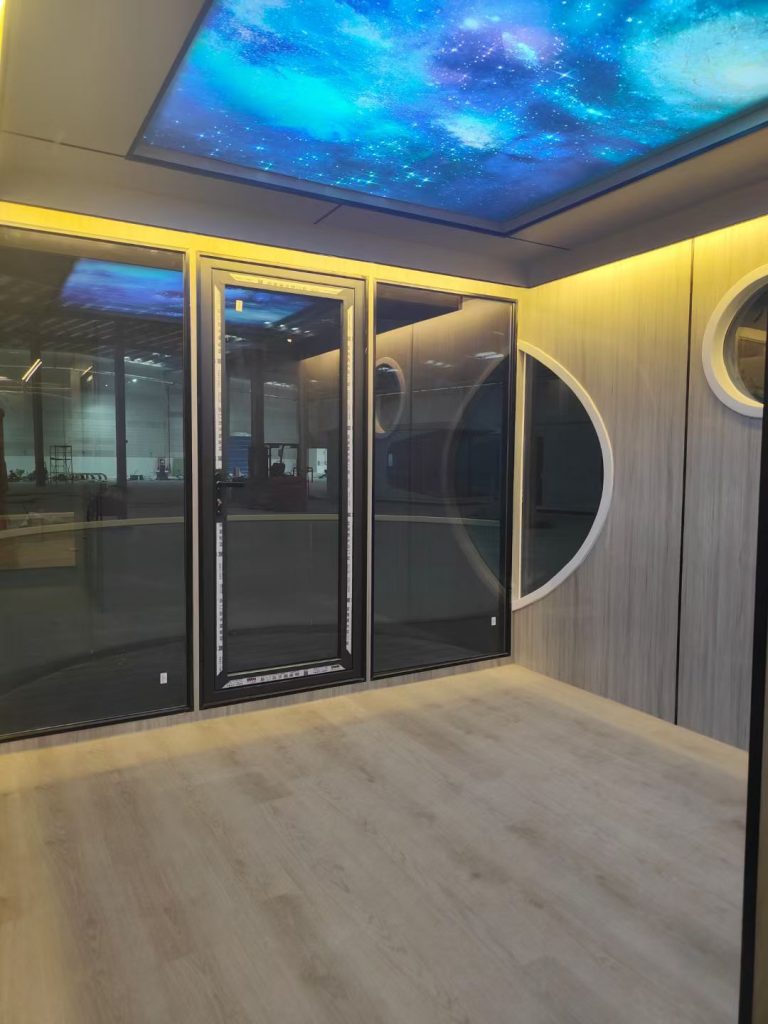
Interiors feature reconfigurable walls and multi-purpose furniture (e.g., fold-out beds, retractable desks), maximizing space utility in compact footprints.
Technology Integration
Innovation extends to smart systems embedded in every capsule. IoT sensors monitor energy use, occupancy, and structural health, sending real-time data to user dashboards. Climate control adjusts automatically based on external weather, reducing energy consumption by 25–30%. Optional upgrades include solar panels (generating 2–4 kWh daily), rainwater harvesting systems, and satellite internet connectivity—essential for remote export destinations.
3. Export Market Readiness: Compliance and Logistics
Succeeding in export markets requires more than a great product; it demands global adaptability. Prefab capsules are engineered to navigate international regulations, shipping constraints, and cultural preferences.
Regulatory Compliance
Manufacturers design capsules to meet or exceed key international standards:
-
Safety: Fire resistance (EN 13501-1), seismic stability (up to 8.0 Richter scale), and wind load tolerance (200 km/h).
-
Accessibility: ADA-compliant ramps, wide doorways, and adjustable fixtures for diverse user groups.
-
Environmental: Low-VOC materials, recyclable components (90%+), and energy efficiency certifications (LEED, BREEAM).
Units can be customized for regional codes—e.g., enhanced insulation for Nordic winters or typhoon-resistant reinforcements for Southeast Asia.
Streamlined Logistics
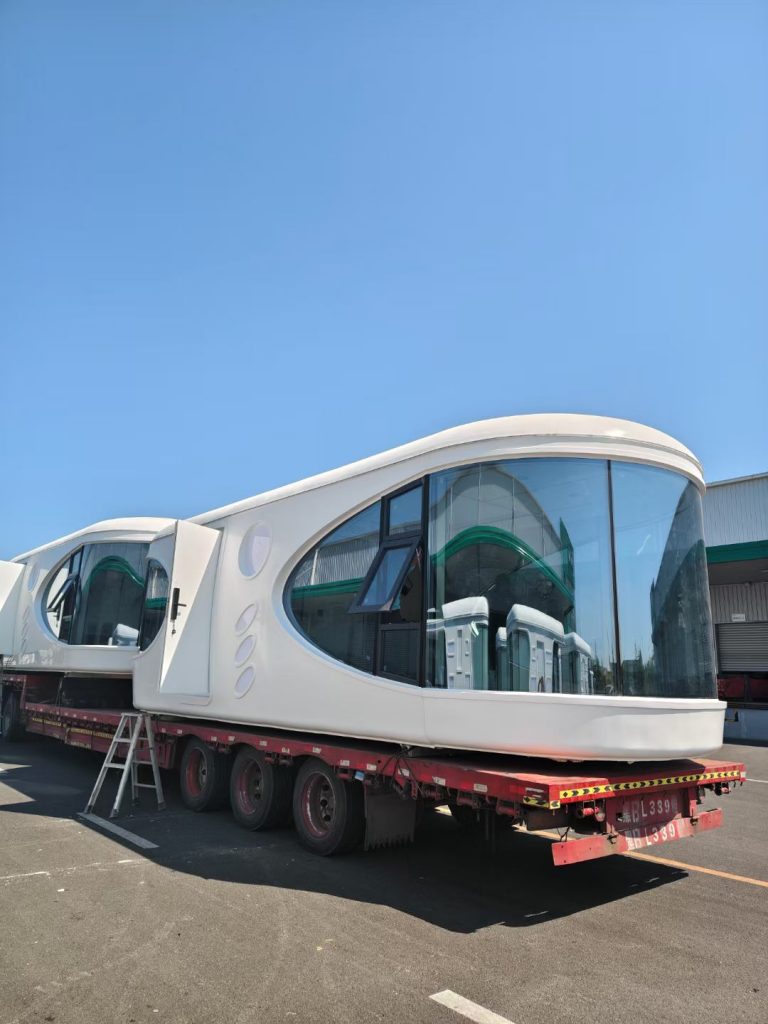
Industrial production simplifies shipping. Capsules are flat-packed into standard 20ft or 40ft containers, with 4–6 units per container. Lightweight composite materials reduce freight costs, while modular design allows disassembly for tight spaces (e.g., mountainous terrain or island destinations). On-site assembly requires minimal heavy machinery: a team of 3–4 workers can erect a basic unit in 1–2 days.
4. Sustainability: Built for a Circular Economy
In an era of climate urgency, prefab capsules lead with sustainable design. Industrial production minimizes waste, while material choices and energy systems prioritize planetary health.
Efficient Resource Use
Factory settings enable precise material calculation, cutting waste by 60–70% compared to traditional construction. Offcuts are recycled into new components, and digital design software optimizes panel shapes to fit raw material sheets without excess.
Green Materials and Energy
-
Structures: Galvanized steel (85% recycled content) and FSC-certified timber reduce deforestation impacts.
-
Insulation: Sheep’s wool and aerogel composites provide high thermal performance with low embodied carbon.
-
Energy: Solar-integrated roofs and air-source heat pumps lower reliance on fossil fuels. A 50-unit capsule village can achieve net-zero energy use with proper solar sizing.
End-of-Life Circularity
Capsules are designed for disassembly. After 30–50 years of use, components (steel, glass, wiring) are 95% recyclable. Old units can be repurposed as storage sheds, garden offices, or even art installations—extending their lifecycle beyond initial use.
5. Real-World Applications: Solving Global Challenges
The versatility of prefab capsules shines in diverse export scenarios, addressing urgent needs from housing shortages to disaster recovery.
Affordable Housing
In regions with rapid urbanization (e.g., parts of Africa and Latin America), capsules provide low-cost, dignified housing. A 2022 project in Kenya deployed 200 units as student dormitories, assembled in 3 weeks and rented at 50% below local apartment rates.
Disaster Relief
After earthquakes or floods, capsules offer immediate, durable shelter. Their weatherproofing and quick assembly make them ideal for emergency response. A 2023 deployment in Turkey provided 150 units to earthquake survivors, complete with basic sanitation and heating.
Tourism and Remote Work
Tourist destinations use capsules as glamping pods or eco-lodges, blending into natural landscapes with customizable exteriors (wood, stone, or composite panels). Remote workers in Scandinavia and Canada rely on them as off-grid offices, powered by solar and connected via satellite internet.
Conclusion: The Future of Export-Driven Construction
Innovative prefab capsules, produced at industrial scale, represent a paradigm shift in global construction. By merging automation, modular design, and sustainability, they offer a solution that is fast, affordable, and adaptable to nearly any environment. For export markets, they solve critical challenges—from regulatory hurdles to logistical complexity—while delivering high-quality spaces that enhance lives and drive economic growth.
As the world seeks resilient infrastructure, prefab capsules are poised to dominate. Their ability to scale production, adapt to local needs, and minimize environmental harm makes them more than a product; they are a blueprint for a smarter, more connected future. For nations and businesses looking to expand globally, these factory-built marvels are not just an option—they are the next chapter in construction history.
Article link:https://www.vlefooena.com/innovative-prefab-capsules-industrial-scale-production-for-export-markets/


No reply content