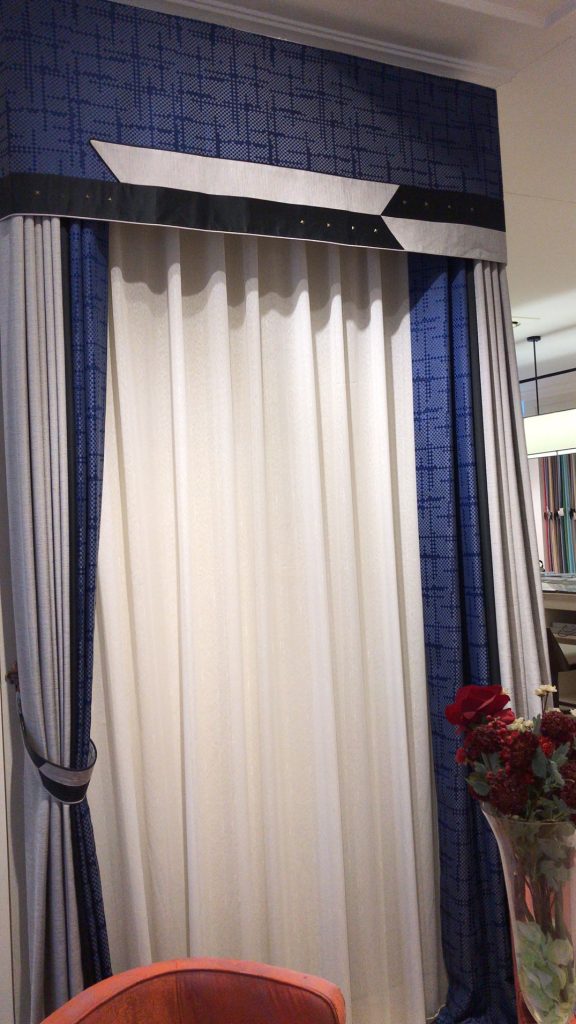
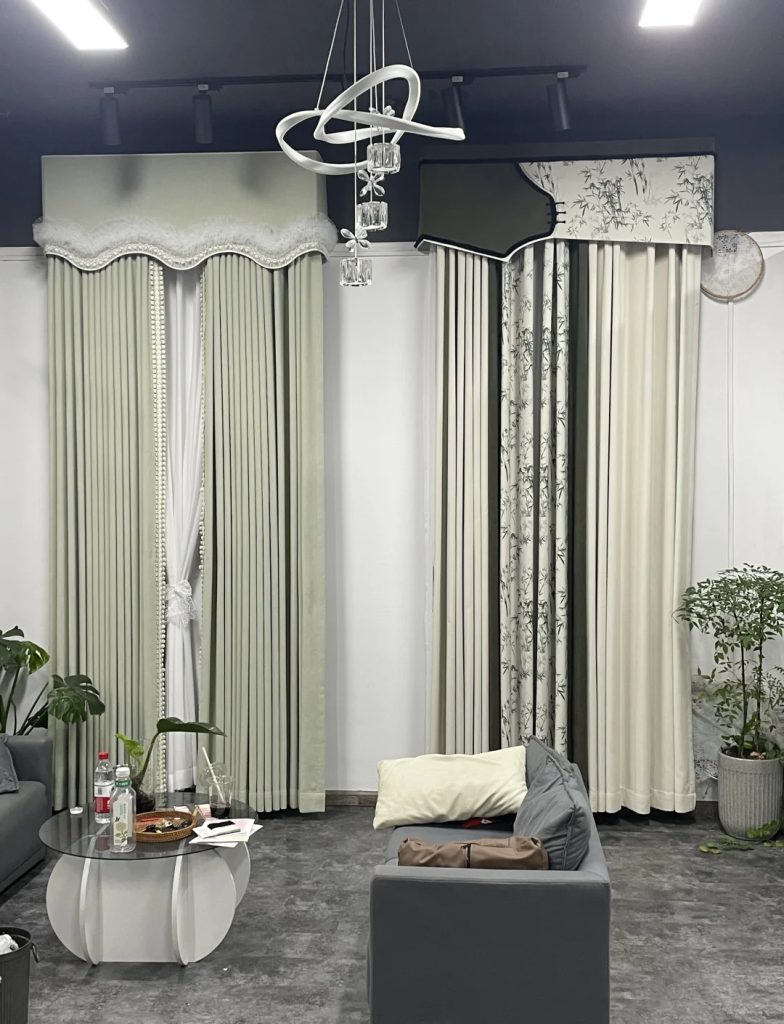
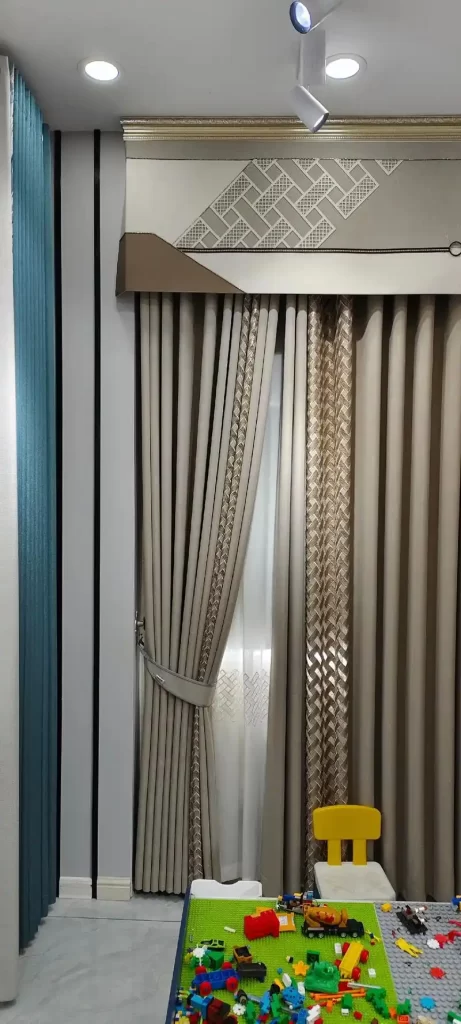
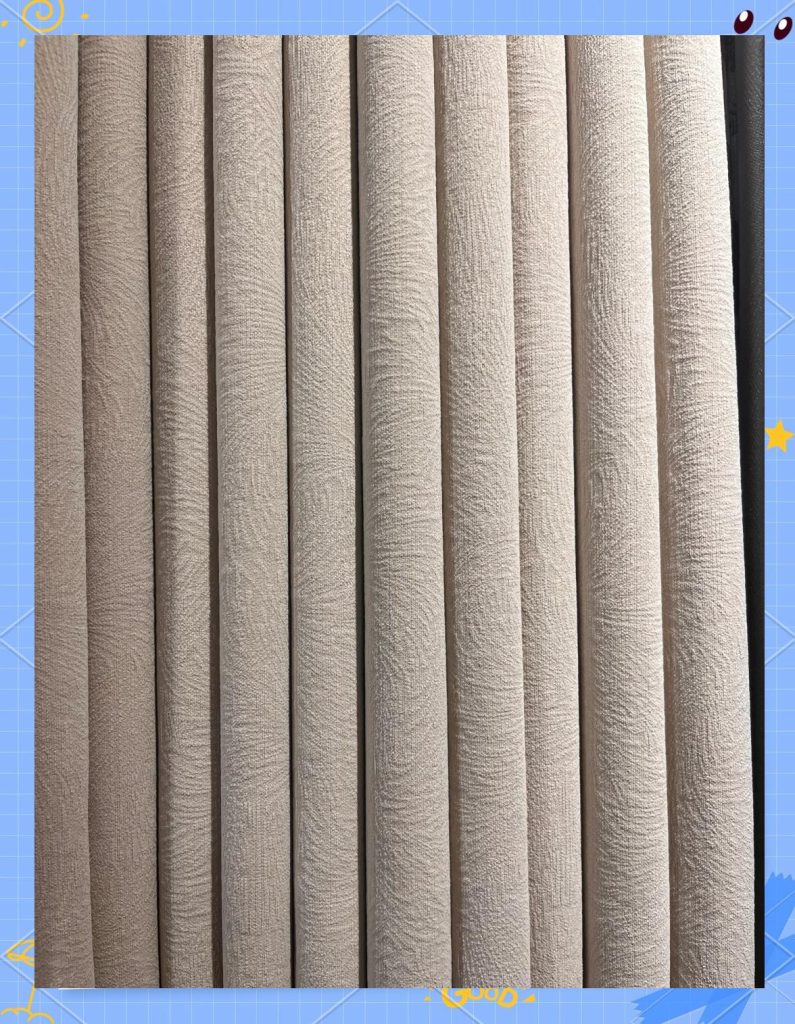
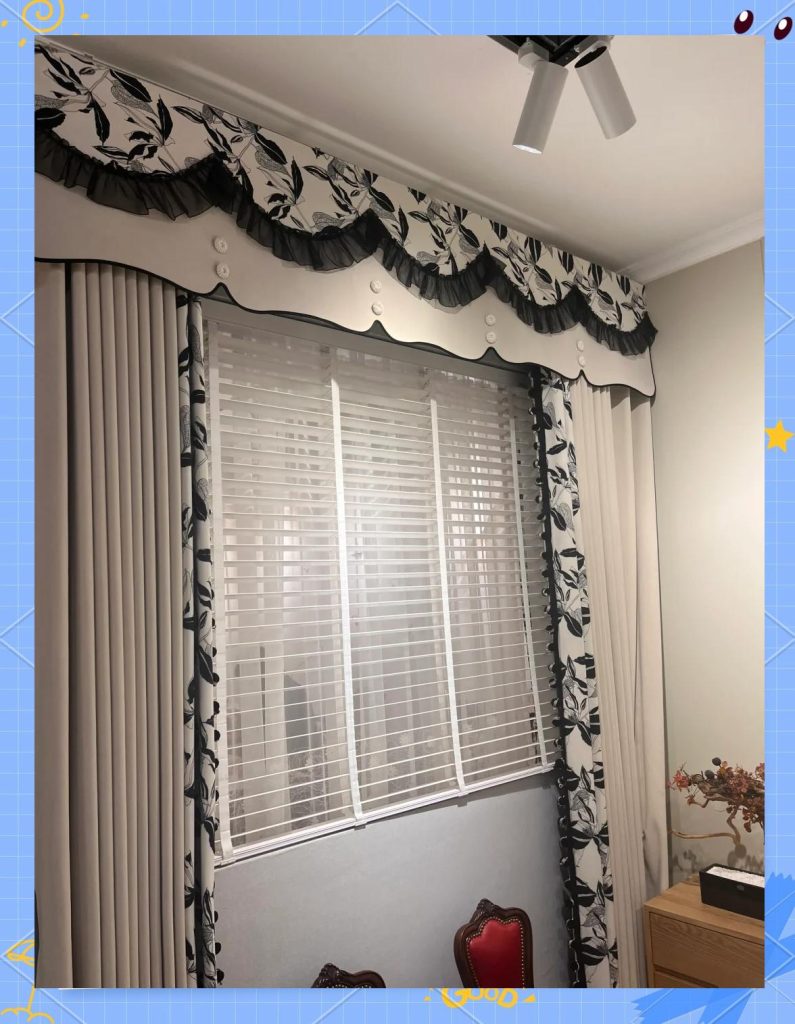
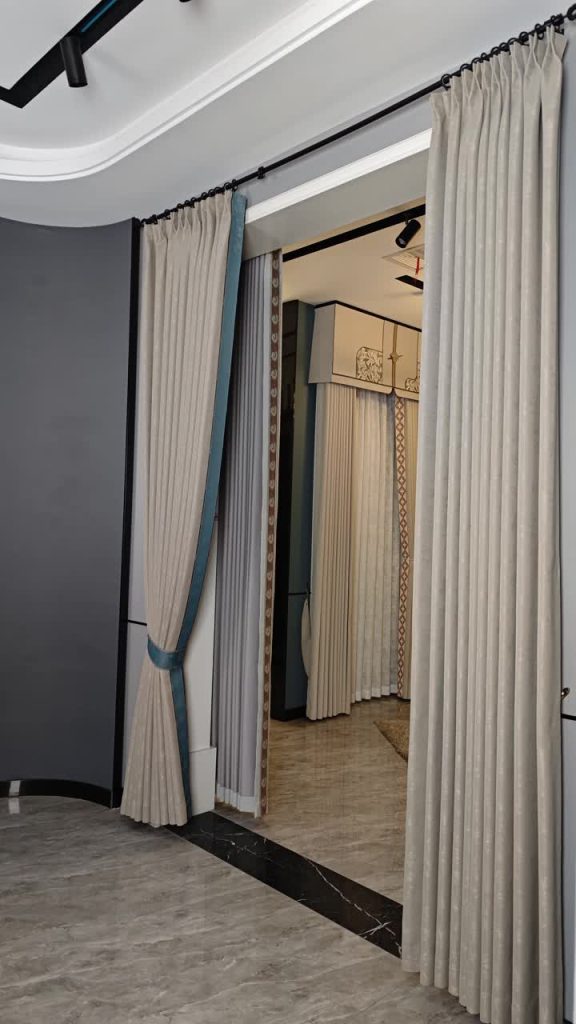
 In the heart of Shanghai’s Pudong district, a factory hums with activity—robotic arms stitch precision – cut fabric, while AI algorithms generate bespoke curtain designs in seconds. This scene encapsulates China’s transformation from a low – cost manufacturing hub to a global leader in technologically advanced curtain production. The image of deep brown curtains paired with ethereal white sheers, set against a sprawling cityscape, mirrors this evolution: it blends timeless elegance with cutting – edge innovation, symbolizing how Chinese manufacturers are reshaping the $120 billion global home decor market through smart engineering and sustainability.
1. AI – Driven Design: Redefining Aesthetics with Data
Key Innovations:
-
Generative Design Software: Platforms like DeepFashion AI analyze millions of global trends, climate data, and user preferences to generate curtain patterns. A client in New York might receive a design featuring geometric patterns inspired by Mid – Century Modern architecture, optimized for natural light filtering in a high – rise apartment.
-
Virtual Reality Showrooms: Factories offer VR previews, allowing customers to “see” how deep brown curtains with subtle gold embroidery will look in their living rooms before placing an order. This reduces returns by 40%, as seen in Alibaba’s Fashion AI pilot program.
-
Real – Time Customization: Mobile apps enable instant adjustments to length, color, and hardware. For instance, a bride in Paris can modify her wedding curtain’s lace trim via WeChat, with the factory updating the design within hours.
2. Precision Manufacturing: Robotics and Automation
Technologies Shaping the Industry:
-
Computer – Vision Cutting Machines: Equipped with AI, these devices cut fabric with micron – level precision, minimizing waste. A single machine can produce 10,000 curtain panels daily, reducing material costs by 15%.
-
Robotic Sewing Lines: Brands like Matarial deploy industrial robots for complex tasks like embroidering phoenix motifs onto silk (a nod to Chinese heritage), achieving 99.8% stitch accuracy.
-
Automated Quality Control: AI – powered cameras inspect every curtain for flaws, ensuring 100% compliance with international standards like ISO 9001.
3. Sustainable Materials: Green Innovation Meets Luxury
Breakthroughs in Materials Science:
-
Recycled Ocean Plastic Curtains: Companies like Ocean Cycle transform discarded fishing nets into durable, waterproof fabrics. A sheer white curtain made from recycled plastic maintains its ethereal quality while reducing ocean pollution.
-
Bamboo Lyocell: Sourced from sustainably managed forests, this material offers the softness of silk with 50% lower water usage. Tencel™ partners with Chinese mills to produce curtains that decompose naturally at the end of their lifecycle.
-
Low – Impact Dyes: Waterless dyeing technology eliminates wastewater, using 90% less energy than traditional methods. Brands like EcoCurtain use indigo – dyed deep brown curtains that retain their rich hue without harmful chemicals.
4. Global Supply Chain Mastery
Strategic Advantages:
-
Vertical Integration: Factories own farms (e.g., cotton in Xinjiang) and dyeing facilities, cutting out middlemen. This reduces costs by 25% and ensures consistent quality.
-
Global Logistics Network: Ports in Shanghai and Shenzhen ship curtains to 150+ countries within 20 days. E – commerce giants like Amazon rely on Chinese factories for fast – fashion curtain collections.
-
Local Partnerships: In markets like India and Brazil, Chinese firms collaborate with regional suppliers to adapt designs to local tastes (e.g., bold patterns for Middle Eastern palaces).
5. The Human Touch: Tradition Meets Tech
Examples of Artisanal – Tech Fusion:
-
Hand – Embroidered AI Patterns: Artists in Suzhou collaborate with AI to create intricate designs inspired by traditional Chinese motifs, which are then reproduced using robotic embroidery machines.
-
Natural Dye Workshops: Small – scale producers teach AI algorithms to replicate centuries – old dyeing techniques, ensuring cultural heritage endures.
6. Challenges and Future Trends
-
Rising Labor Costs: Automation investments are essential to offset wage inflation.
-
Supply Chain Disruptions: Geopolitical tensions and climate change threaten material sourcing.
-
Sustainability Pressures: Consumers demand even greener practices, pushing manufacturers to innovate.
The Road Ahead:
-
Circular Economy Models: Factories will recycle fabric scraps into new products.
-
Biodegradable Materials: Research into plant – based fabrics that decompose naturally.
-
AI – Driven Sustainability: Algorithms will optimize production to reduce carbon footprints.
Conclusion
Article link:https://www.vlefooena.com/smart-manufacturing-revolution-how-china-curtain-makers-redefine-global-home-decor/


No reply content