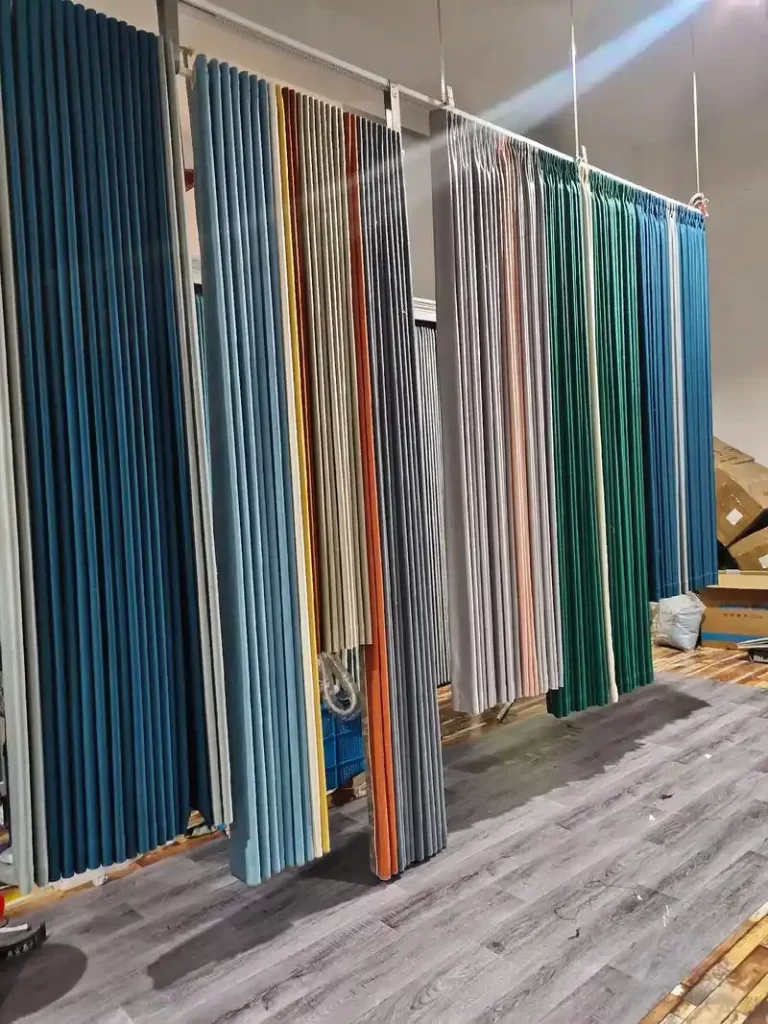
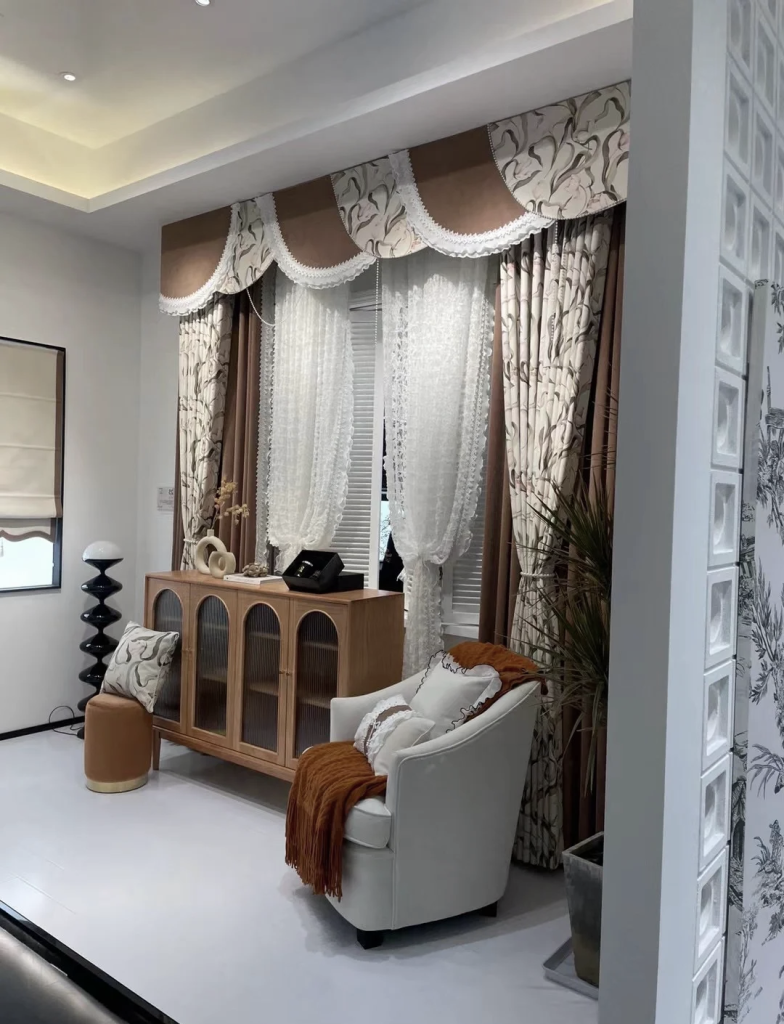
 In an era where environmental responsibility is no longer optional, Chinese curtain manufacturers are redefining industry standards by merging sustainability with affordability. Long associated with mass production, these factories are now at the forefront of a green revolution, leveraging innovative technologies, circular economy models, and government support to create eco – friendly curtains without compromising on quality or price. This article explores how China became a leader in sustainable textile manufacturing, examining key strategies like sustainable material sourcing, waterless dyeing, recycling initiatives, and policy-driven innovation. By blending environmental stewardship with economic viability, Chinese manufacturers are setting new benchmarks for global curtain production.
1. The Shift Toward Sustainability: A Global Imperative
-
Regulatory Pressure: China’s 14th Five-Year Plan emphasizes “green development,” mandating stricter emissions standards and waste reduction targets for textile manufacturers.
-
Market Competition: International brands like IKEA and H&M Conscious prioritize suppliers with verified sustainability credentials, pushing Chinese factories to innovate.
-
Corporate Social Responsibility (CSR): Chinese exporters recognize that sustainable practices reduce long – term risks (e.g., resource scarcity, reputational damage) while opening premium market segments.
2. Sustainable Material Innovation: From Farm to Factory
Organic & Regenerative Fibers
-
Organic Cotton: Farms in Xinjiang and Gansu now produce GOTS – certified organic cotton, eliminating synthetic pesticides and fertilizers. A single organic cotton curtain uses 91% less water than conventional cotton.
-
Bamboo Lyocell: Sourced from sustainably managed forests, bamboo lyocell requires no pesticides and uses 50% less water than cotton. Brands like Tencel™ partner with Chinese mills to create soft, durable curtains.
-
Recycled Polyester: Made from post – consumer plastic bottles, recycled polyester reduces landfill waste and energy consumption by 75% compared to virgin polyester.
Natural Dyeing Techniques
-
Plant – Based Dyes: Factories in Jiangsu province revive ancient techniques using indigo, madder root, and tea leaves. These dyes produce muted, earthy tones while avoiding toxic chemicals.
-
Low – Impact Synthetic Dyes: Waterless dyeing technologies, adopted by 60% of Chinese textile mills, eliminate wastewater and reduce energy use by 40%.
3. Circular Economy Models: Closing the Loop
Zero – Waste Production
-
Pattern Optimization: AI – driven design software minimizes fabric waste during cutting. For example, a factory producing 10,000 curtains monthly can save 2–3 tons of fabric annually through algorithmic pattern layout.
-
Upcycling Initiatives: Scrap fabric is repurposed into decorative trims, pillow covers, or reusable packaging. Shanghai Textile Co. converts leftover silk into luxury cushion fabrics, generating an additional revenue stream.
Recycling Programs
-
Take – Back Schemes: Brands like EcoCurtain offer discounts for customers who return old curtains. These are then shredded into insulation material or regenerated into new fibers.
-
Industrial Symbiosis: Factories collaborate to reuse byproducts—e.g., dyeing wastewater treated and reused in agriculture.
4. Smart Manufacturing: Technology for Sustainability
Energy – Efficient Machinery
-
Solar – Powered Factories: Mills in Zhejiang and Guangdong install solar panels to power 30–50% of their operations. A typical factory saves 200–300 tons of CO₂ annually through renewables.
-
AI – Optimized Workflows: Machine learning predicts equipment maintenance needs, reducing downtime and energy waste.
Blockchain for Transparency
-
Supply Chain Traceability: Blockchain records track raw materials from farm to finished product, ensuring compliance with eco – standards. Consumers can scan QR codes to verify a curtain’s sustainability credentials.
5. Government Support: Policy as a Catalyst
Financial Incentives
-
Green Bonds: State – backed bonds fund sustainable textile projects. In 2023, ¥12 billion was allocated to textile recycling and eco – dyeing R&D.
-
Tax Breaks: Manufacturers adopting waterless dyeing or solar power receive tax deductions of up to 30%.
Regulatory Frameworks
-
Eco – Labeling Standards: The “China Environmental Label” certifies products meeting strict environmental criteria, boosting consumer trust.
-
Extended Producer Responsibility (EPR): Factories are legally required to manage product end – of – life, encouraging recycling and waste reduction.
6. Case Study: A Sustainable Success Story
-
Challenge: High water consumption and waste generation in traditional dyeing processes.
-
Strategy: Invested ¥5 million in waterless dyeing machines and solar panels. Partnered with local farms for organic cotton.
-
Results: Reduced water usage by 95%, cut CO₂ emissions by 60%, and increased export revenue by 40% through access to eco – conscious markets like Germany and Japan.
7. Overcoming Challenges: Scalability and Affordability
-
Higher Upfront Costs: Eco – friendly technologies (e.g., waterless dyeing machines) require significant investment. Smaller factories struggle to compete.
-
Technical Barriers: Low – income regions lack access to training and infrastructure for sustainable practices.
-
Global Supply Chain Complexity: Sourcing certified materials (e.g., GOTS cotton) can delay production and inflate costs.
Solutions in Action
-
Government Subsidies: Low – interest loans and grants support SMEs in adopting green technologies.
-
Cluster Development: Industrial parks concentrate sustainable factories, sharing resources like water treatment plants and solar grids.
-
Tech Partnerships: Collaborations with international firms (e.g., Siemens, BASF) accelerate technology transfer.
8. The Future of Sustainable Curtains in China
-
Biodegradable Materials: Research into plant – based fabrics that decompose naturally after use.
-
Carbon – Negative Production: Pilot projects explore using algae – based dyes and carbon capture technology in mills.
-
Circular Fashion Ecosystems: Integrating curtain production with other textile waste streams (e.g., clothing recycling) to create a truly circular economy.
Conclusion: Redefining What “Made in China” Means
Article link:https://www.vlefooena.com/sustainable-excellence-how-chinese-curtain-manufacturers-lead-the-green-revolution/


No reply content