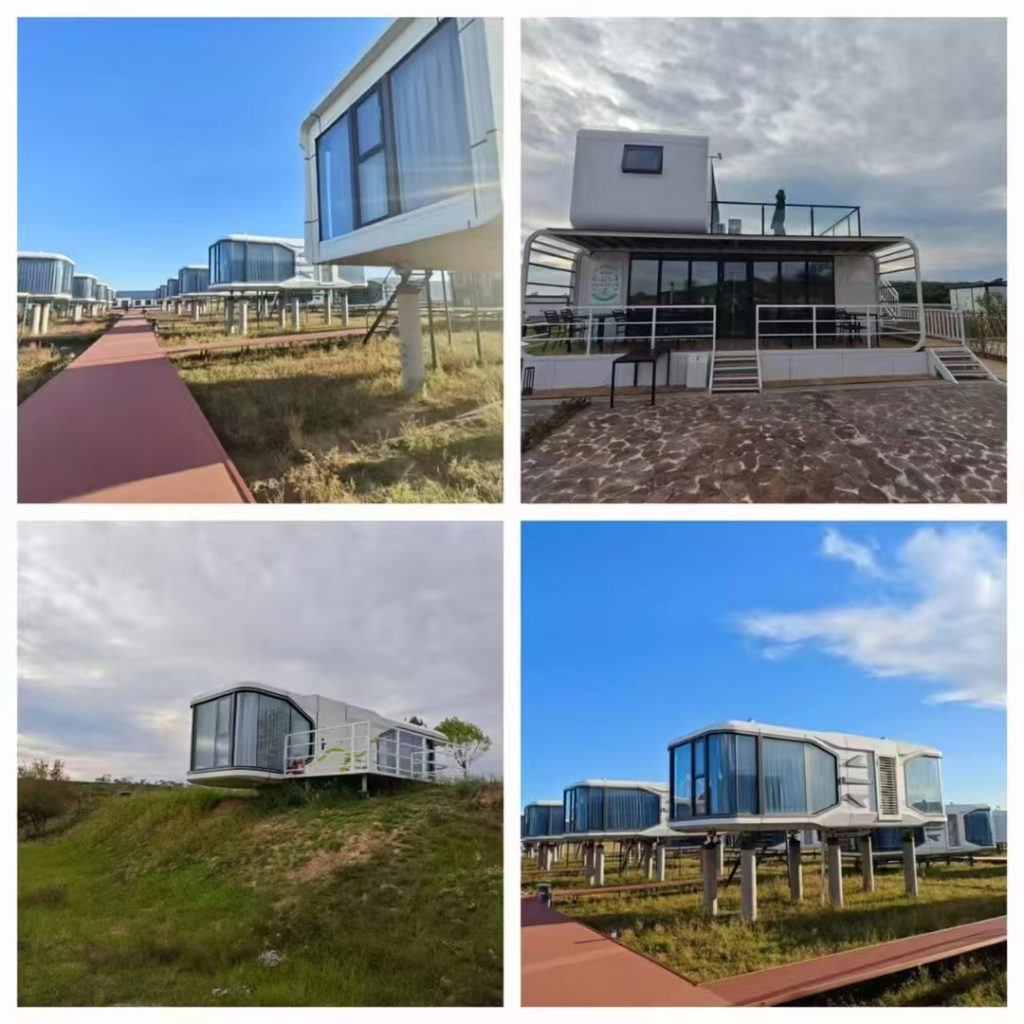
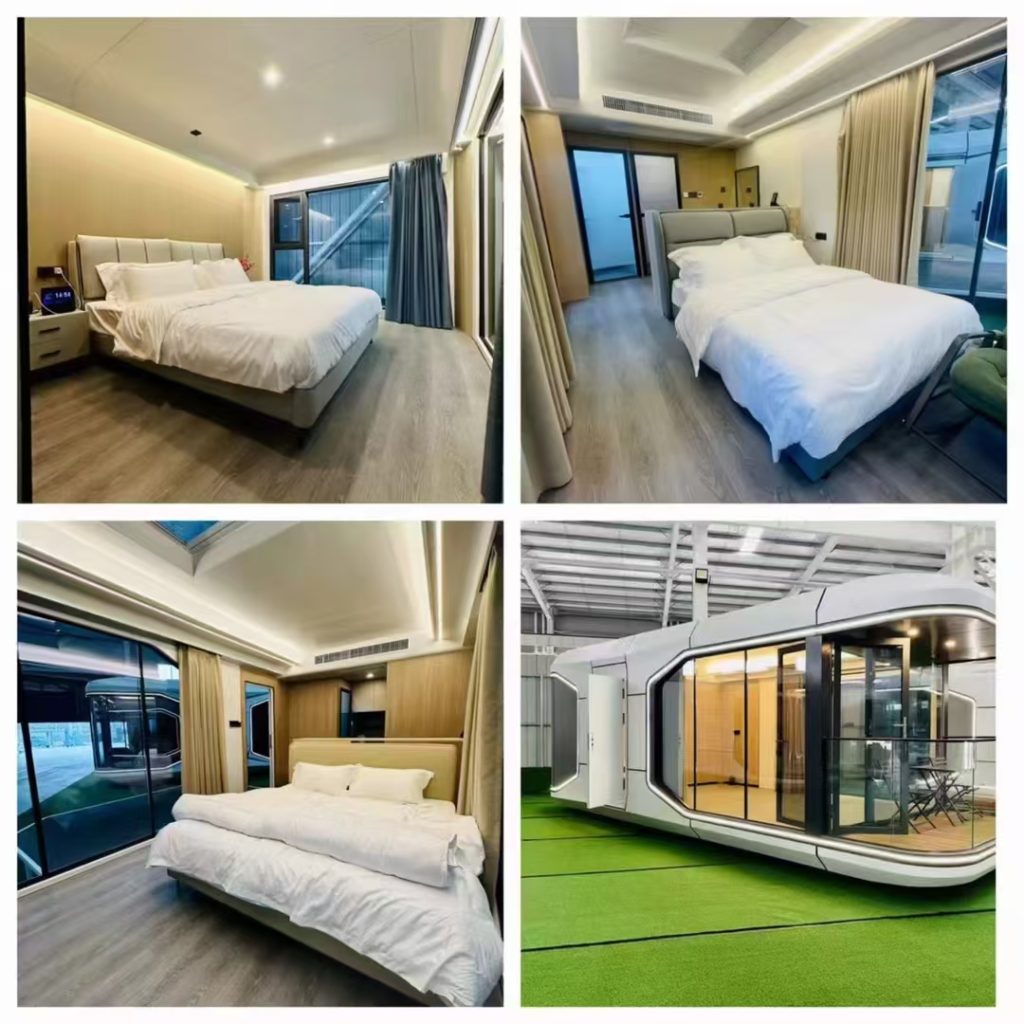
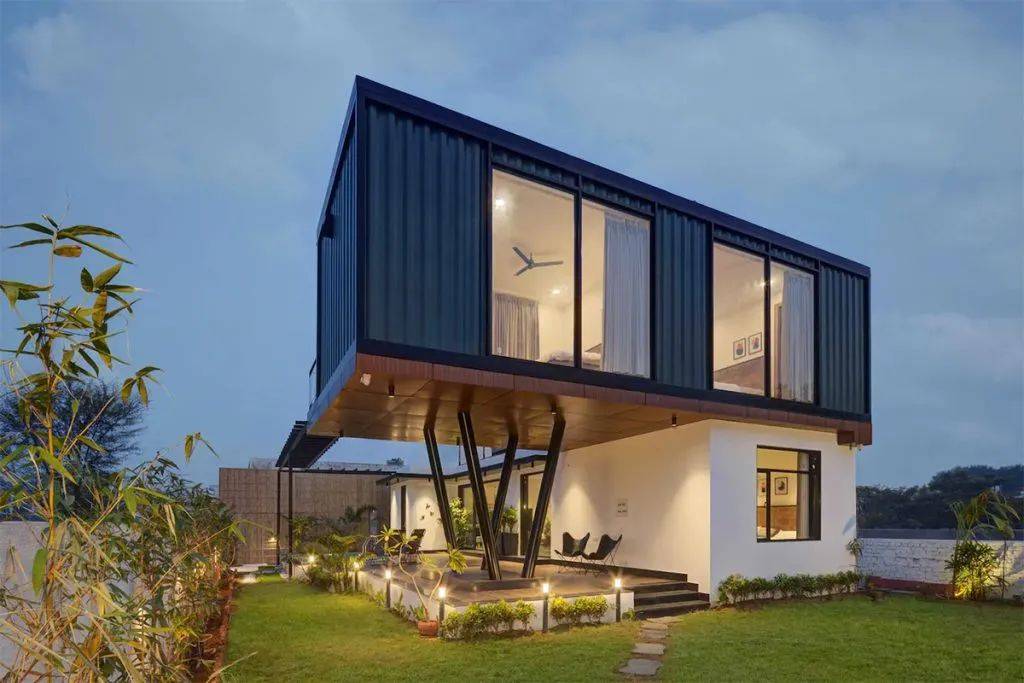
We begin with a single seed: a compact, hermetic core. This is the nucleus of a new paradigm in living—a Sustainable Expandable Habitat. It is not a static structure, but a living system designed for intelligent growth. Rooted in circular principles and built for longevity, it provides a resilient foundation that can evolve organically with the needs of its inhabitants and the land it occupies.
Chapter 1: The Immutable Core
Every habitat originates from a singular, factory-perfected unit: the Life Core.
-
The Bioclimatic Vessel: This primary module is a hyper-efficient, airtight capsule. Its curved, monolithic shell is formed from bio-based composites—hempcrete, mycelium-bonded panels, or recycled mineral boards—providing superior thermal mass and humidity regulation. A solar-gain-optimized glazed face integrates passive solar principles from the outset.
-
Integrated Vital Systems: Within this core reside all essential, high-efficiency utilities in a dense, plug-and-play configuration: a water-independent loop (harvesting, filtration, recycling), a hybrid renewable energy hub (solar, micro-wind), and a climate intelligence system. This Core is fully autonomous, capable of sustaining occupants indefinitely from day one.
-
Foundational Intelligence: The Core contains the habitat’s “digital brain”—a low-power monitoring system that manages resource flows, tracks energy production/consumption, and provides the interface for future expansion. It is the command center and the proving ground for sustainable living.
Chapter 2: The Grammar of Growth
Expansion is not an afterthought; it is a pre-designed language. The system allows for modular, low-impact addition.
-
The Connector Node: The Core features standardized, sealed connection ports on its sides. Expansion modules—additional sleeping quarters, a workshop, a greenhouse—dock directly into these nodes. Each new module is itself a factory-built, fully finished unit with its own insulated shell and pre-installed secondary systems.
-
Adaptive Skin & Structure: The expansion framework utilizes a lightweight, recycled aluminum or timber lattice. Cladding is drawn from a kit of sustainable parts: modular green wall panels, reclaimed wood siding, or dynamic shutters that track the sun. The aesthetic is cohesive yet adaptable, growing like a crystalline structure.
-
The Bio-Cluster: The ultimate expansion is ecological. The habitat is designed to be the heart of a regenerative landscape. Rooftops and awnings support native planting. Expansion modules can be dedicated to food production (aquaponic or aeroponic pods) or compost/water treatment, closing resource loops on-site and fostering biodiversity.
Chapter 3: The Regenerative Pulse
Sustainability is active, not passive. The habitat is designed to give back more than it takes.
-
Energy-Positive Operation: The Core, with its integral renewable generation and ultra-efficient envelope, is designed to produce a surplus. This surplus powers expansions and can be used for external needs (e.g., charging an electric vehicle, powering tools).
-
The Hydrological Cycle: The habitat manages a complete, local water cycle. Rainwater is harvested, filtered, and used. Greywater is treated through constructed wetlands integrated into the landscape or compact onboard bioreactors. Blackwater is processed via waterless or composting systems, returning nutrients safely to the earth.
-
Material Lifecycle: Every component is selected for its next life. Structural materials are demountable and reusable. Insulation is natural and compostable. At the end of its service life, the habitat can be largely disassembled, with its materials re-entering the manufacturing or natural cycles with minimal loss.
Chapter 4: From Nucleus to Network
This system scales from a solitary retreat to a collaborative community.
-
The Phased Family Home: A young couple starts with the Core. A child brings a docked sleeping module. Later, a studio for aging parents or a home office is added, all without major construction or waste.
-
The Research & Conservation Outpost: Deployed in sensitive environments, it provides a zero-impact base for scientists, expanding only as the mission requires.
-
The Regenerative Agri-Habitat: Serving as a home and operational hub for small-scale regenerative farming, with modules for processing, storage, and farm-stay tourism.
-
The Resilient Neighborhood: Multiple Cores can be clustered, sharing larger communal renewable energy grids, food production hubs, and water management systems, creating a distributed, resilient community fabric.
Conclusion: Building Like a Forest
The Sustainable Expandable Habitat rejects the model of the finished, permanent object. Instead, it embraces the logic of natural systems: starting from a resilient seed, growing adaptively, creating surplus, and enriching its location. It is a testament to the principle that the most intelligent design is one that learns from ecology—modular, responsive, and inherently renewable.
We are not delivering a house. We are providing a living protocol for place.
The Core is established. The systems are alive. The future has room to grow.
Article link:https://www.vlefooena.com/sustainable-expandable-habitat-the-thoughtful-colony/


No reply content