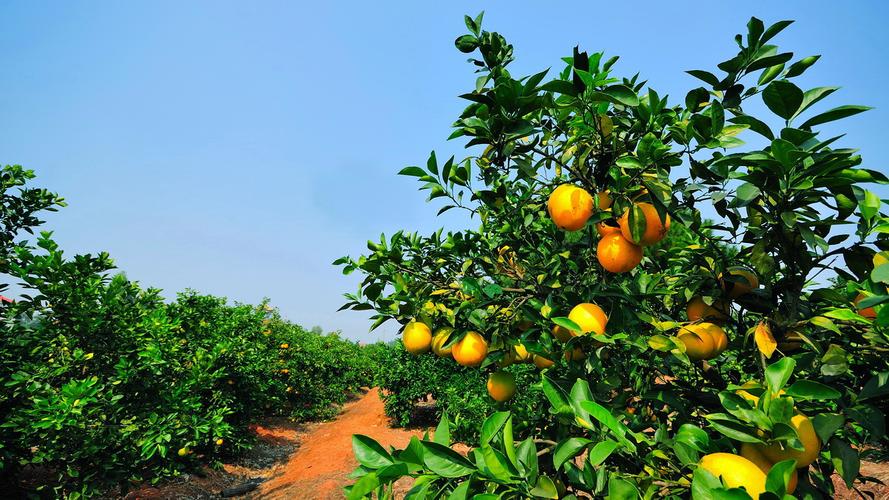
The Grove Where My Heart Found Its Rhythm: Growing Navel Oranges, One Season at a Time
If you stand at the edge of our farm at sunrise, you’ll see it first—a golden glow spilling through the treetops, as if the sun itself is eager to greet these oranges. The air smells like damp earth and blossoms, and somewhere, a rooster crows. This isn’t a place built for speed. It’s a place built for listening: to the trees, to the soil, to the generations of hands that have tended this land before us.
We’re a navel orange grove. But more than that, we’re a story—written in sap, sweat, and the quiet pride of watching something grow exactly as it’s meant to.
Grandpa’s Shovel: The First Word in the Story
My earliest memory is of Grandpa’s shovel. Rusty, heavy, and always leaning against the oldest tree in the grove. “This tree’s my partner,” he’d say, patting its gnarled trunk. “Planted her the day your grandma said ‘yes.’”
Grandpa didn’t believe in rushing. When he planted his first saplings in ’53, he dug holes twice as deep as the root balls, filled them with compost from our kitchen scraps, and sang ranchero songs while he worked. “Oranges need roots that reach for the heart of the earth,” he’d teach me, kneeling to show me how to cradle a seedling. “Hurry, and you’ll get a tree that’s all leaves and no soul.”
That tree—Grandma’s tree—still stands today. Its branches bow low with fruit every winter, each orange a little heavier, a little sweeter, like a thank-you note from the past.
Work That Tastes Like the Land
Farming here is a cycle, not a checklist.
Spring is for blooming. We don’t force it. We wait for the nights to soften, for the bees to hum louder, for the trees to swell with tiny green nubs. Last year, a late frost scared us—all hands on deck, lighting smudge pots, drinking coffee under the oak until dawn. By May, the grove forgave us: plump, fragrant blooms covered every branch, like nature’s way of saying, I remember.
Summer is for care. We weed by hand, not with chemicals—because the clover feeds the soil, and the dandelions attract ladybugs. We thin fruit, leaving only the strongest clusters, because overcrowded branches grow small, bitter oranges. “Better fewer, better,” Grandma used to say, as she tucked a stray leaf back around a baby orange.
Fall is for harvest. We start at dawn, when the oranges are cool but the sun’s already kissing their skins. Workers move like shadows—no clattering ladders, no dropped fruit. Rosa, who’s picked here for 28 years, cradles each orange like a baby bird. “They know when you’re gentle,” she says. “Sweetest ones come from careful hands.”
The Beauty of “Not Perfect”
Not every orange is picture-perfect. Some have a nick from a branch, others are lopsided, their tops a little flat. For years, we’d toss them—or sell them cheap. Then my daughter, Lila, then 6, brought one to me, her face scrunched. “This one’s sad,” she said. “But it tastes good, right?”
Right. So now, we call them “adventure oranges.” They go to the food bank, where a single dad told us, “My kid eats these like candy—their ‘ugly’ oranges are the best.” They go to the high school art class, where students paint them, calling them “nature’s canvases.” And some stay right here, left for deer or squirrels—because even the “imperfect” ones deserve a feast.
What You’ll Hold: More Than Fruit
When you pick up one of our oranges, I hope you feel the weight of this place. The sun that baked its skin golden. The rain that plumped its segments. The hands that picked it gently, the bees that pollinated it, the deer that kept the weeds in check.
Bite in, and taste the story. First, the bright tang—like a squeeze of morning lemonade, but warmer, softer. Then, the sweetness unfolds, slow and rich, like honey steeped in summer. The juice runs, thick and golden, not watery. Peel it, and the skin comes away cleanly, leaving no bitter pith—just a faint, citrusy scent that lingers, like a memory you don’t want to forget.
Come, Stay a While (Even If You’re Far)
If you visit, pull up a stool under the oak. We’ll brew sweet tea, hand you a basket, and let you pick. I’ll show you Grandma’s tree—its trunk thick, its branches still heavy with fruit. Rosa will teach you to test ripeness by smell: “If it smells like sunshine, it’s ready.” And Lila? She’ll giggle and say, “Don’t forget to say hi to the worms—they’re the real bosses here.”
If you’re miles away, we’ll pack your order with straw and care—no plastic, no rush. These oranges aren’t perfect. They’re not mass-made. They’re grown by people who show up, day in and day out, for the land, for the fruit, and for anyone who believes food should taste like it’s rooted in love.
So go ahead. Peel one. Let the juice drip. And taste the rhythm, the care, and the generations who made it possible.
Our grove is here. And it’s waiting to share its heartbeat with you.
Article link:https://www.vlefooena.com/the-grove-where-my-heart-found-its-rhythm-growing-navel-oranges-one-season-at-a-time/

No reply content