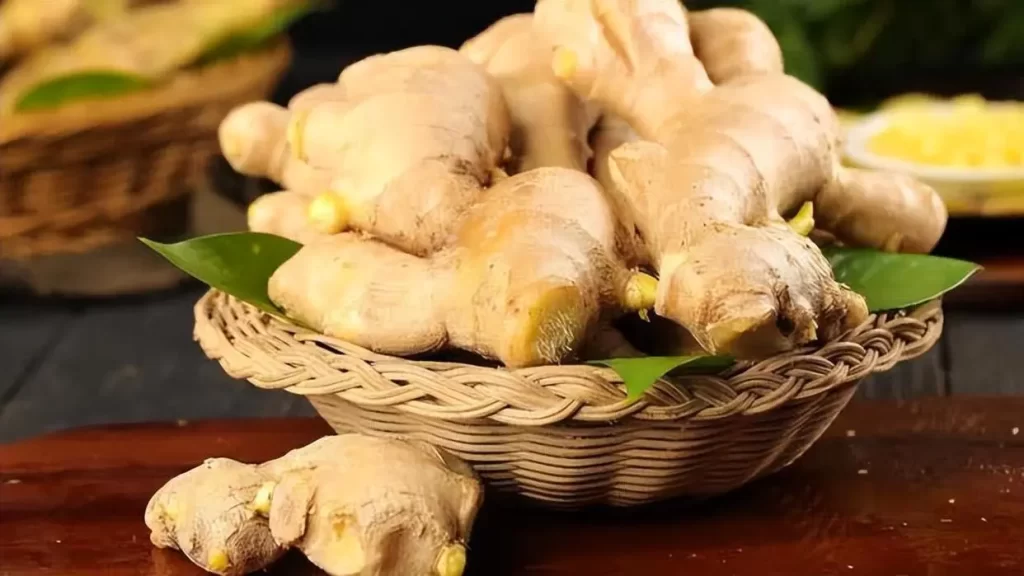
For centuries, China’s fertile lands have nurtured ginger—a root steeped in tradition and flavor. Today, this legacy fuels a global empire: China commands over 50% of the world’s ginger supply, blending time-honored cultivation with industrial precision to serve 100+ countries. Here’s how quality and scale converge to make China the undisputed king of ginger.
A Heritage Forged in Soil and Time
Ginger’s journey in China began over 2,000 years ago, woven into the fabric of Traditional Chinese Medicine and imperial cuisines. This deep-rooted history is not merely cultural; it’s agricultural DNA. While other nations grow ginger, China’s mastery lies in its generational knowledge of varietals, soil dynamics, and microclimates. Farmers in Shandong’s Anqiu region, for instance, still follow lunar cycles for planting—a practice refined since the Ming Dynasty. Such wisdom, combined with modern science, creates ginger with unmatched potency, aroma, and shelf life.
The Scale Advantage: Feeding the World
China’s dominance isn’t accidental—it’s engineered. With annual production exceeding 3 million metric tons, the nation operates a two-tiered system:
-
Smallholder farms (70%): Nurture niche products (e.g., Guizhou’s organic ginger) with artisanal care.
-
Commercial enterprises (30%): Deploy mechanized planting, drip irrigation, and AI-driven pest monitoring to guarantee bulk consistency.
This duality allows suppliers to simultaneously cater to boutique buyers and multinational corporations. A single cooperative in Henan can switch from supplying 10kg organic batches to 100-tonne contracts within weeks—a flexibility unrivaled globally.
Quality: The Non-Negotiable Foundation
Volume alone doesn’t win markets; consistency does. Chinese suppliers achieve this through:
-
Rigorous Varietal Selection: Strains like “Shanyang” (Shandong) and “Miaojiang” (Guizhou) are bred for disease resistance and flavor intensity.
-
Controlled Post-Harvest Processing: Roots are washed, cured, and stored in climate-controlled warehouses to prevent mold.
-
Zero-Compromise Safety: 95% of exporters test for pesticides at third-party labs (SGS/BV), adhering to EU MRLs and FDA standards.
Take Yunnan’s high-altitude farms: Cooler temperatures slow growth, yielding smaller but intensely aromatic roots perfect for gourmet markets. Meanwhile, Shandong’s sandy loam produces larger, milder ginger ideal for mass-market powders.
The Global Supply Chain: Built for Efficiency
From farm to port, China’s infrastructure minimizes friction:
-
Integrated Logistics: 18 major ports (Qingdao, Shanghai) handle ginger exports, with cold-chain capacity for fresh roots.
-
Digital Traceability: QR codes on crates let buyers access farm data, harvest dates, and lab reports.
-
Value-Added Agility: Peels become animal feed; waste is converted to biogas. This circular model cuts costs while appealing to ESG investors.
A German spice importer recently noted: “We get 40ft containers of Shandong ginger in Hamburg within 25 days, with full documentation. No other origin matches this.”
Case Study: The Anqiu Model
Anqiu City epitomizes China’s ginger prowess. Home to 500-year-old farms and a state-of-the-art processing zone, it supplies 30% of China’s export-grade ginger. Key innovations include:
-
Solar-Powered Dryers: Reduce energy use by 40% vs. coal-fired kilns.
-
Blockchain Tracking: Walmart’s suppliers use this to verify ethical sourcing.
-
Contract Farming: Stabilizes income for 20,000+ farmers, ensuring year-round loyalty.
Navigating Challenges: Climate and Competition
China’s supremacy faces threats:
-
Climate Volatility: Floods in Henan (2021) and droughts in Yunnan (2022) disrupted yields.
-
Rising Labor Costs: Pushing automation (e.g., robotic harvesters in Shandong).
-
New Competitors: Peru and Nigeria are gaining share in niche markets.
Yet Chinese suppliers adapt swiftly. In Guizhou, farmers now intercrop ginger with legumes to boost soil nitrogen, cutting fertilizer use by 30%. Others are diversifying into ginger-based extracts (e.g., shogaol for anti-inflammatory drugs), capturing higher margins.
The Future: Smart Agriculture and Green Premiums
The next frontier is data-driven cultivation. In Zhejiang, pilot projects use IoT sensors to monitor soil moisture, adjusting irrigation in real-time. Early results show 15% yield increases with 20% less water. Simultaneously, demand for organic ginger is surging—now 15% of China’s output—driven by EU/US buyers willing to pay 20–30% premiums.
Why Buyers Stay Loyal
International clients return for three reasons:
-
Unbeatable Economics: 20–30% lower costs than competitors due to scale.
-
Customization: Suppliers tweak moisture levels, slice thickness, or packaging per request.
-
Crisis Resilience: During the 2020 pandemic, Chinese exporters rerouted shipments via rail (China-Europe Express) when air freight collapsed.
Conclusion: Beyond a Commodity
China’s ginger suppliers have transcended mere production—they deliver security. In an era of supply chain fragility, their fusion of ancient wisdom and industrial might offers buyers predictability. As global demand grows (projected 5.8% CAGR through 2030), China isn’t just dominating the market; it’s defining its future. For importers worldwide, partnering with Chinese suppliers isn’t just a transaction—it’s a strategic imperative.
Article link:https://www.vlefooena.com/the-latest-prices-of-ginger-in-shandong/


No reply content