As a curtain supplier, I’ve learned that windows are far more than architectural necessities—they’re the eyes of a home, framing its personality and inviting the world in (or keeping it gently at bay). Over the years, I’ve worked with homeowners, designers, and architects to craft window treatments that do more than cover glass: they elevate spaces, solve problems, and mirror the lives lived within. Today, I want to pull back the curtain (pun intended!) on what goes into creating curtains that don’t just look good, but feel right—and why that distinction matters.
1. The Science of Comfort: Beyond Aesthetics
Let’s start with the obvious: curtains must function. But “function” is rarely one-size-fits-all. Take light control, for example. A nursery demands near-total blackout to protect a baby’s sleep cycle, while a sunroom might need diffused light to prevent glare on art. We approach this by offering layered solutions: a sheer outer layer for soft morning light, paired with a lined inner drape for evening privacy. The magic? These layers work together—no harsh transitions, just adaptable comfort.
Then there’s temperature regulation. Many clients don’t realize curtains can act as insulation. Our thermal-lined options use a thick, brushed polyester layer sandwiched between the main fabric and a vapor barrier. In winter, this traps warm air, reducing heat loss by up to 20%; in summer, it blocks solar gain, keeping rooms cooler. One client in a historic home with drafty windows told us their heating bills dropped by $150/month after switching to our thermal drapes—proof that beauty and efficiency can coexist.
And let’s not forget sound. Urban dwellers often battle street noise. Our acoustic curtains, woven with dense, high-thread-count cotton and lined with foam-backed polyester, absorb up to 40% of ambient sound. A couple in a noisy downtown loft recently shared that their new curtains turned their bedroom from a place of restless nights to one where they could finally drift off to the sound of silence.
2. Fabric Stories: Choosing Materials That Speak to Lifestyle
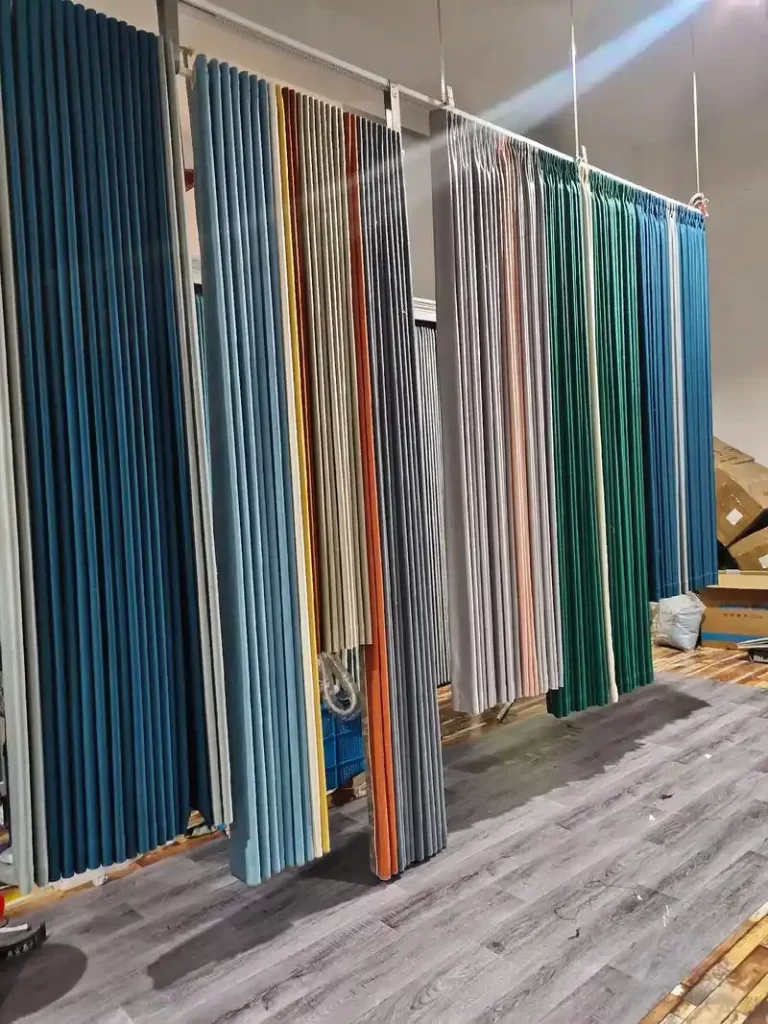
Fabric is where function meets soul. We source globally but curate locally, prioritizing mills that share our values—ethical production, durability, and beauty that lasts. Here’s a peek at our most-loved options:
-
Natural Fibers for Warmth: Organic cotton and linen are perennial favorites. Cotton, GOTS-certified and stone-washed for softness, is a go-to for family spaces—its breathable nature keeps kids’ rooms cool, and its muted tones (think oatmeal, sage) age gracefully. Linen, with its irregular slubs and earthy hue, adds rustic charm to porches or sunrooms. Both wrinkle minimally (a bonus for busy households) and soften with every wash.
-
Luxury for Drama: Silk charmeuse, with its liquid-like drape, is reserved for formal settings—imagine it pooling on a marble floor in a dining room, catching light to create subtle shimmer. Velvet, too, makes a statement, but we only use high-pile, low-shedding options. A client once described our emerald velvet curtains as “like wearing a cozy sweater for your windows”—a perfect metaphor for their tactile, enveloping appeal.
-
Eco-Conscious Choices: Recycled polyester, spun from post-consumer bottles, is a game-changer. It mimics the drape of traditional polyester but with a smaller footprint. Stain-resistant and machine-washable, it’s ideal for kids’ rooms or pet-friendly homes. We also offer hemp blends—durable, mold-resistant, and naturally antimicrobial—for bathrooms or basements.
3. Customization: Because No Two Windows Are Alike
The biggest mistake I see? Treating curtains as an afterthought. A standard size or off-the-shelf pattern rarely fits a room’s unique rhythm. That’s why 80% of our projects involve custom work.
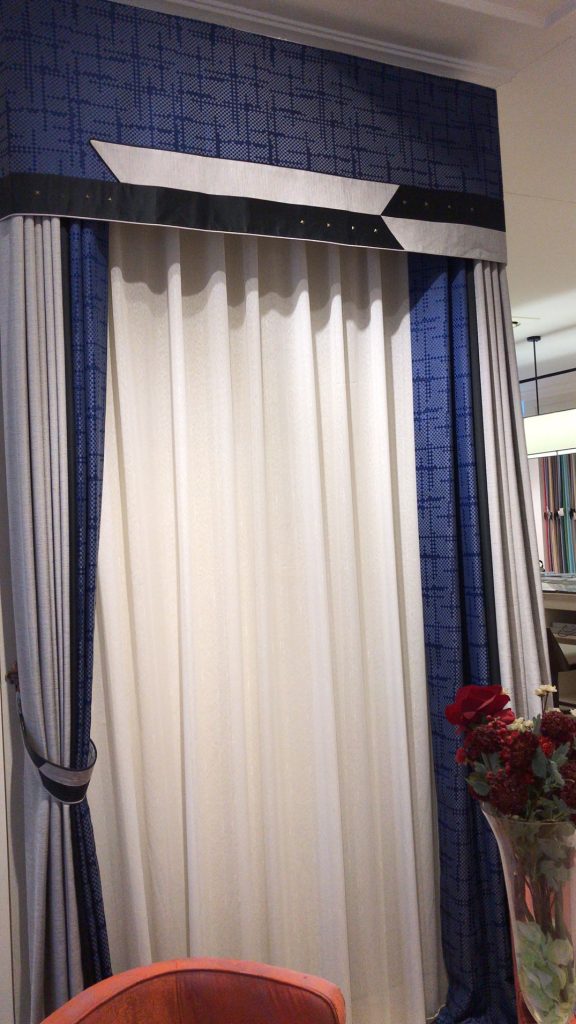
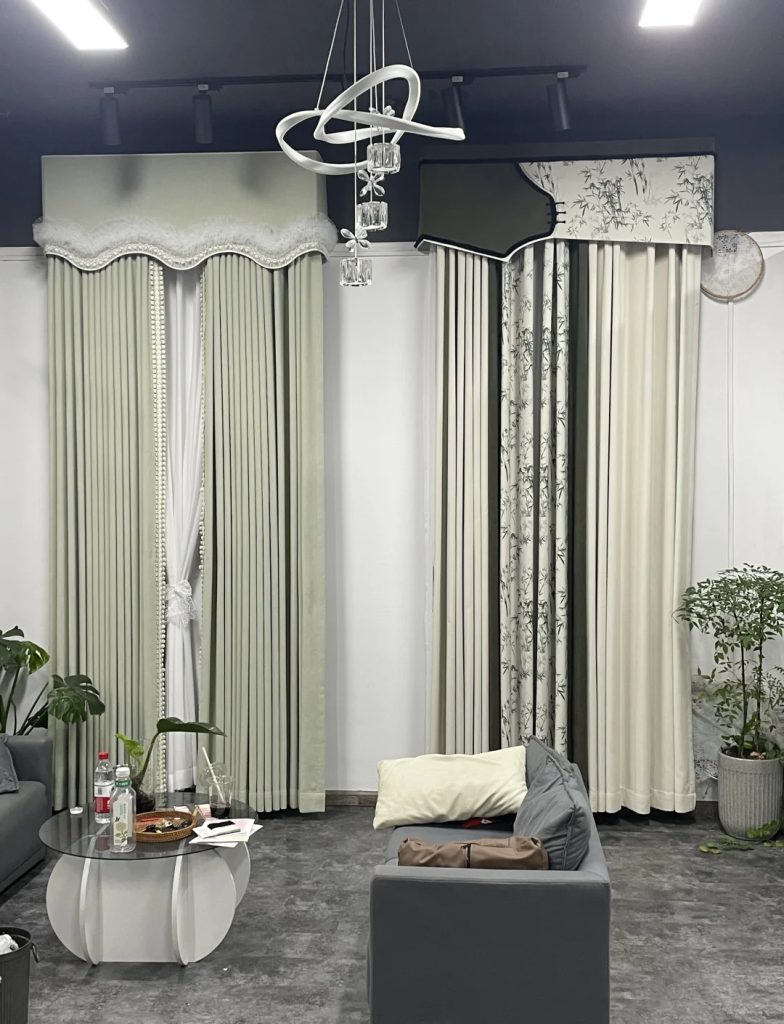
Consider a recent project: a tall, narrow living room with floor-to-ceiling windows. Off-the-shelf curtains would have looked overwhelming, so we designed a slim, tailored drape with a hidden rod pocket to minimize bulk. We paired it with a valance in a complementary linen, adding softness without overwhelming the space. The client called it “the missing piece that tied the room together.”
Or take a client with mobility challenges. Traditional corded curtains posed a tripping hazard, so we developed a motorized system controlled via a wall switch. Now, she adjusts her curtains with a tap, maintaining independence and style.
Customization isn’t just about size—it’s about solving problems invisibly. Whether it’s adjusting the header style for a sloped ceiling, adding a weighted hem to prevent pooling, or matching a fabric’s color to an existing sofa, we obsess over the details that make a curtain yours.
4. The Art of Collaboration: Listening Before Measuring
Great curtain design starts with conversation. When a client first contacts us, we ask more than just width and height. We dig deeper: What’s the room’s vibe? (A bohemian reading nook needs flowing, textured fabrics; a sleek home office calls for structured linen.) Who uses the space? (A home gym needs moisture-wicking, quick-dry fabrics; a guest room demands easy-to-clean options.) What’s the unspoken need? (Maybe a couple wants privacy but hates feeling “closed in,” so we suggest a sheer curtain that diffuses light without blocking views.)
I’ll never forget a client who wanted curtains for her late mother’s study. She brought in a faded swatch of the original fabric—a vintage floral print—and shared stories of her mom reading there. We replicated the pattern with modern, durable cotton and added motorized operation so she could easily adjust the curtains, preserving the room’s warmth while making it functional for her own family. It wasn’t just a curtain; it was a tribute.
5. Beyond the Sale: Ensuring Longevity
Our job doesn’t end when the curtains are hung. We include care guides tailored to each fabric—hand-washing instructions for delicate silks, machine-wash cold for cotton linens—and offer free re-hemming or lining adjustments if needed. We’ve had clients return years later to update their curtains, and it’s rewarding to hear, “These still look brand-new!”
Sustainability is woven into this promise, too. By crafting durable, long-lasting curtains, we’re reducing waste. When a client upgrades, we encourage donating old curtains (if usable) or recycling them through our partner program—turning end-of-life fabric into insulation or stuffing for new products.
Final Thoughts: Curtains as a Reflection of You
At the heart of what we do is this belief: your curtains should tell your story. They should make you smile when you walk into a room, feel cozy on a rainy day, and proud to host friends. As a supplier, I’m not just selling fabric—I’m helping you curate a space that feels uniquely yours.
So whether you’re dreaming of breezy linen in a beach house, rich velvet in a downtown loft, or a custom solution for a tricky window, I invite you to see curtains not as a chore, but as an opportunity. An opportunity to transform light, to add warmth, and to make your house feel like home.
Let’s create something beautiful—together.
Article link:https://www.vlefooena.com/windows-as-canvases-how-thoughtful-curtain-design-transforms-homes-and-why-it-matters/


No reply content