

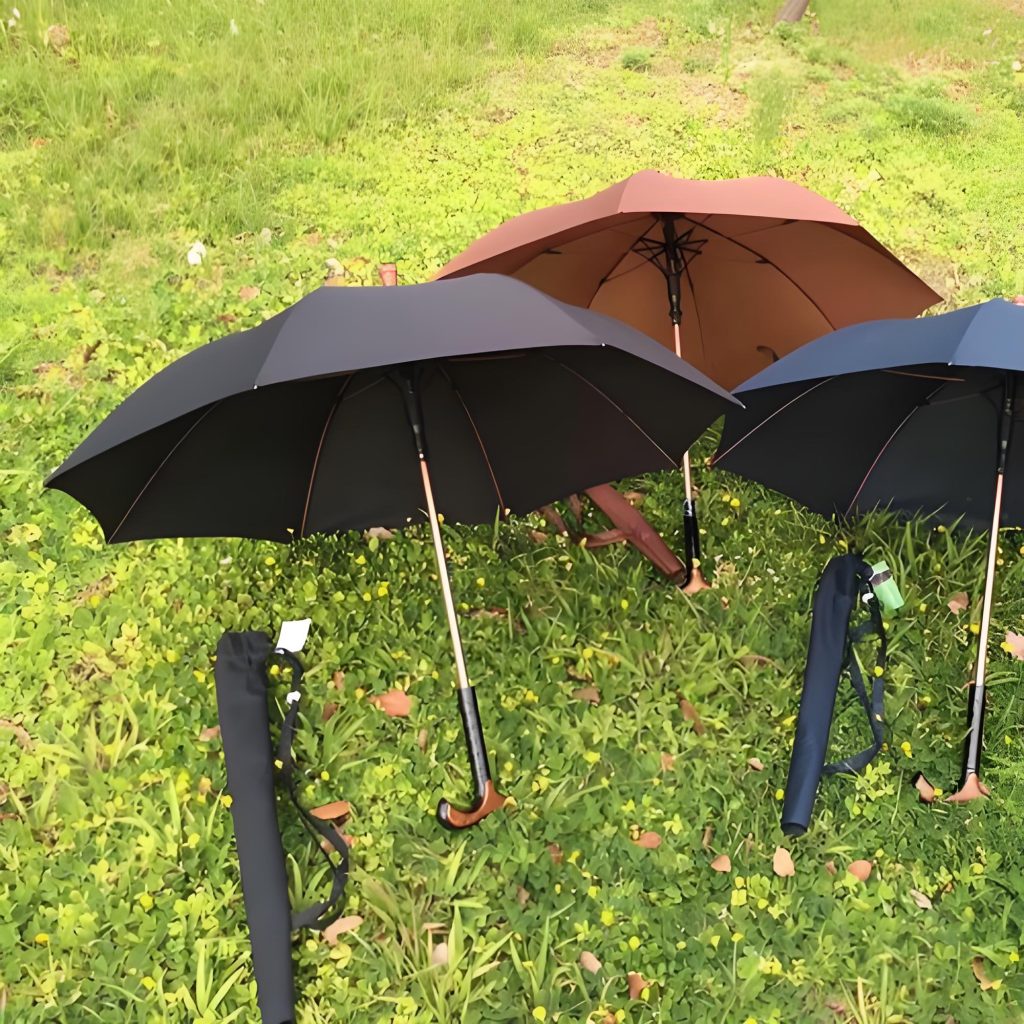
Introduction: Why Umbrella Fabric Selection Matters More Than Ever in 2026
In the global umbrella industry, fabric choice is no longer a minor detail—it is a core determinant of product performance, positioning, cost structure, and customer satisfaction.
As markets become more competitive and buyers more informed, importers, private-label brands, promotional product companies, and OEM clients increasingly ask one question:
“Should I choose 190T, 210T, or 300T umbrella fabric for my order?”
At first glance, these numbers may look like simple specifications. In reality, they represent significant differences in weaving density, durability, waterproof performance, wind resistance, visual quality, and long-term reliability.
This guide is written from the perspective of hands-on manufacturing and export experience, not theory. It aims to help you make a commercially correct, technically sound, and market-appropriate decision—whether you are placing a small trial order or scaling to container-level production.
Understanding the “T” in Umbrella Fabric: What Does 190T, 210T, or 300T Really Mean?
The letter “T” stands for “Thread Count”, also referred to as fabric density.
Specifically, it indicates:
The total number of warp and weft threads per square inch
- Warp threads: longitudinal yarns
- Weft threads: transverse yarns
Example:
- 190T ≈ 95 warp + 95 weft threads
- 210T ≈ 105 warp + 105 weft threads
- 300T ≈ 150 warp + 150 weft threads
A higher T value generally means:
- Tighter weave
- Smoother surface
- Better waterproof performance
- Higher cost
However, T count alone does not define quality. Fiber type, yarn denier, coating process, and finishing techniques all play critical roles.
Core Material: Polyester vs Nylon in T-Grade Umbrella Fabrics
Before comparing 190T, 210T, and 300T, it’s important to clarify the base material.
Common Materials Used:
- Polyester (Pongee Polyester)
- Nylon (Taffeta Nylon)
In modern umbrella production:
- 190T & 210T → Mostly polyester pongee
- 300T → High-density polyester or premium nylon
Polyester dominates the market due to:
- Better UV resistance
- Colorfastness
- Cost efficiency
- Dimensional stability
Detailed Comparison: 190T vs 210T vs 300T Umbrella Fabric
1. 190T Umbrella Fabric: Entry-Level, Cost-Oriented Choice
190T is widely used in promotional umbrellas, giveaways, and price-sensitive markets.
Key Characteristics:
- Moderate density
- Lightweight
- Basic waterproof performance
- Lower yarn consumption → lower cost
Typical Applications:
- Promotional umbrellas
- Event giveaways
- Budget retail umbrellas
- Short-term use products
Advantages:
- Lowest material cost
- Easy mass production
- Fast delivery cycles
Limitations:
- Lower tear resistance
- Less wind stability
- Shorter lifespan under frequent use
2. 210T Umbrella Fabric: The Industry Standard Balance
210T is considered the most widely accepted standard in mid-range umbrella manufacturing.
Key Characteristics:
- Balanced density and weight
- Improved waterproof rating
- Better visual smoothness
- Stronger structure under wind stress
Typical Applications:
- Mid-range retail umbrellas
- Corporate gifts
- OEM private-label umbrellas
- Export markets (EU / US / Japan)
Advantages:
- Excellent cost-performance ratio
- Suitable for screen printing and digital printing
- Consistent quality across batches
Limitations:
- Not premium enough for luxury positioning
- Slightly heavier than 190T
3. 300T Umbrella Fabric: Premium Density for High-End Products
300T represents a high-density, premium fabric class.
Key Characteristics:
- Extremely tight weave
- Smooth, almost silk-like surface
- Superior waterproof and wind performance
- Higher yarn fineness control
Typical Applications:
- High-end automatic umbrellas
- Luxury branding projects
- Executive gifts
- High-wind / storm umbrellas
Advantages:
- High water pressure resistance
- Strong tear and tensile strength
- Premium hand-feel and appearance
Limitations:
- Higher cost
- Slightly increased weight
- Not suitable for ultra-low-cost promotions
Technical Specification Comparison Table
| Parameter | 190T | 210T | 300T |
|---|---|---|---|
| Thread Density (Threads/Inch) | ~190 | ~210 | ~300 |
| Typical Yarn Denier | 75D | 75D / 68D | 50D / 40D |
| Fabric Weight (gsm) | 55–60 | 60–65 | 70–80 |
| Waterproof Rating (mm) | 600–800 | 800–1000 | 1200–1500 |
| Tear Strength | Low | Medium | High |
| Wind Resistance | Basic | Good | Excellent |
| Printing Compatibility | Screen | Screen / Digital | High-Resolution Digital |
| Cost Level | Low | Medium | High |
| Recommended Market | Promotional | Retail / OEM | Premium / Luxury |
Waterproof Performance: Coating Matters More Than T Count
While higher T fabric improves natural water resistance, coating technology is equally important.
Common Coatings:
- PU (Polyurethane) coating
- Silver UV coating
- Black UV coating
A 210T fabric with high-quality PU coating can outperform a poorly coated 300T fabric.
Professional buyers should always confirm:
- Coating thickness (microns)
- Adhesion strength
- Aging resistance
- Hydrostatic pressure test results
Wind Resistance and Structural Integrity
Wind resistance is influenced by:
- Fabric density
- Yarn tensile strength
- Stretch behavior under load
300T fabric shows:
- Lower deformation
- Reduced fabric flutter
- Less stress concentration on ribs
For regions with frequent storms or coastal climates, higher-density fabric reduces frame fatigue over time.
Printing & Branding Compatibility
| Fabric | Logo Printing Result |
|---|---|
| 190T | Acceptable, ink spread risk |
| 210T | Clean, stable, professional |
| 300T | Sharp edges, premium finish |
For high-precision logos or gradient designs, 210T and 300T are strongly recommended.
Cost vs Value: How Buyers Should Decide
Choose 190T if:
- Target price is extremely sensitive
- Product lifespan expectation is short
- Used mainly for marketing exposure
Choose 210T if:
- You want stable export quality
- Balanced performance and price
- Suitable for long-term retail sales
Choose 300T if:
- Brand positioning is premium
- End users expect durability
- Product competes on quality, not price
Common Buyer Mistakes (Industry Insight)
- Assuming higher T always means better quality
- Ignoring coating specifications
- Choosing fabric without considering wind conditions
- Over-specifying fabric for low-end markets
- Underestimating branding and print requirements
Frequently Asked Questions (FAQ)
Q1: Is 300T always better than 210T?
Not necessarily. 300T is better for premium use, but 210T often offers the best cost-performance balance for most markets.
Q2: Can 190T umbrellas be waterproof?
Yes, with proper PU coating, but long-term resistance is lower than higher-density fabrics.
Q3: Which fabric is best for OEM private-label orders?
210T is the most commonly chosen for OEM due to its stability and versatility.
Q4: Does higher T make umbrellas heavier?
Yes, but the difference is usually within acceptable ergonomic limits for end users.
Q5: How do I verify fabric quality before mass production?
Request fabric samples, test reports, and pre-production samples with real coating specifications.
Final Recommendation: Fabric Choice Is a Strategic Decision
Choosing between 190T, 210T, and 300T umbrella fabric is not just a technical choice—it is a market positioning decision.
Smart buyers align:
- Fabric specification
- Target customer expectation
- Branding strategy
- Long-term cost control
When fabric selection is done correctly, it reduces after-sales risk, improves brand trust, and strengthens market competitiveness.
{
  "@context": "https://schema.org",
  "@type": "FAQPage",
  "mainEntity": [
    {
      "@type": "Question",
      "name": "Is 300T umbrella fabric better than 210T?",
      "acceptedAnswer": {
        "@type": "Answer",
        "text": "300T offers higher density and durability, but 210T often provides the best balance between cost and performance for most markets."
      }
    },
    {
      "@type": "Question",
      "name": "What does 190T, 210T, and 300T mean in umbrella fabric?",
      "acceptedAnswer": {
        "@type": "Answer",
        "text": "They represent fabric thread density per square inch, indicating weave tightness and overall performance characteristics."
      }
    },
    {
      "@type": "Question",
      "name": "Which umbrella fabric is best for OEM orders?",
      "acceptedAnswer": {
        "@type": "Answer",
        "text": "210T is most commonly used for OEM and private-label umbrellas due to its stability and cost-effectiveness."
      }
    }
  ]
}


No reply content