7 Red Flags to Avoid When Sourcing Industrial Cables Overseas
Importing industrial cables for large-scale infrastructure, commercial construction, or industrial automation is a high-stakes operational game. On paper, international sourcing from major manufacturing hubs offers significant cost advantages, massive production scalability, and access to versatile OEM capabilities. In practice, a single overlooked defect in cable construction or compliance can ripple into catastrophic on-site failures: electrical short circuits, project commissioning delays, costly customs rejections, or severe thermal fire hazards.
Because cables are often buried deep within concrete walls, buried underground, or routed through high-voltage industrial enclosures, fixing a defective batch after installation is exponentially more expensive than the original purchase order.
To protect your procurement budget, project timelines, and operational safety, watch out for these 7 major red flags when evaluating overseas cable suppliers and reviewing pre-shipment orders.
The 7 Critical Red Flags in Overseas Cable Procurement
┌─────────────────────────────────────────────────────────────────────────────┐
│                       OVERSEAS CABLE SOURCING RED FLAGS                     │
├─────────────────────────────────────────────────────────────────────────────┤
│  [1] Abnormally Low Unit Quotes (The Copper Weight Trap)                   │
│  [2] Unverifiable Test Certificates & Fake Lab Marks                        │
│  [3] Inconsistent Insulation Wall Thickness & Off-Center Cores             │
│  [4] Recycled Polymer Compounds & Brittle Sheaths                           │
│  [5] Missing or Illegible Continuous Meter Markings                         │
│  [6] Ambiguous Trade Terms (Vague Incoterms & Payment Structures)           │
│  [7] Opaque Manufacturing Locations (Trading Houses Posing as Factories)   │
└─────────────────────────────────────────────────────────────────────────────┘
Red Flag 1: Abnormally Low Unit Quotes (The “Copper Weight” Trap)
Copper and aluminum represent the vast majority of an industrial cable’s raw material Bill of Materials (BOM). Because base metal prices are tied directly to real-time global commodity exchanges (such as the London Metal Exchange / LME), direct manufacturing costs remain relatively uniform worldwide.
If a vendor offers a price that is 15% to 20% below prevailing market spot rates, they are almost certainly compensating through hidden structural cuts:
- Undersized Conductors: Labeling a 2.1 mm² conductor as a standard 2.5 mm² nominal wire.
- Material Substitution: Secretly mixing Copper-Clad Aluminum (CCA) or scrap copper alloys into orders specified for 100% Oxygen-Free Annealed Copper (OFC).
Rule of Thumb: Always enforce conductor DC resistance limits (\Omega/km per IEC 60228) in your purchase contracts rather than relying on physical diameter callouts alone.
Red Flag 2: Unverifiable Test Certificates and Third-Party Lab Marks
A glossy PDF test report bearing a CE, TÜV, UL, or IEC logo means nothing if it cannot be independently verified. Unscrupulous suppliers frequently Photoshop certificate registration numbers, alter expiration dates, or present a report belonging to a different factory altogether.
How to audit:
- Request the complete, unredacted test report showing the issuing laboratory’s contact details and unique certificate number.
- Log onto the official accreditation body’s online portal (e.g., TÜV Rheinland Certipedia, UL IQ, or SGS certificate check) and cross-reference the exact corporate name, product model, and voltage rating.
Red Flag 3: Severe Insulation Eccentricity (Off-Center Cores)
Insulation concentricity measures how centered the conductor sits within its protective polymer jacket. When extrusion cross-heads are poorly calibrated or operated at excessive speeds without laser gauge tracking, the conductor drifts off-center.
       [ HIGH CONCENTRICITY ]                 [ POOR CONCENTRICITY ]
         (Safe & Uniform)                       (Failure Prone)

         ┌───────────────┐                      ┌───────────────┐
         │   ┌───────┐   │                      │ ┌───────┐     │
         │   │ Copper│   │                      │ │ Copper│     │  ◄── Thin Wall
         │   └───────┘   │                      │ └───────┘     │      (Breakdown
         └───────────────┘                      └───────────────┘       Risk!)
           Uniform PVC                            Uneven Wall
This creates a dangerous “thin spot” in the wall. Under high-load thermal expansion or tight conduit bends, this thin barrier degrades rapidly, leading to insulation puncture and localized grounding arcs.
Red Flag 4: Use of Recycled PVC Compounds & Excess Fillers
High-grade PVC or XLPE insulation must remain tough, flexible, and chemically stable across decades of operation. To cut resin costs, low-tier processing plants add heavy proportions of cheap calcium carbonate fillers or scrap recycled plastic.
Signs of low-grade compounding:
- The outer sheath turns white or cracks easily when bent 180^\circ by hand at room temperature.
- The cable emits an overpowering, harsh chemical odor indicative of volatile, unrefined plasticizers.
- Poor flame-retardant performance that continues burning after removal of an open flame source (failing basic IEC 60332-1 flame propagation standards).
Red Flag 5: Missing or Illegible Continuous Sheath Markings
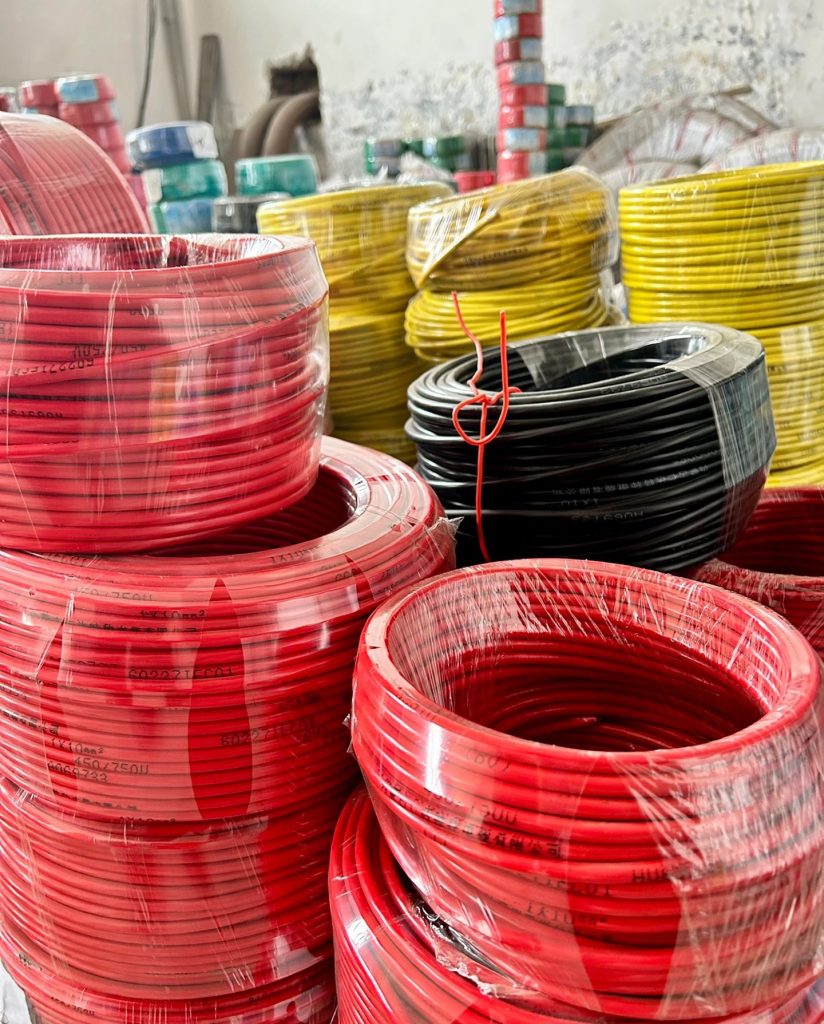
Professional cabling must feature crisp, indestructible inkjet or laser surface markings printed at precise, repeating intervals (typically every 500mm to 1000mm).
An acceptable cable marking legend must state:
- Manufacturer Name or Registered Trademark
- International Standard Reference (e.g.,
60227 IEC 01orBV) - Voltage Rating (e.g.,
450/750V) - Cross-Sectional Area (e.g.,
3x2.5 mm²) - Sequential Meter Count (vital for installer length verification on-site)
If the print is easily smudged with an alcohol wipe, missing meter counts, or lacks core technical parameters, local building inspectors will likely reject the installation on site.
Red Flag 6: Ambiguous Commercial Terms and Unbalanced Payment Schedules
Be cautious of suppliers demanding a 50%+ upfront deposit without allowing pre-shipment inspections (PSI) or those who insist on vague trade clauses.
Standard commercial safeguards:
- Use a 30% deposit / 70% balance structure, with the final payment explicitly tied to a passing Pre-Shipment Inspection report generated by a recognized third-party agency (such as SGS, BV, or Intertek).
- Avoid vague shipping terms. Clearly define responsibility for port handling fees, customs clearance documentation, and container loading limits using standard INCOTERMS 2020 (such as FOB or CIF).
Red Flag 7: Opaque Production Facilities (Trading Intermediaries Posing as Direct Factories)
Working with middleman trading firms who pose as direct manufacturers adds unearned margin markups, dilutes technical communication, and obscures true material origin.
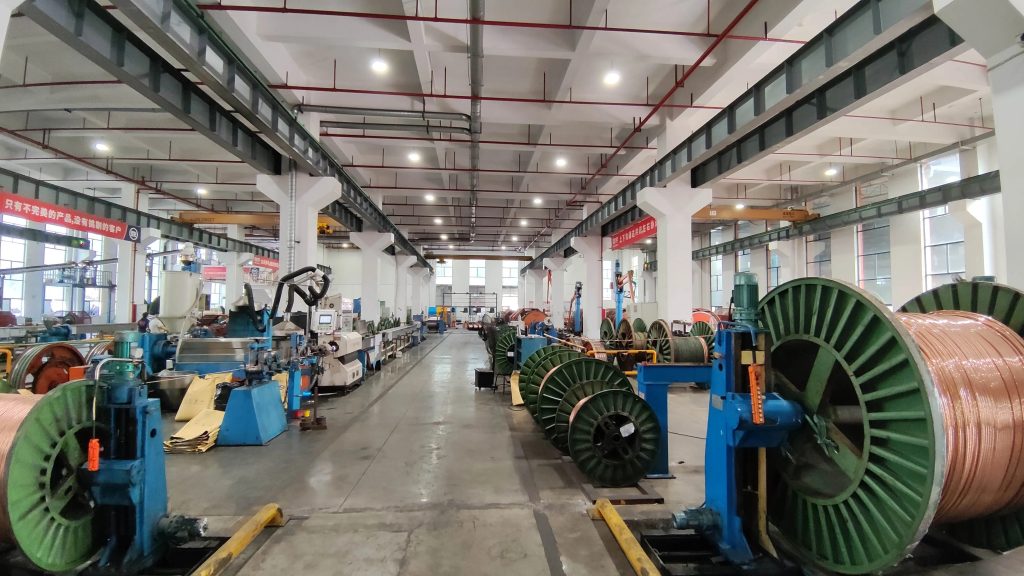
When sourcing industrial goods like building wires and control cables, verify that your vendor operates a genuine extrusion and testing facility. Direct manufacturing portals—such as the China Cable and Wire Manufacturing Co., Ltd. Profile—allow buyers to review clear factory parameters, specialized product capabilities (like BV, BVR, and 60227 IEC series), and established export setups without dealing with unverified intermediaries.
Actionable Pre-Shipment Inspection Checklist
Before authorizing final payment and container sealing, instruct your field auditor to execute this 4-step physical verification:
<Sequence>
  <Step title="Gross Weight Verification" subtitle="Detect copper-cheating instantly">
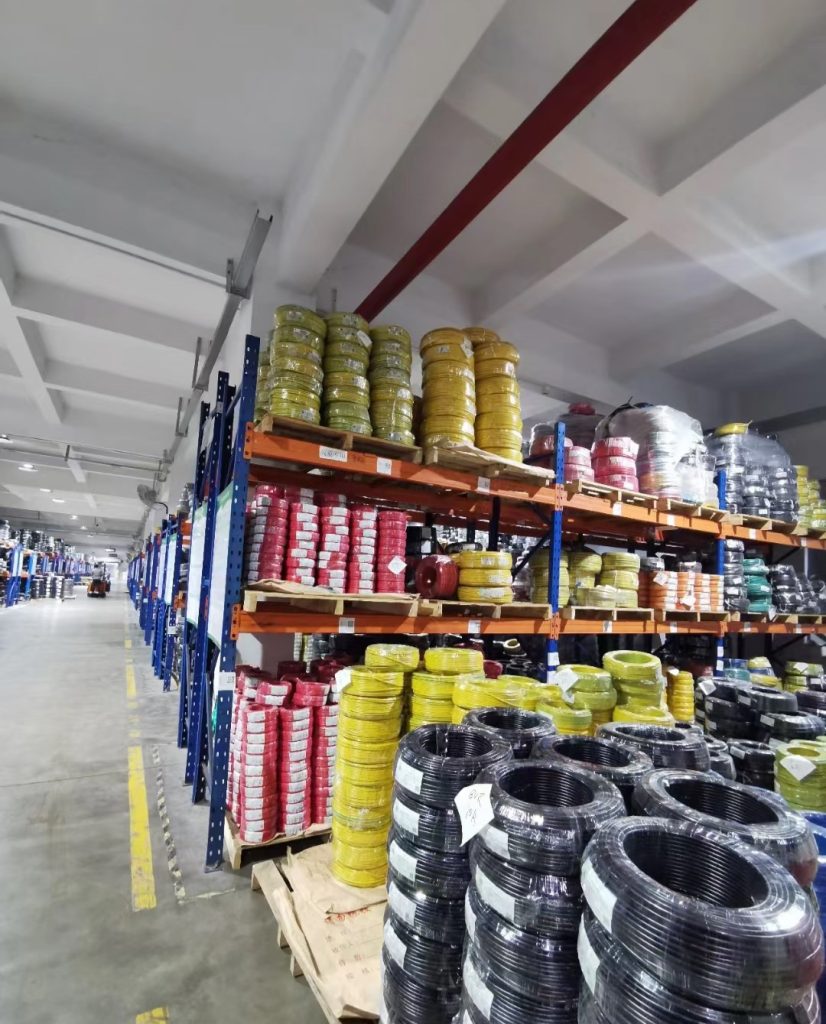
    Weigh multiple 100m coils across different batch cartons. A standard roll of 2.5mm² solid copper wire has a known theoretical weight; significant downward variance indicates undersized conductors or reduced insulation wall thickness.
  </Step>
  <Step title="Conductor Resistance Testing" subtitle="Electrical proof over visual assumption">
    Use a calibrated micro-ohmmeter to measure DC resistance per kilometer at 20°C, verifying compliance against maximum allowable IEC 60228 thresholds.
  </Step>
  <Step title="Flame Retardancy Check" subtitle="Verify safety compliance">
    Perform a simple vertical flame test on a sample section to verify self-extinguishing properties and check for excessive toxic smoke emission.
  </Step>
  <Step title="Packaging & Reel Inspection" subtitle="Protect cargo during ocean transport">
    Ensure inner spools are wrapped in moisture-proof shrink film, packed in reinforced corrugated master cartons, and stacked on heat-treated, fumigated pallets with edge protectors.
  </Step>
</Sequence>
Recommended Sourcing & Logistics Infrastructure
Building a secure, high-efficiency supply chain requires leveraging audited directories, freight forwarders, and platform resources. Explore these key internal channels:
- Direct Factory Hub: Review product specifications, manufacturing standards, and direct export parameters on the China Cable and Wire Manufacturing Co., Ltd. Showcase.
- Global Trade Portal: Connect with international B2B suppliers and explore regional market channels via the Global Trade Markets Overview.
- Verified Suppliers Directory: Locate vetted industrial factories and OEM/ODM specialists through the Verified Supplier Network.
- International Freight & Shipping Guide: Master heavy-cargo ocean shipping, container load optimization, and customs handling with the
- China Sourcing & Audit Guide: Learn step-by-step techniques for factory audits, business license verification, and quality control using the .
Frequently Asked Questions (FAQ)
What is the most effective way to test if cable copper is genuine and high-purity?
The most definitive method is a DC Resistance Test using a micro-ohmmeter, measuring a sample against IEC 60228 standards at 20°C. Additionally, a simple chemical burn test or scraping the conductor surface will instantly expose Copper-Clad Aluminum (CCA), as aluminum reveals its silvery core beneath the thin copper plating.
How do I know if a factory’s CE or IEC certificate is genuine?
Never rely on a printed image or PDF file alone. Copy the certificate reference number and company name, then search the official online verification database of the specific accredited testing body (such as TÜV, DEKRA, SGS, or Intertek) listed on the document.
Why is insulation eccentricity such a dangerous defect in industrial cabling?
Uneven insulation wall thickness means one side of the cable is thinner than intended. Under high thermal operating conditions, electrical surges, or mechanical conduit bending, these thin spots suffer dielectric breakdown first, leading to short circuits, arc flashes, and structural fires.
What payment terms should I insist on to protect my order quality?
The industry standard for safe overseas procurement is 30% T/T deposit and 70% balance paid AFTER a successful Pre-Shipment Inspection (PSI) report. Never transfer the final 70% balance until an independent inspector verifies roll weights, meter prints, conductor resistance, and packaging quality at the factory.



No reply content