
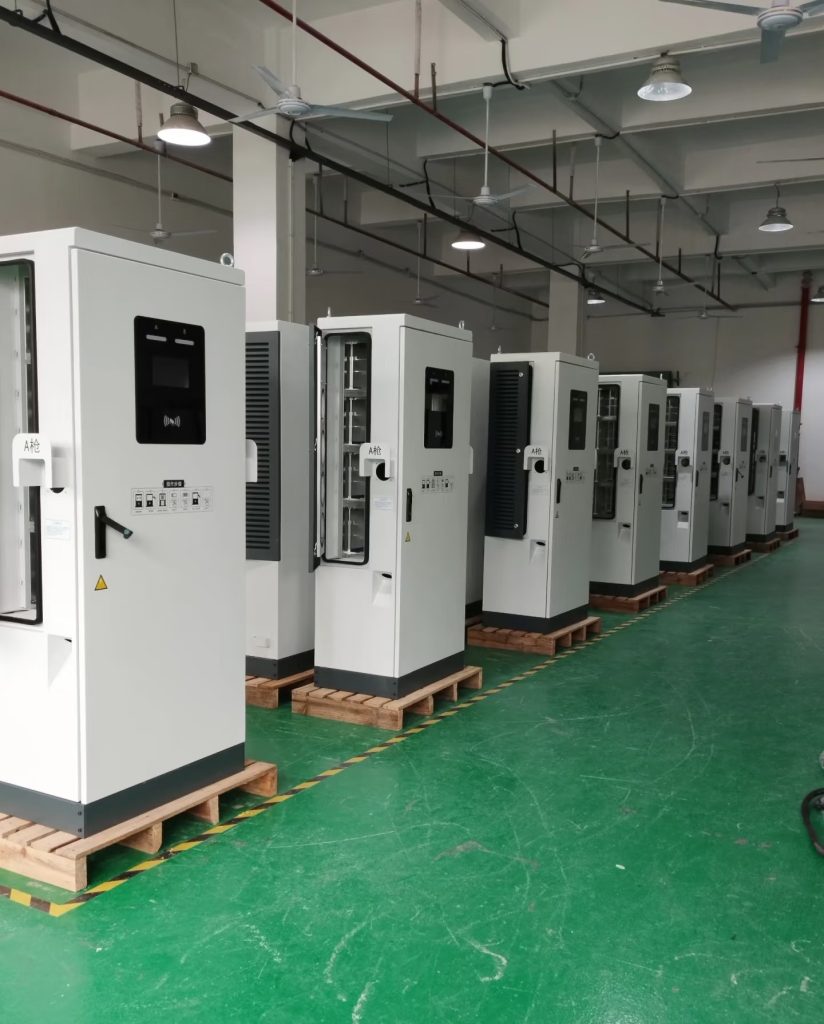
AC vs. DC EV Chargers: Which One Is Right for Your Project?
Choosing between an AC EV charger and a DC fast charger is one of the first decisions to make when planning an electric vehicle charging project. The right choice depends on charging speed, installation conditions, vehicle requirements, electricity supply, operating environment, and budget.
AC and DC chargers serve different applications. AC chargers are commonly used where vehicles remain parked for several hours, while DC chargers are designed for faster charging in commercial, fleet, highway, and public charging environments.
This guide explains the main differences between AC and DC EV chargers and provides practical considerations for international buyers sourcing charging equipment.
1. What Is an AC EV Charger?
An AC EV charger supplies alternating current to an electric vehicle. The vehicle’s onboard charger converts the AC electricity into DC electricity used by the battery.
Common AC charger power ratings include:
- 7kW
- 11kW
- 22kW
AC wall-mounted chargers are commonly used in:
- Residential properties
- Apartments
- Hotels
- Offices
- Workplaces
- Private parking areas
- Small commercial locations
Because vehicles can remain parked for several hours, AC charging is often suitable for locations where charging speed is important but ultra-fast charging is not required.
2. What Is a DC Fast Charger?
A DC fast charger converts AC electricity to DC electricity within the charging station before supplying DC power directly to the vehicle battery.
DC chargers can therefore provide much higher charging power than typical AC wallbox chargers.
Depending on the model, commercial DC charging stations may offer power ratings such as:
- 30kW
- 60kW
- 120kW
- 180kW
- 240kW
- 360kW
The actual charging speed depends on the charger, vehicle battery, battery management system, state of charge, temperature, and other technical factors.
DC fast chargers are commonly used for:
- Public charging stations
- Highway service areas
- Commercial parking facilities
- EV fleets
- Bus and logistics fleets
- Automotive dealerships
- High-traffic charging locations
3. AC vs. DC: Charging Speed
The biggest practical difference is charging speed.
AC chargers generally provide lower charging power and are suitable for longer parking periods.
DC fast chargers can provide significantly higher power and are designed to reduce charging time.
However, the charger’s rated power does not automatically mean that every vehicle will charge at that power.
For example, a 120kW DC charger cannot force a vehicle to accept 120kW if the vehicle’s maximum charging capability is lower.
When evaluating charging speed, buyers should therefore consider both the EV charger’s specifications and the target vehicles.
4. Installation Requirements
AC chargers generally have simpler electrical requirements than high-power DC charging stations.
A 7kW or 11kW AC charger may be easier to install at a residential or workplace location, subject to the local electrical system.
Higher-power AC and DC chargers can require more substantial electrical infrastructure.
For commercial DC charging projects, buyers may need to consider:
- Available grid capacity
- Input voltage
- Maximum current
- Transformer capacity
- Distribution equipment
- Cable requirements
- Site space
- Ventilation
- Protection systems
The electrical infrastructure should be evaluated before selecting the final charger model.
5. Cost Considerations
AC chargers generally have a lower equipment cost than high-power DC fast chargers.
However, the total project cost is not determined by the charger price alone.
Buyers should consider:
- Charger equipment
- Electrical installation
- Distribution equipment
- Transformer requirements
- Cabling
- Civil works
- Network connection
- Software
- Maintenance
- Shipping
- Import duties and taxes
- Installation labor
For a residential project, an AC wallbox may provide the best balance between cost and charging requirements.
For a commercial charging station where rapid vehicle turnover is important, a DC charger may provide greater operational value despite the higher initial investment.
6. Choosing AC Charging for Residential Projects
AC charging is often suitable for residential applications because vehicles are typically parked for long periods.
For example, a homeowner may plug in the vehicle after returning home and leave it charging overnight.
When choosing a residential AC charger, consider:
- Available household power supply
- Required charging power
- Vehicle compatibility
- Installation location
- Cable length
- Indoor or outdoor installation
- Connectivity
- Safety functions
- Weather protection
A 7kW, 11kW, or 22kW charger may be appropriate depending on the electrical installation and vehicle requirements.
7. Choosing AC Charging for Commercial Properties
AC chargers can also be useful for offices, hotels, apartment buildings, shopping centers, and workplaces.
These locations often have longer parking periods, allowing vehicles to charge while customers or employees are working, shopping, or staying overnight.
For commercial AC projects, buyers should evaluate:
- Number of charging points
- Available electrical capacity
- User management
- Payment functions
- Network connectivity
- OCPP compatibility
- Load management
- Installation costs
For larger projects, smart charging and load management can become particularly important.
8. Choosing DC Charging for Public Stations
DC fast charging is generally more suitable for locations where vehicles need to charge quickly and leave the station soon afterward.
Potential applications include:
- Highway charging
- Service stations
- Urban fast-charging hubs
- Fleet depots
- Commercial transportation
- Taxi charging
- Logistics operations
When choosing a DC charger, buyers should pay close attention to the required power level.
A 30kW charger may be suitable for some applications, while a high-traffic charging hub may require much higher power.
9. Consider the Target Vehicle Fleet
The vehicles that will use the chargers should be considered before selecting the equipment.
For a passenger-car charging project, buyers should review:
- Vehicle charging capability
- Connector requirements
- Battery capacity
- Maximum AC charging power
- Maximum DC charging power
For fleets, the analysis should also include:
- Number of vehicles
- Daily mileage
- Charging schedule
- Vehicle operating hours
- Required turnaround time
- Available charging windows
This information can help determine how many chargers are required and what power rating is appropriate.
10. Check Connector and Charging Standards
Connector requirements vary by market and vehicle.
Before placing an order, confirm:
- Required connector type
- Number of charging guns
- Cable configuration
- Applicable electrical standards
- Target vehicle compatibility
Do not select a charger solely because it has a high power rating. A charger must also be compatible with the vehicles and infrastructure where it will be installed.
11. Consider OCPP and Smart Charging
For networked commercial charging projects, communication functions can be important.
Buyers should confirm whether the charger supports the required OCPP version and whether it can communicate with the selected charging management platform.
Depending on the project, useful functions may include:
- Remote monitoring
- Charging session management
- User authentication
- Remote configuration
- Firmware updates
- Energy monitoring
- Load management
These functions can become increasingly important as the number of charging stations grows.
12. AC or DC: Which One Should You Choose?
A simple way to compare the two technologies is:
| Requirement | AC EV Charger | DC Fast Charger |
|---|---|---|
| Residential charging | Suitable | Usually unnecessary |
| Workplace charging | Suitable | Suitable for fast turnover |
| Hotel charging | Suitable | Suitable depending on demand |
| Apartment charging | Suitable | Possible for shared facilities |
| Public fast charging | Limited | Highly suitable |
| Highway charging | Generally unsuitable | Highly suitable |
| Fleet charging | Suitable for long parking | Suitable for rapid turnaround |
| Initial equipment cost | Generally lower | Generally higher |
| Charging speed | Lower | Higher |
| Electrical infrastructure | Generally simpler | Often more demanding |
The best solution depends on the project’s actual operating requirements.
13. Questions to Ask an EV Charger Manufacturer
Before ordering, ask the manufacturer:
- What AC and DC power ratings are available?
- Which connectors are supported?
- Which certifications are available for the selected model?
- Does the charger support OCPP?
- Can the charger be customized?
- What is the MOQ?
- What is the typical production lead time?
- What warranty and after-sales support are provided?
- Can the manufacturer provide technical documentation?
- Can samples be supplied before bulk production?
A professional supplier should be able to provide clear technical information rather than only a product price.
Frequently Asked Questions
Is an AC charger better than a DC charger?
Neither technology is universally better. AC chargers are often more suitable for long-duration parking, while DC fast chargers are designed for applications requiring faster charging.
Is a 22kW AC charger faster than a 7kW AC charger?
A 22kW AC charger can provide higher charging power than a 7kW charger when the vehicle and electrical installation support the required power. The actual charging rate is limited by the vehicle and electrical system.
What power rating should I choose for a DC fast charger?
The appropriate power rating depends on the target vehicles, expected charging demand, available electrical capacity, required charging time, and project budget.
Can one project use both AC and DC chargers?
Yes. Many commercial locations can use a combination of AC and DC chargers. AC chargers can serve vehicles parked for longer periods, while DC chargers can provide faster charging for users who need shorter charging times.
Does a higher-power charger always mean faster charging?
No. The actual charging speed depends on the charger’s power, the vehicle’s charging capability, battery condition, temperature, and other system limitations.
Can AC and DC chargers be customized for different markets?
Depending on the manufacturer and model, customization may include connectors, power configuration, communication functions, branding, packaging, and other requirements. Buyers should confirm the available options with the manufacturer.
Conclusion
The choice between AC and DC EV charging should be based on the project’s actual charging requirements rather than simply selecting the highest available power.
AC chargers are generally well suited to homes, workplaces, hotels, apartments, and other locations where vehicles remain parked for longer periods. DC fast chargers are more suitable for public charging, highways, fleets, and commercial locations where fast vehicle turnaround is important.
International buyers should evaluate charging power, vehicle compatibility, connector requirements, electrical infrastructure, certifications, communication functions, OEM capability, MOQ, lead time, and total project cost before placing an order.
For buyers looking for AC wall-mounted chargers or DC fast charging stations from China, you can learn more about the supplier here:
China EV Charging Station Manufacturer
You can provide the required charging power, quantity, connector type, destination market, and customization requirements when requesting product information or a quotation.


No reply content