
China Custom Furniture Factory
Beyond the Cabinet: The Strategic Value of China’s Custom Kitchen Furniture Suppliers in the Global Market
The kitchen is no longer just a utilitarian space for meal preparation. It has evolved into the heart of the modern home—a multifunctional hub for cooking, entertaining, and living. This global shift in perception has fueled an insatiable demand for kitchens that are not only beautiful and functional but are also deeply personal, reflecting the individual homeowner’s lifestyle, taste, and spatial constraints. Catering to this demand is a sophisticated, design-led industry often hidden in plain sight: China’s custom kitchen furniture manufacturing sector. Far from the outdated image of mass-produced generic boxes, a new generation of Chinese suppliers has emerged as a global powerhouse for high-quality, technically advanced, and meticulously customized cabinetry and kitchen solutions. This article explores the evolution, capabilities, and strategic advantages of partnering with these specialized manufacturers for importers, developers, and high-end retailers worldwide.
The Evolution: From OEM Workshops to Integrated Solution Providers
The journey of China’s custom kitchen furniture industry mirrors the nation’s broader manufacturing ascent. It began decades ago with Original Equipment Manufacturing (OEM), where factories executed designs and used materials specified by foreign brands. This phase was crucial, as it ingrained fundamental skills in woodworking, panel processing, and hardware assembly on a massive scale. However, the real transformation began when forward-thinking manufacturers invested in moving up the value chain. They absorbed international design trends, adopted stringent quality management systems (like ISO 9001), and, most importantly, made colossal investments in advanced, computer-controlled machinery from Germany and Italy. This technological leap was a game-changer.
Today, leading suppliers are best described as Integrated Solution Providers. They offer a vertically integrated service that spans from initial concept collaboration to the final delivery of ready-to-install modules. This integration provides unparalleled control over the entire process, ensuring quality consistency, timeline adherence, and cost efficiency—the holy trinity of successful project execution.
Core Competencies: The Pillars of Excellence
What distinguishes a top-tier Chinese custom kitchen supplier? Several interconnected capabilities form the foundation of their value proposition.
-
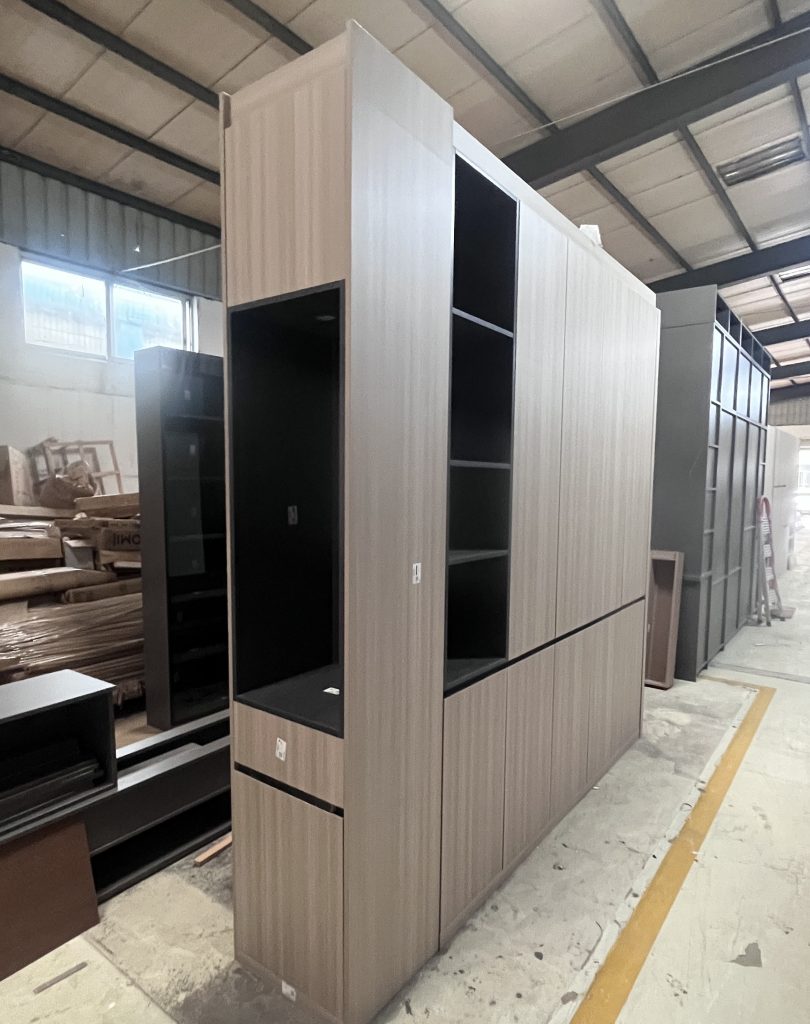
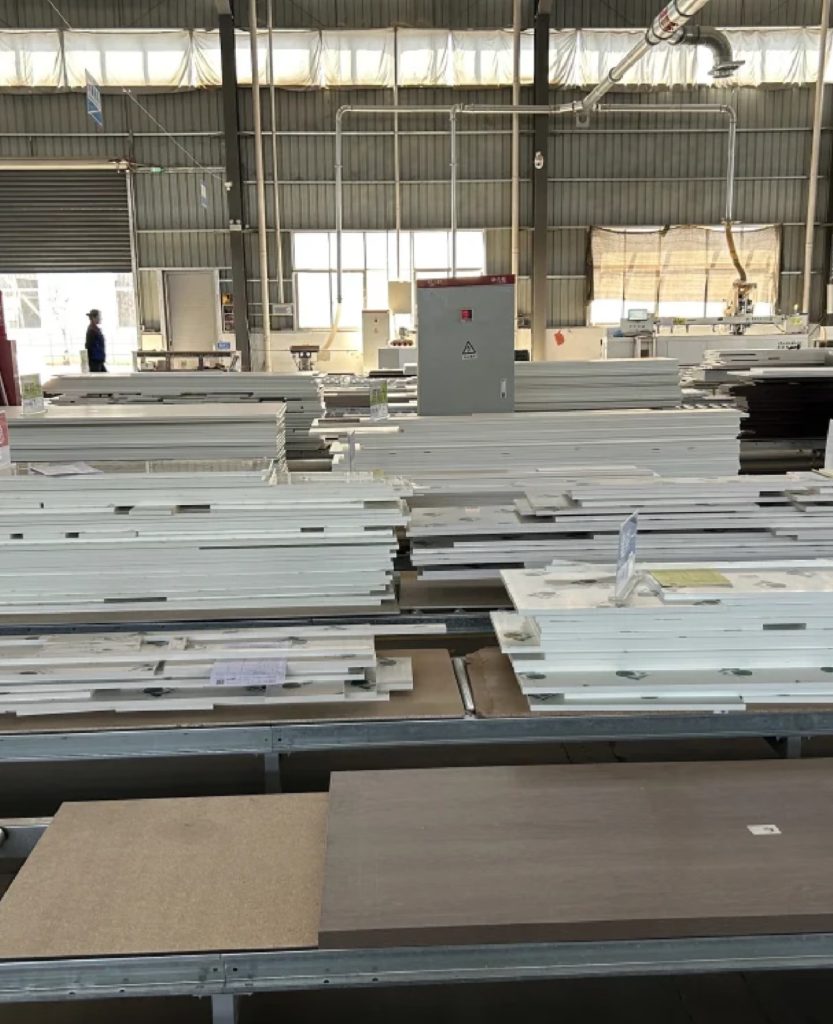
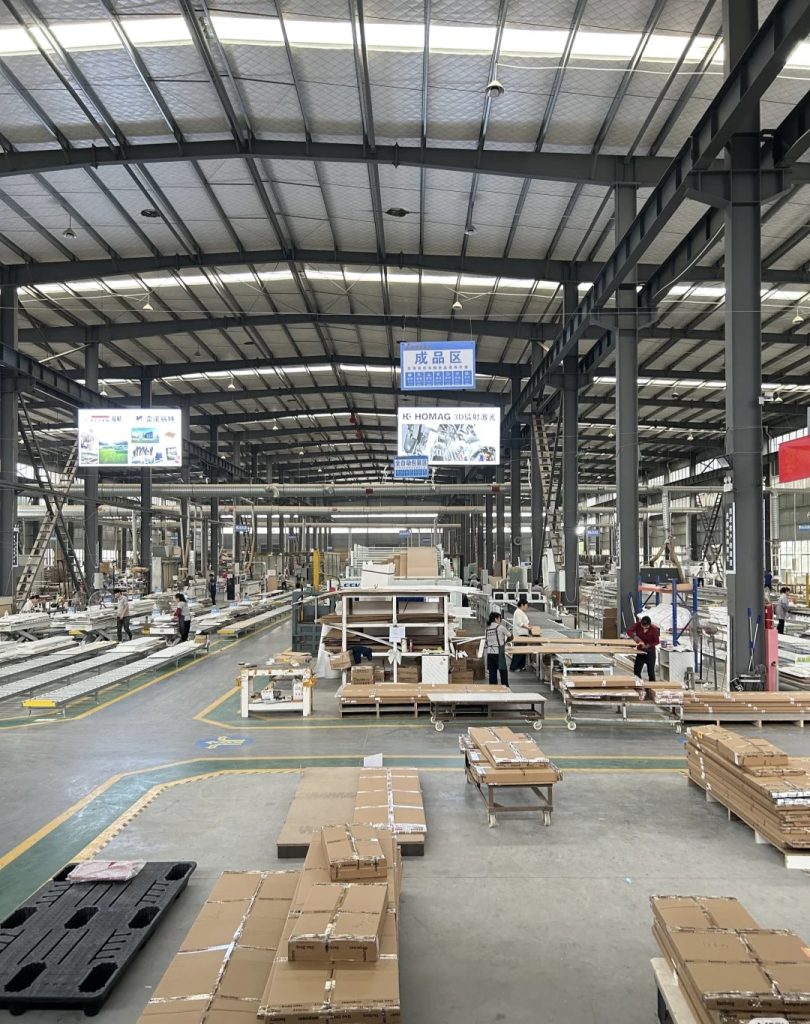
Advanced Manufacturing Agility: At the heart of their operation lies a flexible, technology-driven production floor. Computer Numerical Control (CNC) machines, edge-banding systems, and digital panel saws allow for precise, repeatable, and efficient fabrication of components. Crucially, this digital workflow enables true customization. Switching from a production run of one cabinet design to another is a matter of software instructions, not a day of manual retooling. This makes “batch size one” economically viable, allowing them to handle everything from a single luxury apartment kitchen to 500 units for a hotel or residential project without sacrificing precision.
-
Material Mastery and Sourcing Power: China’s domestic market is one of the world’s largest consumers of building and decorative materials. Consequently, leading kitchen manufacturers have unparalleled access to a vast universe of raw materials. They don’t just work with standard laminates and wood veneers. They maintain extensive libraries featuring:
-
Solid Woods: European oak, American walnut, and teak, sourced and kiln-dried to specific climatic standards.
-
Innovative Surfaces: Ultra-compact sintered stone, large-format ceramic slabs, high-pressure laminates with realistic textures, and a wide array of lacquers and automotive-grade paints.
-
Specialty Materials: Glass, metals, and sustainable composites. This access allows them to collaborate with clients to select the perfect material palette for aesthetics, durability, and budget.
-
-
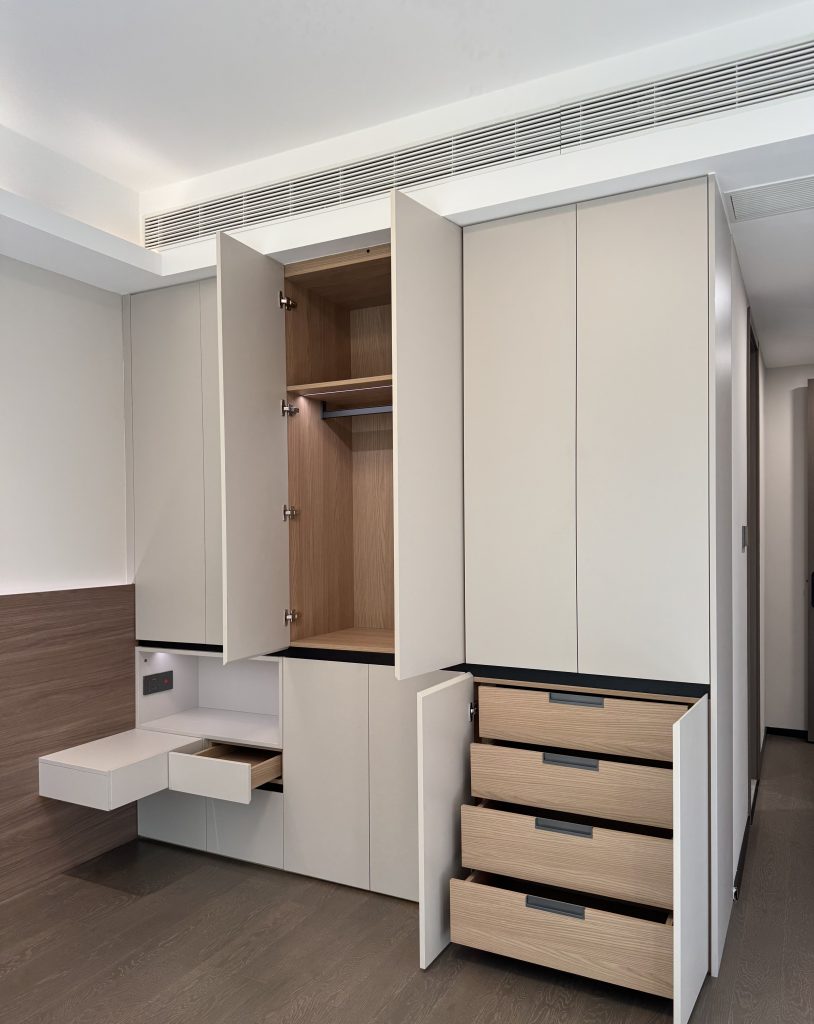
Engineering and Design Partnership: True customization is an exercise in intelligent engineering, not just aesthetic choice. The best suppliers employ teams of engineers and designers who work to translate a kitchen’s look into a functional, durable, and installable reality. They advise on cabinet internals for specific storage needs (cutlery trays, spice pull-outs, corner solutions), ensure structural integrity for overhanging countertops, and design seamless integration for appliances from Gaggenau, Sub-Zero, or Miele. This collaborative approach transforms the client’s vision into a manufacturable, error-minimized technical package.
-
Uncompromising Quality Infrastructure: Quality is not an afterthought; it is systematized. The benchmark is the 32mm System, a European standard for drill hole spacing and construction that ensures flawless assembly and hardware compatibility. Hardware from premium brands like Blum, Hettich, or Grass is standard. A rigorous quality control (QC) protocol is enforced at every stage: material inspection, production line checks, pre-assembly dry fits, and final packaging. This meticulous attention to detail ensures that cabinets arrive on-site perfectly finished and ready for smooth installation.
The Strategic Collaboration: A Blueprint for Success
Working effectively with a Chinese custom kitchen supplier is a partnership. Here is a roadmap for a successful collaboration:
-
Phase 1: Deep Discovery & Technical Dialogue: The process begins with a comprehensive exchange. The client provides inspiration (mood boards, sketches, architectural plans) and a detailed project brief covering aesthetics, functionality, budget, and target market. The supplier reviews this, asks clarifying questions, and provides initial feedback on manufacturability and material recommendations. This stage aligns expectations and feasibility.
-
Phase 2: Co-Creation & Quotation: Based on the brief, the supplier’s design team creates detailed 3D renderings and technical drawings. This is an iterative process. Once the design is finalized, the supplier provides a transparent, itemized quotation covering all materials, hardware, labor, and logistics. Clear terms regarding payment schedules (e.g., 30% deposit, 70% before shipment), production timelines, and Incoterms (like FOB or CIF) are established.
-
Phase 3: Production & Transparent Communication: Upon order confirmation, production begins. A reputable supplier will assign a dedicated project manager as a single point of contact. They provide regular updates, including photos and videos of key production milestones (e.g., material arrival, panel processing, finishing, and quality checks). This transparency builds immense trust and allows for proactive management.
-
Phase 4: Precision Logistics & Installation Support: The supplier carefully packs the order, with each cabinet door and drawer front protected. They provide clear numbering/identification corresponding to installation plans. Comprehensive installation manuals and, if required, on-site technical support can be arranged. They handle all export documentation, ensuring smooth customs clearance.
Navigating Trends and Building the Future
The industry is dynamically responding to global trends:
-
Sustainability as Standard: There is growing demand for materials with low VOC emissions (like E0/E1 standard panels), FSC-certified woods, and recycled content. Leading factories are implementing waste-reduction systems and optimizing material yields, appealing to eco-conscious brands and consumers.
-
The Smart Kitchen Integration: Suppliers are increasingly adept at designing cabinetry to seamlessly house and integrate smart home technology, wiring for built-in charging stations, and creating solutions for hidden appliance garages and pop-up mechanisms.
-
Focus on Value Engineering: For volume projects, suppliers work as partners in value engineering—suggesting alternative materials or constructions that achieve the same visual and functional outcome at a lower cost without compromising quality, a critical skill for developers and large-scale retailers.
Conclusion: Partnering for a Competitive Edge
Choosing a premium Chinese custom kitchen furniture supplier is a strategic decision that offers a formidable competitive advantage. It is a partnership that combines world-class design sensitivity, engineering rigor, and manufacturing agility with significant cost and scalability benefits. For businesses looking to offer their end clients exceptional quality, limitless design personalization, and superior value, these suppliers provide the keys to unlocking the true potential of the modern kitchen. By moving beyond a transactional buyer-vendor relationship and fostering a true collaborative partnership, international clients can leverage this deep expertise to deliver kitchens that are not just built, but are masterfully crafted for living.


No reply content