
China computer manufacturers
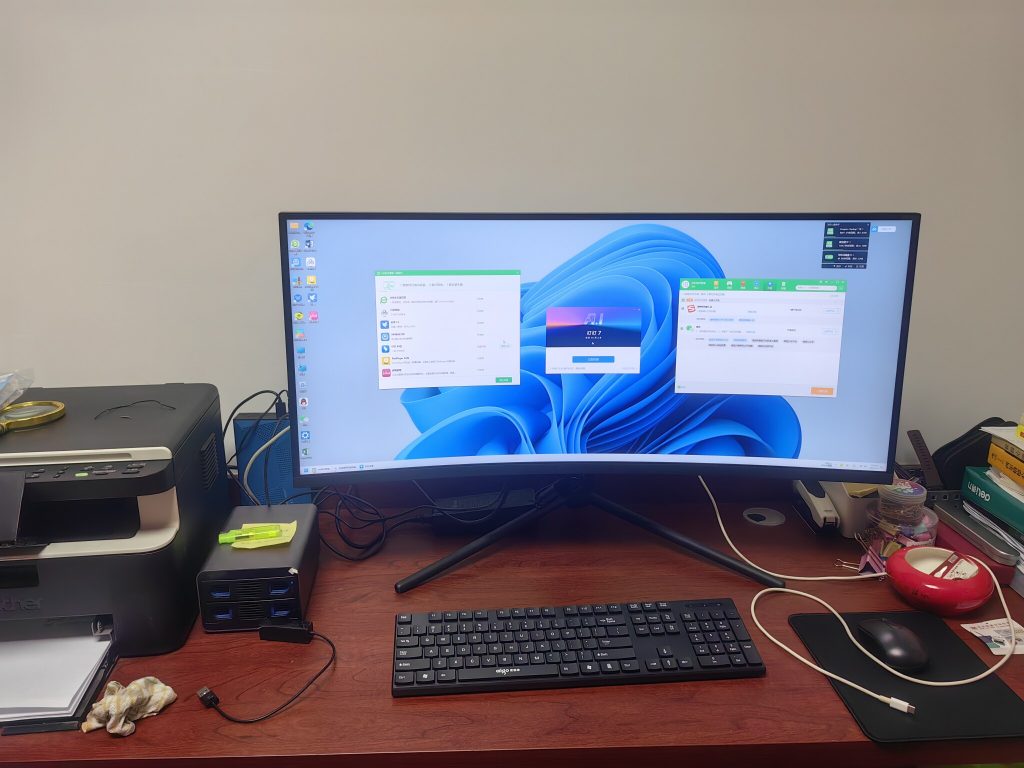
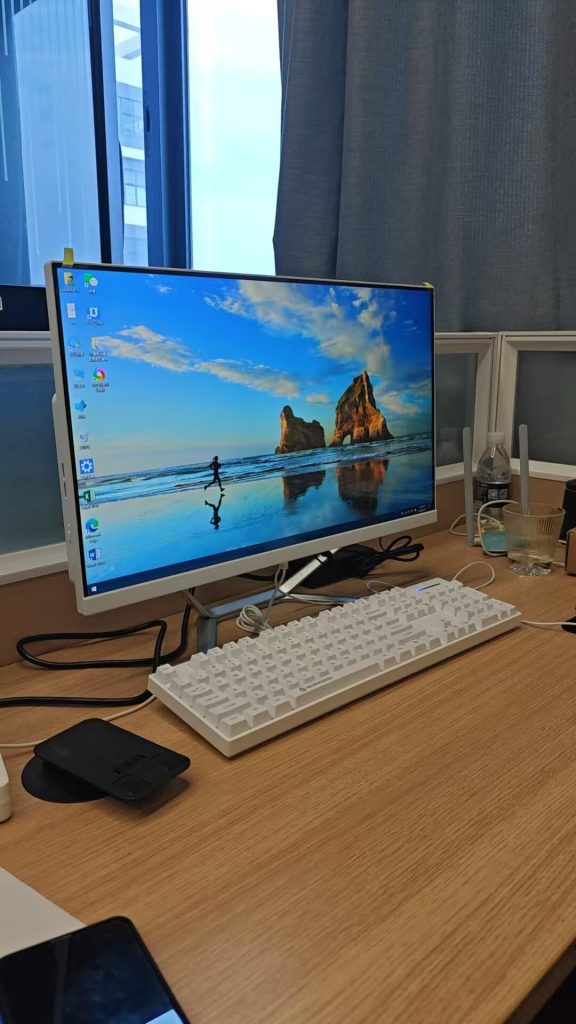
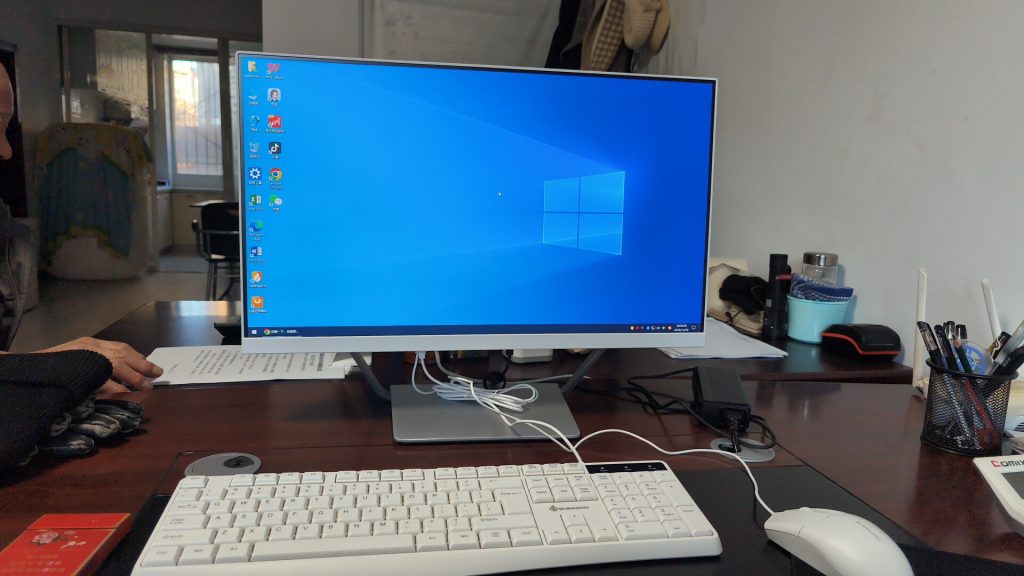
The global computer market is increasingly turning to China for its unparalleled manufacturing capabilities, technological innovation, and cost-efficiency. For businesses, IT resellers, and even tech enthusiasts, purchasing computers from China offers access to cutting-edge hardware, flexible customization, and scalable supply chains. However, navigating this ecosystem requires understanding the technical nuances, quality standards, and decision-making frameworks that define reputable Chinese manufacturers. This article provides a comprehensive, E-E-A-T (Experience, Expertise, Authoritativeness, Trustworthiness)-driven guide to buying computers from China, with a focus on technical specifications, comparative analysis, and trust-building practices.
Why China? The Foundation of a Thriving Computer Manufacturing Ecosystem
China’s rise as a global computer manufacturing hub is rooted in decades of strategic investment in three pillars:
1. Vertical Integration & Supply Chain Dominance
Leading Chinese manufacturers control end-to-end production, from raw material sourcing (e.g., silicon wafers, rare earth metals) to component fabrication (CPUs, GPUs, motherboards) and final assembly. This vertical integration reduces lead times by 30–50% compared to fragmented global supply chains and ensures consistency in quality. For example, a single facility may house SMT (Surface-Mount Technology) lines for PCB assembly, automated testing rigs for component validation, and cleanrooms for display calibration—all under one roof.
2. R&D Investment in Emerging Technologies
Chinese firms allocate 5–8% of annual revenue to R&D, focusing on high-growth areas like AI-accelerated computing, energy-efficient architectures, and modular design. This has led to breakthroughs in areas such as:
-
Low-Power Processors: ARM-based SoCs (System-on-Chip) for thin clients and edge devices, with TDP (Thermal Design Power) as low as 5W.
-
Advanced Cooling: Vapor chamber + liquid metal thermal interface materials (TIM) for high-performance desktops, reducing peak temperatures by 15–20°C.
-
Flexible Displays: Foldable OLED panels for niche laptop models, with bend radii <3mm.
3. Cost-Efficiency Without Compromising Quality
Economies of scale and localized component production enable Chinese manufacturers to offer identical or superior specs at 20–35% lower costs than competitors in North America or Europe. This is not achieved through corner-cutting but through optimized workflows: automated assembly lines reduce labor costs by 40%, while in-house component testing cuts third-party validation expenses.
Technical Specifications: Decoding the DNA of Chinese-Made Computers
To evaluate a Chinese computer’s value, one must analyze its core components using industry-standard technical parameters. Below is a detailed breakdown of key hardware categories, with typical performance benchmarks from leading Chinese manufacturers.
1. Central Processing Unit (CPU): The Brain of Performance
The CPU dictates multitasking, computational speed, and power efficiency. Chinese manufacturers offer both off-the-shelf and custom-designed processors, with a focus on x86 (Intel/AMD-compatible) and ARM architectures.
| Parameter | Entry-Level (Office/Home) | Mid-Range (Content Creation) | High-Performance (Gaming/AI) |
|---|---|---|---|
| Architecture | x86-64 (14nm/7nm) | x86-64 (7nm/5nm) | x86-64 (5nm/3nm) or ARMv9 (4nm) |
| Cores/Threads | 4C/8T (e.g., Intel Celeron N5105) | 6C/12T (e.g., AMD Ryzen 5 7535U) | 8C/16T (Ryzen 7 7840HS) or 16C/32T (Threadripper 7970X) |
| Base/Boost Clock | 2.0–2.9 GHz / 2.9–3.3 GHz | 2.5–3.2 GHz / 4.2–4.8 GHz | 3.2–4.0 GHz / 5.0–5.7 GHz |
| Cache | 4–6MB L3 | 16–32MB L3 | 32–64MB L3 or 64–128MB L3 (HEDT) |
| TDP | 10–15W (fanless/low-profile) | 25–45W (standard desktops/laptops) | 55–125W (gaming/workstation) |
| Integrated GPU | Intel UHD Graphics 600 (32 EU) | AMD Radeon 610M (2 CU) | AMD Radeon 780M (12 CU) or Intel Iris Xe (96 EU) |
Expert Insight: Chinese manufacturers often optimize CPU-GPU pairing for specific use cases. For example, a mid-range business laptop might pair an AMD Ryzen 5 7535U with Radeon 610M for balanced productivity, while a gaming desktop could use an Intel Core i5-13600KF with NVIDIA RTX 4060 for 1080p high-refresh-rate gaming.
2. Graphics Processing Unit (GPU): Visual and Computational Power
GPUs handle rendering, AI inference, and parallel computing. Chinese suppliers offer integrated, discrete, and workstation-grade options, with a growing focus on domestic alternatives to Western brands.
| Type | Model Example | VRAM | Memory Bus | Bandwidth | Use Case |
|---|---|---|---|---|---|
| Integrated | Intel Iris Xe (96 EU) | Shared System RAM | Up to 128-bit | 68 GB/s | Office, 4K video playback |
| Discrete (Consumer) | NVIDIA RTX 4060 (Laptop) | 8GB GDDR6 | 128-bit | 272 GB/s | 1080p/1440p gaming, light 3D modeling |
| Discrete (Workstation) | NVIDIA RTX A5000 | 24GB GDDR6 | 384-bit | 936 GB/s | CAD, 8K video editing, AI training |
| Domestic Alternative | Moore Threads MTT S80 | 16GB GDDR6 | 256-bit | 448 GB/s | Mid-range gaming, cloud rendering |
Technical Note: Chinese manufacturers prioritize GPU compatibility with open standards like Vulkan and DirectX 12 Ultimate, ensuring cross-platform performance. Some also integrate Tensor Cores for AI acceleration (e.g., NVIDIA’s DLSS or AMD’s FSR).
3. Memory (RAM): Speed and Capacity Balance
RAM affects multitasking fluidity and application responsiveness. Chinese computers typically use DDR4 or DDR5 modules, with configurations tailored to use cases.
| Parameter | Budget Models | Mainstream Models | High-End Models |
|---|---|---|---|
| Type | DDR4-2666 | DDR4-3200 / DDR5-4800 | DDR5-5600 / DDR5-6400 |
| Capacity | 8GB (single-channel) | 16GB (dual-channel) | 32–64GB (dual/quad-channel) |
| Timings | CL19-19-19-43 | CL16-18-18-38 (DDR4) / CL40-40-40-77 (DDR5) | CL30-36-36-76 (DDR5) |
| Voltage | 1.2V (DDR4) / 1.1V (DDR5) | 1.2V (DDR4) / 1.1V (DDR5) | 1.1V (DDR5) |
| Expandability | Soldered (non-upgradeable) | 1–2 SO-DIMM slots (up to 32GB) | 2–4 SO-DIMM slots (up to 128GB) |
Key Consideration: Dual-channel RAM is critical for integrated GPUs, as it doubles memory bandwidth. Chinese manufacturers often preconfigure dual-channel setups in mid-range and above to avoid bottlenecks.
4. Storage: Speed, Capacity, and Reliability
Storage solutions balance read/write speeds, durability, and cost. Chinese suppliers offer NVMe SSDs, SATA SSDs, and hybrid HDDs, with a focus on TLC (Triple-Level Cell) NAND for mainstream models.
| Type | Interface | Read Speed | Write Speed | Endurance (P/E Cycles) | Typical Use |
|---|---|---|---|---|---|
| NVMe PCIe Gen3 | M.2 2280 | 3500 MB/s | 3000 MB/s | 500–1000 | Budget gaming, office PCs |
| NVMe PCIe Gen4 | M.2 2280 | 7000 MB/s | 6500 MB/s | 1000–1500 | Mainstream gaming, content creation |
| NVMe PCIe Gen5 | M.2 2280 | 12,000 MB/s | 11,000 MB/s | 1500–2000 | High-end workstations, AI servers |
| SATA III SSD | 2.5”/M.2 | 550 MB/s | 520 MB/s | 300–500 | Legacy system upgrades |
| Hybrid HDD (SSHD) | 3.5” | 210 MB/s | 180 MB/s | 50,000 hours MTBF | Mass storage (1–4TB) |
Reliability Standard: Reputable Chinese manufacturers use 3D NAND flash (176-layer or higher) for SSDs, with built-in LDPC (Low-Density Parity-Check) error correction to extend lifespan.
5. Motherboard: The System’s Backbone
Motherboards connect all components, with chipset choice dictating expandability. Chinese manufacturers often use Intel B-series (budget) or Z-series (overclocking) chipsets, or AMD B/X-series.
| Parameter | Value/Example |
|---|---|
| Chipset | Intel B760 (mainstream) / Z790 (enthusiast) |
| CPU Socket | LGA 1700 (Intel 12th/13th Gen) / AM5 (AMD Ryzen 7000) |
| PCIe Slots | 1x PCIe 5.0 x16 (GPU) + 2x PCIe 4.0 x4 (storage) |
| M.2 Slots | 2–4 (PCIe 4.0/5.0) |
| USB Ports | 4x USB 3.2 Gen2 (10 Gbps) + 2x USB4 (40 Gbps) |
| Networking | 2.5GbE LAN + Wi-Fi 6E (802.11ax) |
Customization: Many Chinese suppliers allow motherboard layout adjustments (e.g., adding extra USB ports, relocating M.2 slots) for OEM clients.
6. Cooling System: Managing Heat in Compact Designs
Efficient cooling is critical for sustained performance. Chinese manufacturers use a mix of air and liquid cooling, with parameters optimized for chassis size.
| Component | Parameter | Example (Gaming Desktop) |
|---|---|---|
| CPU Cooler | Type: Tower Air Cooler | 4x 6mm copper heat pipes + 120mm PWM fan (1500–2500 RPM) |
| GPU Cooler | Type: Open-Air Axial Fan | 3x 90mm fans + vapor chamber base |
| Case Fans | Size/Count: 120mm x3 (intake/exhaust) | 120mm ARGB fans (800–1800 RPM) |
| Max Noise Level | <40 dB (idle) / <55 dB (load) | Measured at 1m distance |
| Peak CPU Temp | <85°C (stock cooler) / <75°C (aftermarket) | Under Prime95 stress test |
Innovation: Some high-end models use phase-change materials (PCM) in thermal pads, which absorb heat during peaks and release it gradually, reducing temperature spikes.
Key Decision Factors When Buying Chinese Computers
Beyond specs, several factors determine a successful purchase:
1. Customization Capabilities (OEM/ODM)
Reputable Chinese manufacturers offer end-to-end customization:
-
Hardware: Chassis design (aluminum/magnesium alloy), port layout, keyboard backlighting (RGB/white), biometric sensors (fingerprint/IR camera).
-
Software: Preinstalled OS (Windows 11 Pro/Linux), enterprise tools (Microsoft Intune, VMware Horizon), BIOS branding (custom splash screens, secure boot settings).
-
Compliance: Certifications like FCC (US), CE (EU), CCC (China), and industry-specific standards (e.g., MIL-STD-810G for rugged devices).
2. Quality Assurance Protocols
Trust is built through rigorous testing:
-
Component-Level: Incoming inspection (IC testing, capacitor ESR measurement).
-
System-Level: Burn-in tests (72-hour continuous operation at 90% load), electromagnetic compatibility (EMC) testing (EN 55032 Class B).
-
Environmental: Temperature/humidity cycling (-20°C to 60°C, 5–95% RH), drop testing (1.2m onto plywood), vibration resistance (ISTA 3A).
3. Supply Chain Transparency
Leading suppliers provide real-time updates via ERP systems, including:
-
Raw material sourcing (conflict-free minerals certification).
-
Production milestones (SMT completion, assembly, QA).
-
Logistics tracking (air/sea freight, customs clearance).
4. After-Sales Support
Comprehensive support includes:
-
Warranty: 12–36 months (extendable to 5 years for enterprise clients).
-
Spare Parts: Local warehouses in key regions (North America, EU, Southeast Asia) for 48-hour replacement.
-
Technical Assistance: 24/7 multilingual support (English, Spanish, German) via phone, email, or remote desktop.
Comparative Analysis: Chinese Computers vs. Global Alternatives
To contextualize value, compare Chinese-made computers with those from other regions:
| Factor | Chinese Manufacturers | Taiwanese Manufacturers | US/European Manufacturers |
|---|---|---|---|
| Price (Same Specs) | 20–35% lower | 10–25% lower | Benchmark price |
| Customization Speed | 4–6 weeks (design to prototype) | 6–8 weeks | 8–12 weeks |
| Component Sourcing | In-house + local suppliers (short lead times) | Mix of local and global suppliers | Primarily global suppliers |
| Innovation Focus | Cost-optimized tech (e.g., efficient cooling) | Premium build quality (e.g., boutique cases) | Niche markets (e.g., gaming peripherals) |
| After-Sales Network | Growing global presence (local warehouses) | Established in Asia/EU | Strong in North America/EU |
Takeaway: Chinese computers excel in scalability and cost-efficiency, making them ideal for bulk orders or price-sensitive markets. Taiwanese and US/European brands may lead in premium aesthetics or niche segments but at higher costs.
FAQ: Addressing Common Buyer Concerns
Q1: What is the minimum order quantity (MOQ) for Chinese computer manufacturers?
A: MOQs vary by product type: 500–1000 units for standard desktops/laptops, 200–500 units for semi-custom models, and 100+ units for highly customized designs (with additional tooling fees).
Q2: Can I request custom hardware configurations (e.g., specific CPU/GPU pairs)?
A: Yes. Most manufacturers support “build-to-order” (BTO) configurations, with options for Intel/AMD CPUs, NVIDIA/AMD GPUs, and RAM/storage upgrades. Lead times increase by 2–4 weeks for non-standard parts.
Q3: How do Chinese manufacturers ensure compliance with international regulations?
A: They conduct pre-compliance testing in-house (e.g., FCC Part 15 for emissions) and partner with certified labs (e.g., TÜV, SGS) for final validation. Documentation (test reports, certificates) is provided with each shipment.
Q4: What if a component fails post-delivery?
A: Reputable suppliers offer cross-shipping: a replacement part is sent within 48 hours, and the faulty unit is returned for repair/replacement. Warranty claims are processed within 5–7 business days.
Q5: Are Chinese computers less durable than Western-made ones?
A: No. Durability depends on design and testing, not origin. Leading Chinese manufacturers use the same MIL-STD-810G testing as global brands and often exceed industry standards for component selection (e.g., using solid capacitors instead of electrolytic).
Conclusion: Building Trust in China’s Computer Market
Buying computers from China is a strategic choice for those seeking a blend of performance, customization, and value. By focusing on technical specifications (e.g., CPU core counts, NVMe Gen4 speeds, DDR5 timings) and partnering with manufacturers that prioritize E-E-A-T—through transparent quality control, robust after-sales support, and compliance with global standards—buyers can mitigate risks and unlock long-term benefits.
Whether outfitting a corporate fleet, launching a new tech product, or upgrading personal systems, China’s computer ecosystem offers solutions tailored to modern needs. The key is to approach the process with informed criteria, leveraging the technical depth outlined in this guide to make a confident, data-driven decision.


No reply content