
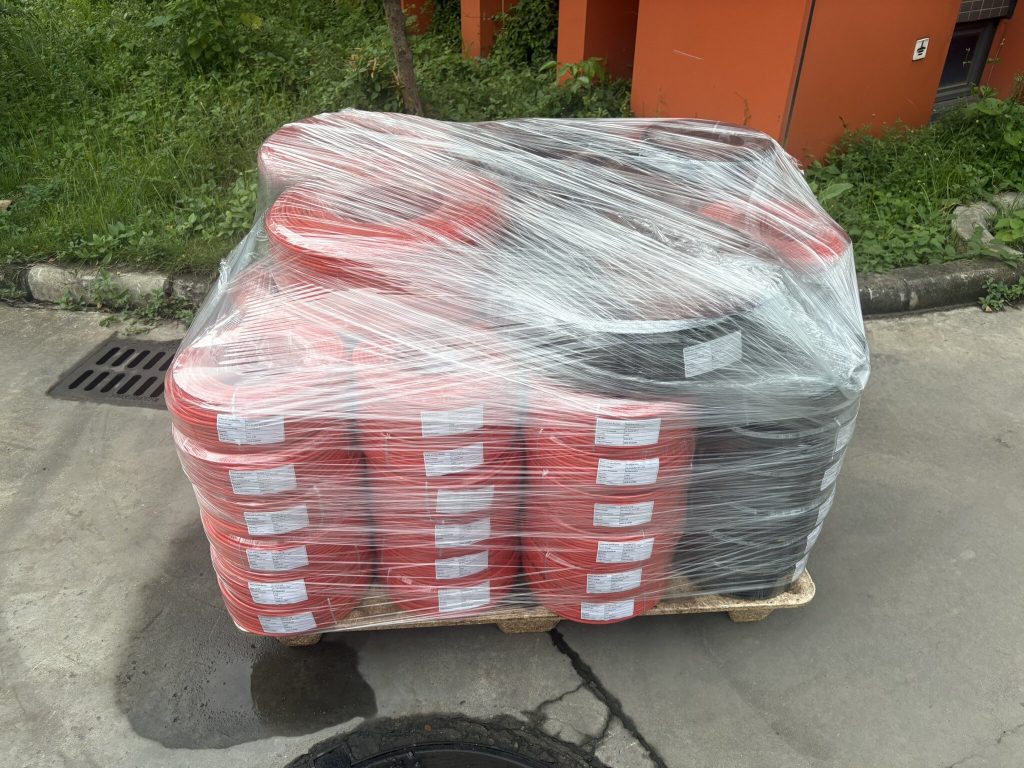
BVR Cable Supplier China: Specifications, Applications and Bulk Buying Guide
When buyers search for a BVR cable supplier in China, they are often looking for a flexible copper wire that can be used where a rigid building wire is difficult to install.
However, “BVR cable” is not a complete purchasing specification.
The conductor cross-section, conductor class, copper material, PVC insulation, rated voltage, applicable standard, color, packaging and quantity all need to be defined before comparing suppliers.
This is particularly important for importers purchasing thousands or tens of thousands of meters. A small difference in conductor construction or insulation specification can affect installation performance, resistance, weight and total purchasing cost.
This guide explains how international buyers can evaluate BVR cable suppliers in China, prepare a professional RFQ, compare quotations and reduce specification problems before placing a bulk order.
What Is BVR Cable?
BVR is commonly used in China to describe a flexible PVC-insulated copper building wire.
Compared with a typical solid-conductor building wire, BVR uses multiple fine copper strands to form the conductor.
The basic construction can be described as:
Stranded copper conductor + PVC insulation
The flexible conductor makes BVR easier to bend and route in applications where rigid wire may be inconvenient.
BVR is commonly considered for:
- Electrical distribution
- Control panels
- Electrical cabinets
- Building wiring
- Equipment connections
- Switchboards
- Conduit installations
- Internal electrical connections
The exact application must always follow the applicable electrical regulations and product standard.
For international purchasing, buyers should also be careful when comparing BVR with products such as H07V-K. Similar-looking flexible wires may have different standards, conductor classes and certification requirements.
BVR vs BV: What Is the Difference?
This is one of the first questions an importer should ask.
Both products can use copper conductors and PVC insulation, but their conductor construction is different.
A simplified comparison is:
| Feature | BV | BVR |
|---|---|---|
| Conductor | Generally rigid/solid configuration | Stranded/flexible configuration |
| Conductor material | Copper | Copper |
| Insulation | PVC | PVC |
| Flexibility | Lower | Higher |
| Typical use | Fixed installation | Applications requiring easier bending |
| Specification | Must follow applicable standard | Must follow applicable standard |
The important point is that BVR should not simply be treated as BV with a different product name.
When requesting quotations, specify the conductor construction explicitly.
This prevents a supplier from quoting a different product that happens to have the same nominal cross-sectional area.
For buyers comparing several Chinese wire products, the Vlefooena guide on PVC insulated building wire provides a useful overview of BV, H07V-U, H07V-R and BVR configurations.
What Does the “R” in BVR Mean?
Product naming can vary between markets and standards, so buyers should avoid interpreting a letter in isolation.
The practical purchasing issue is the conductor construction.
When requesting BVR, ask the manufacturer to confirm:
- Conductor material
- Number and diameter of strands where applicable
- Conductor class
- Nominal cross-sectional area
- Maximum DC resistance
- Insulation material
- Insulation thickness
- Rated voltage
- Applicable standard
This information is much more useful than relying on the product name alone.
A professional supplier should be able to provide these details in a technical datasheet or quotation.
Common BVR Cable Sizes
BVR is available in a range of conductor sizes.
Common purchasing requirements may include:
- 1.5mm²
- 2.5mm²
- 4mm²
- 6mm²
- 10mm²
- 16mm²
- 25mm²
- 35mm²
- Larger cross-sections for specific applications
The appropriate size depends on the electrical design.
A buyer should never select BVR purely because a larger cross-section appears to provide a higher current capacity.
Actual allowable current depends on installation conditions, ambient temperature, conductor arrangement, insulation temperature rating, grouping and the applicable electrical code.
For example, a 6mm² BVR cable installed under one set of conditions may have a different allowable current from the same nominal conductor installed under another set of conditions.
BVR Cable Technical Specification
A useful BVR purchasing specification can look like this:
| Specification | Buyer Requirement |
|---|---|
| Product | BVR flexible copper building wire |
| Conductor | Copper |
| Construction | Stranded |
| Cross-section | Specify required size |
| Insulation | PVC |
| Rated voltage | Specify required voltage |
| Standard | Specify applicable standard |
| Color | Specify color |
| Length | Specify coil or drum length |
| Quantity | Specify total meters |
| Packaging | Coil, roll or drum |
| Destination | Country and port |
| Certification | According to destination market |
This is a much stronger RFQ than simply writing:
Please quote BVR cable.
The second request leaves too many technical questions unanswered.
Why Conductor Construction Matters
The biggest difference between many building-wire products is not visible from the product name.
Two products can both be described as copper wire while having different conductor constructions.
For BVR, the manufacturer should clearly state the conductor construction.
The buyer can then compare:
Nominal cross-section → conductor construction → resistance → insulation → standard
rather than comparing product names only.
This becomes especially important when purchasing from several suppliers.
If one supplier quotes a flexible stranded conductor and another supplier quotes a different construction, comparing their prices per meter without checking the technical specification can produce a misleading result.
Copper Quality and Electrical Resistance
Copper is usually one of the largest material-cost components in electrical wire.
For this reason, buyers should pay attention to the conductor specification rather than relying on a supplier’s statement that the wire is simply “high-quality copper.”
One useful technical parameter is maximum DC resistance at 20°C.
For equivalent conductor sizes and standards, resistance provides an objective reference for comparing electrical performance.
When requesting a quotation, ask the supplier to provide:
- Maximum DC resistance at 20°C
- Conductor cross-sectional area
- Conductor class
- Copper conductor specification
- Relevant test standard
The buyer can then compare the technical data between quotations.
For a deeper explanation of purchasing electrical wire from China, see the Vlefooena guide How to Buy Electrical Wires from China: A Step-by-Step Guide for Importers.
PVC Insulation: What Should Buyers Check?
The copper conductor receives most of the attention, but the insulation is equally important.
For BVR, buyers should confirm the PVC insulation requirements before production.
Important points include:
- PVC insulation type
- Nominal insulation thickness
- Rated temperature
- Rated voltage
- Color
- Flame-performance requirements where applicable
- Printing and identification
- Applicable manufacturing standard
Do not assume that all PVC insulation has identical properties.
If the destination market requires a particular PVC compound or certification, write the requirement directly into the RFQ.
This prevents the supplier from making assumptions during production.
BVR Rated Voltage
The rated voltage should appear clearly on the technical specification.
A buyer should not assume the voltage rating simply from the product name.
The RFQ should state the required:
Rated voltage + applicable standard + insulation specification
If the project has a specific electrical code or certification requirement, include that information before the supplier prepares the final quotation.
This is particularly important for international orders because the requirements in the destination market may differ from those in China.
Where Is BVR Cable Used?
BVR is commonly considered when the installation requires more flexibility than a rigid conductor provides.
Typical applications can include:
Electrical Panels
Flexible copper wire can make internal panel connections easier to route.
Control Cabinets
BVR may be considered for wiring where bending and routing space are important.
Distribution Systems
It can be used in suitable fixed electrical installations according to the applicable standard.
Building Electrical Systems
Certain BVR configurations are used for building-related electrical connections.
Equipment Wiring
Flexible conductors can be useful when connecting equipment components where repeated positioning or tighter bends are involved.
The exact application should always be checked against the applicable electrical regulations and the manufacturer’s product specification.
BVR vs H07V-K
International buyers may encounter H07V-K when searching for flexible single-core PVC-insulated copper wire.
These products can appear similar, but they should not automatically be treated as interchangeable.
When comparing BVR and H07V-K, check:
- Applicable standard
- Conductor class
- Strand construction
- Voltage rating
- Insulation requirements
- Certification
- Destination-market requirements
- Marking requirements
A European project may specify a harmonized product designation, while another market may use a different national designation.
Therefore, the correct question is not:
Which name is better?
The better purchasing question is:
Which product specification matches the project and destination-market requirements?
This distinction helps prevent incorrect substitutions.
How to Request a BVR Cable Quotation From China
A good RFQ should give the supplier enough information to quote the same product you intend to purchase.
For example:
Product: BVR flexible copper wire
Conductor: Copper
Construction: Stranded
Size: 6mm²
Insulation: PVC
Voltage: Required voltage
Standard: Required standard
Color: Blue
Quantity: 20,000 meters
Packing: 100m coils
Destination: Buyer’s country and port
Certification: Required certification
Trade term: FOB or CIF
Then request:
- Unit price
- MOQ
- Production lead time
- Technical datasheet
- Maximum DC resistance
- Insulation thickness
- Packaging details
- Gross weight
- Net weight
- Sample availability
- Test report
- Certification
- Price validity
This gives both sides a clear commercial and technical reference.
How to Compare BVR Cable Supplier Quotations
Suppose three Chinese suppliers provide prices.
Supplier A offers the lowest price.
Supplier B offers a slightly higher price.
Supplier C offers the highest price.
The correct comparison should not start with the price.
First compare the specification.
Step 1: Compare the conductor
Check:
- Copper material
- Cross-section
- Conductor class
- Strand construction
- Resistance
Step 2: Compare the insulation
Check:
- PVC type
- Thickness
- Temperature rating
- Voltage rating
- Color
Step 3: Compare documentation
Check:
- Test reports
- Certification
- Technical datasheet
- Factory inspection information
Step 4: Compare commercial terms
Check:
- MOQ
- Unit price
- Packaging
- Production time
- Payment terms
- FOB/CIF terms
- Price validity
Only after these items are aligned should the price be compared.
The Vlefooena article How to Compare Electrical Wire Suppliers in China: A Practical Buyer’s Guide can also be used as a reference when evaluating several factories.
How MOQ Works for BVR Cable
There is no universal MOQ for BVR cable.
MOQ can vary depending on:
- Cable size
- Color
- Packaging
- Order quantity
- Standard product or customized product
- OEM printing
- Special certification
- Production schedule
A standard product may have a different MOQ from an OEM product with customized printing and packaging.
If you are buying multiple sizes, ask the supplier whether mixed-size orders are accepted.
For example, a distributor may need:
- 1.5mm²
- 2.5mm²
- 4mm²
- 6mm²
- 10mm²
Ordering several sizes together may be more practical than placing separate orders for each size.
BVR Cable Packaging for Export Orders
Packaging is often underestimated by first-time importers.
The supplier may offer:
- Small coils
- Large coils
- Plastic reels
- Wooden drums
- Export cartons
- Customized labels
- OEM packaging
The right option depends on how the product will be transported, stored and sold.
For example, a distributor may prefer shorter coils for retail or contractor sales.
A large project may prefer longer lengths on drums to reduce the number of joints and handling operations.
When requesting a quotation, specify the desired length per coil or drum.
Otherwise, two suppliers may quote the same price per meter but use completely different packaging configurations.
What Determines BVR Cable Price in China?
BVR pricing is influenced by several factors.
Copper Price
Copper is a major raw-material component, so market movements can affect quotations.
Cross-Section
Larger conductor sizes generally require more conductor material.
PVC Material
The insulation compound affects material cost.
Order Quantity
Larger orders may receive different factory pricing.
Packaging
Special reels, printing and export packaging can add cost.
Certification
Destination-market testing and certification may increase the total cost.
Customization
OEM colors, markings, labels and packaging can affect the quotation.
Trade Terms
FOB, CIF and other commercial terms produce different quoted prices.
For this reason, “price per meter” should always be evaluated together with the complete specification and delivery conditions.
Sample Inspection Before a Bulk Order
For a significant BVR order, requesting a sample can be useful.
A buyer can check:
- Outer appearance
- Flexibility
- Insulation surface
- Color
- Printing
- Marking
- Approximate dimensions
- Packaging
- Documentation
For larger projects, the buyer can also request relevant laboratory or factory test documentation.
A sample is not a substitute for formal compliance testing where such testing is required, but it can help identify obvious differences between the requested product and the supplied product before a large order is manufactured.
What Should Be Checked During Production?
For repeat or high-volume purchases, quality control should not start only when the container arrives.
Important production checkpoints may include:
- Copper conductor preparation
- Strand construction
- Conductor resistance
- Insulation extrusion
- Insulation thickness
- Finished diameter
- Surface appearance
- Electrical testing
- Length measurement
- Final packaging
The exact inspection plan should match the product standard and project requirements.
How to Choose a BVR Cable Supplier in China
Instead of evaluating a supplier only by its website or lowest quotation, look at its ability to provide a consistent product specification.
A useful supplier evaluation includes:
Product Capability
Can the manufacturer produce the required sizes and constructions?
Technical Documentation
Can the supplier provide clear datasheets and test information?
Production Consistency
Can the same specification be maintained across repeat orders?
Packaging Capability
Can the supplier provide the coil, reel or drum configuration required by the buyer?
Export Experience
Can the factory prepare the documentation and packaging required for international shipment?
Communication
Can the supplier clearly answer technical questions instead of only sending a price?
Sample Process
Can the buyer receive a sample before committing to a large production order?
For more information, buyers can also read How to Find a Reliable Electrical Wire Manufacturer in China: Buyers’ Guide.
Common Mistakes When Buying BVR Cable
Mistake 1: Asking Only for the Price
“Give me the best BVR price” is not enough.
The supplier still needs the size, standard, quantity, color, packaging and destination.
Mistake 2: Assuming Every BVR Product Is Identical
Product names do not replace technical specifications.
Mistake 3: Ignoring Resistance
Resistance can provide useful information when comparing equivalent conductors.
Mistake 4: Not Specifying the Standard
A product suitable for one market may not meet another market’s requirements.
Mistake 5: Comparing Different Packaging
100m coils and large drums should not be compared purely by price per meter.
Mistake 6: Ordering a Large Quantity Without a Sample
For an unfamiliar supplier, confirming the product before mass production can reduce the risk of specification problems.
Mistake 7: Selecting Wire Size Without Engineering Requirements
The conductor size should come from the electrical design and applicable regulations rather than from price alone.
A Practical BVR Cable Purchasing Checklist
Before confirming your order, check the following:
- [ ] BVR product type confirmed
- [ ] Copper conductor confirmed
- [ ] Cross-sectional area confirmed
- [ ] Conductor construction confirmed
- [ ] Conductor class confirmed
- [ ] Maximum DC resistance confirmed
- [ ] PVC insulation confirmed
- [ ] Insulation thickness confirmed
- [ ] Rated voltage confirmed
- [ ] Applicable standard confirmed
- [ ] Color confirmed
- [ ] Printing confirmed
- [ ] Coil/drum length confirmed
- [ ] Packaging confirmed
- [ ] Quantity confirmed
- [ ] MOQ confirmed
- [ ] Sample approved
- [ ] Test documentation reviewed
- [ ] Certification confirmed
- [ ] Production lead time confirmed
- [ ] Shipping terms confirmed
- [ ] Destination confirmed
This checklist can be reused whenever you request quotations from multiple Chinese electrical-wire manufacturers.
Frequently Asked Questions About BVR Cable
Is BVR cable copper or aluminum?
BVR is commonly used to describe a PVC-insulated stranded copper building wire. However, the conductor material should always be confirmed on the manufacturer’s technical specification.
Is BVR more flexible than BV?
Generally, yes. BVR uses a stranded conductor construction, making it more flexible than a typical solid-conductor BV configuration.
Can BVR replace BV?
Not automatically. The appropriate product depends on the required conductor construction, applicable standard, installation method and project specification.
What sizes of BVR cable can be purchased from China?
Chinese manufacturers can offer multiple conductor sizes, including common building-wire sizes such as 1.5mm², 2.5mm², 4mm², 6mm², 10mm² and larger sizes. Availability and MOQ depend on the manufacturer.
Is BVR suitable for electrical panels?
BVR can be used in suitable electrical-panel and cabinet applications where its specification and conductor construction meet the project requirements.
What is the difference between BVR and H07V-K?
Both may be flexible PVC-insulated single-core copper wires, but the applicable standards, conductor classifications, markings and certification requirements can differ. Buyers should compare the complete technical specifications rather than relying on the product names.
How should I compare two BVR suppliers?
Give both suppliers the same RFQ and compare conductor construction, cross-section, resistance, insulation, voltage, standard, certification, packaging, MOQ, lead time and commercial terms before comparing price.
What information should I include in a BVR RFQ?
At minimum, specify the product type, copper conductor, cross-sectional area, conductor construction, insulation, voltage, standard, color, quantity, packaging, destination and certification requirements.
Can BVR cable be customized?
Depending on the manufacturer, buyers may be able to request customized colors, printing, packaging, coil lengths and other production details. MOQ and additional costs should be confirmed before production.
Should I request a sample before a bulk order?
For a new supplier or large project, requesting and checking a sample is a practical step before committing to mass production.
How is BVR cable priced?
Pricing is influenced by copper cost, conductor size, PVC material, order quantity, packaging, certification, customization and shipping terms. A meaningful comparison requires matching the complete specification.
Final Thoughts
Buying BVR cable from China should be treated as a technical sourcing process rather than a simple price-shopping exercise.
The product name tells you what category you are looking at, but the purchasing specification tells you what you are actually buying.
For a professional RFQ, define the:
conductor + cross-section + construction + resistance + insulation + voltage + standard + color + quantity + packaging + certification + destination.
Once these points are fixed, it becomes much easier to compare Chinese suppliers, evaluate samples and negotiate a realistic wholesale price.
For buyers who are still preparing their sourcing requirements, the Vlefooena guide How to Buy Electrical Wires from China: A Step-by-Step Guide for Importers provides a useful starting point. Buyers comparing several manufacturers can also use the supplier-comparison guide to organize quotations before placing an order.
The goal is not simply to find the lowest price per meter. The goal is to make sure the wire delivered to your warehouse matches the specification you approved before production.


No reply content