
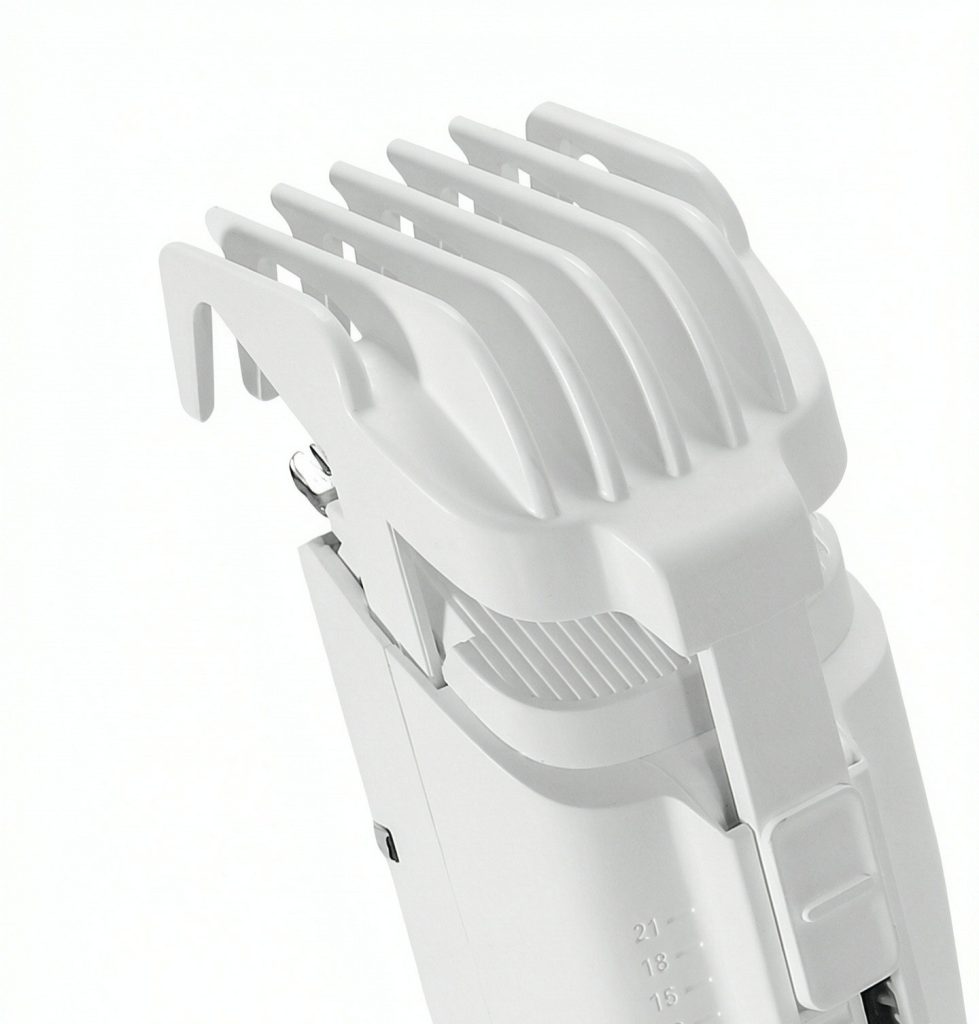
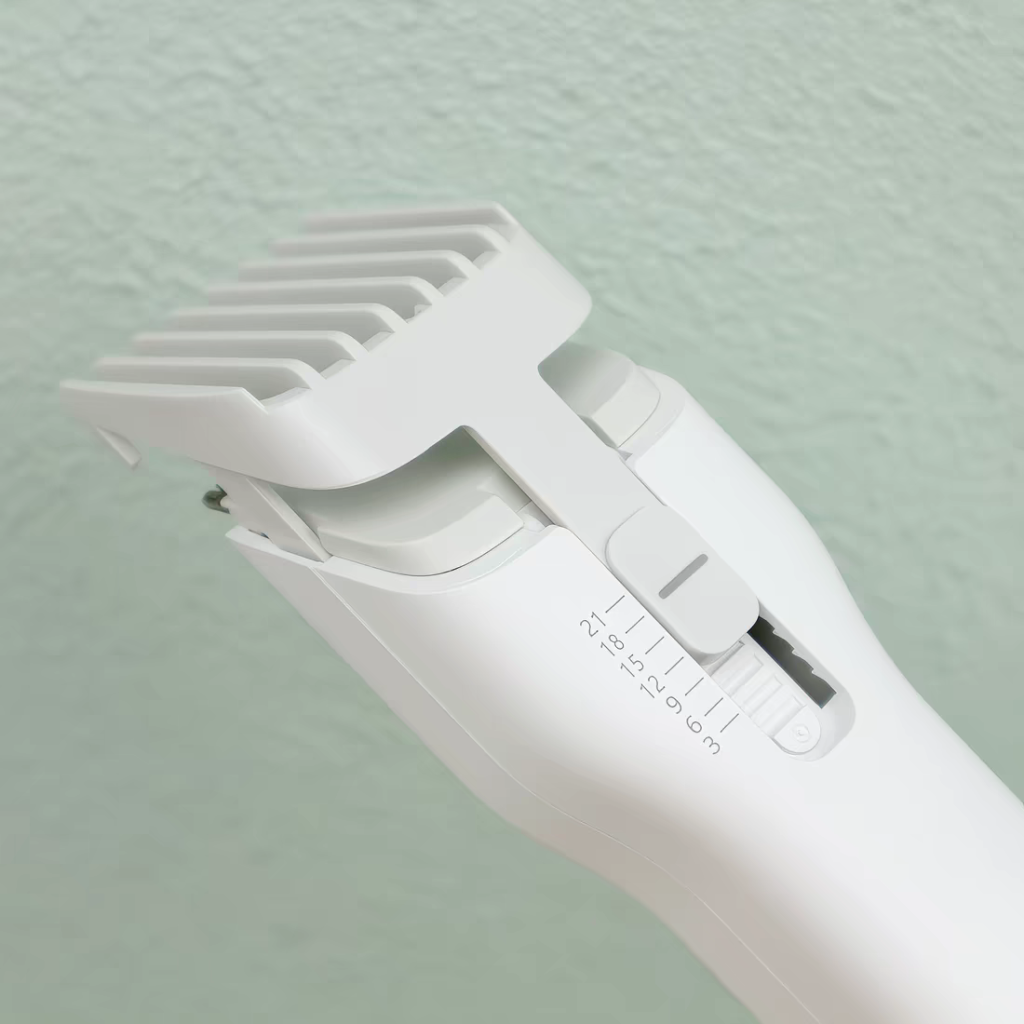
Yes. Many Chinese hair clipper manufacturers can provide OEM and private label services for international buyers.
However, “OEM” can mean very different things from one factory to another.
Some manufacturers simply add a customer’s logo to an existing hair clipper. Others can customize the housing, motor, blade, battery, accessories, packaging, and even develop a new product based on the buyer’s specifications.
If you are planning to create your own hair clipper brand, understanding these differences is important before choosing a manufacturer.
What Is OEM Hair Clipper Manufacturing?
OEM means a manufacturer produces a product according to a buyer’s requirements.
For hair clippers, OEM services can include:
- Custom logo
- Custom colors
- Custom housing
- Custom graphics
- Custom packaging
- Custom accessories
- Custom blade configuration
- Custom battery
- Custom charging system
- Product modifications
- New product development
The level of customization depends on the factory’s equipment, engineering team, tooling capability, and production experience.
OEM vs. Private Label: What Is the Difference?
These terms are sometimes used interchangeably, but there can be an important difference.
Private Label
The manufacturer already has an existing hair clipper model.
You customize:
- Brand logo
- Product color
- Packaging
- User manual
- Accessories
The core product remains largely unchanged.
This is usually the fastest and most economical way to launch a new brand.
OEM
The buyer may require modifications or development of the actual product.
For example:
- Different housing
- Different motor
- Different battery
- Different blade
- Different switch
- Different display
- Different accessories
A completely customized product normally requires more development time and investment.
How Much Does an OEM Hair Clipper Cost?
The manufacturing cost varies considerably depending on the specifications.
As a general planning reference:
| Product Type | Approximate Factory Price |
|---|---|
| Basic private-label clipper | US$10–20 |
| Standard cordless private-label clipper | US$15–30 |
| Professional OEM clipper | US$20–45 |
| Premium private-label clipper | US$30–60 |
| Advanced custom model | US$40–80+ |
These are indicative factory-level ranges, not guaranteed quotations.
The actual price can change depending on:
- Motor
- Blade
- Battery
- Housing
- Accessories
- Packaging
- Order quantity
- Product development
- Tooling
- Quality requirements
Can You Put Your Own Logo on a Hair Clipper?
Yes.
Logo customization is one of the most common private-label requirements.
You may be able to customize:
- Logo position
- Logo size
- Logo color
- Product graphics
- Packaging
- User manual
- Labels
Before mass production, request a digital artwork proof or physical sample.
This helps prevent problems such as:
- Incorrect logo
- Wrong color
- Incorrect position
- Outdated artwork
- Incorrect packaging information
Can the Housing Be Customized?
Depending on the manufacturer, the housing may be customizable.
You could potentially modify:
- Shape
- Color
- Texture
- Buttons
- Grip
- Display
- Branding area
However, completely new housing designs may require new tooling.
Tooling and development costs should be discussed before production begins.
Ask the manufacturer:
Is the quoted price based on an existing housing or a new custom housing?
This can make a significant difference to the total project cost.
Can You Customize the Motor?
Some manufacturers can offer different motor configurations, but not every factory can develop a completely new motor.
For a professional clipper, you may want to specify:
- Motor type
- Speed
- Torque
- Noise
- Vibration
- Heat
- Continuous-use performance
Don’t select a motor based only on the advertised RPM.
The actual cutting performance and long-term stability should be tested using samples.
Can You Customize the Blade?
Depending on the manufacturer, buyers may be able to customize:
- Blade material
- Blade shape
- Blade width
- Blade coating
- Fixed blade
- Moving blade
- Adjustment mechanism
If your brand targets professional barbers, blade performance should be tested carefully.
A good-looking clipper with poor cutting performance can quickly lead to customer complaints.
Can You Customize the Battery?
For cordless products, battery specifications may be customized within the manufacturer’s capabilities.
Possible specifications include:
- Battery capacity
- Voltage
- Battery type
- Charging time
- Operating time
- Charging interface
- Battery protection
You should verify the actual operating performance rather than relying entirely on the manufacturer’s advertised numbers.
Because cordless clippers may contain lithium batteries, international shipping and documentation requirements should also be considered.
Can You Customize Accessories?
Yes, manufacturers may offer customized accessory packages.
Possible accessories include:
- Guide combs
- Cleaning brush
- Blade oil
- Charging cable
- Charger
- Charging stand
- Storage case
- Protective cap
For private-label products, you can sometimes create an accessory package specifically for your target market.
Can You Customize the Packaging?
Yes.
Packaging is one of the easiest ways to make an existing factory product look like a complete private-label product.
Options may include:
- Retail box
- Gift box
- Printed carton
- Product insert
- User manual
- Warranty card
- Barcode
- Product labels
- Master carton
Basic packaging may add only a small amount to the product cost, while premium custom packaging can add several dollars or more per unit.
What Is the Typical MOQ?
There is no universal MOQ.
A manufacturer may have different requirements for:
Existing model: lower MOQ
Logo customization: medium MOQ
Custom color: medium or higher MOQ
Custom packaging: higher MOQ
New housing/product: potentially much higher MOQ
For a new brand, ask the factory for separate MOQ figures for each customization level.
How Much Does a Custom Sample Cost?
A standard sample may cost approximately US$15–50+.
A heavily customized sample or new product development project can cost considerably more.
The final amount depends on:
- Product modifications
- Tooling
- Components
- Packaging
- Engineering work
Before paying, ask whether the sample fee can be refunded or deducted from the bulk order after reaching a specified quantity.
How Long Does OEM Development Take?
A simple private-label project can be relatively quick.
For example:
Existing model → logo → packaging → sample → production
A completely new product is different:
Design → engineering → prototype → sample → testing → modification → final approval → mass production
The more customized the product, the more time you should allow for development.
Ask the manufacturer for separate lead times for:
- Sample preparation
- Custom development
- Tooling
- Final production
- Packaging
What Information Should You Send to a Manufacturer?
The more detailed your specification, the more accurate the quotation will be.
For example:
Product: Professional cordless hair clipper
Motor: High-speed professional motor
Battery: Rechargeable lithium battery
Operating time: 3 hours target
Charging: USB-C
Blade: Adjustable stainless-steel blade
Housing: Custom design
Color: Brand color
Logo: Private label
Accessories: 8 guide combs + cleaning brush + oil
Packaging: Custom retail box
Quantity: 1,000 units
Destination: Target country
This gives the manufacturer a clear basis for calculating the product and customization cost.
How to Protect Your Brand
If you are developing a unique hair clipper brand, don’t rely only on verbal agreements.
Keep records of:
- Product specifications
- Approved sample
- Logo artwork
- Packaging artwork
- Custom drawings
- Component specifications
- Quality requirements
- Purchase agreement
You should also clearly discuss ownership and permitted use of custom designs, trademarks, packaging artwork, and other intellectual property.
For substantial projects, appropriate legal advice and a properly drafted manufacturing agreement can provide additional protection.
How to Select an OEM Hair Clipper Manufacturer
Don’t choose a supplier only because it says “OEM available.”
Compare:
| Factor | What to Check |
|---|---|
| Product quality | Sample performance |
| OEM capability | Level of customization |
| Motor | Performance and stability |
| Blade | Cutting quality |
| Battery | Operating and charging performance |
| MOQ | Initial order requirement |
| Price | Complete product specification |
| Quality control | Production inspection |
| Lead time | Sample and bulk production |
| Packaging | Retail and export packaging |
| Communication | Technical support |
A manufacturer with a higher quotation may still be the better choice if it provides better product quality and more reliable production.
FAQ
Can Chinese hair clipper manufacturers make products under my brand?
Yes. Many manufacturers can provide private-label services such as logo printing, custom colors, packaging, labels, and accessories.
Can I completely redesign an existing hair clipper?
Some manufacturers can modify existing products or develop new housings and components. The available customization depends on the factory’s engineering and tooling capabilities.
What is the minimum order quantity for OEM hair clippers?
MOQ varies by manufacturer and customization level. Existing products with simple logo customization generally require less quantity than completely new products.
How much does a private-label hair clipper cost?
A broad factory-level range is approximately US$10–60+ per unit, while advanced custom products can reach US$80+ depending on specifications and quantity.
Should I order samples before mass production?
Yes. Sample testing is strongly recommended. It allows you to evaluate motor performance, blade quality, battery life, ergonomics, appearance, packaging, and overall workmanship.
Can the manufacturer customize the packaging?
Yes. Many manufacturers can produce custom retail boxes, manuals, labels, inserts, and master cartons.
Conclusion
Chinese hair clipper manufacturers can provide anything from simple private-label services to complete OEM product development.
If you are launching your own brand, the best approach is to first decide whether you need an existing product with your branding or a genuinely customized product.
Then compare several manufacturers, request samples, verify the motor, blade, battery, and construction, calculate the complete landed cost, establish quality requirements, and confirm MOQ and production lead time before placing a large order.
The right OEM manufacturer should not simply offer a low price. It should be able to consistently produce a hair clipper that meets your brand positioning, quality expectations, target price, and long-term production requirements.


No reply content