

A Manufacturer’s Deep Dive into Engineering, Quality Control, and Large-Scale Customization
In B2B promotional and premium gifting projects, scale and reliability matter more than slogans.
When a global automotive brand approached us to customize 50,000 automatic folding umbrellas for a regional marketing campaign, the requirements went far beyond basic logo printing.
This was not a typical umbrella order.
It involved:
- Tight delivery timelines
- Strict automotive-grade quality expectations
- Zero tolerance for functional failure
- Consistent branding across tens of thousands of units
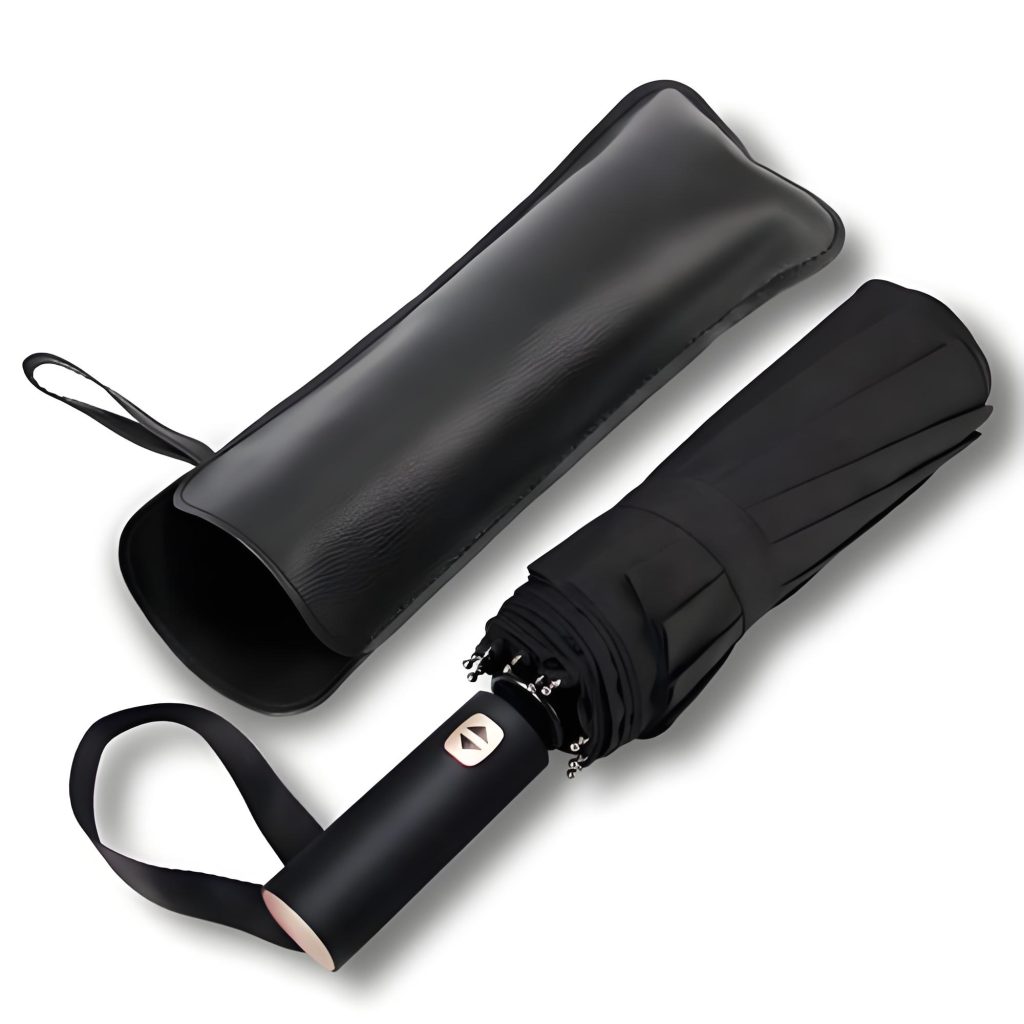
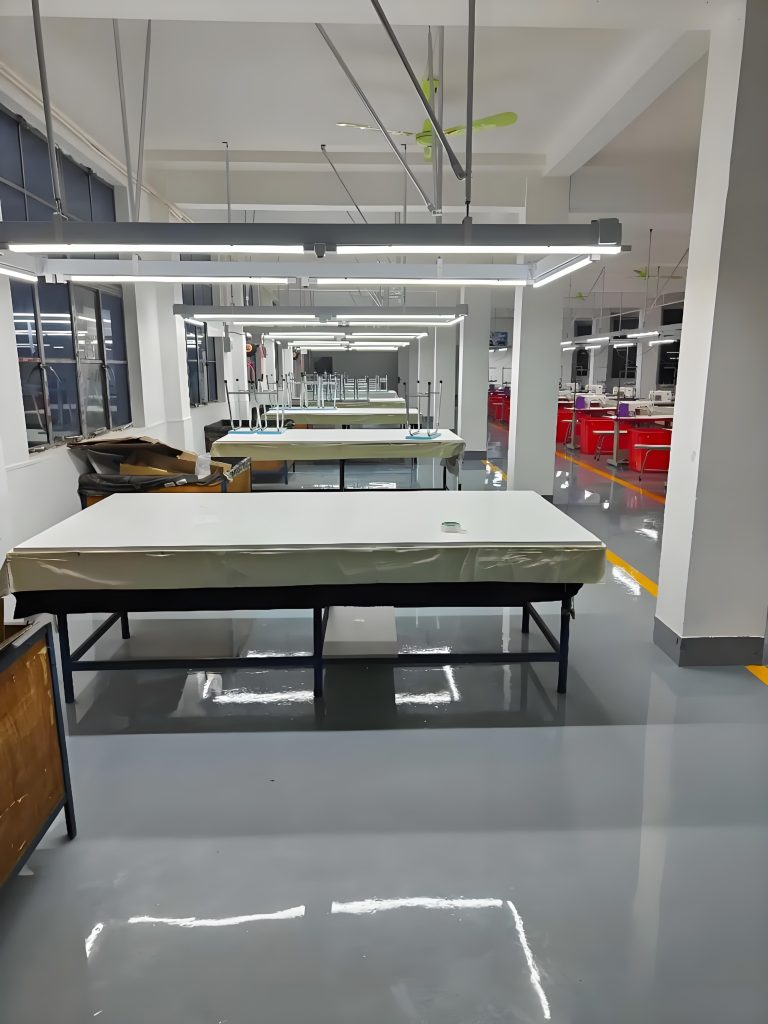
This article provides a transparent, factory-level breakdown of how we engineered, produced, inspected, and delivered the project—on time and within specification.
Project Background: Why the Client Chose Automatic Folding Umbrellas
The client’s internal brief highlighted three objectives:
- Practical daily use for car owners
- Compact size for glove compartments and door pockets
- Premium tactile experience aligned with automotive brand positioning
After evaluating multiple product categories, the brand selected automatic folding umbrellas as a functional, high-visibility gift item.
Why Automatic Folding Umbrellas Fit Automotive Campaigns
| Requirement | Automatic Folding Umbrella Advantage |
|---|---|
| One-hand operation | Matches in-car usage scenarios |
| Compact storage | Fits glove box / trunk organizer |
| High reuse frequency | Long-term brand exposure |
| Technical appeal | Aligns with automotive engineering mindset |
Step 1: Translating Brand Requirements into Technical Specifications
Before sampling began, our engineering team worked backward from usage scenarios, not just appearance.
Core Technical Requirements Defined
| Category | Client Requirement |
|---|---|
| Open/close mechanism | Fully automatic, one-button |
| Durability | Minimum 3,000 open-close cycles |
| Wind resistance | Stable up to 30 km/h |
| Weight | Under 420 g |
| Logo durability | No peeling or fading after 12 months |
These requirements formed the baseline for material selection and structure design.
Step 2: Engineering the Frame Structure for Mass Reliability
Automatic folding umbrellas are mechanically complex.
In large-volume projects, the failure rate often comes from shortcuts in internal components.
Frame Configuration Used in This Project
| Component | Specification | Technical Rationale |
|---|---|---|
| Shaft | 3-section steel + fiberglass hybrid | Balance strength and weight |
| Ribs | Fiberglass with reinforced joints | Wind flexibility without deformation |
| Stretchers | Zinc-alloy reinforced | Prevent joint cracking |
| Springs | High-carbon steel | Stable rebound force |
Engineering Note:
Pure steel frames were rejected early due to fatigue risk and weight increase at scale.
Step 3: Fabric Selection & Coating Technology
The canopy fabric had to meet both visual branding and functional performance standards.
Fabric Chosen
| Parameter | Specification |
|---|---|
| Fabric type | 210T pongee |
| Coating | Black PU (UV-blocking) |
| Water repellency | ≥ 90 spray rating |
| Color fastness | Grade 4–5 |
Why 210T and Not 190T?
At high production volumes, thinner fabrics show inconsistent tension after repeated folding, increasing wrinkle complaints.
Step 4: Logo Customization Strategy for Automotive Standards
Unlike consumer retail brands, automotive companies demand long-term logo integrity.
Logo Placement & Method
| Area | Method | Reason |
|---|---|---|
| Canopy panel | High-precision screen printing | Sharp edges, durability |
| Handle button | Laser engraving | Permanent branding |
| Sleeve | Heat transfer | Cost-efficient secondary exposure |
We avoided low-cost transfer films on the canopy to prevent cracking under UV exposure.
Step 5: Prototyping & Stress Testing Phase
Before mass production, three prototype rounds were completed.
Testing Protocols Applied
- Open/close cycle test: 3,000 cycles
- Wind tunnel simulation: 30 km/h
- Salt spray test (metal parts): 24 hours
- Fabric folding memory test: 500 folds
Only after all benchmarks were met did the project move to bulk production.
Step 6: Scaling Production to 50,000 Units
Large-volume customization introduces challenges not seen in small orders.
Production Breakdown
| Stage | Duration |
|---|---|
| Material preparation | 7 days |
| Frame assembly | 12 days |
| Fabric cutting & sewing | 10 days |
| Logo printing | 6 days |
| Final assembly | 8 days |
| QC & packaging | 7 days |
To maintain consistency, production was split across parallel lines, all using the same tooling and SOPs.
Quality Control System Used
Automotive clients expect process transparency, not random inspection.
QC Structure
- Incoming material inspection
- In-line inspection every 200 pcs
- Function test (100% automatic open/close)
- Random AQL 2.5 final inspection
Defect Rate Achieved
| Metric | Result |
|---|---|
| Functional defect rate | < 0.3% |
| Print defect rate | < 0.2% |
| Packaging damage | 0% |
Packaging & Logistics Optimization
The umbrellas were packed with space efficiency and protection in mind.
Packing Specifications
| Item | Detail |
|---|---|
| Inner pack | Individual branded sleeve |
| Master carton | 48 pcs |
| Carton size | Optimized for pallet stacking |
| Container load | 40HQ |
By optimizing carton dimensions, we reduced shipping volume by ~12%, lowering total landed cost.
Comparison: Why This Project Succeeded Where Others Fail
| Common Failure Point | Our Approach |
|---|---|
| Weak automatic mechanism | Reinforced spring & joint design |
| Inconsistent logo quality | Fixed screen mesh + color control |
| Delayed delivery | Parallel production lines |
| High defect rate | Multi-layer QC system |
Technical Specification Summary
| Item | Specification |
|---|---|
| Type | Automatic folding umbrella |
| Canopy | 210T pongee, black PU |
| Frame | Steel + fiberglass |
| Ribs | 8 ribs |
| Weight | ~400 g |
| Diameter | 98 cm |
| Wind resistance | 30 km/h |
| MOQ | 5,000 pcs (custom) |
FAQ – Frequently Asked Buyer Questions
Q1: Are automatic folding umbrellas suitable for large-volume gifting?
Yes, if the internal structure is engineered correctly. Cheap mechanisms fail quickly at scale.
Q2: What is the biggest risk in 50,000+ umbrella orders?
Inconsistent component quality. Material standardization is critical.
Q3: How long does such a project usually take?
From specification freeze to shipment: 45–60 days, depending on customization depth.
Q4: Can logos remain durable for years?
With proper screen printing and engraving, logos can last 3–5 years in daily use.
Q5: Is fiberglass necessary?
For wind resistance and longevity—yes, especially for automatic models.
Final Reflection from the Manufacturer’s Perspective
Delivering 50,000 automatic folding umbrellas is not about factory size—it’s about process discipline.
For global brands, especially in the automotive sector, a promotional product must:
- Work flawlessly
- Represent engineering values
- Survive daily use
- Arrive on time, without excuses
When executed correctly, a customized umbrella becomes a long-term brand ambassador, not a disposable giveaway.
{
  "@context": "https://schema.org",
  "@type": "FAQPage",
  "mainEntity": [
    {
      "@type": "Question",
      "name": "Why do automotive brands choose automatic folding umbrellas?",
      "acceptedAnswer": {
        "@type": "Answer",
        "text": "Automatic folding umbrellas offer one-hand operation, compact storage, and high daily usability, aligning well with in-car usage scenarios."
      }
    },
    {
      "@type": "Question",
      "name": "What makes large-scale umbrella orders challenging?",
      "acceptedAnswer": {
        "@type": "Answer",
        "text": "Maintaining consistent quality across thousands of units requires standardized materials, reinforced structures, and multi-layer quality control."
      }
    }
  ]
}


No reply content