
China computer manufacturers
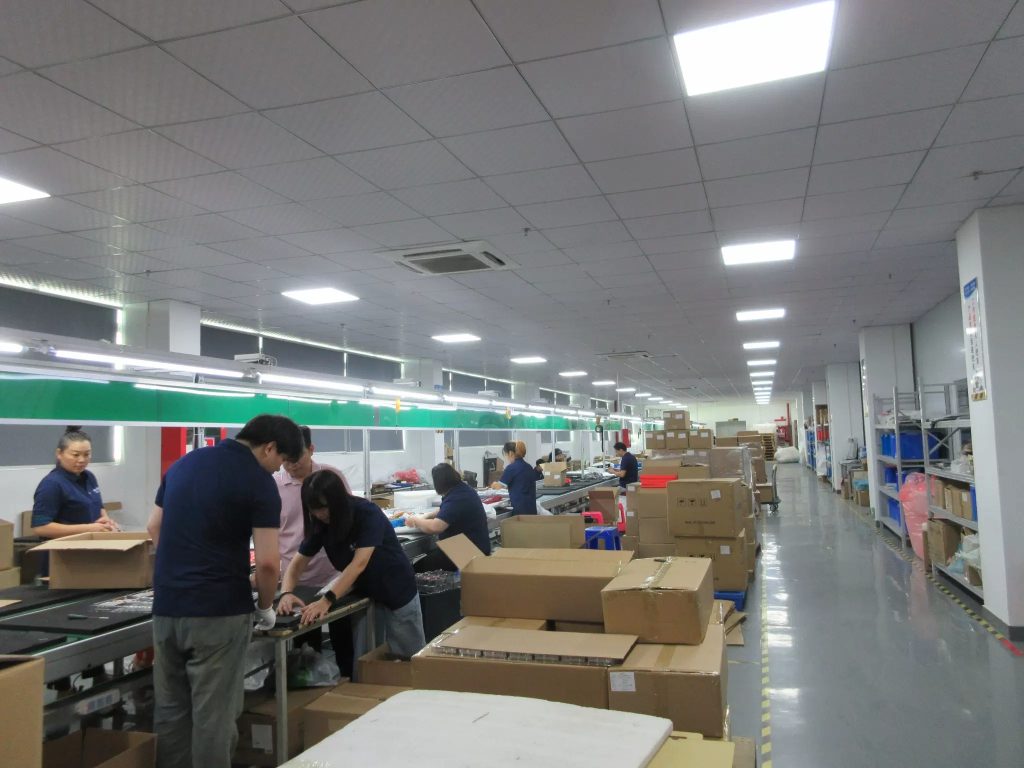
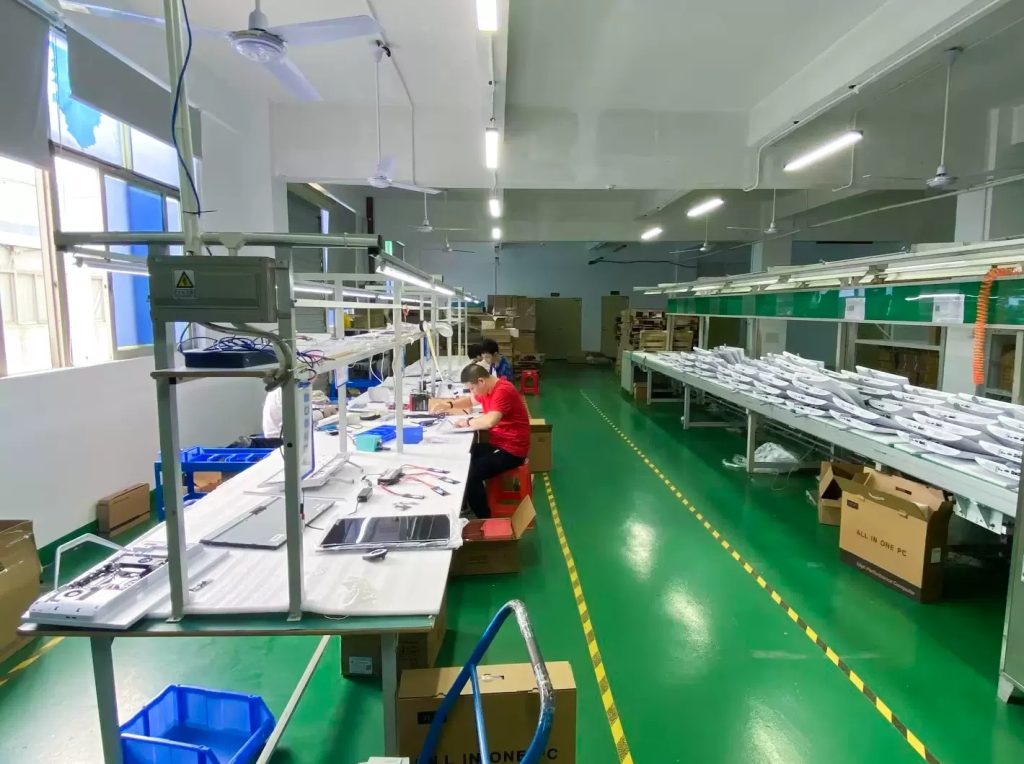
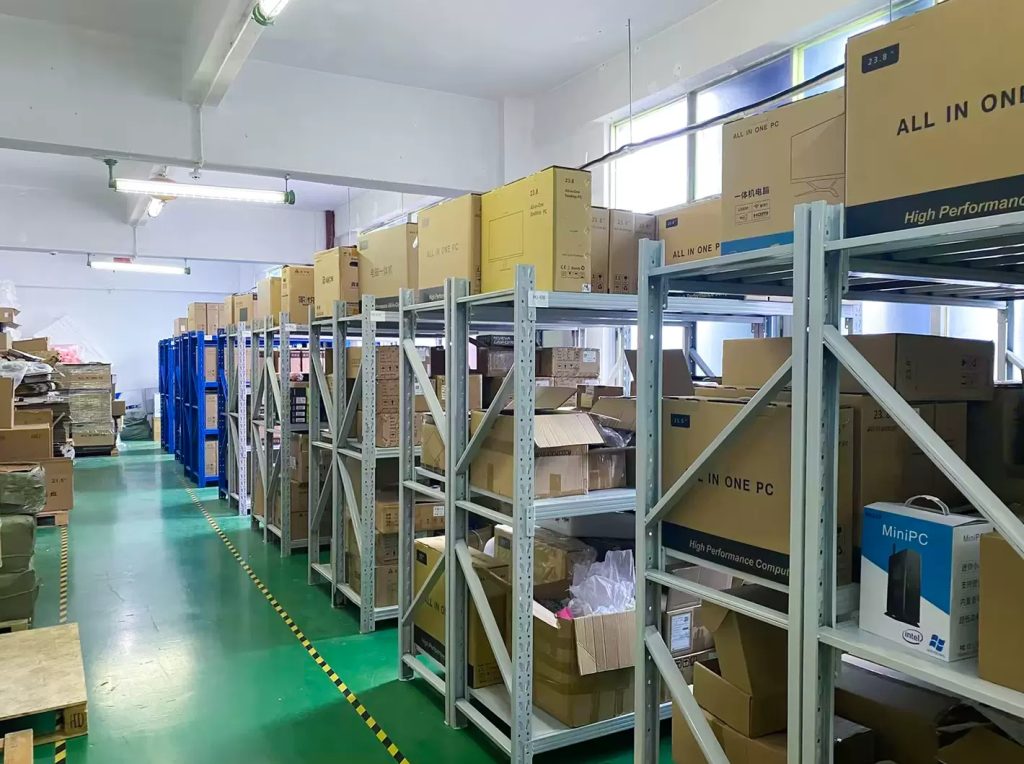
The global all-in-one (AIO) computer market, valued at over $50 billion annually, relies heavily on China’s manufacturing ecosystem. Chinese AIO factories have evolved into hubs of precision engineering, offering scalable production, deep customization, and rigorous quality control—qualities that position them as preferred partners for global brands, enterprises, and retailers. This article provides a comprehensive, E-E-A-T (Experience, Expertise, Authoritativeness, Trustworthiness)-driven guide to China’s AIO computer factories, focusing on technical specifications, manufacturing capabilities, and trust-building practices. By decoding the technical DNA of these facilities and highlighting their competitive advantages, we aim to empower buyers with data-driven insights for informed sourcing decisions.
The Pillars of China’s AIO Factory Dominance
China’s AIO factories thrive on four interconnected strengths, each reinforcing their role as global leaders:
1. Vertical Integration: End-to-End Control
Unlike fragmented supply chains, leading Chinese AIO factories manage the entire production lifecycle—from component sourcing (LCD panels, CPUs, memory) to final assembly, testing, and packaging. This vertical integration reduces lead times by 30–50% and ensures consistency. For example, a single campus may house SMT (Surface-Mount Technology) lines for PCB assembly, automated optical inspection (AOI) systems for defect detection, and cleanrooms for display calibration, all under one operational umbrella.
2. R&D Investment in Next-Generation Tech
Chinese factories allocate 5–8% of annual revenue to R&D, focusing on energy efficiency, compact thermal management, and modular design. Innovations include:
-
Low-Power SoCs: ARM-based chips with TDP (Thermal Design Power) as low as 5W for thin clients.
-
Advanced Cooling: Vapor chambers + liquid metal thermal interface materials (TIM) to reduce peak CPU temps by 15–20°C.
-
Flexible Displays: Foldable OLED panels with bend radii <3mm for niche AIO models.
3. Cost Efficiency Through Economies of Scale
With annual output exceeding 60 million AIO units, factories leverage bulk purchasing and automated assembly to offer 20–35% lower costs than competitors in Taiwan or Southeast Asia. Labor costs are reduced by 40% via robotic assembly lines, while in-house component testing cuts third-party validation expenses.
4. Rigorous Quality Assurance (QA) Frameworks
Trust is built through adherence to international standards (ISO 9001, ISO 14001) and multi-stage testing:
-
Component Validation: Incoming inspection of CPUs, GPUs, and displays against datasheets.
-
Burn-In Tests: 72-hour continuous operation at 90% load to detect early failures.
-
Environmental Screening: Temperature (-20°C to 60°C), humidity (5–95% RH), and shock/vibration (ISTA 3A) testing.
Technical Specifications: The Engineering Blueprint of Chinese AIO Factories
To evaluate a factory’s technical prowess, buyers must analyze core components using industry-standard parameters. Below is a detailed breakdown of AIO hardware, with benchmarks from leading Chinese factories.
1. Processor (CPU): The Computational Heart
CPUs dictate performance for multitasking, content creation, and everyday use. Chinese factories offer x86 (Intel/AMD-compatible) and ARM architectures, optimized for AIO form factors.
| Parameter | Entry-Level (Office/Kiosks) | Mid-Range (Education/Enterprise) | High-Performance (Gaming/Workstation) |
|---|---|---|---|
| Architecture | x86-64 (14nm/7nm) | x86-64 (7nm/5nm) | x86-64 (5nm/3nm) or ARMv9 (4nm) |
| Cores/Threads | 4C/4T (e.g., Intel Celeron G6900) | 6C/12T (e.g., AMD Ryzen 5 7530U) | 8C/16T (Ryzen 7 7840HS) or 12C/24T (i7-13700H) |
| Base/Boost Clock | 3.4 GHz / 3.4 GHz (no boost) | 2.5 GHz / 4.5 GHz | 3.2 GHz / 5.1 GHz |
| Cache | 6MB L3 | 16MB L3 | 24–36MB L3 |
| TDP | 46W (standard) / 35W (low-power) | 15–28W (ultrabook-class) | 45–65W (gaming/workstation) |
| Integrated GPU | Intel UHD Graphics 710 (32 EU) | AMD Radeon 660M (6 CU) | AMD Radeon 780M (12 CU) or Intel Iris Xe (96 EU) |
Factory Insight: Factories often pair CPUs with integrated GPUs for cost-sensitive models (e.g., retail kiosks) and offer discrete options (NVIDIA RTX 3050/4050) for gaming AIOs, with MXM slots for upgrades.
2. Graphics Processing Unit (GPU): Visual and Computational Power
GPUs handle rendering, AI inference, and parallel computing. Chinese factories provide integrated, discrete, and workstation-grade options, with growing support for domestic alternatives.
| Type | Model Example | VRAM | Memory Bus | Bandwidth | Use Case |
|---|---|---|---|---|---|
| Integrated | Intel Iris Xe (96 EU) | Shared System RAM | 128-bit | 68 GB/s | Office, 4K media |
| Discrete (Consumer) | NVIDIA RTX 4050 (Laptop) | 6GB GDDR6 | 96-bit | 192 GB/s | 1080p/1440p gaming, light 3D |
| Discrete (Workstation) | NVIDIA RTX A2000 | 8GB GDDR6 | 128-bit | 224 GB/s | CAD, 4K video editing |
| Domestic Alternative | Moore Threads MTT S60 | 12GB GDDR6 | 192-bit | 336 GB/s | Mid-range gaming, cloud rendering |
Technical Note: Factories prioritize GPU compatibility with Vulkan/DirectX 12 Ultimate and offer driver support for Windows/Linux, critical for enterprise clients.
3. Memory (RAM): Speed, Capacity, and Expandability
RAM impacts multitasking fluidity. Chinese AIOs use DDR4/DDR5 modules, with configurations tailored to use cases.
| Parameter | Budget Models | Mainstream Models | High-End Models |
|---|---|---|---|
| Type | DDR4-2666 | DDR4-3200 / DDR5-4800 | DDR5-5600 / DDR5-6400 |
| Capacity | 8GB (single-channel) | 16GB (dual-channel) | 32–64GB (dual/quad-channel) |
| Timings | CL19-19-19-43 | CL16-18-18-38 (DDR4) / CL40-40-40-77 (DDR5) | CL30-36-36-76 (DDR5) |
| Voltage | 1.2V (DDR4) / 1.1V (DDR5) | 1.2V (DDR4) / 1.1V (DDR5) | 1.1V (DDR5) |
| Expandability | Soldered (non-upgradeable) | 1x SO-DIMM slot (up to 32GB total) | 2x SO-DIMM slots (up to 64GB total) |
Key Consideration: Dual-channel RAM is standard in mid-range+ AIOs to optimize integrated GPU performance.
4. Storage: Speed, Capacity, and Reliability
Factories balance speed, durability, and cost with NVMe SSDs, SATA SSDs, and hybrid SSHDs.
| Type | Interface | Read Speed | Write Speed | Endurance (P/E Cycles) | Typical Use |
|---|---|---|---|---|---|
| NVMe PCIe Gen3 | M.2 2280 | 3500 MB/s | 3000 MB/s | 500–1000 | Budget AIOs, basic office use |
| NVMe PCIe Gen4 | M.2 2280 | 7000 MB/s | 6500 MB/s | 1000–1500 | Mid-range AIOs, content creation |
| NVMe PCIe Gen5 | M.2 2280 | 12,000 MB/s | 11,000 MB/s | 1500–2000 | High-end workstations |
| SATA III SSD | 2.5”/M.2 | 550 MB/s | 520 MB/s | 300–500 | Legacy upgrades, bulk storage |
| Hybrid SSHD | 2.5” | 210 MB/s | 180 MB/s | 50,000 hours MTBF | Entry-level AIOs (1–2TB) |
Reliability: Factories use 3D NAND (176-layer+) with LDPC error correction, ensuring 1.5 million hours MTBF.
5. Display Technology: Size, Resolution, and Interactivity
Displays are a key differentiator, with parameters tailored to use cases.
| Parameter | Compact AIOs (21.5”) | Standard AIOs (23.8”) | Immersive AIOs (27”+) |
|---|---|---|---|
| Resolution | FHD (1920×1080) | QHD (2560×1440) / FHD | 4K UHD (3840×2160) |
| Panel Type | IPS (178° viewing angle) | IPS/VA (high contrast) | IPS (factory-calibrated Delta E < 2) |
| Brightness | 250–300 nits | 300–400 nits | 400–500 nits (HDR10 support) |
| Refresh Rate | 60Hz | 60Hz / 75Hz | 60Hz / 144Hz (gaming models) |
| Touchscreen | Optional (10-point capacitive) | Optional (multi-touch) | Rare (interactive kiosks) |
| Bezel Width | <5mm (thin-bezel) | <3mm (frameless) | <2mm (immersive) |
Calibration: Premium AIOs undergo factory color calibration (X-Rite devices) for 99% sRGB/Adobe RGB coverage.
6. Thermal Management: Cooling Compact Designs
AIOs’ slim profiles demand efficient cooling. Factories use:
| Component | Parameter | Example (Mid-Range AIO) |
|---|---|---|
| CPU Cooler | Type: Aluminum fin + single fan | 3x 6mm heat pipes + 80mm PWM fan (1200–2500 RPM) |
| GPU Cooler | Type: Passive (integrated GPU) | Heatsink with thermal pad |
| Case Fans | Size/Count: 80mm x1 (exhaust) | Quiet mode (<25 dB at idle) |
| Max Noise Level | <30 dB (idle) / <40 dB (load) | Measured at 0.5m distance |
| Peak CPU Temp | <75°C (Prime95) | Ambient temp 25°C |
Innovation: High-performance models use vapor chambers and dual-fan systems with BIOS-adjustable RPM.
7. Connectivity & Ports: Versatility for Modern Workflows
| Port Type | Specification | Quantity (Typical) |
|---|---|---|
| USB-A | USB 3.2 Gen2 (10 Gbps) | 2–4 |
| USB-C | Thunderbolt 4/USB4 (40 Gbps) | 1 (DisplayPort Alt Mode) |
| HDMI | HDMI 2.1 (4K@120Hz) | 1 |
| DisplayPort | DP 1.4 (8K@60Hz) | 1 (optional) |
| Networking | 2.5GbE RJ45 + Wi-Fi 6E (802.11ax) | 1 each |
| Audio | 3.5mm combo jack | 1 |
Customization Capabilities: Tailoring AIOs for Global Markets
Chinese factories excel at OEM/ODM customization, enabling buyers to differentiate products:
1. Design & Form Factor
-
Chassis: Plastic (budget), aluminum alloy (premium), magnesium-lithium (rugged).
-
Stands: Tilt (-5° to 25°), swivel (±45°), height (100mm), VESA mount (75×75/100×100).
-
Branding: Laser-etched logos, custom bezels, backlit accents.
2. Hardware Configuration
-
CPU/GPU Pairing: Build-to-order (BTO) options for Intel/AMD/NVIDIA/AMD.
-
Peripherals: Built-in webcams (5MP/8MP with IR), microphones, speakers (2x2W/5W).
3. Software & Compliance
-
OS: Windows 11 Pro/Home, Linux (Ubuntu/Debian), ChromeOS Flex.
-
Enterprise Tools: Intel vPro/AMD PRO, TPM 2.0, remote management software.
-
Certifications: CE (EU), FCC (US), CCC (China), RoHS, MIL-STD-810H (ruggedness).
Quality Assurance: Building Trust Through Rigorous Testing
Factories implement multi-stage QA to minimize defects:
1. Component Validation
-
Incoming Inspection: Verify specs via CPU-Z/GPU-Z, test SSD speeds (CrystalDiskMark), check display uniformity (colorimeters).
-
Burn-In: 48-hour continuous operation at 80% load.
2. Environmental Testing
-
Temp/Humidity: Operate in -10°C to 50°C with 10–90% RH.
-
Shock/Vibration: ISTA 3A standard (1.2m drop, 5–500Hz vibration).
3. User Scenario Testing
-
Multimedia: 4K video playback + Office apps + video calls.
-
Connectivity: Stress-test Wi-Fi 6E in crowded RF environments.
Comparative Analysis: China Factories vs. Global Alternatives
| Factor | China Factories | Taiwan Factories | Southeast Asia Factories | Western Factories |
|---|---|---|---|---|
| Price (Same Specs) | 20–35% lower | 10–25% lower | 5–15% lower | Benchmark price |
| MOQ | 500–1000 units | 1000–2000 units | 2000–5000 units | 500–1000 units |
| Customization Lead Time | 4–6 weeks | 6–8 weeks | 8–12 weeks | 8–12 weeks |
| Component Sourcing | In-house + local (short lead times) | Mix of local/global | Primarily global | Primarily global |
| Quality Control | ISO 9001-certified, in-house labs | ISO 9001-certified, third-party labs | Variable (outsourced) | ISO 9001-certified, in-house labs |
| After-Sales Support | 12–36-month warranty, local spare parts hubs | 12-month warranty, limited hubs | 6–12-month warranty, no hubs | 12–24-month warranty, global hubs |
Takeaway: China offers the best balance of cost, customization agility, and quality.
FAQ: Addressing Buyer Concerns
Q1: What is the minimum order quantity (MOQ) for Chinese AIO factories?
A: 500–1000 units for standard models; 200–500 units for semi-custom designs (higher per-unit cost).
Q2: Can factories customize the BIOS or firmware?
A: Yes. BIOS customization includes branding (splash screens), boot settings, and security (TPM activation).
Q3: What is the average lead time from order to delivery?
A: 30–45 days for standard models; 60–90 days for highly customized designs (e.g., rugged AIOs).
Q4: How do factories ensure compliance with EU/US regulations?
A: Pre-compliance testing (EMC, safety) in-house; final certification via TÜV/SGS. Documentation included with shipments.
Q5: What after-sales support is provided?
A: 12–36-month warranties, 24/7 multilingual support, and local spare parts hubs in North America/EU.
Conclusion: Partnering with China’s AIO Factory Leaders
China’s AIO computer factories combine technical expertise, customization agility, and cost efficiency to serve global markets. By analyzing key specifications—from CPU core counts to NVMe Gen4 speeds—and prioritizing factories with ISO certifications, transparent QA, and flexible OEM/ODM support, buyers can build profitable, long-term partnerships.
For enterprises, retailers, and brands seeking scalable AIO solutions, China’s ecosystem offers a trusted pathway to deliver high-quality, tailored devices worldwide. The key is to leverage the technical depth outlined here to select partners aligned with your market needs, ensuring mutual growth in an evolving industry.


No reply content