China Customized OEM Arts & Crafts Gift Manufacturer
If you are looking for a China Christmas decoration factory, Christmas figurines and decorative ornaments can be an attractive category for wholesalers, retailers, gift shops, home décor brands, and seasonal distributors.
However, finding a supplier is easy. Finding a manufacturer that can consistently produce the right design, material, finish, packaging, and quantity is much more important.
A Christmas decoration may look simple, but a small difference in paint color, surface finish, proportions, packaging, or material can significantly affect the final product. For large wholesale orders, these details can determine whether customers are satisfied or whether you end up with expensive returns and unsold inventory.
This guide explains how to find a reliable Christmas figurine manufacturer in China, how to compare factories, what questions to ask, how customization works, and how to reduce purchasing risks.
What Types of Christmas Decorations Can Chinese Factories Produce?
Chinese Christmas decoration manufacturers produce a wide variety of decorative products.
Common categories include:
-
Santa Claus figurines
-
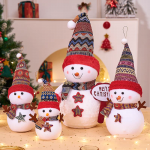
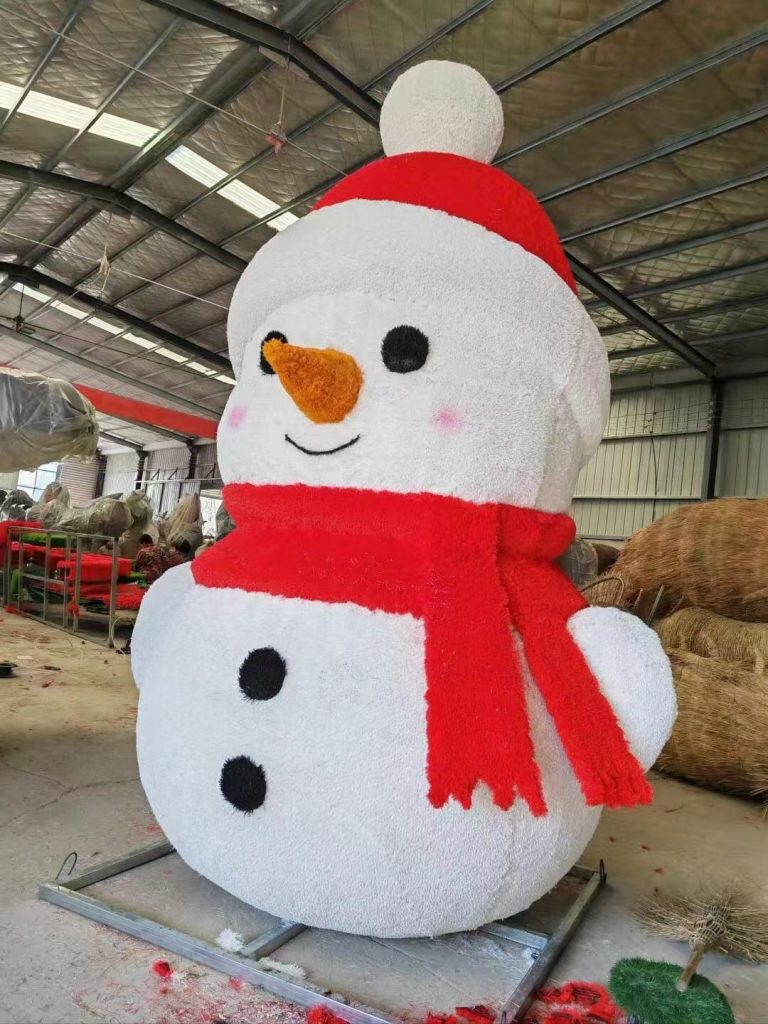
Snowman decorations
-
Reindeer decorations
-
Christmas elf figures
-
Christmas gnome decorations
-
Christmas angel figures
-
Christmas tree ornaments
-
Christmas village houses
-
Christmas church models
-
Christmas gift boxes
-
Christmas sleigh decorations
-
Christmas train decorations
-
Christmas nutcracker figures
-
Christmas tabletop decorations
-
Christmas candle holders
-
Christmas hanging ornaments
-
Christmas centerpieces
-
Outdoor Christmas decorations
-
LED Christmas figurines
-
Personalized Christmas ornaments
Some factories specialize in a particular material or production process, while others can manufacture several types of Christmas decorations.
For example, a resin factory may be particularly suitable for detailed figurines, while a wooden decoration manufacturer may be better for rustic or Scandinavian-style Christmas products.
Therefore, buyers should select the factory according to the product and production process, rather than simply choosing the supplier with the lowest quotation.
Which Materials Are Commonly Used?
The material has a direct effect on appearance, durability, weight, packaging requirements, and cost.
Resin
Resin is widely used for detailed Christmas figurines because it can reproduce relatively complex shapes.
It is suitable for:
-
Santa figures
-
Snowmen
-
Reindeer
-
Christmas villages
-
Tabletop decorations
-
Decorative characters
The main things to check are surface quality, casting consistency, paint adhesion, and whether there are visible bubbles or defects.
PVC and Plastic
Plastic materials can be useful for lightweight and higher-volume products.
They may be suitable for:
-
Hanging decorations
-
Small figurines
-
Outdoor decorations
-
Christmas accessories
The specific plastic material should be confirmed with the manufacturer rather than assuming that all plastic products have the same durability.
Wood
Wooden Christmas decorations are popular for rustic, farmhouse, Scandinavian, and natural-style designs.
Common products include:
-
Wooden hanging ornaments
-
Wooden Christmas trees
-
Wooden Santa decorations
-
Wooden signs
-
Christmas village accessories
Ask the factory about the type of wood, thickness, moisture control, surface treatment, and finishing process.
Fabric
Fabric is commonly used for:
-
Christmas stockings
-
Santa dolls
-
Christmas gnomes
-
Soft ornaments
-
Table decorations
For fabric products, buyers should pay attention to stitching, filling material, fabric density, color consistency, and loose threads.
Metal
Metal can be used for:
-
Christmas signs
-
Hanging decorations
-
Candle holders
-
Outdoor decorations
-
Decorative frames
Material thickness and surface treatment should be specified before production.
How to Find a China Christmas Decoration Factory
There are several ways to find Chinese manufacturers.
1. B2B platforms
B2B marketplaces can provide a large number of supplier candidates.
However, being listed as a supplier does not automatically mean that the company is a factory.
When contacting suppliers, ask:
-
Are you the manufacturer?
-
What products do you produce in-house?
-
Where is your factory located?
-
How many production workers do you have?
-
Which processes are outsourced?
-
Can you provide factory photos or video?
-
Can you provide a live factory video call?
The objective is not simply to find a supplier but to determine whether the supplier has the production capabilities you actually need.
2. Chinese Christmas production clusters
Some regions of China have developed strong manufacturing ecosystems for seasonal decorations, gifts, home décor, lighting, and related products.
A factory located in a mature production cluster may have easier access to:
-
Raw materials
-
Packaging suppliers
-
Painting services
-
Molds
-
Accessories
-
Printing
-
Assembly workers
-
Export logistics
However, location alone does not prove that a supplier is reliable.
A smaller factory with excellent quality control can sometimes be a better choice than a large factory that does not pay sufficient attention to your order.
How to Check Whether a Supplier Is Really a Factory
This is one of the most important steps when sourcing Christmas decorations from China.
A supplier’s website and product catalog are not enough.
Ask the supplier to provide basic company information and production evidence.
You can check:
Business registration
Verify the legal company name and whether the company is currently operating.
Factory address
The registered office and manufacturing location may not always be the same.
Ask for the actual production address.
Production equipment
Depending on the product, look for equipment such as:
-
Molding equipment
-
Cutting machines
-
Painting equipment
-
Printing equipment
-
Sewing machines
-
Assembly lines
-
Packaging equipment
Production workers
A real factory should be able to explain how production is organized.
Previous products
Ask for photos or samples of products similar to yours.
The more similar the previous production is, the more useful it is for evaluating capability.
How Much Do China Christmas Decorations Cost?
There is no single standard price for Christmas figurines.
The final price depends on:
-
Material
-
Size
-
Weight
-
Design complexity
-
Mold requirements
-
Painting process
-
Number of colors
-
Accessories
-
Packaging
-
Order quantity
-
Customization
-
Shipping method
As a rough initial budgeting reference, small mass-produced Christmas decorations may be available in the low single-digit US-dollar range, while larger, highly detailed or customized figurines can cost significantly more.
For example, a buyer may encounter approximate factory-level planning ranges such as:
Product Type |
Rough Planning Range |
|---|---|
Small simple ornament |
US$0.50–3 |
Small resin figurine |
US$2–8 |
Medium decorative figurine |
US$5–15 |
Large detailed figurine |
US$15–50+ |
Customized large decoration |
US$30–100+ |
These are not fixed market quotations. A specific product can be substantially cheaper or more expensive depending on its specifications and order volume.
The safest approach is to send the factory the same product specifications and request comparable quotations from several suppliers.
Does Custom Christmas Decoration Require a Mold?
Often, yes.
If you want a completely new three-dimensional figurine, the factory may need to create a mold.
This can increase your initial development cost.
The mold cost depends on:
-
Product size
-
Shape complexity
-
Material
-
Mold structure
-
Number of components
-
Required production quantity
A simple design may require relatively little development work, while a complex multi-part figurine can require considerably more.
Before paying a mold fee, clarify:
-
Is the mold included in the product price?
-
Who owns the mold?
-
Can the factory use it for other customers?
-
Can the mold be transferred if you change factories?
-
Is mold maintenance included?
These questions can prevent disputes later.
What Is the MOQ for Christmas Decorations?
MOQ means Minimum Order Quantity.
There is no universal MOQ for Chinese Christmas decoration factories.
A supplier may offer:
-
100 pieces
-
300 pieces
-
500 pieces
-
1,000 pieces
-
3,000 pieces
-
5,000+ pieces
The MOQ often depends on whether the product is:
-
Existing design
-
Private label
-
Customized
-
New mold
-
Custom color
-
Custom packaging
If you are testing a new product, ask whether the factory can offer a smaller trial order.
A slightly higher unit price may be acceptable for the first order if it reduces your inventory risk.
How Does Customization Work?
A professional Christmas decoration factory should be able to explain the development process clearly.
A typical process is:
Design → Quotation → Sample → Sample approval → Mold/tooling → Pre-production confirmation → Mass production → Quality inspection → Packaging → Shipment
For customized products, provide as much information as possible.
Useful specifications include:
-
Product drawings
-
Reference photos
-
Dimensions
-
Material
-
Colors
-
Surface finish
-
Logo
-
Packaging requirements
-
Individual packaging
-
Carton requirements
-
Barcode
-
Label requirements
If you only send a product photo and say “make this,” different factories may interpret the design differently.
How to Avoid Quality Problems
Christmas decorations often involve multiple manual processes.
For example, a resin figurine may go through:
-
Mold preparation
-
Casting
-
Trimming
-
Sanding
-
Priming
-
Painting
-
Assembly
-
Inspection
-
Packaging
A defect in any stage can affect the finished product.
Common quality problems include:
-
Uneven paint
-
Color differences
-
Cracks
-
Air bubbles
-
Poorly fitted parts
-
Loose accessories
-
Broken decorations
-
Scratches
-
Excessive glue
-
Deformed components
-
Poor packaging
Do not rely only on the factory’s internal inspection.
For larger orders, consider using an independent pre-shipment inspection company.
Always Approve a Pre-Production Sample
A sample is not just for checking whether the product looks attractive.
It establishes a reference for mass production.
Check:
Dimensions
Measure the actual height, width, and depth.
Weight
This matters for both shipping costs and product positioning.
Colors
Compare the sample with your approved color references.
Surface
Check for:
-
Paint defects
-
Scratches
-
Cracks
-
Bubbles
-
Rough edges
Assembly
Make sure all parts fit correctly.
Packaging
Drop-test or otherwise evaluate the packaging when appropriate.
A beautiful product can still become a poor commercial product if the packaging cannot protect it during international transportation.
Packaging Is Especially Important for Christmas Figurines
Decorative products can be fragile.
A buyer should not only ask:
“What is the unit price?”
You should also ask:
“How will each piece be packed?”
Common packaging may include:
-
Poly bags
-
Foam
-
EPE
-
Bubble wrap
-
Molded inserts
-
Paper boxes
-
Color boxes
-
Export cartons
For fragile figurines, the internal packaging should prevent the product from moving excessively inside the carton.
Ask the supplier for:
-
Product dimensions
-
Individual package dimensions
-
Carton dimensions
-
Pieces per carton
-
Gross weight
-
Net weight
This information is necessary to calculate the real landed cost.
How to Calculate the Real Cost
The factory quotation is only one part of your total purchasing cost.
Your actual cost can include:
Product price + packaging + mold cost + inland transportation + export charges + international freight + customs duties + taxes + destination charges
For bulky Christmas decorations, shipping volume can become particularly important.
A product with a low factory price can become expensive if it takes up a large amount of container or air-freight space.
For this reason, compare suppliers based on landed cost, not only FOB or EXW price.
When Should You Place a Christmas Order?
Christmas products are seasonal, so timing matters.
Do not wait until the Christmas selling season is close before starting production.
A safer purchasing process is:
Product selection → Supplier verification → Sample → Order confirmation → Production → Inspection → Shipping → Customs clearance → Warehouse → Sales
Customized products require additional time because molds and samples may need several rounds of modification.
If your products must arrive before the peak Christmas sales period, discuss the complete production and shipping schedule with the factory before placing the order.
Do not assume that “30 days production” means the products will arrive at your warehouse in 30 days.
Production time and total delivery time are different.
How to Compare Three Christmas Decoration Factories
Suppose you receive three quotations.
Do not immediately choose the lowest price.
Create a comparison sheet:
Factor |
Factory A |
Factory B |
Factory C |
|---|---|---|---|
Unit price |
|||
MOQ |
|||
Sample cost |
|||
Mold cost |
|||
Material |
|||
Packaging |
|||
Production time |
|||
Customization |
|||
Quality control |
|||
Export experience |
|||
Payment terms |
Then compare the total package.
For example, a factory offering a price 8% higher may still be cheaper overall if it provides stronger packaging, lower defect rates, better production control, and more reliable delivery.
Questions to Ask a China Christmas Decoration Factory
Before placing an order, ask the supplier:
-
Are you a manufacturer or trading company?
-
Where is your factory located?
-
What Christmas decorations do you specialize in?
-
What materials do you use?
-
What is the MOQ?
-
What is the sample cost?
-
Is mold development required?
-
How much does the mold cost?
-
Who owns the mold?
-
Can you customize colors?
-
Can you add my logo?
-
Can you provide custom packaging?
-
What is the production lead time?
-
What is your quality inspection process?
-
Can you provide a pre-production sample?
-
Can you provide carton dimensions and weights?
-
What export markets do you currently serve?
-
What are your payment terms?
-
What happens if products are defective?
-
Can you arrange inspection before shipment?
A factory that gives clear and specific answers is generally easier to work with than one that provides vague responses.
Common Mistakes When Buying Christmas Decorations From China
Choosing the cheapest supplier
The lowest quotation may come with lower material quality, thinner packaging, inconsistent painting, or limited quality control.
Ordering without a sample
This is risky for customized products.
Ignoring packaging
A fragile product can arrive damaged even if the factory manufactured it correctly.
Ordering too late
Christmas products have a fixed selling season. Delays can directly affect sales.
Not confirming specifications
Dimensions, colors, materials, packaging, and accessories should be documented before production.
Comparing different specifications
A US$3 product and a US$4 product are not necessarily directly comparable if their materials, sizes, packaging, and finishing processes are different.
Paying the full balance before proper inspection
For larger orders, establish a clear inspection and payment procedure before production begins.
Is Buying Directly From a China Factory Worth It?
For wholesalers and retailers purchasing significant quantities, buying directly from a manufacturer can provide advantages such as:
-
Better control over specifications
-
More customization options
-
Potentially better factory pricing
-
Direct communication with production
-
Easier product development
-
Better control over packaging
However, direct factory purchasing also means the buyer needs to manage supplier verification, product specifications, quality control, payment terms, shipping, and customs requirements.
For smaller buyers, a professional sourcing company or experienced trading supplier may sometimes be more practical.
The right choice depends on your order volume, product complexity, and level of purchasing experience.
FAQ About China Christmas Decoration Factories
Can Chinese factories make my own Christmas decoration design?
Yes. Many manufacturers can develop customized products, although new designs may require samples, molds, tooling, or other development work.
Can I order a small quantity?
Some factories accept relatively small trial orders, especially for existing designs. Customized products generally have higher minimum requirements.
How long does production take?
It depends on the product, order quantity, customization, and factory schedule. Standard products may be faster, while new customized products require additional development time.
Can I put my brand logo on Christmas decorations?
Many factories can provide logo customization, labels, packaging, or other private-label services. Confirm the exact method and additional cost before ordering.
What is the best material for Christmas figurines?
There is no single best material. Resin is useful for detailed figurines, wood works well for rustic designs, fabric is suitable for soft decorations, and plastic or metal may be better for specific applications.
Should I use a third-party inspection company?
For larger orders, independent inspection can reduce the risk of receiving products that do not match the approved specifications.
Can the factory arrange shipping?
Many Chinese suppliers can help arrange export transportation, but buyers should compare the factory’s shipping quotation with independent freight-forwarding options.
Final Checklist Before Ordering
Before sending a deposit to a China Christmas decoration manufacturer, make sure you have confirmed:
-
Product design
-
Material
-
Dimensions
-
Weight
-
Color
-
Surface finish
-
Accessories
-
Logo
-
Packaging
-
Carton specifications
-
MOQ
-
Unit price
-
Mold cost
-
Sample approval
-
Production lead time
-
Quality standards
-
Inspection method
-
Payment terms
-
Shipping terms
-
Defective-product policy


No reply content