
China Guangzhou custom curtains OEM
China
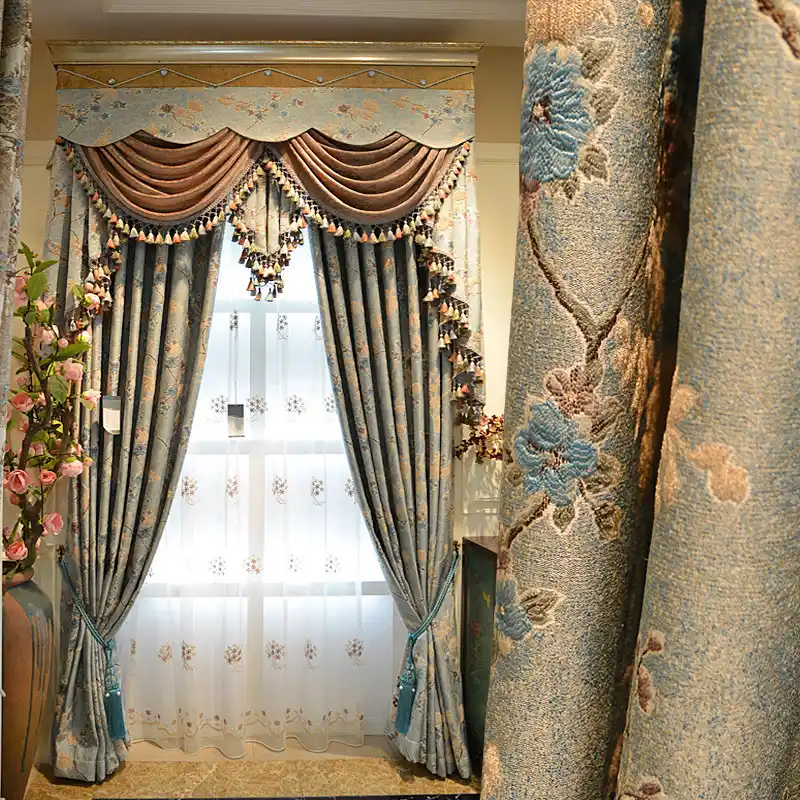
When overseas buyers search for a China curtain factory, they are usually looking for more than a low product price. A suitable factory needs to provide the right fabric, consistent workmanship, flexible customization, reasonable minimum order quantities, reliable production capacity, and clear communication throughout the order process.
China has a mature home-textile manufacturing industry, with factories producing curtains for wholesalers, retailers, hotels, interior designers, distributors, e-commerce brands, and commercial projects.
However, not every curtain factory is suitable for every buyer.
A small retailer may need 100 ready-made curtains, while a hotel project may require thousands of custom blackout curtains with specific fire-performance requirements. A private-label brand may also need custom packaging, labels, colors, and product development.
This guide explains what buyers should know about sourcing curtains directly from a China curtain factory, including products, MOQ, pricing, manufacturing, OEM services, quality control, and ordering procedures.
What Does a China Curtain Factory Produce?
Curtain factories in China can manufacture many different types of window coverings.
Common products include:
-
Blackout curtains
-
Sheer curtains
-
Polyester curtains
-
Linen curtains
-
Linen-blend curtains
-
Velvet curtains
-
Thermal curtains
-
Room-darkening curtains
-
Hotel curtains
-
Custom curtains
-
Children’s curtains
-
Printed curtains
-
Embroidered curtains
-
Ready-made curtains
-
Custom-size curtains
Some factories focus on mass-market polyester products, while others specialize in higher-end fabrics, hotel projects, custom manufacturing, or private-label production.
Before contacting a factory, determine which product category best matches your target market.
Popular Curtain Fabrics Used by Chinese Manufacturers
Polyester
Polyester is one of the most widely used curtain materials.
Advantages include:
-
Relatively low cost
-
Good dimensional stability
-
Easy maintenance
-
Wide range of colors
-
Suitable for mass production
-
Suitable for printing and customization
Polyester curtains are commonly used for residential, rental, hospitality, and retail applications.
Linen and Linen Blends
Linen and linen-blend curtains are often positioned toward the mid-range and premium markets.
They can provide a more natural appearance and textured surface.
However, buyers should specify the actual fiber composition rather than simply accepting a product description such as “linen curtain.”
For example:
100% linen
and
30% linen / 70% polyester
are very different products.
Velvet
Velvet curtains are commonly used for:
-
Hotels
-
Luxury residences
-
Theaters
-
Restaurants
-
Interior-design projects
They generally require careful handling during cutting, sewing, packaging, and inspection.
Sheer Fabric
Sheer curtains are frequently used as a decorative or light-filtering layer.
Common materials include polyester and polyester blends.
Buyers should evaluate:
-
Transparency
-
Fabric density
-
Texture
-
Color
-
Drape
-
Stitching
Blackout Fabric
Blackout curtains can use coated fabric, blackout lining, multi-layer construction, or dense textile structures.
The actual performance depends on the construction.
If your project requires a specific level of light blocking, request samples and relevant testing rather than relying only on the word “blackout.”
China Curtain Factory MOQ
MOQ, or Minimum Order Quantity, is one of the first commercial questions buyers should ask.
The required quantity depends on whether the curtain is standard or customized.
Indicative ranges may look like this:
Curtain Type |
Typical Indicative MOQ |
|---|---|
Standard ready-made curtains |
50–200 pcs |
Custom-size curtains |
100–500 pcs |
Custom fabric/color |
300–1,000+ pcs |
Private-label curtains |
500–2,000+ pcs |
Large hotel/project orders |
Negotiable |
These figures are general sourcing references rather than fixed industry rules.
A factory may accept a smaller quantity when using existing fabrics and standard colors but require a higher MOQ for new fabric development or custom dyeing.
How to Reduce MOQ
If your order quantity is small, consider:
-
Using existing fabric
-
Choosing standard colors
-
Using standard curtain sizes
-
Avoiding new fabric development
-
Using existing accessories
-
Using simple packaging
-
Ordering several sizes using the same fabric
This can make a small order more commercially practical.
China Curtain Factory Price Range
Curtain pricing is determined by many variables.
The major factors include:
-
Fabric
-
GSM
-
Curtain size
-
Construction
-
Header type
-
Lining
-
Accessories
-
Order quantity
-
Printing
-
Embroidery
-
Packaging
-
Customization
-
Shipping terms
A general sourcing reference might be:
Product |
Indicative Factory Price |
|---|---|
Basic polyester curtain |
US$2–6 |
Standard blackout curtain |
US$4–10 |
Sheer curtain |
US$2–7 |
Linen-blend curtain |
US$6–18 |
Velvet curtain |
US$7–20+ |
Custom/OEM curtain |
US$5–30+ |
These are broad indicative ranges, not quotations.
A 140 × 250 cm polyester curtain and a 300 × 300 cm heavy blackout curtain should never be compared solely by their piece price.
Why Two Factories May Quote Very Different Prices
Suppose you receive:
Factory A: US$3.50
Factory B: US$4.80
Factory C: US$6.20
Before selecting Factory A, check whether the three products have identical specifications.
Compare:
-
Fabric composition
-
GSM
-
Size
-
Lining
-
Header
-
Sewing
-
Accessories
-
Packaging
-
Quantity
-
Incoterms
The cheapest quotation may simply represent a different product.
Curtain Manufacturing Process in China
A typical curtain production process involves several stages.
1. Fabric Selection
The factory confirms the required material, color, weight, width, and other specifications.
2. Fabric Inspection
The fabric is inspected for issues such as:
-
Stains
-
Holes
-
Color differences
-
Weaving defects
-
Uneven texture
-
Width inconsistencies
3. Cutting
Fabric is cut according to the approved dimensions.
For large orders, accurate cutting is important because small dimensional differences can become significant when thousands of pieces are produced.
4. Sewing
The panels are assembled according to the approved construction.
Depending on the product, this may include:
-
Side hems
-
Bottom hems
-
Header sewing
-
Lining attachment
-
Label installation
-
Decorative details
5. Header Installation
Different curtains may use:
-
Rod pockets
-
Grommets
-
Pinch pleats
-
Back tabs
-
Hooks
-
Ring-top construction
-
Other customized header systems
The header should match the buyer’s installation requirements.
6. Final Inspection
The finished curtain is checked for:
-
Dimensions
-
Color
-
Stitching
-
Appearance
-
Accessories
-
Labels
-
Packaging
7. Packing
The curtains are folded, protected, labeled, and packed according to the agreed requirements.
OEM Services from a China Curtain Factory
OEM is particularly useful for retailers and brands that want their own products rather than generic catalog items.
A curtain factory may provide:
-
Custom sizes
-
Custom fabrics
-
Custom colors
-
Custom patterns
-
Custom labels
-
Custom packaging
-
Custom cartons
-
Barcode labels
-
Instruction cards
-
Brand inserts
For example, an online home-decoration brand may order:
2,000 blackout curtains
Custom beige color
140 × 250 cm
Private label
Custom retail packaging
Custom barcode
Individual polybag
Export cartons
The factory then produces the curtains according to the approved specifications.
OEM vs ODM
OEM generally means the buyer provides the product specifications or design and the factory manufactures them.
ODM generally means the factory provides an existing or developed design that the buyer can customize or brand.
For standard curtains, ODM can be useful when buyers want to select an existing design and add their branding.
For unique collections, OEM may provide more control.
Custom Curtain Sizes
One major advantage of working directly with a manufacturer is the ability to order non-standard sizes.
Examples include:
-
120 × 200 cm
-
140 × 250 cm
-
150 × 260 cm
-
200 × 250 cm
-
250 × 270 cm
-
Custom project dimensions
However, the buyer should define whether the measurement refers to:
-
Finished curtain size
-
Fabric size
-
Flat width
-
Installed width
-
Finished drop
This is especially important for curtains made for hotels or architectural projects.
A factory should not have to guess what the buyer means by “200 cm wide.”
Custom Curtain Colors
Many factories can supply standard colors from existing fabric collections.
For larger orders, buyers may request custom colors.
Depending on the fabric, customization can involve:
-
Pantone matching
-
Existing color references
-
Lab dips
-
Custom dyeing
Color approval should happen before mass production.
A buyer should retain an approved color reference where possible.
This is important because the appearance of colors can vary between screens, photographs, samples, and physical production.
Private Label Curtain Packaging
Packaging can be important for retail brands.
A China curtain factory may offer:
-
Individual polybags
-
Paper inserts
-
Printed bags
-
Hang tags
-
Woven labels
-
Carton labels
-
Barcodes
-
Custom cartons
For e-commerce products, packaging should also be designed with shipping efficiency in mind.
Oversized packaging can increase:
-
Storage costs
-
Carton volume
-
Freight charges
-
Warehouse requirements
Therefore, packaging should be discussed before production rather than added at the end.
Quality Control for Curtain Manufacturing
A good quality-control system should begin before the finished product reaches the carton.
A practical inspection process can include:
Incoming Fabric Inspection
Check:
-
Color
-
Width
-
GSM
-
Surface defects
-
Composition documentation where applicable
In-Process Inspection
Check:
-
Cutting dimensions
-
Sewing
-
Header construction
-
Lining
-
Thread
-
Labels
Finished Product Inspection
Check:
-
Quantity
-
Dimensions
-
Appearance
-
Color
-
Stitching
-
Accessories
-
Packaging
For large orders, buyers can also arrange an independent inspection before shipment.
Certifications and Compliance
Certification requirements depend on the destination country, material, and intended use.
Depending on the project, buyers may need to investigate:
-
OEKO-TEX®
-
REACH-related requirements
-
Flame-retardant testing
-
Formaldehyde requirements
-
Colorfastness
-
Fiber-content testing
-
Other market-specific regulations
Do not assume that a certificate automatically covers every product manufactured by a supplier.
Ask for the actual documentation and check whether it applies to the specific material or product being purchased.
For hotel, healthcare, public-building, or other commercial projects, compliance requirements can be more demanding than those for ordinary residential curtains.
How to Order Curtains Directly from a China Factory
A typical sourcing process can follow these steps:
Step 1: Define Requirements
Prepare:
-
Product type
-
Dimensions
-
Fabric
-
Color
-
Quantity
-
Header
-
Lining
-
Packaging
-
Destination
Step 2: Contact Multiple Factories
Do not rely on one quotation.
Contact several manufacturers using the same RFQ.
Step 3: Compare Factory Capabilities
Look beyond price.
Compare:
-
Production capability
-
Product specialization
-
MOQ
-
Samples
-
Quality control
-
Lead time
-
OEM services
Step 4: Request Samples
Evaluate the actual product.
Step 5: Confirm the Final Specification
Put important requirements into the quotation, purchase order, or contract.
Step 6: Approve the Pre-Production Sample
For customized products, the approved sample becomes an important reference for bulk production.
Step 7: Start Production
The factory begins bulk manufacturing after the agreed commercial conditions are satisfied.
Step 8: Inspect Before Shipment
For larger orders, consider pre-shipment inspection.
Step 9: Arrange Shipping
Depending on the destination and trade terms, buyers can arrange:
-
Sea freight
-
Air freight
-
Express
-
DDP
-
FOB
-
CIF
-
DAP
Information to Include in a Curtain RFQ
A good RFQ saves time for both buyer and manufacturer.
You can provide the following:
Product: Blackout Curtain
Size: 140 × 250 cm
Quantity: 1,000 pcs
Fabric: 100% polyester
Color: Beige
GSM: Please recommend
Header: Grommet
Lining: Blackout
Logo: Yes
Packaging: Individual retail packaging
Carton: Export carton
Destination: Los Angeles, USA
Required quotation: FOB and CIF
Then ask the factory to provide:
-
Unit price
-
MOQ
-
Sample cost
-
Sample lead time
-
Bulk production lead time
-
Packaging cost
-
Payment terms
-
Available testing documents
-
Production capacity
This produces a much more useful quotation than simply asking for “your best price.”
How to Choose Between a Factory and a Trading Company
A factory is not automatically better than a trading company.
A specialized trading company may have:
-
Multiple factory resources
-
More product choices
-
Sourcing experience
-
Quality-control services
-
Export documentation support
-
Logistics coordination
A factory may provide:
-
Direct manufacturing
-
Greater production control
-
Technical expertise
-
More direct customization
The important question is:
Which supplier can reliably meet your specific requirements?
For a buyer sourcing curtains plus several other home-textile products, a capable sourcing company may sometimes be more convenient.
For a highly customized curtain project, direct communication with a specialized manufacturer may be preferable.
What Buyers Should Confirm Before Paying
Before making payment, confirm the following information in writing:
-
Legal company name
-
Product description
-
Fabric specification
-
Dimensions
-
Quantity
-
Unit price
-
Total price
-
Packaging
-
Production lead time
-
Inspection requirements
-
Payment terms
-
Shipping terms
-
Delivery location
Also verify that the payment beneficiary information is consistent with the commercial documents or has been properly explained and verified.
Do not rely solely on informal conversations for critical specifications.
Common Mistakes When Buying Curtains from China
Choosing the Lowest Price
The lowest price may come with lower fabric weight, cheaper construction, or different specifications.
Ordering Without a Sample
A photograph cannot show the complete physical quality of a curtain.
Ignoring Fabric Composition
“Polyester,” “linen,” and “linen blend” can represent very different products.
Failing to Specify Dimensions
Always clarify finished dimensions and measurement methods.
Not Confirming Packaging
Retail and wholesale packaging requirements can be very different.
Ignoring Lead Time
Custom fabrics, colors, and packaging can extend production schedules.
Comparing Different Incoterms
EXW, FOB, CIF, DAP, and DDP prices are not directly comparable.
Making a Large First Order
If you have never worked with the factory before, consider starting with a manageable order and increasing volume after the supplier demonstrates consistent performance.
Frequently Asked Questions
What is the MOQ for a China curtain factory?
MOQ varies by factory and product. Standard curtains may be available from around 50–200 pieces, while custom fabrics, colors, and private-label orders can require several hundred or more pieces.
How much do curtains cost from a Chinese factory?
Basic curtains may start around US$2–6 per piece, while blackout, linen-blend, velvet, and highly customized products can cost considerably more. Actual pricing depends on specifications and quantity.
Can Chinese curtain factories make custom sizes?
Yes. Many manufacturers can produce custom dimensions, but the factory should confirm its minimum order quantity, measurement tolerances, and production limitations.
Can I order curtains with my own logo?
Many curtain manufacturers offer OEM and private-label services. These can include custom labels, packaging, barcodes, colors, and designs.
How long does curtain production take?
Production time varies according to quantity, material availability, customization, packaging, and factory workload. Standard orders may take several weeks, while custom projects can take longer.
Should I visit the factory?
A factory visit can provide useful information about production capability, but it is not always practical for overseas buyers. Video factory tours, documentation, samples, and independent inspections can provide additional verification.
Can a China curtain factory handle hotel projects?
Many manufacturers serve commercial and hospitality customers. However, hotel projects may require specific fabric performance, fire-related testing, dimensional standards, blackout performance, and project-specific documentation.
What is the best way to start?
Start with a detailed RFQ, contact several suitable manufacturers, compare samples and complete quotations, verify the strongest candidates, and begin with an order size appropriate to your level of confidence.
Final Thoughts
A China curtain factory can offer overseas buyers competitive manufacturing costs, extensive fabric choices, flexible customization, OEM services, and large-scale production.
But successful sourcing depends on choosing the right factory for the right project.
Before placing an order, evaluate the manufacturer’s product specialization, fabric quality, MOQ, pricing, production capability, quality-control system, customization options, packaging, compliance documentation, and communication.
The most useful approach is not to ask:
“Which factory has the cheapest curtains?”
Instead, ask:
“Which factory can consistently produce the exact curtains my customers require at a commercially viable cost?”


No reply content