
China Guangzhou custom curtains OEM
China
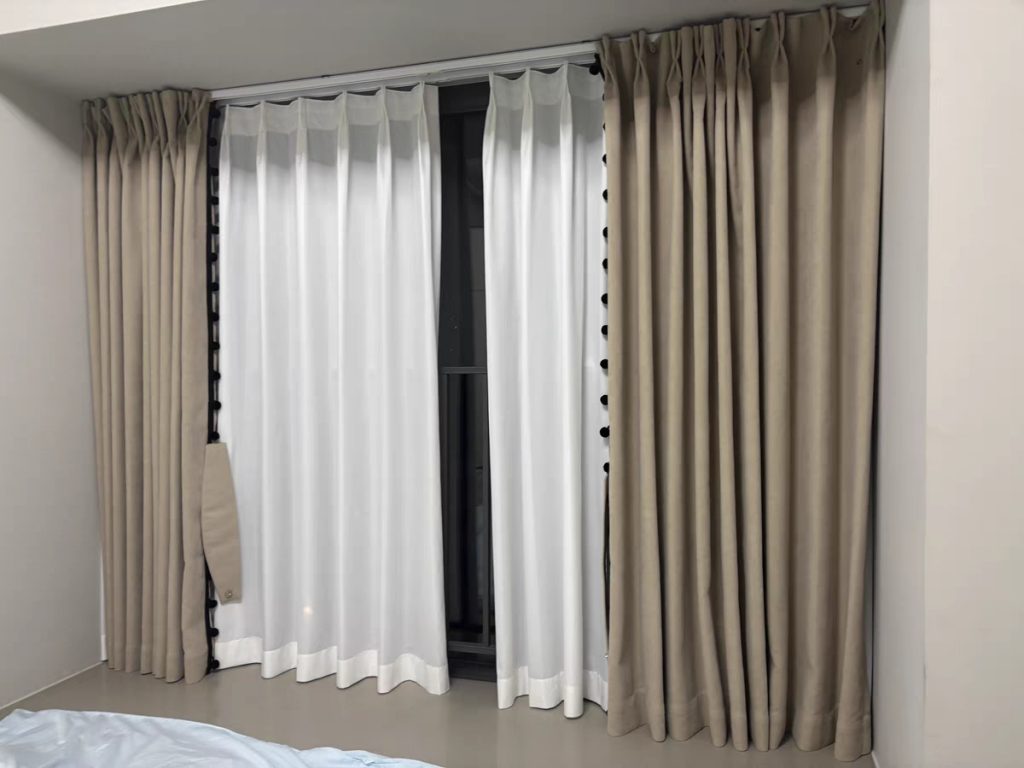
Finding the right curtain manufacturer in China can make a significant difference to product quality, purchasing costs, lead times, and long-term supply stability. China has a large and diverse curtain manufacturing industry, covering ready-made curtains, custom window treatments, blackout curtains, hotel curtains, sheer curtains, shower curtains, stage curtains, and other commercial and residential window-covering products.
For overseas importers, wholesalers, interior designers, hotels, retailers, and e-commerce businesses, working directly with a China curtain manufacturer can provide access to a wider selection of fabrics, customization options, competitive production costs, and OEM or private-label services.
However, not every supplier operates as a factory, and manufacturing capabilities can vary considerably. Buyers should evaluate the factory’s product range, materials, production process, quality-control procedures, minimum order quantity, customization capability, and export experience before placing an order.
What Does a China Curtain Manufacturer Produce?
Chinese curtain manufacturers can produce both standard and customized window-covering products. The available product range depends on the factory’s equipment, workforce, fabric supply chain, and specialization.
Common products include:
-
Blackout curtains
-
Sheer curtains
-
Linen curtains
-
Polyester curtains
-
Cotton curtains
-
Velvet curtains
-
Thermal curtains
-
Soundproof or acoustic curtains
-
Hotel curtains
-
Bedroom curtains
-
Living room curtains
-
Children’s curtains
-
Shower curtains
-
Stage curtains
-
Hospital and institutional curtains
-
Motorized and smart curtains
-
Custom curtains for commercial projects
Some manufacturers specialize in finished curtains, while others focus on fabric production, curtain sewing, or complete window-treatment solutions.
For buyers ordering in volume, it is important to confirm whether the supplier actually manufactures the finished product or mainly purchases curtains from other factories.
Why Buy Curtains Directly from China?
China has an established textile and home-furnishing supply chain. Buyers can often source fabrics, accessories, sewing services, packaging, and finished curtains through connected manufacturing networks.
1. Wide Fabric Selection
Depending on the factory, buyers may have access to:
-
Polyester
-
Cotton
-
Linen and linen blends
-
Velvet
-
Jacquard
-
Chenille
-
Voile
-
Mesh
-
Dimout fabrics
-
Blackout fabrics
-
Recycled polyester and other specialty materials
The final fabric specification should always be confirmed through a sample or approved production standard rather than relying only on photographs.
2. Custom Manufacturing
Many Chinese curtain factories accept custom specifications. A buyer may be able to specify:
-
Curtain dimensions
-
Fabric composition
-
Fabric weight
-
Color
-
Pattern
-
Printing
-
Embroidery
-
Pleat style
-
Header type
-
Lining
-
Hem construction
-
Hanging accessories
-
Packaging
-
Private labels
Custom requirements should be confirmed before quotation because changes to fabric, dimensions, construction, packaging, or accessories can significantly affect the final price.
3. OEM and Private Label Production
For retailers and brands, a China curtain manufacturer may provide OEM or private-label production.
A typical OEM project can include:
-
Buyer provides product specifications.
-
Manufacturer recommends suitable fabrics and construction.
-
Samples are produced.
-
Buyer reviews and approves the sample.
-
Production specifications are finalized.
-
Bulk production begins.
-
Quality inspection is completed.
-
Products are packed and prepared for export.
The exact process varies between factories.
Popular Curtain Fabrics
Choosing the correct fabric is one of the most important decisions in curtain sourcing.
Polyester Curtains
Polyester is widely used because it is relatively durable, versatile, and available in many colors and textures. It is commonly used for residential, hospitality, and commercial curtains.
Linen and Linen-Blend Curtains
Linen has a natural appearance and is popular in interior-design projects that emphasize texture and a relaxed appearance. Pure linen can have different care and cost characteristics from polyester or blended fabrics.
Velvet Curtains
Velvet provides a heavier and more decorative appearance. It is frequently used for bedrooms, luxury interiors, hotels, theaters, and decorative applications.
Sheer Curtains
Sheer fabrics allow natural light to enter while providing a degree of privacy. They are often combined with blackout or heavier curtains in residential and hospitality projects.
Blackout Fabrics
Blackout curtains are designed to significantly reduce incoming light. Buyers should confirm the actual performance specification because “blackout” can refer to different construction methods and performance levels.
For projects requiring measurable performance, request product specifications or testing documentation rather than relying solely on marketing terminology.
Custom Curtain Manufacturing Options
A major advantage of working with a curtain factory is the ability to customize the finished product.
Size
Manufacturers can typically produce curtains according to the buyer’s required width and length.
For large projects, buyers should provide detailed measurements and clarify whether dimensions refer to the finished curtain, fabric cut size, or installation size.
Curtain Header
Common header options include:
-
Rod pockets
-
Grommets
-
Pinch pleats
-
Box pleats
-
Pencil pleats
-
Back tabs
-
Wave or ripple-style headers
The appropriate option depends on the curtain track, rod system, appearance, and installation requirements.
Lining
Depending on the product, buyers may request:
-
Unlined curtains
-
Standard lining
-
Blackout lining
-
Thermal lining
-
Multi-layer construction
Lining can affect weight, appearance, insulation characteristics, and production cost.
Color and Pattern
Factories can offer standard fabric colors or develop custom colors for larger orders.
For brand-sensitive projects, buyers should approve a physical color sample or lab dip before mass production. Digital images and screens can display colors differently.
China Curtain Manufacturer MOQ
MOQ means Minimum Order Quantity.
There is no universal MOQ for Chinese curtain manufacturers. The requirement can vary depending on:
-
Fabric type
-
Curtain size
-
Customization
-
Printing
-
Embroidery
-
Packaging
-
Private labeling
-
Custom dyeing
-
Production schedule
A factory may accept a relatively small quantity for standard products but require a larger order for customized fabrics or private-label production.
Typical commercial arrangements may look like:
Order Type |
Possible MOQ Range |
|---|---|
Standard ready-made curtains |
50–200 pieces |
Custom-size curtains |
100–500 pieces |
Custom fabric/color |
300–1,000+ pieces |
Private-label/OEM projects |
500–2,000+ pieces |
Large hotel/project orders |
Negotiated by project |
These are indicative ranges rather than fixed industry standards. The actual MOQ must be confirmed with the individual manufacturer.
If your initial order is small, ask whether the factory can offer existing fabrics and standard colors. This can reduce development costs and make smaller orders more practical.
How Much Do Curtains from China Cost?
Curtain pricing depends heavily on material, dimensions, construction, customization, and order quantity.
As a broad manufacturing reference, standard polyester curtains may fall within approximately US$2–8 per finished piece at volume, while heavier fabrics, blackout constructions, premium materials, custom designs, or larger sizes can move into the US$8–30+ range.
Custom hotel, commercial, luxury, or technically specified curtains can cost considerably more.
A simple price comparison might look like:
Curtain Type |
Indicative Factory Price |
|---|---|
Basic polyester curtain |
US$2–6/piece |
Standard blackout curtain |
US$4–10/piece |
Sheer curtain |
US$2–7/piece |
Linen-blend curtain |
US$6–18/piece |
Velvet curtain |
US$7–20+/piece |
Custom/OEM curtain |
US$5–30+/piece |
These figures are only general reference ranges, not quotations. Prices can change significantly according to fabric GSM, composition, size, header style, lining, accessories, packaging, order quantity, and current material costs.
When requesting a quotation, provide as many specifications as possible so different factories can be compared on the same basis.
What Information Should You Include in a Curtain RFQ?
A detailed RFQ helps manufacturers calculate a more accurate price.
Provide:
Product:
Blackout curtain, sheer curtain, hotel curtain, etc.
Dimensions:
For example, 140 × 250 cm per panel.
Quantity:
For example, 1,000 pieces.
Fabric:
Polyester, linen blend, velvet, etc.
Fabric weight:
If required.
Color:
Pantone or approved physical sample when necessary.
Header:
Grommet, pinch pleat, rod pocket, ripple fold, etc.
Lining:
Specify whether lining is required.
Logo:
Provide artwork if private labeling is required.
Packaging:
Individual polybag, branded packaging, carton packing, or other requirements.
Destination:
Country and city/port.
The more complete the specification, the easier it is to compare quotations accurately.
How to Choose a Reliable Curtain Manufacturer in China
Price should not be the only factor.
1. Confirm Manufacturing Capability
Ask the supplier:
-
Do you manufacture curtains in-house?
-
What products do you specialize in?
-
What equipment do you use?
-
What is your monthly production capacity?
-
Which processes are outsourced?
-
Can you provide factory photos or videos?
-
Can you arrange a factory inspection?
A supplier that clearly explains its manufacturing process is easier to evaluate.
2. Request Samples
Samples are especially important for curtains because photographs cannot fully demonstrate fabric weight, texture, stitching, color, lining, drape, and finishing quality.
Before placing a large order, compare:
-
Fabric composition
-
GSM
-
Color
-
Stitching
-
Hemming
-
Header construction
-
Dimensions
-
Lining
-
Packaging
3. Check Quality-Control Procedures
Ask how the factory checks products during production.
A practical QC process may include:
Incoming material inspection → Cutting inspection → Sewing inspection → Finished-product inspection → Packing inspection
For large orders, buyers can also arrange independent third-party inspection before shipment.
4. Compare Complete Quotes
Do not compare factories only by unit price.
Check whether the quotation includes:
-
Fabric
-
Sewing
-
Accessories
-
Labels
-
Packaging
-
Sample costs
-
Tooling or development charges
-
Inland transportation
-
Export documentation
A cheaper initial quotation can become more expensive if important items are excluded.
What Certifications Should Curtain Buyers Ask About?
Certification requirements depend on the destination market and the intended application.
For ordinary residential curtains, the buyer may primarily focus on material specifications and product quality.
For hotels, public buildings, healthcare facilities, children’s products, or projects with specific safety requirements, additional testing may be required.
Depending on the market and product, buyers may ask about:
-
OEKO-TEX® certification
-
REACH-related compliance
-
Flame-retardant testing
-
Formaldehyde testing
-
Colorfastness testing
-
Fiber-content testing
-
Other destination-market requirements
Do not assume that a factory has a certification simply because its website displays a certification logo. Ask for the relevant certificate and confirm that it applies to the specific material or product being purchased.
Curtain Manufacturing Process in China
A typical curtain manufacturing process includes several stages.
Step 1: Fabric Selection
The buyer selects or approves the fabric according to appearance, composition, weight, performance, and budget.
Step 2: Sample Development
The factory produces a sample using the agreed specifications.
Step 3: Cutting
Fabric is measured and cut according to the approved dimensions.
Step 4: Sewing
Panels, hems, headers, lining, and other components are assembled.
Step 5: Finishing
The factory adds required accessories, labels, ironing, and other finishing operations.
Step 6: Inspection
Finished curtains are checked for dimensions, appearance, stitching, color, and other agreed specifications.
Step 7: Packaging
Products are folded, labeled, packed, and placed into export cartons.
Step 8: Shipment
The finished goods are prepared for international transportation according to the buyer’s shipping arrangement.
OEM vs. ODM Curtain Manufacturing
These two models are often confused.
OEM
Under an OEM arrangement, the buyer normally provides the product concept, specifications, brand requirements, or design direction, while the factory manufactures the product.
This is suitable for brands that already have their own designs.
ODM
Under ODM, the manufacturer may provide existing designs or product solutions that can be adapted for the buyer.
This can be useful for retailers that want to launch products without developing every component from scratch.
Before ordering, clarify who owns the design, artwork, patterns, molds, packaging artwork, and other intellectual property.
Shipping Curtains from China
Curtains are generally suitable for international ocean, air, rail, or express transportation depending on order size and delivery requirements.
For large wholesale orders, ocean freight is often more economical because curtains can occupy significant carton volume.
When calculating the landed cost, consider:
Product cost + packaging + domestic transportation + export charges + international freight + customs duties + destination charges
A supplier’s factory price is therefore not the same as the final delivered cost.
For smaller urgent orders, air freight may provide faster delivery but usually costs more per kilogram.
Questions to Ask a China Curtain Factory
Before placing an order, consider asking:
-
Are you a manufacturer or trading company?
-
Where is your factory located?
-
Which curtain products do you specialize in?
-
What fabrics can you supply?
-
What is your MOQ?
-
Can you produce custom sizes?
-
Do you provide OEM or private-label production?
-
Can you make samples?
-
What is your sample lead time?
-
What is the normal bulk production lead time?
-
How do you control quality?
-
Can you provide material test reports?
-
What packaging options are available?
-
Which countries do you export to?
-
Can you support third-party factory inspection?
-
What are your payment terms?
-
Can you quote based on FOB, CIF, or another shipping term?
These questions help buyers distinguish between factories with different capabilities.
Common Mistakes When Buying Curtains from China
Choosing the Lowest Price
The cheapest quotation may use a different fabric weight, construction method, or packaging standard.
Always compare equivalent specifications.
Ordering Without a Sample
Curtain appearance can change significantly depending on fabric, lighting, stitching, and finishing.
Approve a sample before bulk production whenever practical.
Not Defining Measurements
A quotation for “one curtain” is meaningless unless the dimensions and construction are clearly defined.
Ignoring Packaging
Curtains can be damaged, wrinkled, or contaminated if packaging is inadequate.
Specify individual and carton packaging requirements before production.
Not Checking Production Capacity
A factory may accept an order larger than it can comfortably produce within your required schedule.
Confirm capacity and production lead time before signing the order.
How to Work With a China Curtain Manufacturer
A reliable sourcing process does not need to be complicated.
1. Define your product
Specify the curtain type, dimensions, fabric, color, quantity, and application.
2. Find several manufacturers
Do not rely on a single quotation.
3. Request comparable quotations
Send the same specifications to each factory.
4. Evaluate samples
Compare physical samples instead of relying only on product photos.
5. Verify the manufacturer
Check company information, factory capability, production experience, and relevant documentation.
6. Confirm the final specification
Put the approved material, dimensions, color, construction, packaging, and quality requirements into the purchase agreement.
7. Inspect production
For larger orders, consider production monitoring or third-party inspection.
8. Arrange international shipping
Choose the appropriate transportation method based on volume, destination, budget, and delivery time.
Why Custom Curtains Can Be a Better Choice for Wholesale Buyers
For retailers and brands, custom manufacturing provides greater control over product positioning.
Instead of selling generic curtains, a buyer can develop a consistent collection around:
-
Specific colors
-
Fabric combinations
-
Standardized sizes
-
Unique packaging
-
Brand labels
-
Seasonal collections
-
Interior-design themes
-
Target market requirements


No reply content