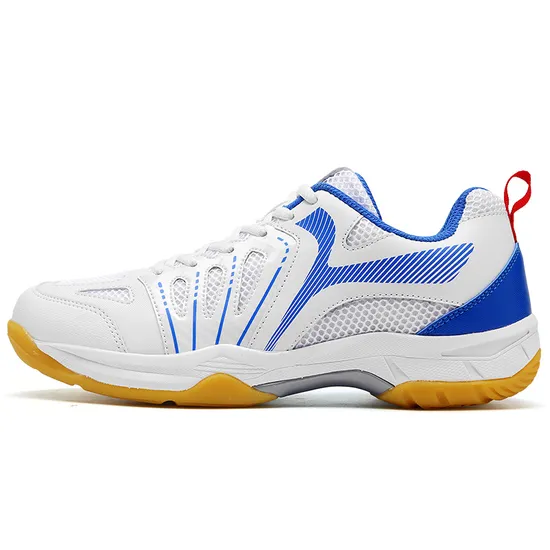
Custom Shoe OEM Manufacturer China | Low MOQ & Fast Sample

Finding a reliable China custom sports shoe manufacturer is not simply about finding the lowest factory price. For a brand, wholesaler, retailer, or startup, the more important questions are whether the factory can reproduce your design accurately, maintain consistent quality, meet your target quantity, and deliver orders on schedule.
China has a large footwear manufacturing industry, but factories differ significantly in production capabilities. Some specialize in running shoes, while others focus on casual sneakers, basketball shoes, outdoor footwear, or private-label production.
This guide explains how to evaluate a Chinese sports shoe factory and what you should prepare before requesting a quotation.
What Can a China Custom Sports Shoe Factory Produce?
A professional sports shoe manufacturer can usually produce footwear according to a buyer’s design, reference sample, technical drawings, or product specifications.
Common categories include:
-
Running shoes
-
Training shoes
-
Gym shoes
-
Basketball shoes
-
Tennis shoes
-
Walking shoes
-
Hiking shoes
-
Outdoor sports shoes
-
Casual sneakers
-
Lightweight athletic shoes
-
Children’s sports shoes
-
Private-label sneakers
Customization can include much more than changing the color.
Depending on the factory’s capabilities, buyers may customize:
Component
|
Typical Customization
|
Upper
|
Mesh, knitted fabric, synthetic leather, TPU and other materials
|
Outsole
|
Rubber, EVA, MD, TPR and compound constructions
|
Midsole
|
Cushioning structure, density and thickness
|
Insole
|
Standard or custom-designed insoles
|
Logo
|
Printing, embroidery, heat transfer, TPU or molded logos
|
Shoelaces
|
Color, material and length
|
Colors
|
Pantone or buyer-specified colors
|
Shoe box
|
Custom size, artwork and printing
|
Packaging
|
Shoe bags, hangtags, cards and labels
|
Shoe last
|
Custom development for specific designs and fit
|
Outsole pattern
|
Customized traction and tread designs
|
The more components you customize, the more development work will normally be required.
OEM vs. ODM: Which Production Model Is Better?
Before contacting a factory, decide whether you need OEM or ODM production.
OEM Sports Shoes
With OEM manufacturing, you provide your own design and specifications, and the factory produces the shoes according to your requirements.
OEM is suitable when you already have:
-
A completed shoe design
-
Technical drawings
-
Material specifications
-
A physical sample
-
Brand guidelines
-
Packaging artwork
The factory’s main responsibility is to turn your specifications into a consistent finished product.
ODM Sports Shoes
ODM is useful when you have a general product concept but do not have a complete design.
For example, you may tell a manufacturer that you need:
Lightweight running shoes for the European market, with a breathable upper, moderate cushioning and a retail price target of $50–70.
An experienced factory may then recommend existing constructions, materials, soles and design options.
For new brands, ODM can reduce development time and initial design costs.
How to Find a Reliable China Custom Sports Shoe Manufacturer
One of the biggest mistakes buyers make is contacting dozens of factories and selecting the supplier with the cheapest quotation.
Instead, evaluate factories according to several factors.
1. Check Whether the Factory Actually Makes Sports Shoes
A company describing itself as a “shoe supplier” may be a trading company rather than a manufacturer.
Ask:
-
What types of sports shoes do you manufacture?
-
Which processes are performed in-house?
-
Do you produce the soles yourself?
-
Do you have your own sample development team?
-
Can you provide recent production photos or videos?
-
What is your monthly production capacity?
A trading company is not necessarily bad. In some cases, an experienced sourcing company can be useful. However, buyers should understand who will actually manufacture the shoes.
2. Review Similar Products
Do not only ask for a general product catalog.
Ask the supplier for products that are similar to your intended design.
For example, if you are developing running shoes, request examples of running shoes rather than casual sneakers.
Look at:
-
Stitching
-
Upper construction
-
Sole bonding
-
Logo application
-
Material quality
-
Finishing
-
Size consistency
-
Packaging
A factory’s previous work gives you a better indication of whether it can handle your project.
How Much Does Custom Sports Shoe Manufacturing Cost in China?
There is no single fixed price because the cost depends heavily on materials, construction, quantity and customization.
As a rough planning range, a basic private-label sports shoe may cost approximately US$12–30 per pair at factory level for certain medium-to-large production orders.
More complicated or performance-oriented footwear can be significantly more expensive.
A simplified cost structure may look like this:
Product Level
|
Approximate Factory Price*
|
Basic private-label sneaker
|
$12–18/pair
|
Mid-range custom sports shoe
|
$18–30/pair
|
More complex performance shoe
|
$30–50+/pair
|
*These are planning ranges rather than fixed market quotations. Actual pricing depends on materials, construction, order quantity, tooling, packaging, testing and other specifications.
For example, changing from a basic EVA sole to a more sophisticated multi-density cushioning system can significantly affect the final cost.
The cheapest quotation is therefore not necessarily the lowest total cost.
What Is the MOQ for Custom Sports Shoes?
MOQ, or minimum order quantity, varies from factory to factory.
A typical custom order may require several hundred to several thousand pairs, depending on the design and materials.
The MOQ can also be different for:
-
One color
-
One size
-
One complete style
-
Multiple colors
-
Custom outsole
-
Custom shoe last
-
Custom packaging
For example, a factory may accept a relatively small order using an existing sole mold but require a higher quantity if you want a completely new outsole.
Always ask the factory to provide the MOQ per style and per color, rather than simply asking, “What is your MOQ?”
How Does the Custom Sports Shoe Development Process Work?
A professional development process normally involves several stages.
Step 1: Send Your Product Requirements
Provide as much information as possible:
-
Product type
-
Target market
-
Intended use
-
Reference images
-
Drawings
-
Materials
-
Colors
-
Size range
-
Logo
-
Packaging requirements
-
Target quantity
-
Target price
The more specific your requirements are, the more accurate the quotation is likely to be.
Step 2: Factory Evaluation
The manufacturer reviews your requirements and determines whether its existing production capabilities are suitable.
The factory may recommend alternative materials or construction methods if your original specifications are difficult to manufacture economically.
Step 3: Prototype Development
A sample is developed based on your design.
Do not treat the first sample as the final product.
It is normal for buyers to request adjustments to:
-
Fit
-
Shape
-
Color
-
Material
-
Sole hardness
-
Logo position
-
Cushioning
-
Weight
Step 4: Sample Confirmation
Once the design and specifications are approved, the factory should have a confirmed sample or specification sheet that can be used as the production reference.
This step is important because verbal instructions can easily lead to misunderstandings.
Step 5: Bulk Production
After approval, the factory purchases materials, prepares components and starts mass production.
Depending on the order, production may include:
-
Material inspection
-
Cutting
-
Printing or logo application
-
Sewing
-
Upper assembly
-
Sole preparation
-
Lasting
-
Sole bonding
-
Finishing
-
Final inspection
-
Packing
Step 6: Pre-Shipment Inspection
Before shipment, inspect finished products against the approved sample and specifications.
For larger orders, an independent inspection company can also be considered.
How Long Does Custom Sports Shoe Production Take?
The production timeline depends on whether the factory already has the required materials, molds and components.
A typical project may look approximately like this:
Stage
|
Typical Time
|
Initial quotation
|
1–5 business days
|
Sample development
|
7–20+ days
|
Sample revisions
|
3–15 days
|
Material preparation
|
7–20 days
|
Bulk production
|
20–45+ days
|
Final inspection
|
1–3 days
|
These are general planning estimates rather than guaranteed lead times.
A completely new shoe design with custom tooling can take considerably longer than a private-label design based on existing factory components.
If you have a fixed launch date, tell the factory about the deadline before placing the order, not after production begins.
What Should You Ask a Chinese Sports Shoe Factory?
A good supplier inquiry should contain enough information for the factory to give you a meaningful quotation.
You can ask:
-
What is your MOQ per style and color?
-
What is your sample cost?
-
How long does sample development take?
-
What is the bulk production lead time?
-
Which materials can you provide?
-
Can you develop a custom outsole?
-
Can you make custom shoe lasts?
-
What logo methods are available?
-
Can you provide custom packaging?
-
What quality-control procedures do you use?
-
What payment terms do you accept?
-
What export markets do you currently serve?
-
Can you provide samples of similar products?
-
What happens if products fail inspection?
-
Can you provide pre-production samples for approval?
The answers will help you compare factories on more than price.
How to Control Quality When Buying Sports Shoes from China
Quality problems are often easier and cheaper to prevent than to fix after shipment.
A practical quality-control system can include three stages.
Pre-Production Inspection
Check:
-
Materials
-
Colors
-
Logo artwork
-
Sole specifications
-
Size specifications
-
Packaging
-
Approved sample
During-Production Inspection
Check a portion of the production before the entire order is completed.
Look for:
-
Stitching problems
-
Glue marks
-
Color differences
-
Incorrect components
-
Sole separation
-
Logo positioning
-
Size labeling
Final Inspection
Inspect finished shoes before shipment.
Depending on your business requirements, you may establish an acceptable quality level and inspection standard with the factory before production.
How Can You Avoid Common Problems?
Several problems occur repeatedly in custom footwear projects.
Problem 1: The Factory Gives a Very Low Price
A low quotation may exclude:
-
Custom molds
-
Sample development
-
Packaging
-
Testing
-
Special materials
-
Shipping
-
Additional logo charges
Always request a detailed quotation.
Problem 2: The Sample Looks Good but Bulk Production Is Different
This can happen when the production team does not follow a properly documented approved sample.
Use a confirmed “golden sample” or production reference sample and clearly document critical specifications.
Problem 3: The Shoe Fit Is Wrong
A shoe can look excellent but still be uncomfortable.
Fit depends on the shoe last, upper construction, materials and intended use.
For sports footwear, testing the actual fit is particularly important.
Problem 4: Color Is Inconsistent
Screens and photographs cannot always accurately represent physical colors.
For important brand colors, provide a physical reference or a standardized color reference such as Pantone where appropriate.
Should You Visit the Factory?
If the order value is substantial or the relationship is expected to continue for years, a factory visit can be useful.
During a visit, look beyond the showroom.
Ask to see:
-
Production lines
-
Sample development area
-
Material storage
-
Quality-control areas
-
Finished goods
-
Packaging operations
The goal is not simply to see whether the factory looks large.
You want to understand whether its actual production process matches what the supplier has told you.
For smaller first orders, third-party factory verification or inspection may be more practical than traveling to China.
What Information Should You Send When Requesting a Quote?
A poorly prepared inquiry often produces vague quotations.
Instead of sending:
“I need 1,000 custom sneakers. Please send price.”
send a structured specification.
For example:
Product: Custom running shoes
Quantity: 2,000 pairs
Sizes: EU 36–46
Colors: 3 colors
Upper: Breathable mesh
Sole: EVA + rubber outsole
Logo: Custom TPU logo
Packaging: Custom printed shoe box
Target market: Europe
Sample: Required
Target price: Please recommend based on specifications
This gives the factory enough information to calculate a more realistic quotation.
China Custom Sports Shoe Manufacturer vs. Trading Company
Both manufacturers and trading companies can work with overseas buyers, but they provide different advantages.
Factor
|
Factory
|
Trading Company
|
Direct production control
|
High
|
Depends on supplier
|
Product customization
|
Usually strong
|
Depends on factory
|
Factory communication
|
Direct
|
Managed by trading company
|
Product range
|
Often specialized
|
Usually broader
|
Small mixed orders
|
Sometimes limited
|
Often more flexible
|
Factory audit
|
Easier to verify
|
Need to verify manufacturing partners
|
For a technically demanding sports shoe project, direct communication with the actual manufacturer can be particularly valuable.
For buyers who need multiple product categories or smaller mixed orders, a reliable sourcing company may sometimes be more convenient.
Questions to Ask Before Paying a Deposit
Before making a deposit, make sure the commercial terms are clear.
Confirm:
-
Product specifications
-
Quantity
-
Unit price
-
MOQ
-
Sample approval
-
Production lead time
-
Payment terms
-
Packaging
-
Inspection requirements
-
Shipping terms
-
Warranty or defect handling
-
Replacement or compensation procedures
A written purchase agreement is preferable to relying on conversations through messaging apps.
Frequently Asked Questions
Can Chinese factories make completely new sports shoe designs?
Yes. Some manufacturers have product-development teams capable of developing new uppers, soles, molds and shoe lasts. However, a completely new design normally requires more development time and tooling investment than modifying an existing model.
Can I order a small quantity?
Some factories accept relatively small private-label orders, especially when using existing molds and standard materials. Completely custom products generally require higher MOQs.
Can the factory put my brand logo on the shoes?
Yes, depending on the factory and logo method. Common options include embroidery, printing, heat transfer, TPU logos and molded logos.
Can I customize the shoe box?
Yes. Custom packaging can normally include printed shoe boxes, labels, hangtags, tissue paper, shoe bags and other brand materials.
How should I compare quotations from different factories?
Do not compare only the unit price. Compare the same specifications, including materials, sole construction, logo method, packaging, MOQ, tooling, sample costs, production time and quality requirements.
Should I order samples before bulk production?
Yes. For a new supplier, approving a physical sample before mass production is one of the most important steps in reducing quality and specification risks.
Final Advice for Overseas Buyers
The best China custom sports shoe manufacturer is not necessarily the factory offering the lowest price.
A better supplier should be able to understand your product requirements, develop a reliable sample, communicate clearly, control production quality and maintain consistent specifications during repeat orders.
For a new brand, a practical approach is to start with 2–5 carefully selected factories, request comparable quotations, order samples from the strongest candidates, evaluate the samples, and only then choose a supplier for bulk production.
If your product will be sold under your own brand, treat the first order as a supplier qualification process rather than simply a purchasing transaction.
A factory that performs well on the first order, communicates transparently and maintains consistent quality can become a long-term manufacturing partner as your brand grows.


No reply content