China agricultural product suppliers

Why Post-Harvest Handling and Cold Chain Integrity Determine Your Profit Margin
In the global garlic trade, the difference between a premium product and a rejected shipment often comes down to water activity and skin integrity. As a post-harvest technology specialist with 18 years in agricultural export, I’ve seen buyers lose millions due to sprouting, dehydration, or fungal decay—issues that start the moment the bulb is lifted from the soil.
This article explains the technical realities of sourcing garlic from China, focusing on the scientific aspects of curing, grading, and logistics that separate a true supplier from a trader.
1. Varietal Selection: It’s Not Just “Garlic”
Different cultivars serve different markets. Understanding the botanical characteristics helps you specify the right product.
| Variety | Clove Count | Pungency (Allicin Content) | Shelf Life Potential | Primary Market |
|---|---|---|---|---|
| Pure White (Snow White) | 10-12 | Medium | Excellent (12-18 months) | Europe, Middle East |
| Normal White | 6-8 | Low-Medium | Good (9-12 months) | Southeast Asia, South America |
| Purple Stripe | 4-6 | High | Moderate (6-9 months) | Russia, Eastern Europe, Korea |
| Organic (All Varieties) | Varies | High | Depends on cultivar | North America, EU (Organic Certified) |
2. The Curing Process: The Most Critical 15 Days
Proper curing determines whether your garlic lasts 3 months or 15 months. Our protocol is scientifically controlled:
-
Field Curing (3 Days): Bulbs are left in windrows immediately after harvest to reduce field heat and initiate skin drying.
-
Controlled Environment Curing (12 Days):
-
Temperature: Maintained at 30-35°C.
-
Relative Humidity (RH): Gradually reduced from 70% to 55%.
-
Airflow: Continuous forced-air circulation to ensure even drying.
-
-
Objective: Reduce moisture content from ~65% to 63-64% (water activity <0.6). This inhibits microbial growth and prevents sprouting.
Improper curing leads to “wet necks,” which are breeding grounds for Botrytis rot.
3. Grading and Sorting: Beyond Visual Inspection
We use a multi-stage sorting process to meet stringent phytosanitary standards.
| Stage | Technology/Method | Rejection Criteria |
|---|---|---|
| Mechanical Cleaning | Rotary drum cleaners | Loose dirt, outer skins |
| Size Grading | Vibrating screen decks | Deviating diameter (e.g., rejecting <45mm for 5.0cm grade) |
| Visual Inspection (Manual) | Conveyor belts with trained sorters | External defects: bruising, cuts, mold, double cloves |
| Internal Inspection | Optical Sorting (Near-Infrared) | Internal rot, hollow cloves, insect damage (non-destructive) |
| Metal Detection | Tunnel metal detector | Ferrous and non-ferrous metal contamination |
4. Storage and Logistics: Maintaining the Cold Chain
Garlic is a living organism. We store it at 0°C to 2°C with 65-70% RH. Fluctuations cause condensation (“sweating”), leading to mold.
-
Pre-cooling: Containers are pre-cooled to -18°C before loading to remove residual heat.
-
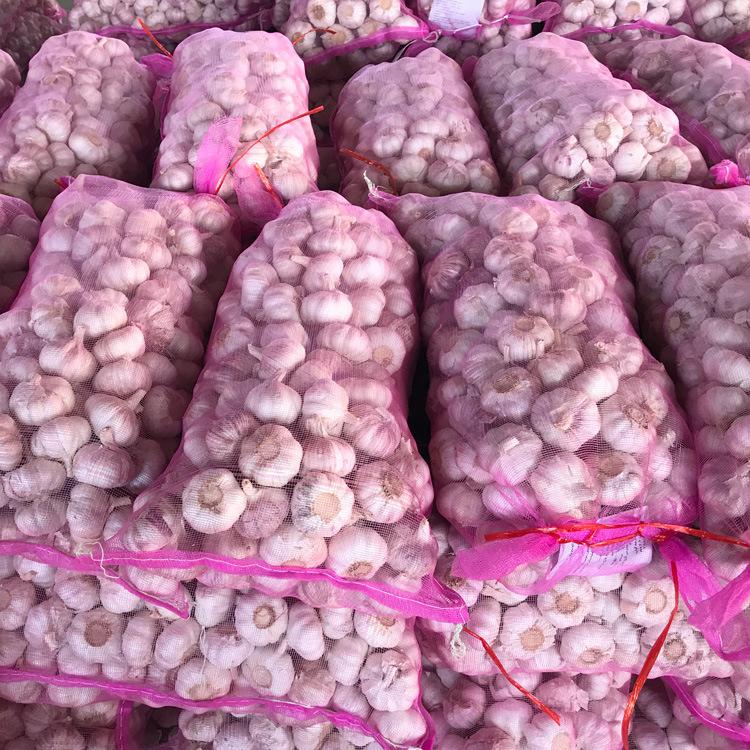
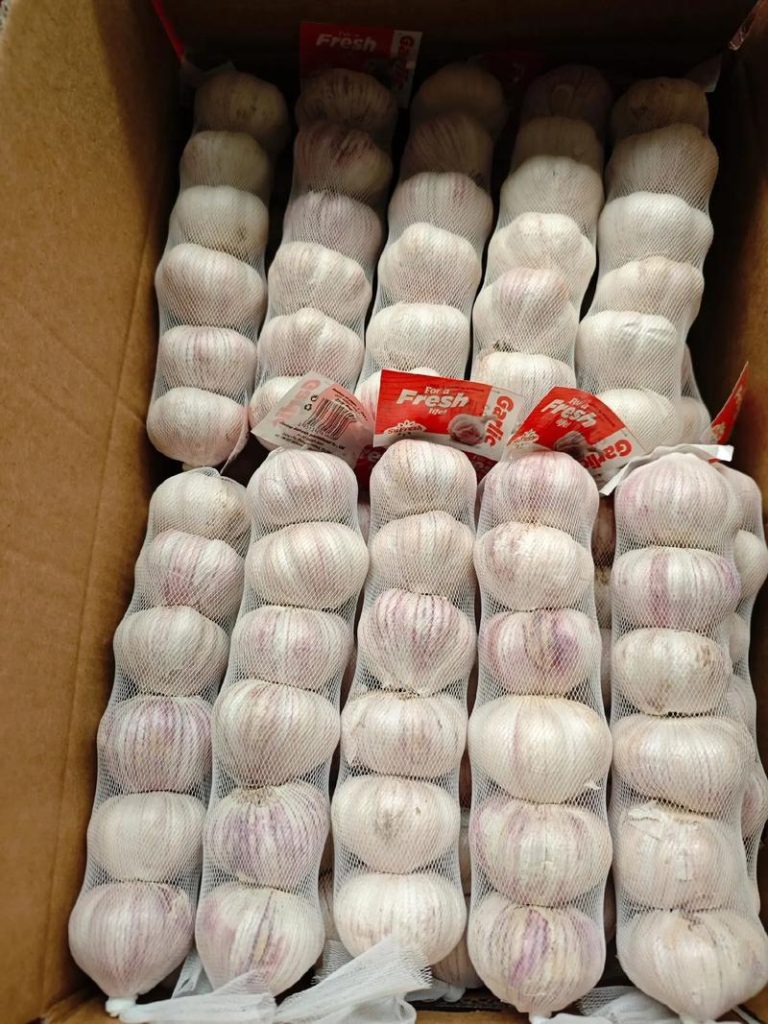
Palletization: Standard 10kg/20kg mesh bags or cartons, stacked to allow airflow.
-
Container Monitoring: We use data loggers to track temperature and humidity throughout the voyage.
FAQ: Addressing Technical Concerns for Importers
Q1: How do you prevent garlic from sprouting during long sea voyages (30-40 days)?
A: Sprouting is inhibited by maintaining the bulbs in a dormant state through strict temperature control (0-2°C) and low oxygen permeability packaging (if vacuum-packed). We also select cultivars with naturally longer dormancy periods for long-distance shipments.
Q2: What is your protocol for avoiding Fusarium basal rot?
A: We implement crop rotation (4-year minimum), use certified disease-free seed, and apply fungicidal dips during curing. Our storage facilities are regularly sanitized, and we reject any bulbs showing basal plate discoloration during optical sorting.
Q3: Can you guarantee a specific clove size distribution for processing?
A: Yes. For peeled garlic or paste production, we sort by clove size using roller graders. We can supply specifications like “Cloves 15-20mm diameter, max 5% deviation” based on your processing line requirements.
Q4: How do you handle pesticide residue compliance (EU MRLs vs. US EPA)?
A: We maintain detailed GAP (Good Agricultural Practices) records. Our farms use IPM (Integrated Pest Management). We test every batch at an ISO 17025 accredited lab for specific MRLs (e.g., Chlorpyrifos, Iprodione) based on the destination country’s regulations before shipment.
Q5: What is the difference between “Fresh” and “Cold Storage” garlic?
A: “Fresh” garlic is harvested and shipped within 30-60 days (high moisture, firm). “Cold Storage” garlic is held at 0°C for 3+ months (lower moisture, slightly softer, but longer shelf life). We clearly label the product type to match your market needs.
Conclusion: Source with Scientific Confidence
Sourcing garlic from China is not just about price; it’s about managing biological risk. By understanding curing science, optical sorting, and cold chain logistics, you ensure a consistent, safe, and profitable product.
Ready to specify your next garlic shipment? Send us your technical requirements, and we will provide a batch-specific quality plan along with your quote.


No reply content