Guangzhou Home Appliance Co. Ltd.
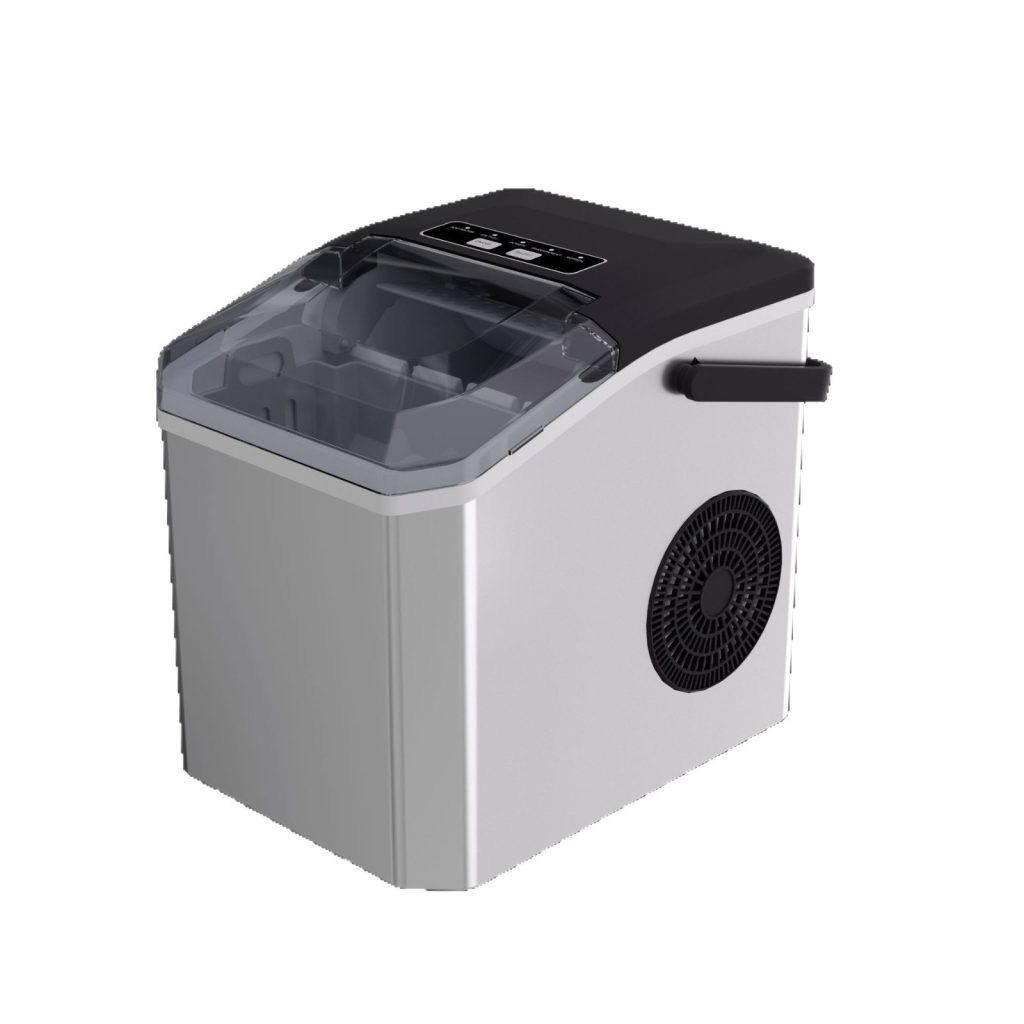
Finding a reliable China ice machine factory can help importers, distributors, restaurants, hotels, supermarkets, seafood businesses, bars, and food-processing companies reduce purchasing costs while getting equipment designed for their actual ice-production requirements.
However, choosing an ice machine manufacturer is different from buying ordinary consumer products. An ice machine combines refrigeration, water circulation, electrical controls, compressors, condensers, evaporators, insulation, drainage and other components. A machine with a low purchase price may become expensive if it consumes too much electricity, produces inconsistent ice, or is difficult to maintain.
For overseas buyers, the right approach is to evaluate the factory, machine configuration, production capacity, energy consumption, after-sales support and total operating cost together.
What Types of Ice Machines Are Made in China?
Chinese manufacturers produce many types of commercial and industrial ice-making equipment.
Common categories include:
-
Cube ice machines
-
Flake ice machines
-
Tube ice machines
-
Bullet ice machines
-
Nugget ice machines
-
Block ice machines
-
Plate ice machines
-
Commercial ice makers
-
Industrial ice-making systems
-
Ice machines with storage bins
-
Integrated ice maker and dispenser systems
Different ice types are designed for different applications.
Cube Ice Machines
Cube ice is commonly used in restaurants, bars, hotels, cafés and beverage businesses.
The relatively slow melting rate of many cube-ice designs makes this type suitable for drinks and food presentation.
Flake Ice Machines
Flake ice is widely used in seafood markets, fish processing, food transportation and applications where products need to be surrounded by ice.
The thin pieces can provide good surface contact with products.
Tube Ice Machines
Tube ice is commonly used by beverage distributors, restaurants, food businesses and commercial ice suppliers.
The hollow shape and relatively hard structure can make it suitable for certain cooling and beverage applications.
Block Ice Machines
Block ice is generally associated with larger-scale commercial applications, including seafood, transportation and some industrial cooling requirements.
The appropriate machine depends heavily on the required block size and daily production capacity.
How Do You Choose the Right Ice Machine Capacity?
One of the most important purchasing decisions is determining how much ice you actually need.
Do not choose a machine simply because the supplier advertises a large production figure.
Instead, estimate your daily demand.
For example, a restaurant may need:
-
Ice for beverages
-
Ice for food preparation
-
Ice for customer service
-
Additional ice during weekends or peak seasons
A seafood distributor may have completely different requirements.
If your business requires approximately 500 kg of ice per day, buying a machine rated at 500 kg/day may not always provide sufficient operational flexibility.
Production capacity can be affected by:
-
Ambient temperature
-
Water temperature
-
Condenser type
-
Refrigerant system
-
Voltage
-
Machine configuration
-
Installation conditions
It is therefore important to ask the manufacturer under what conditions the stated production capacity was measured.
Air-Cooled vs. Water-Cooled Ice Machines
Buyers should also determine which condenser configuration is appropriate.
Air-Cooled
Air-cooled machines use ambient air to remove heat.
Advantages can include:
-
Easier installation
-
No additional condenser water consumption
-
Simpler plumbing requirements
However, performance can be affected by high ambient temperatures and poor ventilation.
Water-Cooled
Water-cooled systems use water to remove heat from the refrigeration system.
They can be useful in certain high-temperature or installation environments, but water consumption and local operating conditions need to be considered.
The cheapest option is not necessarily the most economical over several years.
What Components Should You Check?
When comparing two Chinese ice machine factories, look beyond the external appearance.
Ask the manufacturer about the major components.
Compressor
The compressor is one of the most important components in an ice-making system.
Ask:
-
What compressor brand is used?
-
What is the compressor model?
-
Is it standard or customized?
-
Can replacement compressors be sourced internationally?
A reputable factory should be able to clearly identify the compressor specifications.
Condenser
Check whether the machine uses an air-cooled or water-cooled condenser and whether its capacity is appropriate for the expected operating environment.
Evaporator
The evaporator directly affects ice formation.
For commercial machines, buyers should pay attention to material quality, surface treatment, ice-release performance and long-term durability.
Water System
The water circulation system should be designed to provide consistent ice formation.
Poor water distribution can contribute to irregular ice shape and inconsistent production.
Electrical System
Before ordering, confirm:
-
Voltage
-
Frequency
-
Phase
-
Plug type
-
Control system
-
Safety protection
For example, a machine designed for one electrical specification may require changes before being installed in another country.
How Much Does a China Ice Machine Cost?
There is no universal factory price because ice machines vary considerably in capacity and configuration.
As a rough purchasing reference, smaller commercial machines may start from several hundred US dollars, while larger commercial and industrial systems can cost several thousand dollars or considerably more.
A simplified planning range might look like:
Machine Type |
Approximate Price Range* |
|---|---|
Small commercial ice maker |
US$500–1,500 |
Medium commercial machine |
US$1,000–4,000 |
Large commercial machine |
US$3,000–10,000+ |
Industrial ice-making system |
US$10,000–50,000+ |
*These figures are general planning ranges rather than quotations. Actual prices depend on production capacity, ice type, compressor, condenser, materials, electrical configuration, storage bin, controls, packaging and customization.
When comparing quotations, make sure every factory is quoting an equivalent configuration.
A US$1,000 machine and a US$1,500 machine cannot be fairly compared if they have different production capacities or components.
What Is the MOQ for Ice Machines?
Ice machine factories often have a different MOQ structure from consumer products.
For standard models, some manufacturers may accept a single machine for sample or trial orders.
For customized production, the factory may establish a higher minimum quantity.
MOQ may depend on whether you require:
-
Custom logo
-
Custom control panel
-
Custom color
-
Special voltage
-
Custom packaging
-
Modified machine dimensions
-
Customized ice shape
-
Special refrigeration configuration
If you are a distributor, ask the factory for both the sample price and the bulk-order price.
Can Chinese Ice Machine Factories Customize Machines?
Yes. Depending on the factory’s engineering capabilities, customization may include:
-
Brand logo
-
Machine appearance
-
Control panel
-
Voltage and frequency
-
Plug
-
Ice production capacity
-
Storage bin
-
Machine dimensions
-
Water inlet and drainage
-
Packaging
-
User manual
-
Nameplate
-
Electrical configuration
However, not every modification is economically practical.
For example, changing the logo may be relatively simple, while developing a completely new refrigeration system can require engineering work, testing and additional development costs.
Ask the factory to separate standard customization from engineering customization.
What Certifications Do Overseas Buyers Need?
Certification requirements depend on the destination market and the specific machine.
Common requirements may include electrical safety and electromagnetic compatibility compliance, while some markets may have additional requirements concerning refrigeration equipment, materials, energy efficiency or food-contact components.
Do not simply ask:
“Do you have certificates?”
Ask for the actual documentation relevant to your market.
For example:
-
Certificate number
-
Test report
-
Applicable standard
-
Product model covered
-
Manufacturer name
-
Certification validity
The certification should correspond to the machine you are actually purchasing.
A certificate for one model does not automatically prove that every product made by the same factory is covered.
How Can You Verify a China Ice Machine Factory?
Before placing a significant order, perform basic supplier verification.
1. Verify the Company
Check:
-
Legal company name
-
Business registration
-
Factory address
-
Years in business
-
Export experience
-
Main products
-
Production facilities
2. Check the Factory’s Production Capability
Ask for photos or videos of:
-
Assembly lines
-
Refrigeration-system assembly
-
Electrical testing
-
Water-system testing
-
Finished machines
-
Packaging area
-
Warehouse
If possible, arrange a factory inspection.
3. Request a Product Sample
For distributors or importers, ordering a sample can provide much more useful information than looking at photographs.
Evaluate:
-
Ice production
-
Ice appearance
-
Noise
-
Water leakage
-
Temperature
-
Control panel
-
Machine construction
-
Ease of cleaning
-
Packaging
What Should Be Included in a China Ice Machine Quotation?
A professional quotation should contain more than a unit price.
Ask the supplier to specify:
Item |
Information to Confirm |
|---|---|
Model |
Exact model number |
Ice type |
Cube, flake, tube, etc. |
Production capacity |
kg/day or another agreed unit |
Storage capacity |
kg |
Compressor |
Brand and model |
Condenser |
Air-cooled or water-cooled |
Voltage |
Required electrical specification |
Power |
Rated input |
Refrigerant |
Exact refrigerant type |
Machine size |
Length × width × height |
Weight |
Net/gross weight |
Packaging |
Carton, plywood case, etc. |
Warranty |
Period and coverage |
Spare parts |
Included or optional |
Price |
EXW/FOB/CIF or other agreed term |
This makes supplier comparison much easier.
What Is the Typical Production Lead Time?
Lead time depends on whether the machine is a standard model or a customized system.
For standard machines, production may take approximately 15–30 days after order confirmation and deposit.
Customized machines can take longer because the factory may need to prepare special components, electrical configurations, packaging or engineering modifications.
Before ordering, confirm:
-
Sample lead time
-
Production lead time
-
Testing time
-
Packaging time
-
Estimated shipping date
Do not confuse manufacturing lead time with total delivery time.
International shipping, customs clearance and inland transportation are additional factors.
How Should You Test an Ice Machine Before Shipment?
A factory should have a suitable testing process before the machine is packed.
Depending on the machine, buyers can request verification of:
-
Ice production
-
Refrigeration performance
-
Water circulation
-
Leakage
-
Electrical safety
-
Compressor operation
-
Noise
-
Automatic controls
-
Ice release
-
Drainage
For larger orders, buyers can also arrange a third-party pre-shipment inspection.
A useful inspection approach is to compare the production machine against the approved sample and purchase specifications.
Common Problems When Importing Ice Machines from China
Problem 1: The Production Capacity Is Lower Than Expected
A machine advertised as producing a certain amount of ice per day may achieve different results under different ambient and water temperatures.
Always ask for the test conditions behind the production rating.
Problem 2: The Machine Is Not Suitable for the Buyer’s Voltage
This is a common issue when buyers do not provide complete electrical requirements.
Specify voltage, frequency, phase and plug requirements before production.
Problem 3: Replacement Parts Are Difficult to Obtain
An inexpensive machine can become difficult to maintain if critical components are proprietary or unavailable in the destination country.
Ask the factory for a spare-parts list before ordering.
Problem 4: Shipping Damage
Ice machines contain refrigeration and electrical components that can be damaged by poor packaging or rough transportation.
For export orders, confirm whether the factory uses reinforced export packaging suitable for international transport.
Problem 5: High Operating Costs
Purchase price is only one part of the total cost.
Consider:
Total Cost = Purchase Price + Shipping + Installation + Electricity + Water + Maintenance + Spare Parts
A slightly more expensive machine can sometimes be more economical if it operates efficiently and is easier to maintain.
Should You Buy Directly From a Factory?
Buying directly from a Chinese manufacturer can provide advantages such as:
-
Better communication with engineers
-
More customization options
-
Potentially better factory pricing
-
Easier spare-parts sourcing
-
More direct quality control
However, direct factory purchasing also means that the buyer needs to manage product specifications, shipping, customs, installation requirements and after-sales communication.
For experienced importers, direct purchasing can be attractive.
For first-time buyers, working with an experienced sourcing or importing partner may reduce communication and logistics difficulties.
Questions to Ask Before Choosing a Factory
Before placing an order, ask the manufacturer:
-
Are you a manufacturer or trading company?
-
How many years have you produced ice machines?
-
Which types of ice machines do you specialize in?
-
What is the actual production capacity of this model?
-
Under what temperature conditions is the capacity measured?
-
What compressor is used?
-
Is the machine air-cooled or water-cooled?
-
What refrigerant does it use?
-
What voltage and frequency are available?
-
Can you customize the machine?
-
What is the MOQ?
-
What is the sample price?
-
What is the production lead time?
-
What certifications are available for my market?
-
What is included in the warranty?
-
Can you supply spare parts?
-
How do you test machines before shipment?
-
Can you provide installation instructions?
-
Can you provide an English manual?
-
What are your export shipping terms?


No reply content