
Plastic Pallet Factory
Why Material Science and Structural Design Matter More Than Price Per Unit
In logistics and material handling, the plastic pallet is often an afterthought—until it fails. For procurement managers in pharmaceuticals, food processing, and export logistics, a pallet is not just a platform; it is a critical link in the chain of custody.
As a manufacturing engineer with 15 years in polymer processing, I will explain what separates a commodity plastic pallet from a high-performance unit. We will cover material selection, structural design, and the testing protocols that ensure compliance with FDA, ISO, and export regulations.
1. Material Selection: The Science of Load and Environment
Not all plastics are created equal. The choice between HDPE and PP dictates the pallet’s performance in cold storage, high-temperature washdowns, or heavy static loads.
| Polymer Grade | Density (g/cm³) | Key Characteristics | Optimal Application |
|---|---|---|---|
| Virgin HDPE (High-Density Polyethylene) | 0.95 – 0.97 | High impact strength, excellent chemical resistance, good for cold storage. | Export shipping, cold chain logistics, general warehousing. |
| PP (Polypropylene) | 0.90 – 0.91 | Higher rigidity, better heat resistance (up to 100°C), less brittle than HDPE in extreme cold. | Food processing (washdown), pharmaceutical cleanrooms, hot fill applications. |
| Recycled HDPE (Post-Consumer/Industrial) | Variable | Cost-effective, environmentally friendly, but properties vary by batch. | Closed-loop internal logistics, non-sensitive goods transport. |
Additives Matter: High-quality pallets include:
-
UV Stabilizers: Prevent degradation in outdoor storage (essential for export containers).
-
Anti-Static Agents: Crucial for electronics and flammable environments.
-
Color Masterbatch: Virgin resin ensures consistent coloring and hides recycled content if needed.
2. Structural Engineering: Injection Molding vs. Structural Foam
The manufacturing process defines the pallet’s strength-to-weight ratio and durability.
| Process | Description | Pros | Cons |
|---|---|---|---|
| Injection Molding | Molten plastic injected into a steel mold under high pressure. | High precision, smooth surface, excellent for hygiene (easy to clean), high load capacity. | Higher tooling cost, limited to thinner walls. |
| Structural Foam Molding | Nitrogen gas injected with plastic to create a cellular core. | Thick walls, high rigidity, lighter weight, lower tooling cost. | Rougher surface finish, potential for cell structure inconsistency. |
| Thermoforming | Plastic sheet heated and formed over a mold. | Low tooling cost, good for lightweight, disposable pallets. | Lower load capacity, less durable, prone to deformation under heavy loads. |
Design Features:
-
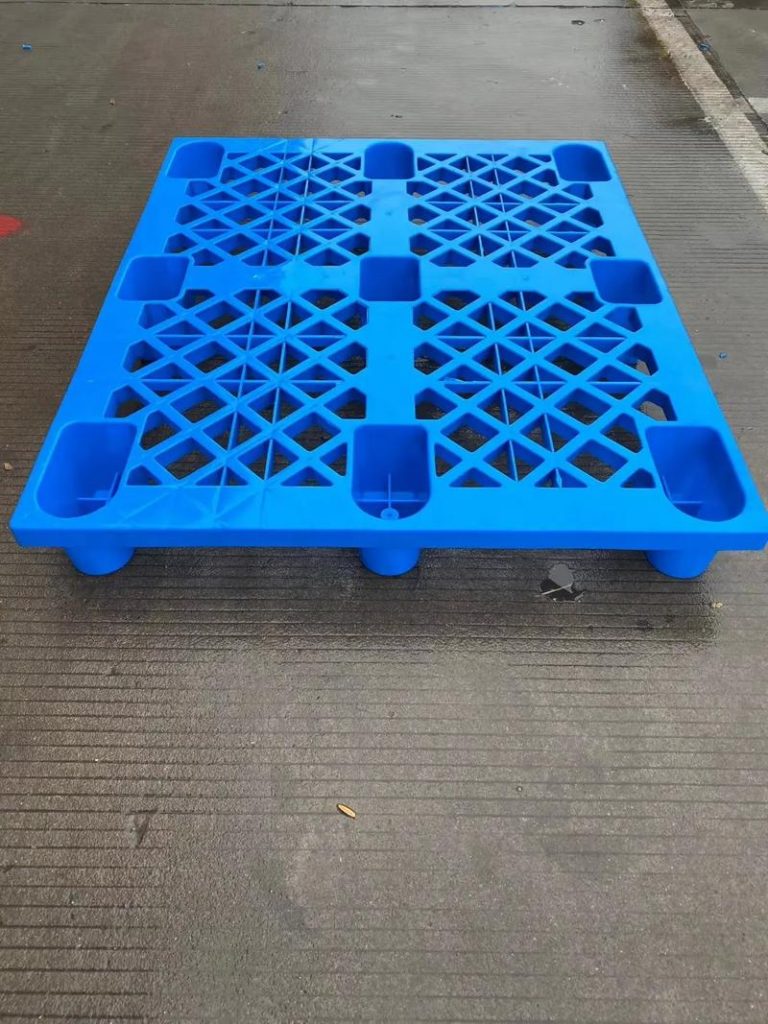
Ribs and Gussets: Internal ribbing distributes load and prevents sagging. Gussets reinforce corners and edges.
-
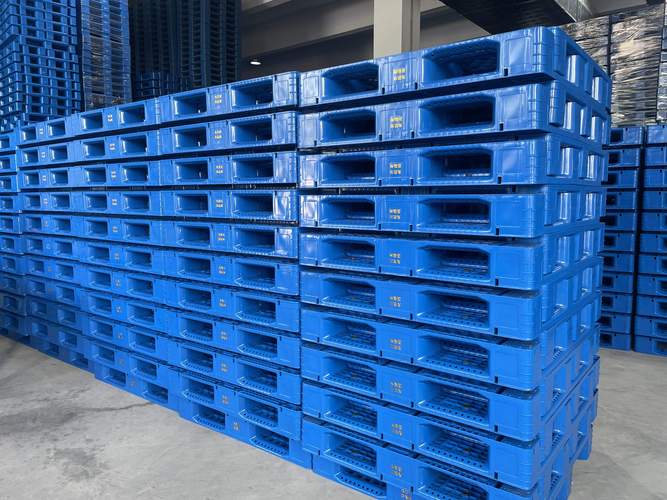
Nestable Design: Allows empty pallets to stack inside each other, saving 75% of storage space.
-
Four-Way Entry: Forklift access from all four sides maximizes maneuverability in tight warehouses.
3. Quality Control: Testing Protocols for Compliance
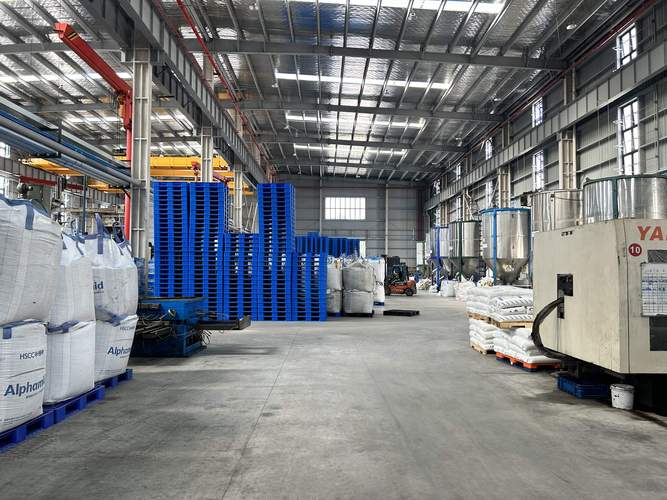
A reputable China plastic pallet supplier adheres to international testing standards. Our QC lab performs:
-
Load Deflection Test: Measures sag under a 1500kg static load over 72 hours (ISO 8611 standard).
-
Drop Test: Drops loaded pallet from 1 meter onto a hard surface (simulates warehouse drops).
-
Fork Tine Impact Test: Simulates fork penetration damage.
-
Chemical Resistance Test: Immerses pallet in common chemicals (acids, alkalis, oils) for 24 hours.
-
Temperature Cycling: Exposes pallet to -20°C and +60°C to check for brittleness or softening.
FAQ: Solving Procurement Manager Concerns
Q1: Can you guarantee your pallets are ISPM 15 exempt for export to the USA/EU?
A: Yes. Since our pallets are made of 100% plastic (HDPE or PP), they are exempt from ISPM 15 regulations regarding wood packaging. We provide a Declaration of Conformity stating the material composition and confirming exemption status for customs clearance.
Q2: What is the maximum dynamic load capacity for your 1200x800mm Euro pallet?
A: Our standard injection-molded Euro pallet (Model EP-1208-HD) has a dynamic load capacity of 1500 kg and a static load capacity of 6000 kg. For heavier loads, we offer a reinforced version (EP-1208-HDR) with a dynamic capacity of 2000 kg.
Q3: Are your pallets FDA compliant for direct food contact?
A: Yes. We manufacture pallets using FDA-compliant virgin HDPE or PP resins. These are suitable for direct contact with dry food ingredients and are non-toxic, odorless, and easy to sanitize. We provide the FDA letter of guarantee upon request.
Q4: How do you prevent pallet slippage when stacking bags?
A: Our anti-slip pallets feature a textured top deck with raised nodules or a diamond pattern. This increases friction and prevents bag shifting during transport. We can also add rubber grippers to the deck for extreme applications.
Q5: What is your warranty policy for cracked or broken pallets?
A: We offer a 3-year warranty against manufacturing defects and material failure under normal use. If a pallet cracks due to a material flaw (not impact damage), we will replace it free of charge. We also provide a repair service for damaged pallets to extend their lifespan.
Conclusion: Invest in Performance, Not Just Price
Choosing a plastic pallet supplier is about more than unit cost. It’s about uptime, hygiene, and regulatory compliance. By understanding material science and structural design, you ensure your supply chain runs smoothly from factory to destination.
Ready to specify high-performance plastic pallets? Contact our engineering team for a load calculation and a customized quote based on your specific operational needs.


No reply content