
Power Strip Supplier in China
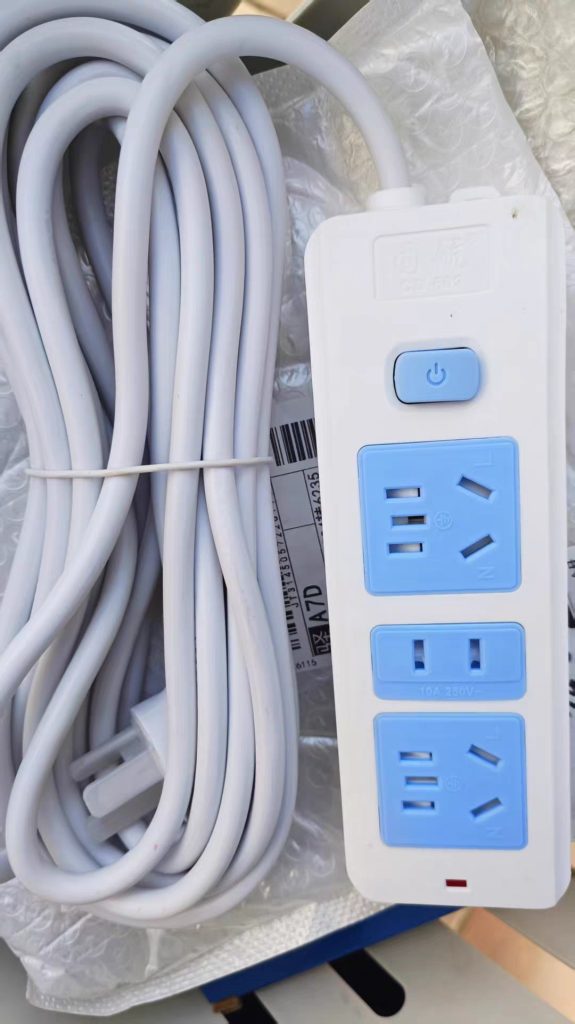
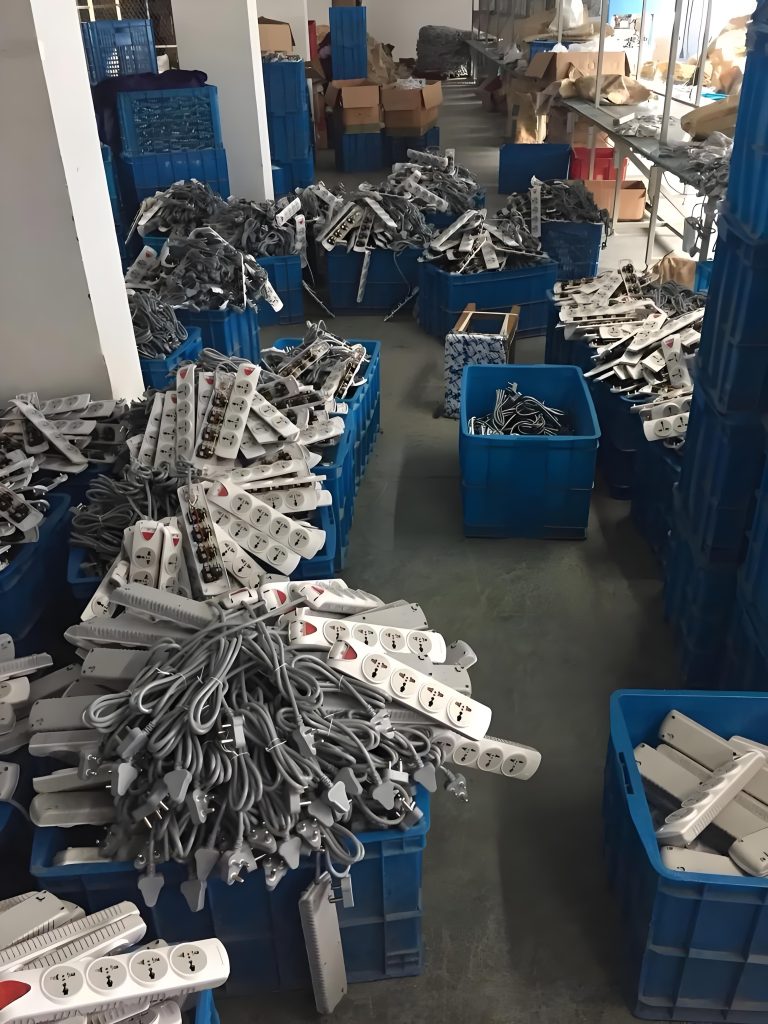

China remains the world’s manufacturing backbone for power strips / extension blocks / relocatable power taps, supplying everything from entry-level household strips to high-spec, surge-protected, USB-C–integrated units for global retail, facility management, and furniture/OEM integration.
Below is a realistic, detail-rich picture written for importers, private-label brands, and procurement teams who want to understand how the supply base works, what actually matters for safety & compliance, and how to run a clean sourcing project without getting burned by shortcuts.
1) How the “China Power Strip Supply Base” Is Structured
The industry isn’t just “one kind of factory.” It’s tiered:
-
Industrial clusters (where capability lives)The highest density of tooling, copper stamping, injection molding, cable processing, and experienced labor sits in Zhejiang (areas around Ningbo/Wenzhou/Yueqing/Cixi) and Guangdong (Pearl River Delta: Dongguan, Shenzhen, Guangzhou, Foshan). Jiangsu/Shanghai also contribute, but Zhejiang + Guangdong dominate for high-volume socket & cord-set ecosystems.
-
Tier logic (quality follows certification & process, not just price)
-
Compliance-first OEM/ODM factories – engineered for export: proper overload protection, thermal safeguards, verified flammability materials, and real third-party reports (UL/ETL, CE/GS, etc.).
-
High-volume generalists – capable and price-competitive, but you must tighten specifications and inspections or quality drifts.
-
Trading resellers / platform sellers – fine for convenience; risky if you’re building a brand that needs traceability, version control, and recall-proof documentation.
-
One practical rule of thumb: price alone explains very little; what explains performance is whether the supplier can show a consistent safety stack (protection devices, verified materials, tested cord/plug sets, and controlled BOM) plus a document trail you can defend in your destination market.
2) The Product Architectures Buyers Actually Specify
When you talk to a China supplier, you’re really specifying five subsystems:
-
Chassis & mechanics
-
Housing material: UL 94 V-0 flame-retardant PC/ABS is the export-grade baseline for serious programs.
-
Mounting options (screw slot, keyhole, under-desk, furniture grommet integration).
-
Child-protection shuttering where the market expects it (many EU retailers won’t accept without).
-
-
Power path & protection
-
Overload protection: resettable breaker or fused/breaker combo, correctly rated for the socket standard.
-
Surge protection (if claimed): MOVs + thermal cutoff/thermal link; joule rating and clamping voltage must be real, not sticker-only.
-
Cord & plug: gauge (AWG/mm²), length, and approved plug type per target market (NEMA 5-15, Schuko/Type F, Type G, etc.).
-
-
Outlet layout & spacing
-
“Wide-spaced” outlets for bulky adapters.
-
Total outlet count vs. acceptable load (the strip isn’t a substitute for fixed wiring).
-
-
Smart / USB subsystem (if any)
-
USB-A legacy or USB-C PD (30 W–100 W+ shared budgets).
-
Power map transparency: which ports share what, and how the unit behaves under mismatched loads.
-
EMI discipline matters here—cheap switchers can trash radio/AV gear without a proper filter strategy.
-
-
Packaging & labeling system
-
Rating label (voltage/ampere, model, serial/lot, certification mark).
-
Manual, warning markings, and (for EU) the CE technical file with Declaration of Conformity.
-
3) Compliance Map: The “Make or Break” Topic
This is where most sourcing mistakes happen: a supplier can look great until you ask for the right reports and labels.
North America (US/Canada)
-
Core safety framework: UL 1363 – Relocatable Power Taps (RPTs).
-
If surge protection is featured, the unit also steps into UL 1449 territory as a Type 3 (cord-connected) SPD requirement set.
-
Ground-fault protection (if present) brings in UL 943 considerations.
-
Practically, many importers buy NRTL-certified (UL or ETL) products so the paper trail and marks are accepted by retailers, distributors, and insurers.
Key nuance: UL 1363 is for indoor-use, cord-and-plug connected taps, not for permanent wiring substitutes. If your market/end-user expects “hardwired strips” or furniture-mounted modules, the applicable rules shift (and so should your supplier’s design approvals).
European Economic Area (EU/EEA)
-
CE marking is mandatory, supported by a technical file and Declaration of Conformity.
-
Typical directive stack for power strips:
-
LVD (2014/35/EU) – electrical safety (insulation, creepage, clearance, thermal, mechanical strength, etc.)
-
EMC (2014/30/EU) – emissions & immunity
-
RoHS (2011/65/EU / 2015/863) – restriction of hazardous substances (lead, cadmium, mercury, etc.) and documentation
-
-
If the strip is furniture-integrated or sold as a built-in desk module, expect extra scrutiny on fixing methods, accessibility of live parts, and cable-strain relief.
China Domestic
-
CCC (China Compulsory Certification) applies to many socket/extension products sold locally (based on national standards). Suppliers who only “export” may still maintain a CCC line for domestic, but for export you’ll validate the destination certs, not just CCC.
Other Markets
-
UK: UKCA (+ legacy CE transition nuances depending on timeline).
-
Australia/NZ: RCM/SAA-style approval frameworks and plug/cord rules.
-
Japan: PSE (diamond or circle depending on classification).
-
Middle East: often requires country-specific marks (e.g., SASO/G-Mark type regimes) on top of CB/test evidence.
4) How a Professional China Power Strip Supplier Typically Works (OEM/ODM Flow)
Below is the clean version of the process that keeps you out of trouble:
-
RFI / Specification Freeze
-
Target markets, plug standard, voltage/current rating, outlet count, cord length/gauge, surge joules (if any), USB-C PD budget, housing color/finish, packaging type (retail window box vs plain carton), and expected certifications.
-
-
Shortlist & Evidence Check
-
Ask for:
-
Recent test reports (not just certificates) from an accredited lab
-
Photos of the rating label and cert mark on the same SKU
-
BOM highlights: MOV specs, thermal cutoff, breaker rating, cord/plug model, housing flame class
-
Factory system basics: ISO 9001-type process control, 100% hipot/ground continuity test commitment
-
-
-
Prototypes (EVT) + Your Verification
-
Fit/finish, socket feel, cord strain relief, breaker trip behavior, and (if USB-C) actual measured PD output under load.
-
Even if you don’t have a lab, you can check: no excessive heat, plug/socket tight but not sloppy, switch action positive, strip lies flat, screws/nylon ties clean, no sharp burrs.
-
-
Compliance & Label Freeze
-
Finalize manual language, warnings, barcode/SKU, model/serial/batch ID, and certification label artwork.
-
Lock version control: “Model X, Rev B” — so future production can’t silently swap components.
-
-
Pilot Run (PVT) + Inspection
-
AQL inspection (appearance/function) plus 100% electrical safety checks (hipot, earth continuity if grounded) is the industry norm for responsible suppliers.
-
-
Scale
-
Once the pilot passes, you scale with a frozen BOM and scheduled re-checks (random batch teardown once or twice a year stops “spec creep”).
-
5) Red Flags vs Green Flags (What “Real & Detailed” Looks Like)
| Red Flags (walk away or fix before PO) | Green Flags (sign of a serious supplier) |
|---|---|
| Certificate image only, no report with test lab name/date | Can produce full report + DoC + label photos for the exact SKU |
| “Surge protected” sticker but no MOV/thermal link visible | Clear surge architecture: MOV rating + thermal cutoff + documented joules |
| Cord gauge thinner than rating implies | Correct AWG/mm² for ampacity + proper strain relief + approved plug |
| Housing feels soft/sticky, no V-0 claim | UL 94 V-0 explicitly specified and enforced in production |
| No 100% hipot/ground test mention | In-line tester/ATE policy documented; defective lockout explained |
| Price drops dramatically if you “remove the certs” | Supplier explains exactly what changes (and why it’s not allowed for your market) |
6) Quick Sourcing Channels That Actually Work
-
Canton Fair / Hong Kong Electronics Fair / Global Sources shows (good for meeting real factories and grabbing label photos on the spot).
-
Verified B2B directories (filter by export markets served and cert proofs, not just catalogs).
-
Regional clusters (if you can visit Zhejiang or Guangdong, you’ll see why tooling/molds and plating/plastic lines drive quality more than sales slides).
FAQ (Buyer-Focused)
Q1: What certifications matter most when I buy power strips from China?
It depends on destination. For the US/Canada, the big ones are UL 1363 (with UL 1449 if surge is claimed) and acceptance via an NRTL mark (UL/ETL). For the EU, you’re looking at CE with LVD + EMC + RoHS and a proper technical file/DoC. If you sell in multiple regions, expect a per-region SKU rather than “one strip everywhere.”
Q2: Can I just ask for “CE” or “UL” stickers and ship?
Not safely or legally. What customs, insurers, and platforms want is evidence tied to the exact model you’re shipping—reports, label artwork, and the ability to trace a batch. A sticker without that trail is a liability.
Q3: What’s a realistic MOQ for OEM/ODM power strips in China?
It varies by how custom you go.
-
Private-label using an existing tool/chassis (logo + packaging change) can sometimes start around 300–1,000 pcs.
-
Full-custom housing/new tooling often moves into 1,000–5,000+ pcs to justify mold investment and setup time.Suppliers will quote differently; base it on your market launch plan, not just unit cost.
Q4: How do I verify “surge protection” is real and not just a sticker?
Ask for:
-
MOV part specs + number of MOVs (line-line, line-ground)
-
Thermal cutoff/thermal link presence (critical for safety)
-
Joule rating methodology (and whether it’s backed by a report)
-
A teardown photo or, better, a sample you can第三方 test (even a small sample send to a local lab).
Q5: Which regions in China should I focus on for factory visits?
Start with Zhejiang (Ningbo/Wenzhou/Yueqing/Cixi) and Guangdong (Dongguan/Shenzhen/Foshan). The supply chain density there (copper stamping, injection, cable, packaging) makes it easier to find vendors who actually make the product versus those who mostly trade.
Q6: What’s the most common cause of returns or failures?
Overheating at contacts/outlets, cord overheating near the entry, and breakers that either never trip or nuisance-trip—usually traced back to under-spec cord/plug, poor spring-contact design, or cost-cutting on materials & creepage/clearance. That’s why the “compliance stack” isn’t optional.


No reply content