China solar power generation and energy storage manufacturing
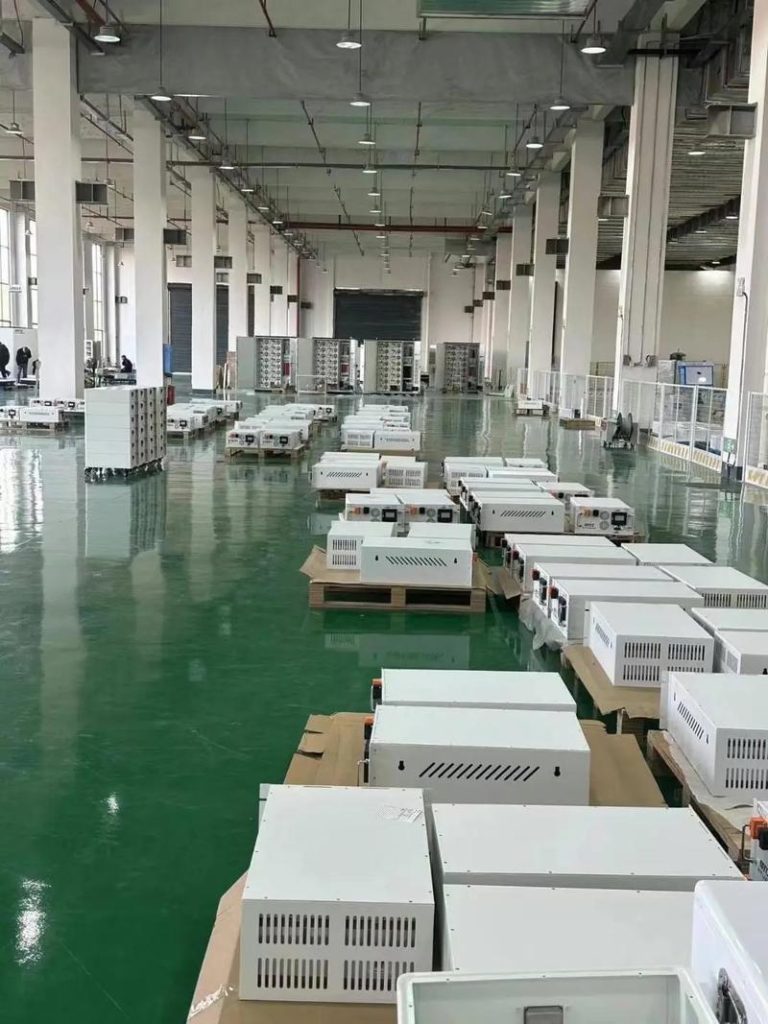
Finding a reliable China solar energy storage factory is becoming increasingly important for distributors, solar installers, EPC companies, commercial users, off-grid projects and renewable-energy businesses.
China has a large supply chain covering solar panels, lithium batteries, battery management systems, hybrid inverters, energy storage cabinets and complete solar energy storage systems. However, not every factory offers the same technology, quality control, engineering support or after-sales service.
For overseas buyers, choosing a supplier based only on battery capacity or price can create problems later. A complete energy storage system needs to work as an integrated solution.
This guide explains what buyers should check before purchasing a solar energy storage system from China.
What Is a Solar Energy Storage System?
A solar energy storage system stores electricity generated by solar panels so that the energy can be used later.
A typical system may include:
-
Solar panels
-
Battery modules
-
Battery management system (BMS)
-
Hybrid or battery inverter
-
Energy management system (EMS)
-
Battery cabinet
-
DC protection
-
AC protection
-
Cooling system
-
Monitoring platform
-
Cables and connectors
The exact configuration depends on the application.
A small residential system may consist of a wall-mounted battery and hybrid inverter, while a commercial project may require multiple battery cabinets and a larger power-conversion system.
What Types of Solar Energy Storage Systems Can Chinese Factories Produce?
Chinese manufacturers commonly produce several categories.
Residential Energy Storage
Residential systems are designed for homes that want to store excess solar electricity and use it during the evening or during power outages.
Typical applications include:
-
Rooftop solar
-
Home backup power
-
Self-consumption
-
Peak electricity cost reduction
-
Off-grid homes
Residential battery systems may be wall-mounted, floor-standing or modular.
Commercial and Industrial Energy Storage
C&I energy storage systems are designed for factories, warehouses, commercial buildings, shopping centers and other facilities with higher electricity demand.
These systems can be used for:
-
Peak shaving
-
Load management
-
Solar self-consumption
-
Backup power
-
Energy cost management
The required battery capacity and inverter power are normally much higher than residential systems.
Off-Grid Solar Energy Storage
Off-grid systems are designed for locations without reliable grid access.
Typical applications include:
-
Remote houses
-
Farms
-
Construction sites
-
Telecom facilities
-
Remote businesses
-
Rural electrification projects
For an off-grid system, the relationship between solar generation, battery capacity and daily electricity consumption is particularly important.
How Do You Choose the Right Battery Capacity?
One of the most important questions is:
How many kWh of battery storage do you actually need?
The answer depends on electricity consumption and the purpose of the system.
For example, suppose a home consumes approximately 20 kWh per day.
If the owner wants enough stored energy to cover several hours of evening consumption, the required battery capacity may be considerably lower than 20 kWh.
If the objective is to provide nearly a full day of backup power, a much larger battery may be necessary.
Buyers should consider:
-
Daily electricity consumption
-
Peak load
-
Solar generation
-
Desired backup duration
-
Battery usable capacity
-
Depth of discharge
-
Inverter efficiency
-
Local solar conditions
-
Future electricity demand
Do not size a battery simply by looking at the number of solar panels.
Solar generation and battery storage are related, but they are not the same thing.
What Is the Difference Between kW and kWh?
This is one of the most important concepts when comparing energy storage quotations.
kW refers to power.
It indicates how much power the system can deliver at a given moment.
kWh refers to energy capacity.
It indicates how much energy the battery can store.
For example, a system could have:
100 kWh battery capacity + 50 kW inverter power.
The battery determines how much energy can be stored, while the inverter helps determine how much power can be delivered to loads.
A quotation that only says “100 kWh solar battery” is incomplete if the buyer does not know the inverter power and other system specifications.
What Battery Chemistry Should You Choose?
For many modern energy storage applications, lithium iron phosphate, commonly known as LFP or LiFePO4, is widely used.
LFP batteries are attractive for stationary energy storage because of characteristics such as:
-
Long cycle life
-
Good thermal stability
-
High usable capacity
-
Relatively stable chemistry
-
Suitability for modular battery systems
However, the battery chemistry alone does not determine system quality.
The complete system also depends on:
-
Cell quality
-
Cell consistency
-
BMS design
-
Thermal management
-
Inverter compatibility
-
Manufacturing quality
-
Protection systems
A factory claiming to use LFP cells does not automatically mean that every system it produces is equivalent.
How Important Is the Battery Management System?
The BMS is a critical component of a lithium battery system.
It monitors and manages parameters such as:
-
Voltage
-
Current
-
Temperature
-
State of charge
-
Cell balance
-
Protection conditions
A properly designed BMS can help protect the battery from abnormal operating conditions.
When evaluating a factory, ask:
-
What BMS is used?
-
Does each battery module have its own BMS?
-
How are multiple battery modules coordinated?
-
What protection functions are included?
-
How does the BMS communicate with the inverter?
-
Is remote monitoring available?
For large systems, communication between the battery, inverter and energy management system is particularly important.
How Much Does a China Solar Energy Storage System Cost?
There is no single factory price because energy storage systems vary greatly in battery chemistry, capacity, inverter power and configuration.
As a broad planning reference, small residential battery systems may range from several hundred to several thousand US dollars, while larger commercial systems can cost tens of thousands of dollars or more.
For example, a simplified planning range might be:
System Type |
Approximate Factory-Level Range* |
|---|---|
Small residential battery system |
US$800–3,000+ |
5–15 kWh residential system |
US$1,500–6,000+ |
20–50 kWh system |
US$5,000–15,000+ |
100 kWh commercial system |
US$15,000–40,000+ |
215 kWh-class commercial cabinet |
US$25,000–60,000+ |
Larger C&I systems |
Project dependent |
*These are broad planning ranges, not quotations. Actual prices depend on battery cells, usable capacity, inverter power, cooling, BMS, EMS, enclosure, certifications, quantity and market requirements.
When comparing prices, always compare the same usable capacity and system configuration.
A cheaper system may have a smaller usable capacity, different cells or fewer included components.
What Certifications Should Overseas Buyers Check?
Certification requirements depend on the destination country, system type and application.
Depending on the market, buyers may encounter requirements involving:
-
Electrical safety
-
Electromagnetic compatibility
-
Battery safety
-
Transportation
-
Grid connection
-
Fire safety
-
Environmental requirements
-
Energy-storage system testing
For many international projects, buyers may specifically encounter standards and certification schemes such as UN 38.3, IEC standards, UL standards, CE marking and local grid requirements.
However, certification should never be treated as a simple checkbox.
Ask the supplier:
-
Which exact product model was tested?
-
Which factory is listed on the certificate?
-
Which standards were used?
-
Is the certification valid for the destination market?
-
Does the certification cover the complete system or only a component?
A certificate for a battery cell does not necessarily prove compliance of the complete energy storage system.
How Can You Verify a China Solar Energy Storage Factory?
Supplier verification should happen before you place a large order.
Check the Company’s Background
Request:
-
Legal company name
-
Business registration information
-
Factory address
-
Years of operation
-
Main products
-
Export markets
-
Production capacity
Also determine whether you are communicating directly with the manufacturer or with a trading company.
Check the Production Facility
If possible, arrange a factory audit or video inspection.
Look at:
-
Battery assembly lines
-
Cell storage
-
Module assembly
-
BMS installation
-
Inverter assembly
-
Aging/testing areas
-
Finished-product warehouse
-
Quality-control department
A showroom can look impressive without representing the actual manufacturing operation.
What Battery Cells Does the Factory Use?
Cell quality is one of the most important issues when purchasing an energy storage system.
Ask for:
-
Cell manufacturer
-
Cell model
-
Cell capacity
-
Cell chemistry
-
Production date or batch information
-
Cell testing procedures
-
Traceability information
Be cautious when a supplier only says:
“We use A-grade lithium cells.”
That statement is not enough.
Ask for the specific cell model and supporting documentation.
How Does a Factory Test Energy Storage Batteries?
A professional manufacturer should have testing procedures throughout production.
Testing may include:
Cell-Level Testing
Checking voltage, capacity and other cell parameters.
Module Testing
Checking:
-
Voltage
-
Temperature
-
BMS communication
-
Cell balancing
-
Protection functions
System Testing
Checking:
-
Charging
-
Discharging
-
Inverter communication
-
Protection functions
-
Monitoring
-
Alarm systems
Aging Testing
Depending on the product and manufacturer, battery systems may undergo controlled charging and discharging or other aging procedures before shipment.
Ask the factory to explain its actual testing process rather than accepting a generic statement such as “100% inspection.”
Can Chinese Factories Customize Solar Storage Systems?
Yes. Many manufacturers offer different levels of customization.
Possible options include:
-
Battery capacity
-
Number of battery modules
-
Inverter power
-
Battery voltage
-
Cabinet size
-
Cooling method
-
BMS
-
EMS
-
Communication protocol
-
Display
-
Monitoring platform
-
Logo
-
Packaging
-
Cable configuration
For commercial projects, customization may also involve integration with existing solar systems or electrical infrastructure.
However, customization increases engineering requirements.
A factory should clearly distinguish between:
Standard product
and
Engineering/customized product.
This makes it easier to understand both price and lead time.
What Is the MOQ for Solar Energy Storage Products?
MOQ depends on the product.
For standard residential batteries, some factories may accept a single unit for testing.
For customized systems, the MOQ can be higher.
The supplier may have different requirements for:
-
Standard models
-
Private-label products
-
Custom battery packs
-
Custom cabinets
-
Special voltage
-
Special communication protocols
-
Custom packaging
If you are a distributor, ask the factory for pricing at several quantities, such as:
1 unit / 10 units / 50 units / 100 units
This allows you to understand how the unit cost changes with volume.
What Should Be Included in a Factory Quotation?
A professional quotation should contain detailed technical information.
Ask the manufacturer to specify:
Specification |
What to Confirm |
|---|---|
Battery chemistry |
LFP or other chemistry |
Rated capacity |
kWh |
Usable capacity |
kWh |
Nominal voltage |
V |
Inverter power |
kW |
Cell brand/model |
Exact model |
BMS |
Model and functions |
Cycle life |
Test conditions |
IP rating |
Enclosure protection |
Cooling |
Natural/forced/liquid cooling |
Communication |
CAN, RS485, Ethernet, etc. |
Operating temperature |
°C |
Dimensions |
L × W × H |
Weight |
kg |
Warranty |
Years and conditions |
Certification |
Exact documents |
Packaging |
Export packaging |
Price term |
EXW/FOB/CIF/etc. |
Without this information, comparing two quotations can be misleading.
What Is the Production Lead Time?
For standard residential products, production may take approximately 15–30 days, depending on stock and order quantity.
Customized systems can take longer.
Commercial systems may require additional time for:
-
Engineering
-
Battery assembly
-
Cabinet production
-
BMS configuration
-
Inverter integration
-
Factory testing
-
Customer approval
Always ask for a complete schedule covering:
Sample → Engineering → Production → Testing → Packing → Shipment
Do not assume that the factory’s production lead time equals the total delivery time.
What About Shipping Lithium Batteries From China?
This is an important consideration for overseas buyers.
Lithium batteries are subject to transportation requirements, and the exact shipping method depends on the battery configuration, applicable regulations and destination.
Before purchasing, ask the supplier for the documents required by your logistics provider and destination country.
Depending on the shipment, documentation may include:
-
UN 38.3 test information
-
Safety documentation
-
Battery specifications
-
Packing information
-
Dangerous-goods documentation where applicable
Work with a freight forwarder that understands lithium-battery transportation rather than treating the shipment as ordinary cargo.
How Should You Inspect a Solar Storage System Before Shipment?
For a significant order, pre-shipment inspection can reduce risk.
Inspection may cover:
-
Product model
-
Battery capacity
-
Cell configuration
-
BMS
-
Inverter
-
Electrical connections
-
Display
-
Communication
-
Enclosure
-
Labels
-
Accessories
-
Packaging
For commercial projects, functional testing should be agreed upon before production.
The buyer and manufacturer should define what constitutes an acceptable product before the goods leave the factory.
Common Mistakes When Buying Solar Energy Storage From China
Mistake 1: Choosing the Cheapest Battery
The cheapest battery may not have the same cell quality, BMS configuration, usable capacity or warranty conditions.
Compare the complete system rather than the headline price.
Mistake 2: Looking Only at Rated Capacity
A 100 kWh battery does not necessarily provide 100 kWh of usable energy under every operating condition.
Ask about:
-
Usable capacity
-
Depth of discharge
-
Efficiency
-
Operating limits
Mistake 3: Ignoring the Inverter
The battery and inverter must work together.
Check compatibility, communication protocols and the required power output.
Mistake 4: Ignoring Local Climate
A system designed for a mild climate may need different thermal-management considerations in a very hot environment.
Tell the manufacturer the actual installation location and expected ambient temperature.
Mistake 5: Buying Without After-Sales Planning
Ask how the supplier handles:
-
Remote troubleshooting
-
Spare parts
-
BMS replacement
-
Inverter replacement
-
Technical support
-
Warranty claims
For commercial systems, after-sales support can be as important as the initial purchase price.
How Should You Compare Three Chinese Energy Storage Factories?
Suppose you receive three quotations.
Do not immediately select the lowest one.
Create a comparison table:
Factor |
Factory A |
Factory B |
Factory C |
|---|---|---|---|
Battery capacity |
|||
Usable capacity |
|||
Cell brand/model |
|||
BMS |
|||
Inverter |
|||
Cooling |
|||
Certification |
|||
Warranty |
|||
MOQ |
|||
Lead time |
|||
Price |
|||
After-sales support |
This makes differences visible.
A supplier that costs 8% more may provide better components, stronger testing and a longer warranty, potentially making it the better choice.
What Should You Send When Requesting a Quotation?
Instead of sending:
“Please quote 100kWh solar battery.”


No reply content