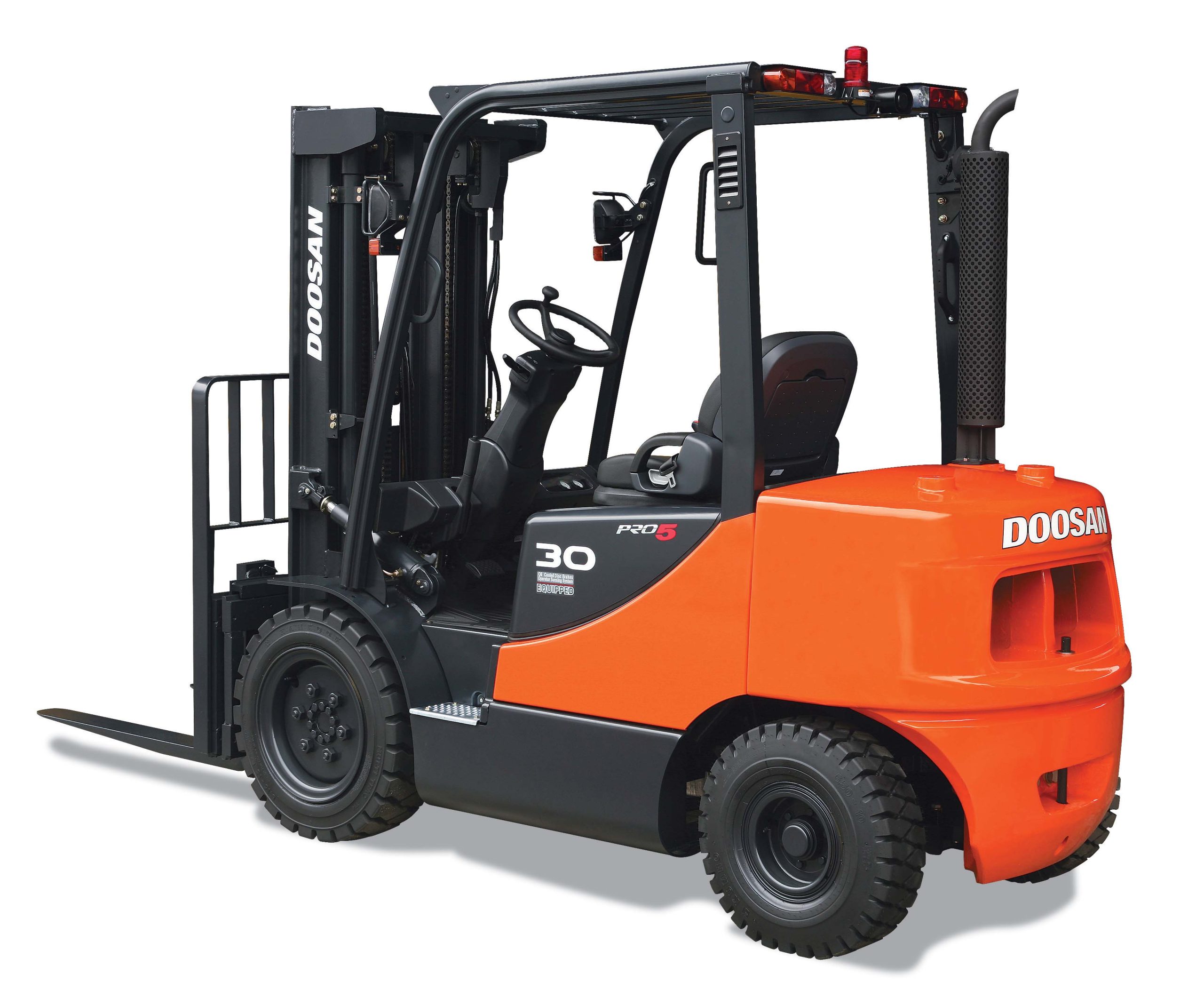
Guangzhou Forklift Manufacturing Factory
The narrative around Chinese forklifts has shifted decisively. In the first half of 2026 alone, Chinese manufacturers sold 861,934 forklifts, with exports reaching 318,085 units—a 21% year-on-year increase in export volume. No longer viewed as budget alternatives, China’s top-tier manufacturers now compete head-to-head with Hyster-Yale, Toyota, and Kion on global regulatory compliance and localized service infrastructure.
This article explains how leading Chinese forklift manufacturers—Hangcha, Heli, BYD, EP, and Noblelift among them—meet EU, North American, and Asian market requirements, and how their overseas after-sales networks have evolved from “ship-and-pray” to genuinely localized, 24/7-supported operations.
1. Global Safety Standards: What “Compliant” Actually Means
A “CE mark” sticker is not compliance. True regulatory conformance for forklifts is a documented, auditable system. Here’s what buyers need to verify.
1.1 European Union: CE Marking under Multiple Directives
Forklifts exported to the EU must satisfy a stack of directives and harmonized standards :
Directive / Standard |
Scope |
|---|---|
Machinery Directive 2006/42/EC |
Core MD directive for forklifts |
EMC Directive 2014/30/EU |
Electromagnetic compatibility |
Low Voltage Directive 2014/35/EU |
Electrical safety (where applicable) |
EN ISO 3691-1 |
Safety requirements for self-propelled industrial trucks |
EN 1175:2020 |
Electrical/electronic safety requirements (effective July 2022) |
EN 16307-1 |
Additional requirements for self-propelled industrial trucks |
EN 1755 |
Additional requirements for potentially explosive atmospheres |
EN 12053 / EN 13059 |
Noise and vibration measurement |
📌 The CE marking is only valid if backed by a proper risk assessment report . Many Chinese manufacturers have lost shipments to EU customs because their risk documentation was incomplete. A compliant report must cover the full lifecycle—design, production, installation, use, maintenance, and decommissioning—with every risk point traceable to test data, not expert opinion .
Leading manufacturers like EP Equipment have obtained ISO 9001, ISO 14001, ISO 45001, ISO 3834, and ISO/IEC 27001 system certifications, with whole-machine compliance to CE (Europe), ANSI (USA), and UL (electrical components) . This multi-standard posture is what separates export-grade manufacturers from domestic-only suppliers.
1.2 North America: EPA, UL/ETL, and OSHA
For the U.S. market, Chinese manufacturers must navigate:
-
EPA engine certification (Tier 4 Final for non-road diesel engines under 40 CFR Part 1039)
-
UL or ETL safety listing—not government-mandated, but required by most retailers and insurers
-
FCC compliance for any wireless/remote features
-
OSHA conformance documentation for workplace safety
-
ANSI/ITSDF B56.1 consensus standards for powered industrial trucks
Chinese manufacturers exporting to North America increasingly obtain UL certification proactively. EP Equipment, for example, certifies its electrical components to UL standards and its U.S. whole-machines to ANSI .
1.3 Asia-Pacific and Emerging Markets
-
Indonesia: SNI certification required
-
Saudi Arabia: SABER registration with PCoC and SCoC
-
ASEAN: Often duty-free with Certificate of Origin; UN 3556 declaration for lithium battery vehicles (mandatory from January 2026)
-
Australia/NZ: AS/NZS 4024 series for safety
1.4 The 2026 Lithium Battery Transport Shift
A critical update for electric forklift buyers: from January 1, 2026, battery-driven vehicles can no longer be declared under UN 3171. They must use:
-
UN 3556 – lithium-ion battery driven vehicles
-
UN 3557 – lithium metal battery driven vehicles
-
UN 3558 – sodium-ion battery driven vehicles
This affects every Chinese electric forklift export. Reputable manufacturers handle this seamlessly with UN38.3 test reports, MSDS documentation, and dangerous goods packaging certification. Buyers should confirm their supplier is fully versed in the new declaration regime before placing orders.
2. How Top Chinese Manufacturers Engineer for Compliance
Compliance isn’t a paperwork exercise—it drives engineering decisions. Here’s how the leading tier approaches it.
2.1 Hangcha: Global Service Infrastructure
Hangcha operates 9 overseas subsidiaries and leverages 300+ overseas dealers, with a stated network of 500+ qualified service stations and 2,000+ certified engineers covering 180+ countries and regions . Its service system supports 400+ models and 200,000+ units in the field .
Key infrastructure milestones:
-
Hangcha Netherlands B.V. (Almere) – Hangcha’s first overseas parts & service center, stocks 15,000+ part types representing ~85% of all Hangcha parts, with same-day dispatch for orders before noon and 2–3 working day delivery across Europe (next-day in some areas)
-
Hangcha Global Service integrates all 9 overseas subsidiaries and 300+ agents under one coordination layer, with 24-hour responsiveness and 1–3 day emergency delivery depending on availability
-
7×24 online expert support via self-help troubleshooting systems
2.2 Heli: 8 Overseas Companies + 1 R&D Center
Heli has established 8 overseas companies and 1 overseas R&D center, building a marketing and service network across over 100 countries and regions, with products sold to 180+ countries and regions .
Heli’s warranty commitment: major components warranted for 1 year or 2,000 working hours (individual components up to 2 years or 4,000 hours), with service initiated within 24 hours of fault notification . Heli’s overseas entities—HELI Europe, HELI Southeast Asia, HELI America, HELI Middle East, HELI Eurasia, HELI South America, and HELI Oceania—each provide routine maintenance, safety training, and technical consultation .
2.3 BYD: Lithium-Ion Pioneer with Regional Parts Hubs
BYD Forklift has built five regional central parts warehouses (Shenzhen, Shaoguan, Xi’an, Shanghai, Changsha) coordinated with national service outlets . While its overseas service network is still maturing compared to Hangcha/Heli, BYD’s integrated battery-and-truck approach means fewer components to fail and its proprietary LiFePO₄ battery technology is the core differentiator.
Domestic service metrics from BYD—1-hour response, 12-hour on-site arrival, 24-hour resolution for common faults, 72-hour resolution for complex issues, with free loaner vehicles if unresolved beyond 3 days —provide a template for the service level it aims to replicate globally.
2.4 Noblelift: Warehouse Equipment Specialist
Noblelift (Norfolk) focuses on warehouse equipment—electric pallet trucks, stackers, reach trucks, and AGVs. The company holds CE, GS, UL, CSA certifications and exports to 150+ countries . With 10+ overseas subsidiaries, 30+ domestic sales branches, and 500+ authorized dealers, Noblelift provides 24-hour fault response and maintains a parts center stocking 5,000+ wear-part SKUs for timely supply .
3. The Anatomy of a Global Forklift Service Network
What does “worldwide after-sales service” actually look like when done properly? Here’s the tiered model that leading Chinese manufacturers have adopted:
3.1 Three-Tier Service Architecture
        Manufacturer HQ (China)

              ↓

    Regional Subsidiaries / Parts Centers

    (e.g., Hangcha Netherlands, Heli America)

              ↓

    Local Dealers & Authorized Service Stations

    (500+ for Hangcha, 300+ dealers globally)
↓
Regional Subsidiaries / Parts Centers
(e.g., Hangcha Netherlands, Heli America)
↓
Local Dealers & Authorized Service Stations
(500+ for Hangcha, 300+ dealers globally)
This three-tier model—HQ → overseas subsidiary → local agent—ensures :
-
Strategic stock of high-usage parts at regional centers
-
Technical escalation paths for complex failures
-
Standardized service procedures across markets
-
Localized training for dealers and operators
3.2 Spare Parts Strategy: The Real Test of Commitment
The single most important factor in forklift uptime is parts availability. Here’s what industry leaders deliver:
Manufacturer |
Parts Network |
Emergency Delivery |
|---|---|---|
Hangcha |
15,000+ SKUs at NL center (~85% of all parts) |
24-hr response; 1–3 days urgent |
Heli |
8 overseas companies + 1 R&D center |
24-hr service initiation |
Noblelift |
5,000+ wear-part SKUs in central inventory |
48-hr standard delivery |
BYD |
5 regional central warehouses (China-focused) |
Rapid domestic; expanding overseas |
Source:
⚠️ Critical buying tip: Before signing, ask your supplier for the exact part number coverage at the regional distribution center nearest to your operation. A manufacturer that cannot tell you what percentage of parts are stocked locally is not ready for your market.
3.3 Service Contracts & Technical Support
Modern Chinese manufacturers offer far more than “break-fix” service. Hangcha’s global service framework includes :
-
Flexible service contracts with extended warranty and labor options
-
Standard service procedures (promise, team, tools, hour counting, charges)
-
7×24 online expert standby plus on-site service
-
Self-help troubleshooting systems for dealers and operators
-
Training programs for operators, service mechanics, and trainers
-
8D quality control processes with customer-visible quality tracking
-
Customer PDI (Pre-Delivery Inspection) capability building
-
Service ability building – helping dealers establish workshop, warehouse, and stock plans
-
Fleet Management Systems (FIMS) based on IoT for optimization and productivity improvement
This is a fundamentally different proposition from “cheap Chinese forklifts” of a decade ago. The service offering now rivals established Japanese and European brands.
4. Quality Management Systems: The Foundation Underneath
Regulatory compliance and service infrastructure rest on robust internal quality systems. Leading Chinese manufacturers hold:
-
ISO 9001 – Quality management
-
ISO 14001 – Environmental management
-
ISO 45001 – Occupational health & safety
-
ISO 3834 – Welding quality management
-
ISO/IEC 27001 – Information security (for connected/IoT forklifts)
-
OHSAS 18001 – Legacy safety standard (being transitioned to ISO 45001)
EP Equipment, for instance, holds all of the above plus ISO 3834 welding certification . Noblelift has invested over 80 million RMB annually in R&D, holds 200+ patents (30+ invention patents), and runs each forklift through 20+ pre-shipment tests covering full-load lifting, travel, braking, hill-climbing, noise, vibration, and sealing .
5. Digitalization: Remote Diagnostics & Predictive Maintenance
The newest frontier for Chinese manufacturers is IoT-enabled fleet management. Hangcha’s FIMS (Fleet Management System) allows operators to:
-
Monitor real-time forklift status, battery health, and energy consumption
-
Receive preventive maintenance alerts before failures occur
-
Optimize fleet utilization and labor management
-
Reduce total cost of operation through data-driven insights
Noblelift’s equipment remote monitoring platform similarly tracks operating status, battery health, and energy consumption, delivering preventive maintenance reminders to reduce unplanned downtime .
These systems close the gap that historically made buyers hesitant about Chinese forklifts: lack of visibility into machine health. Now, a fleet manager in Rotterdam or Dallas can monitor Hangcha or Noblelift fleets with the same granularity as Toyota or Hyster equivalents.
6. Buyer’s Due Diligence Checklist
When evaluating a Chinese forklift manufacturer for global compliance and after-sales support, verify:
Regulatory & Certification
-
✅ Valid CE Declaration of Conformity with correct directives (2006/42/EC, 2014/30/EU) and current harmonized standards (EN ISO 3691-1, EN 1175:2020)
-
✅ Full risk assessment report per EN ISO 12100, covering lifecycle and with test-data validation
-
✅ EPA certificate for diesel engines (North America) with matching engine family name
-
✅ UL/ETL listing (North America) – request the file number
-
✅ ISO 9001, ISO 14001, ISO 45001, ISO 3834 certificates from IAF-accredited bodies
-
✅ UN38.3 test report for lithium battery vehicles + correct UN 3556 declaration (post-2026 requirement)
After-Sales Infrastructure
-
✅ Overseas subsidiary or authorized distributor in your region
-
✅ Parts warehouse with published stock coverage percentage and SKU count
-
✅ Guaranteed response time in writing (e.g., 24-hr response, 1–3 day emergency parts)
-
✅ Certified service engineers count and certification process
-
✅ Warranty terms: minimum 12 months or 1,200–2,000 hours for major components
-
✅ Training program availability for your operators and mechanics
-
✅ Remote diagnostics / Fleet Management System access
-
✅ Escrow or performance bond option for warranty security
Reference Checks
-
✅ Minimum 2 reference customers in your country/region using the same model
-
✅ Verification of claimed service station addresses (Google Maps + phone call)
-
✅ Third-party inspection (SGS, TÜV, BV) at the factory before shipment
7. The Bottom Line: Risk vs. Reward
The data tells a clear story. Chinese forklift manufacturers have transformed from “low-cost, low-support” vendors into full-stack global competitors. Consider:
-
Scale: 861,934 units sold domestically + 318,085 exported in H1 2026 alone
-
Compliance: Top manufacturers hold CE, EPA, UL, ANSI, GOST, and ISO 3834 simultaneously
-
Service footprint: Hangcha alone operates 500+ service stations across 180+ countries with 2,000+ certified engineers
-
Innovation: BYD’s LiFePO₄ forklift batteries achieve 8,000+ cycle life—4× lead-acid—with 1.5-hour fast charge
-
Cost: Still 20–40% below comparable Western electric forklifts
When Chinese Manufacturers Make Sense
-
Large fleet standardization where total cost of ownership matters more than brand prestige
-
Electric/li-ion operations where Chinese manufacturers lead technologically (BYD, EP, Noblelift)
-
Warehouse & logistics applications (Noblelift, EP specialize here)
-
Budget-conscious operations willing to verify compliance rigorously before purchase
When to Proceed with Caution
-
Applications requiring immediate local dealer support in regions where Chinese brands have limited presence
-
Highly specialized heavy-duty applications (>10T) where established Western/Japanese brands still hold engineering advantages
-
Operations where residual value depends heavily on brand recognition (Chinese forklift resale values are still catching up)
Key Takeaways
The title question—can Chinese forklift manufacturers meet global safety standards with worldwide after-sales service?—deserves a nuanced answer:
Yes, the leading tier absolutely can. Hangcha, Heli, BYD, EP, and Noblelift have invested billions in compliance infrastructure, overseas subsidiaries, parts warehouses, and certified service networks. Their forklifts satisfy EU CE, U.S. EPA/UL, and Asian market requirements, and their service commitments—24-hour response, 1–3 day parts delivery, 7×24 technical support—match or exceed established global competitors.
But “Chinese manufacturer” is not monolithic. The gap between a top-tier brand like Hangcha (9 overseas subsidiaries, 500+ service stations) and a trading-company-resold unknown factory is enormous. The compliance paperwork, parts network, and service guarantees that separate them are exactly what buyers must verify.
💡 The smart procurement strategy: Treat leading Chinese manufacturers as genuine global competitors—demand the same certifications, service contracts, and reference checks you would from any Tier-1 Western or Japanese brand. The manufacturers who can deliver on all counts are no longer “Chinese budget options”—they are simply the most cost-effective globally-compliant forklift suppliers in the world today.


No reply content