
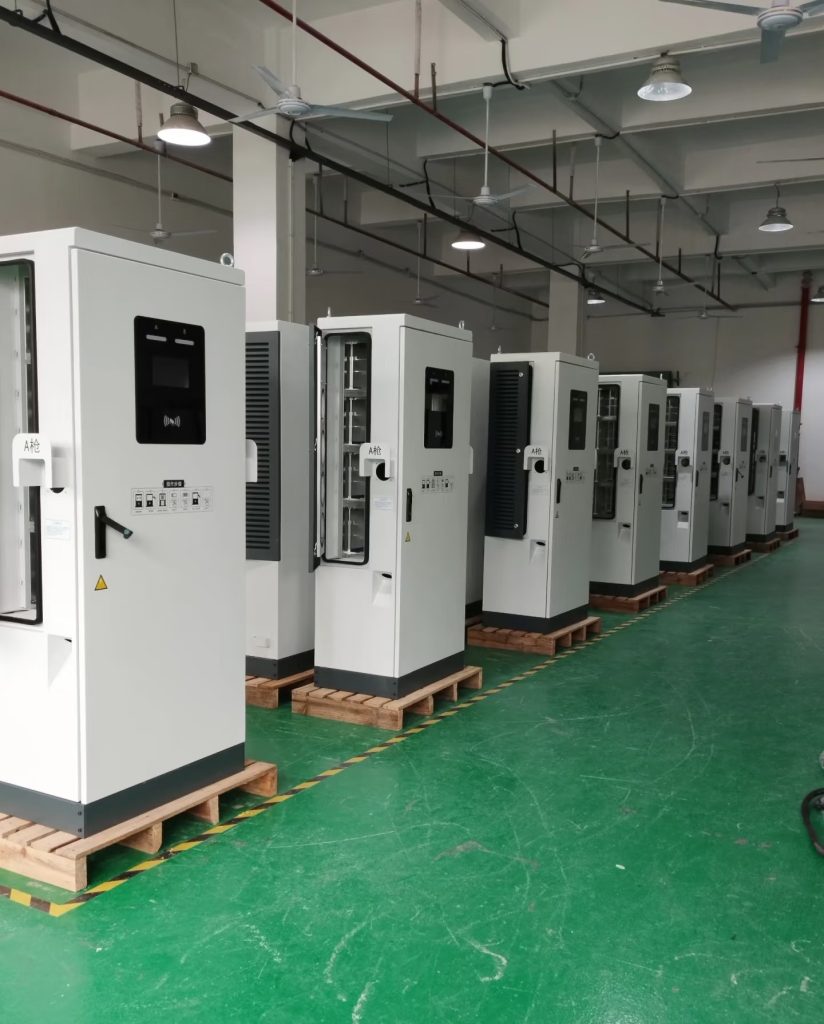
Sourcing EV chargers from China can offer clear advantages in cost, production capacity, and customization options. However, many international buyers encounter problems because of avoidable mistakes during the selection and ordering process.
This article highlights the most common mistakes and explains how to avoid them. For a structured comparison method, you can also refer to our earlier guide: [How to Compare China EV Charging Station Manufacturers Before a Bulk Order](https://www.vlefooena.com/how-to-compare-china-ev-charging-station-manufacturers-before-a-bulk-order/).
### 1. Focusing Only on the Lowest Unit Price
One of the most frequent mistakes is selecting a supplier solely based on the lowest quoted price.
A lower price may correspond to:
– Different technical specifications
– Lower-grade components
– Incomplete certification
– Shorter warranty coverage
– Limited after-sales support
Instead of comparing unit prices alone, buyers should evaluate the total project cost. This includes product configuration, packaging, testing, logistics, spare parts, and long-term support. More details on this approach can be found in [How to Choose a China EV Charger Manufacturer for Wholesale and OEM Projects](https://www.vlefooena.com/how-to-choose-a-china-ev-charger-manufacturer-for-wholesale-and-oem-projects/).
### 2. Not Providing a Clear Product Specification
Many buyers send general inquiries such as “Please quote your EV chargers” without defining the exact requirements.
Without a clear specification, suppliers may quote different configurations, making comparison difficult. Buyers should prepare a detailed RFQ that includes power rating, connector type, communication protocol, certification needs, quantity, and OEM requirements.
### 3. Ignoring the Difference Between AC and DC Chargers
Some buyers treat all EV chargers as interchangeable. In reality, AC and DC chargers serve different applications and have very different technical and cost structures.
Understanding the correct application is essential. For a detailed comparison, see [AC vs DC EV Chargers: Which Charging Solution Is Better for Your Project?](https://www.vlefooena.com/ac-vs-dc-ev-chargers-which-charging-solution-is-better-for-your-project/) and [How to Choose a DC Fast Charger for Commercial EV Charging](https://www.vlefooena.com/how-to-choose-a-dc-fast-charger-for-commercial-ev-charging/).
### 4. Overlooking Certification Requirements for the Target Market
Certification requirements vary significantly by country and region. Ordering products without confirming the correct certificates for the destination market can lead to customs delays or installation problems.
Always inform the manufacturer of the target market early and request the corresponding documents for the exact model being purchased.
### 5. Skipping Sample Evaluation
Some buyers move directly from quotation to bulk order without testing a sample. This increases the risk of discovering quality or compatibility issues after mass production has already started.
Testing a sample allows buyers to check build quality, performance, communication functions, and packaging before committing to a large quantity.
### 6. Underestimating the Importance of OCPP and Network Functions
For commercial, public, or fleet projects, communication capability is often critical. Simply asking “Does it support OCPP?” is not enough.
Buyers should confirm the exact OCPP version, supported network options (Ethernet, Wi-Fi, 4G), and compatibility with their backend platform. A full explanation is available in [What Is OCPP and Why Is It Important for EV Chargers?](https://www.vlefooena.com/what-is-ocpp-and-why-is-it-important-for-ev-chargers/).
### 7. Not Checking Production Capacity and Lead Time Realistically
A manufacturer may handle small trial orders well but struggle with large or recurring volumes. Buyers should verify actual production capacity, current workload, and realistic lead times before placing a significant order.
### 8. Neglecting After-Sales Support and Spare Parts
EV chargers are long-term infrastructure. Focusing only on the initial purchase price while ignoring warranty terms, spare parts availability, and remote technical support can create operational problems later.
### 9. Choosing Power Ratings Without Matching Real Usage Needs
Selecting the wrong power level is another common issue. For example, choosing a higher-power AC charger than necessary increases cost without delivering proportional benefits.
For guidance on selecting the right AC power level, refer to [How to Choose a 7kW, 11kW, or 22kW AC EV Charger](https://www.vlefooena.com/how-to-choose-a-7kw-11kw-or-22kw-ac-ev-charger/).
### 10. Poor Communication of OEM Requirements
When buyers need private-label or customized products, unclear or incomplete OEM instructions often cause delays and misunderstandings. Branding, packaging, software, and labeling requirements should be documented clearly from the beginning.
### How to Avoid These Mistakes
A practical process includes:
1. Define detailed technical and commercial requirements.
2. Contact several qualified manufacturers with the same specification.
3. Review technical documents and certifications.
4. Evaluate samples.
5. Confirm production capacity, lead time, and after-sales terms.
6. Compare total project cost rather than unit price alone.
Following a structured evaluation process significantly reduces procurement risk. For a complete comparison framework, see [How to Compare China EV Charging Station Manufacturers Before a Bulk Order](https://www.vlefooena.com/how-to-compare-china-ev-charging-station-manufacturers-before-a-bulk-order/).
### Conclusion
Most problems in EV charger sourcing from China come from incomplete specifications, insufficient evaluation, or focusing only on price. By avoiding the common mistakes listed above and following a clear selection process, international buyers can significantly improve the chances of a successful project and a reliable long-term supplier relationship.


No reply content