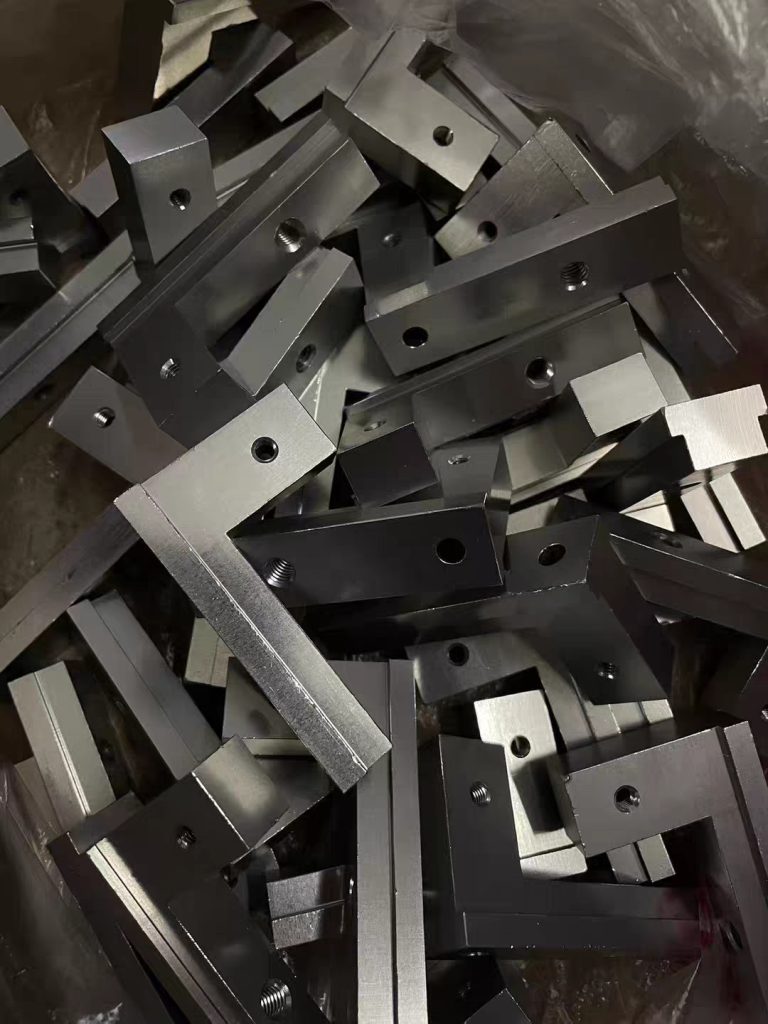
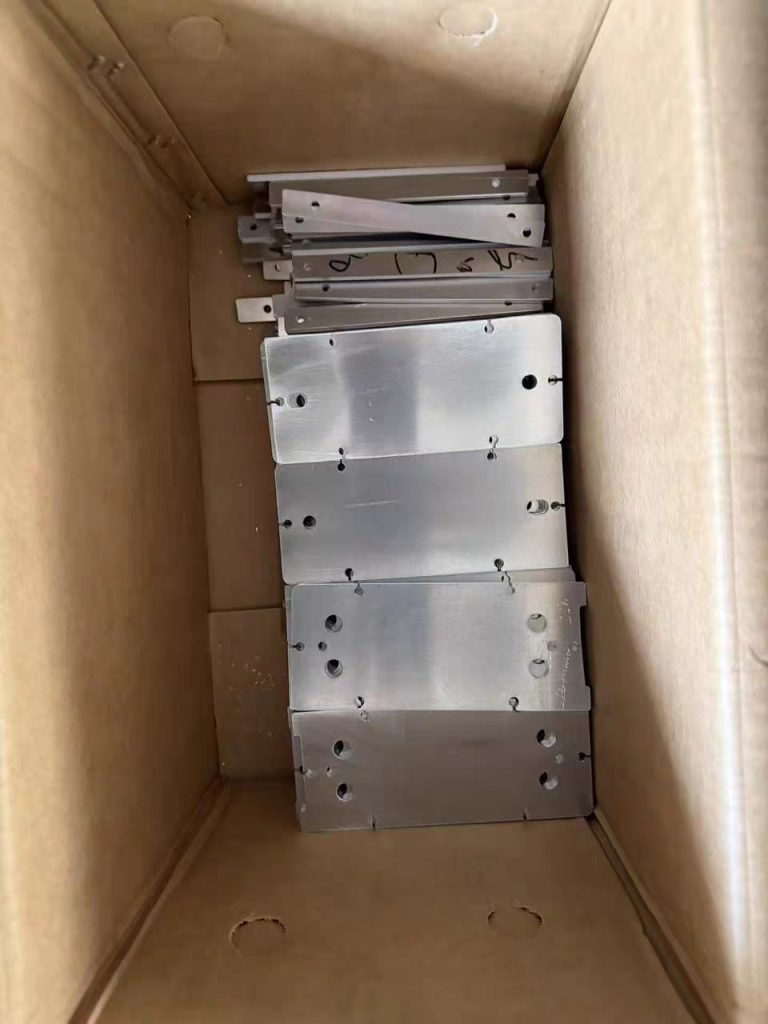
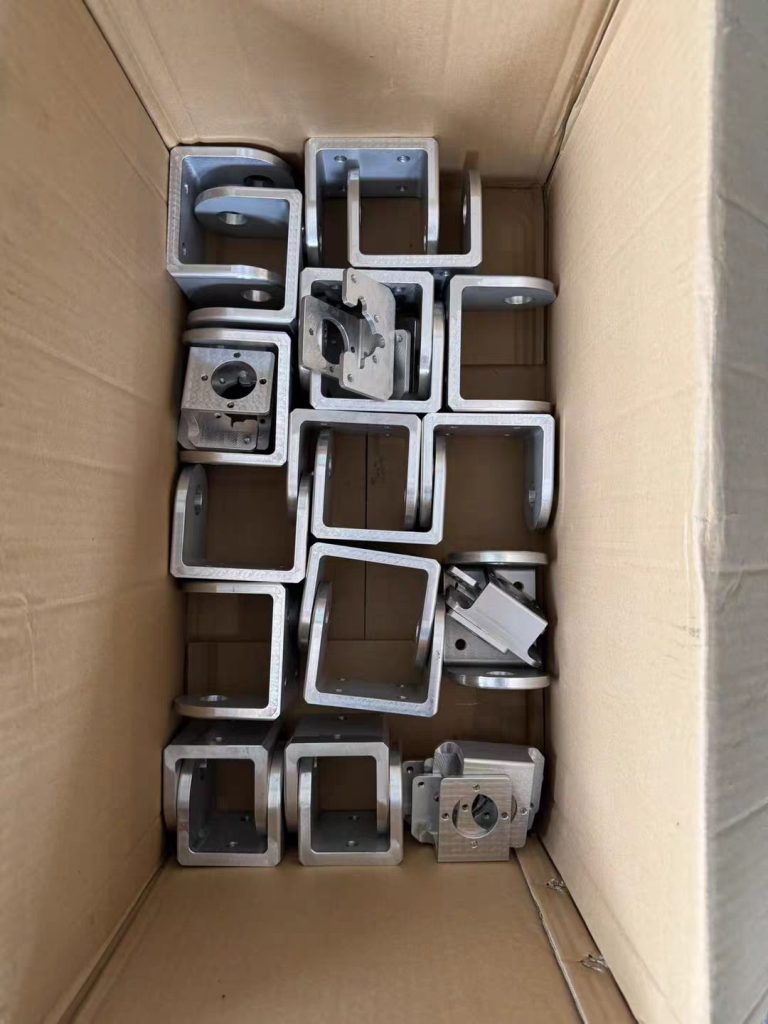
Beyond 3+2: The Real Challenges of Deep Ribs, Thin Walls, and Conformal Cooling
Every tooling engineer has been there: you’ve designed a brilliant mold with deep, thin ribs and a conformal cooling channel that follows the part geometry perfectly. Then you send out the RFQ, and the quotes come back with caveats: “Ribs must be thicker,” “Coolant channels require EDM,” or worst of all, “Lead time extended by 4 weeks.”
At our shop, we specialize in saying “Yes” to complex geometry. This article explains the technical realities of machining difficult mold bases and components, and why our 5-axis strategy and deep-hole drilling capabilities allow us to deliver what others can’t.
1. The Geometry Gauntlet: What Makes a Mold “Complex”?
“Complex” isn’t just about pretty 3D curves. In machining, it refers to features that push the limits of tool deflection, chip evacuation, and machine kinematics.
| Complex Feature | The Machining Nightmare | Our Solution |
|---|---|---|
| Deep Ribs (>5:1 Aspect Ratio) | Tool chatter, deflection, and poor surface finish due to lack of rigidity. | Tapered neck end mills and high helix angles to maximize stiffness and chip evacuation. |
| Thin Walls (<1mm) | Workpiece vibration (chatter) leading to dimensional inaccuracy and potential breakage. | Trochoidal milling paths to maintain constant tool engagement and reduce radial forces. |
| Conformal Cooling Channels | Standard drills can’t follow the curve; EDM is slow and expensive. | Gun drilling combined with 5-axis contour milling to create smooth, flowing channels. |
| Sharp Internal Corners | Standard end mills leave a radius. | Sinker EDM or small diameter ball nose strategies to reach theoretical zero-radius corners. |
2. The 5-Axis Advantage: More Than Just Tilting
Many shops have a 5-axis machine; few know how to program it for mold making efficiently. Our approach focuses on collision avoidance and optimal tool orientation.
-
The Tilt Strategy: Instead of using a long, skinny tool that deflects, we tilt the head to use the shank of the tool for support, maintaining rigidity deeper in the pocket.
-
Barrel Cutters: We use lens-shaped barrel cutters on our 5-axis machines. This allows us to take massive stepovers while maintaining a fine scallop height, reducing machining time by up to 70% compared to ball nose finishing.
-
Simultaneous 5-Axis: For free-form surfaces, we don’t use 3+2 positioning. We use simultaneous 5-axis motion to keep the cutter contact point optimal, resulting in superior surface finish and reduced polishing time.
3. Deep Hole Drilling: The Hidden Hero of Mold Bases
A mold base is just a block of steel until you drill the cooling lines. For complex geometries, standard drilling fails.
| Drilling Method | Application | Accuracy |
|---|---|---|
| BTA Drilling (Boring and Trepanning Association) | Large diameter (>20mm), deep holes for straight cooling lines. | High straightness, excellent surface finish. |
| Gun Drilling | Small diameter, deep, and curved holes (conformal cooling). | High depth-to-diameter ratio (up to 100:1), straightness within 0.1mm/m. |
| Helical Interpolation | Creating large ports or intersections for cooling lines. | High precision, avoids the need for custom form tools. |
4. The “Fast Quote” Promise: How We Do It
Speed comes from preparation, not rushing the cut.
-
CAD Analysis: We import your 3D model (STEP/IGES) and run a accessibility analysis. We identify which features can be reached with standard tools and which require special strategies.
-
Tool Library: We maintain a library of over 500 specialized cutting tools (tapered, long-reach, micro-grain carbide) so we don’t waste time sourcing tools for your job.
-
CAM Automation: Our CAM software is programmed with our machine capabilities. It automatically selects the optimal toolpath (trochoidal, peel, adaptive clearing) based on the geometry.
-
Instant Feedback: If a rib is too thin to machine reliably, we tell you immediately and suggest a DFM (Design for Manufacturability) change. No waiting days for an engineer to manually check your drawing.
FAQ: Solving Your Complex Geometry Headaches
Q1: My mold has ribs that are 0.8mm wide and 15mm deep. Can you machine that in hardened steel (HRC 50+)?
A: Yes. We use solid carbide, tapered neck end mills with a very high helix angle. We run these at high RPM with low radial engagement (trochoidal path) to prevent deflection. We also perform a “spring pass” at the end to ensure the wall is straight and stress-free.
Q2: How do you handle the intersection of two conformal cooling channels without leaving a burr or weak spot?
A: We use gun drilling for the main channel and EDM drilling or small diameter ball nose milling for the intersection. We control the overlap to ensure a smooth transition, which is critical for coolant flow and preventing stress risers in the mold base.
Q3: Can you machine my complex mold base without distorting it after heat treatment?
A: Absolutely. We rough the complex features first, leaving extra material. After vacuum heat treatment and cryogenic processing, we perform a stress-relief grind on the reference surfaces. Finally, we use light finishing cuts to bring the part to final size, minimizing induced stress.
Q4: What is your tolerance for a 50mm deep, 2mm diameter pin hole in a mold insert?
A: We routinely hold H7 (+0.021/-0.000mm) tolerance for deep pin holes. We achieve this using a combination of high-precision gun drilling for the pilot hole and jig grinding or honing for the final size, ensuring the pin fits perfectly without binding.
Q5: My mold has a textured surface. Will your 5-axis machining ruin the texture?
A: No. We use a barrel cutter with a large radius for finishing. This spreads the cutting force over a larger area, reducing the risk of chipping the texture. We also control the stepover to match the texture pattern, ensuring a uniform appearance.
Conclusion: Don’t Redesign Your Mold to Fit the Machine
Your creativity shouldn’t be limited by your machine shop’s capabilities. With our 5-axis expertise and deep-hole drilling technology, we turn complex geometry into manufacturable reality.
Have a challenging mold base or component? Upload your 3D file today. We’ll provide a DFM analysis and a fast, no-obligation quote within 24 hours.


No reply content