
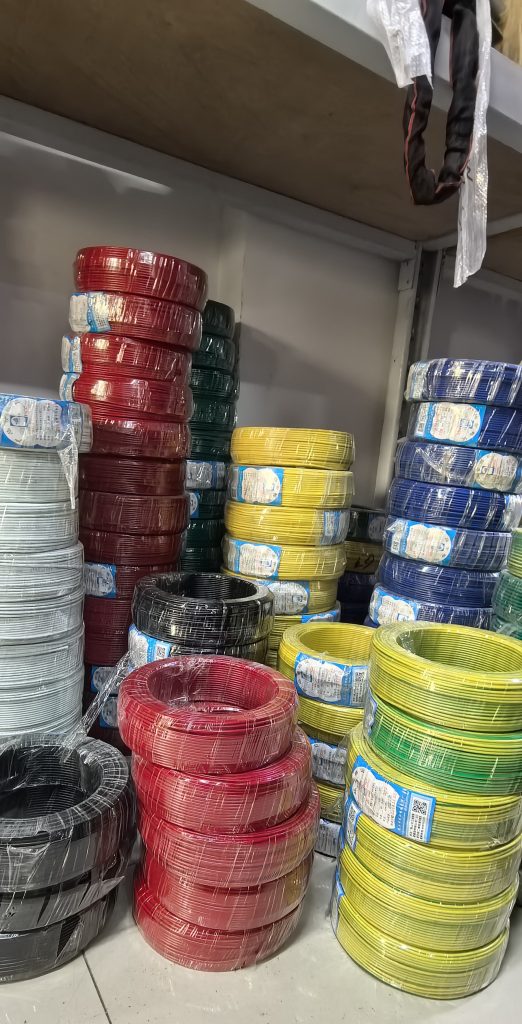
When purchasing electrical wire from China, buyers are often asked one basic question: copper conductor or aluminum conductor?
The answer cannot be based on material price alone.
Copper and aluminum have different physical and electrical characteristics, and the appropriate choice depends on the project design, conductor size, installation conditions, connection requirements, applicable standards, and purchasing budget.
For international buyers, understanding these differences is important because two wires with similar insulation and appearance may have substantially different conductor specifications and prices.
This guide explains the practical differences between copper and aluminum electrical wire, the factors that affect their prices, what buyers should inspect, and how to request a more accurate quotation from a Chinese manufacturer.
What Is Copper Electrical Wire?
Copper electrical wire uses copper as the main conductor material.
Copper is widely used in electrical products because it provides good electrical conductivity and is commonly specified for many wiring applications. Copper conductors can be manufactured in solid or stranded constructions depending on the product design.
The conductor size is normally specified by its nominal cross-sectional area, usually expressed in mm².
When buying copper electrical wire, the term “copper wire” is not enough to define the product. Buyers should also specify:
- Conductor size
- Solid or stranded construction
- Insulation material
- Rated voltage
- Applicable standard
- Color
- Required marking
- Packaging
- Quantity
For a more detailed discussion of conductor inspection, buyers can also refer to the Author 88 supplier page on Vlefooena when evaluating electrical wire products and supplier information.
What Is Aluminum Electrical Wire?
Aluminum electrical wire uses aluminum as the conductor material.
Aluminum is lighter than copper, which can be relevant in applications where conductor weight is an important consideration. However, aluminum conductors also have different electrical and mechanical characteristics from copper and should be selected according to the actual project requirements.
An aluminum wire should therefore not be viewed simply as a cheaper version of an equivalent copper wire.
The required conductor size, connection method, installation conditions, applicable standard, and system design all need to be considered.
When requesting an aluminum wire quotation, clearly state that aluminum is required. This avoids confusion when a supplier offers copper as the default product.
Copper vs. Aluminum: The Main Differences
The most important difference is the conductor material itself.
Copper and aluminum differ in conductivity, density, mechanical characteristics, and material cost.
This means that an aluminum conductor may require a different cross-sectional area from a copper conductor for a particular electrical application.
Buyers should therefore avoid making a direct one-to-one substitution based only on the nominal wire size.
The technical design should determine whether a particular conductor is acceptable.
Conductivity
Copper generally provides higher electrical conductivity than aluminum.
As a result, conductor sizing cannot always be transferred directly from copper to aluminum.
A buyer should follow the required electrical design rather than assuming that the same mm² value provides identical performance.
Weight
Aluminum is significantly lighter than copper.
For large-scale projects, weight can become an important logistics consideration because conductor mass affects handling and transportation.
However, lower weight does not automatically mean lower total project cost. Transportation, conductor size, connection requirements, and installation design should also be considered.
Mechanical Characteristics
Copper and aluminum behave differently during bending, forming, and connection.
The installation method and termination system therefore matter when selecting the conductor material.
For projects where the conductor needs to meet specific mechanical or connection requirements, those requirements should be included in the technical specification.
Material Cost
Copper and aluminum have different raw material values, so their quotations are normally calculated differently.
However, comparing only the raw conductor price can produce a misleading conclusion.
The buyer should compare the complete product and complete project cost rather than looking at material price in isolation.
Which Is More Expensive: Copper or Aluminum Electrical Wire?
The answer depends on the product specification and current material market conditions.
A simple statement such as “copper wire costs X and aluminum wire costs Y” would not be reliable without a specific product specification, quantity, market date, and delivery term.
The quotation may change according to:
- Conductor material
- Cross-sectional area
- Conductor construction
- Insulation type
- Insulation dimensions
- Rated voltage
- Product standard
- Order quantity
- Packaging
- Testing requirements
- Delivery terms
For this reason, international buyers should request a product-specific quotation rather than using a general online price as the purchasing benchmark.
Copper Wire Price Factors
For copper electrical wire, the conductor is usually one of the most important cost components.
The requested conductor size affects the amount of copper used. Larger conductors normally require more material.
The quotation can also be affected by whether the conductor is solid or stranded, the insulation specification, and the required standard.
Order quantity also matters. A small trial order and a larger production order may receive different commercial terms.
Packaging should not be overlooked either. Some buyers need standard coils, while others require reels, custom labels, cartons, pallets, or export-specific packing.
If testing documents, inspections, or special labeling are required, confirm whether these are included in the quotation.
Aluminum Wire Price Factors
Aluminum electrical wire also has several pricing variables.
The conductor size, alloy or conductor specification where applicable, construction, insulation, quantity, and packaging all influence the quotation.
Because aluminum has lower density than copper, the physical weight of an aluminum order may differ considerably from a copper order designed for a similar application.
This can affect shipping calculations and handling requirements.
For international procurement, buyers should therefore examine both the product price and the logistics cost.
Why Unit Price Alone Can Be Misleading
Imagine two suppliers quote electrical wire for the same destination.
Supplier A gives a lower price per meter.
Supplier B gives a higher price per meter.
The difference may result from different conductor materials, different sizes, different insulation specifications, different packaging, or different Incoterms.
For example, one quotation may be based on EXW while another includes transportation to a named port. The numbers cannot be compared directly without adjusting the commercial scope.
This is why a proper quotation comparison should have two separate parts:
Technical comparison: Are the products actually equivalent?
Commercial comparison: Are the prices based on the same quantity, packaging, Incoterm, documentation, and destination?
Both need to match before the numbers become meaningful.
How Conductor Size Affects Copper and Aluminum Selection
One of the most common procurement mistakes is assuming that a copper wire and aluminum wire with the same nominal cross-sectional area are equivalent.
They are not necessarily equivalent for every application.
The required conductor size should be determined by the electrical design and applicable requirements.
International buyers should provide the required cross-sectional area or electrical specification to the supplier rather than asking the manufacturer to make an unsupported substitution.
If the project documentation permits either copper or aluminum, the buyer can request separate quotations for both options and then compare the full technical and commercial specifications.
Solid vs. Stranded Conductors
Both copper and aluminum wires may be available in different conductor constructions.
A solid conductor consists of one continuous conductor.
A stranded conductor contains several smaller conductors assembled together.
The choice can affect flexibility, installation characteristics, manufacturing requirements, and product price.
When asking a supplier for a quotation, specify the required conductor construction instead of using only “copper wire” or “aluminum wire.”
For stranded products, request the applicable conductor class or construction details when required by the project.
How to Check Copper Wire Quality
Before purchasing copper electrical wire in large quantities, buyers should establish measurable inspection criteria.
Useful checks may include conductor material identification, conductor size, conductor construction, electrical resistance, insulation condition, marking, and packaging.
The surface appearance of copper can be checked visually, but appearance alone cannot establish electrical compliance.
A professional inspection should distinguish between what can be checked visually and what requires measurement or testing.
For example, a buyer can visually examine the insulation for obvious damage, but conductor resistance requires an appropriate testing method.
If a project has strict electrical requirements, the applicable testing procedures and acceptance criteria should be confirmed before mass production.
How to Check Aluminum Wire Quality
The same principle applies to aluminum electrical wire.
Buyers should confirm:
- Correct conductor material
- Required conductor size
- Conductor construction
- Electrical requirements
- Insulation specification
- Product marking
- Applicable standard
- Required test documentation
Aluminum products also require attention to the intended connection system and installation requirements.
If the project specifies a particular termination method or hardware compatibility requirement, this should be confirmed before purchasing.
What Should Be Included in a Chinese Wire Supplier’s Quotation?
A useful quotation should contain more than a unit price.
Ask the supplier to identify:
Product type
The quotation should clearly state the wire or cable construction.
Conductor material
Copper or aluminum should be stated explicitly.
Conductor size
Specify the nominal cross-sectional area.
Conductor construction
Solid or stranded, together with any required conductor class.
Insulation
State the insulation material and relevant requirements.
Standard
Identify the applicable product standard or technical specification.
Quantity
The supplier should quote based on the requested quantity for each specification.
Packaging
Coil, reel, carton, pallet, and labeling requirements should be identified.
Trade term
The quotation should state whether the price is EXW, FOB, CIF, or another agreed term.
Additional costs
Any testing, custom marking, packaging upgrades, documentation, or other additional charges should be clearly identified.
How to Compare Chinese Electrical Wire Manufacturers
When comparing suppliers, start with the technical specification rather than the price.
Ask all suppliers to quote the same product description.
For example, instead of asking:
“Please quote copper electrical wire.”
Provide a more detailed inquiry such as:
“Please quote PVC insulated copper electrical wire, stranded conductor, specified nominal cross-sectional area, specified rated voltage, required standard, specified quantity, and export packaging.”
The exact requirements should come from the buyer’s project documents.
This approach makes supplier quotations much easier to compare.
Questions to Ask Before Placing an Order
Before confirming a purchase, buyers can ask the manufacturer:
- What conductor material and construction are used?
- What nominal conductor sizes can you supply?
- Which standard does the product follow?
- What insulation specification is used?
- What testing is performed during production?
- Can you provide the technical specification sheet?
- Can you provide applicable test records or certificates?
- Can you supply custom colors or printed markings?
- What packaging options are available?
- What quantity is the quotation based on?
- What Incoterm and delivery point are included?
- Are there any additional costs outside the quoted unit price?
These questions help clarify both product quality and commercial conditions.
Common Mistakes When Choosing Copper or Aluminum Wire
Choosing Based Only on Price
The lowest price does not necessarily correspond to the required technical specification.
Always compare matching products.
Assuming the Same Size Is Equivalent
Copper and aluminum should not automatically be compared using the same nominal cross-sectional area.
Follow the project’s electrical requirements.
Ignoring Connection Requirements
The conductor material can affect termination and connection considerations. Confirm compatibility with the intended installation system.
Focusing Only on the Conductor
Insulation, rated voltage, standard, testing, packaging, and marking are also part of the purchased product.
Comparing EXW and CIF Prices Directly
Different Incoterms represent different commercial scopes.
Always compare quotations on the same delivery basis.
A Practical Inquiry Template
International buyers can send a request such as:
Product: Electrical wire
Conductor: Copper / Aluminum
Construction: Solid / Stranded
Nominal size: ______ mm²
Insulation: PVC / Other required specification
Rated voltage: ______
Applicable standard: ______
Color: ______
Marking: ______
Quantity: ______
Packaging: Coil / Reel / Other
Destination: ______
Trade term: EXW / FOB / CIF / Other
Please provide:
- Product specification
- Unit price
- Price basis and Incoterm
- Packaging details
- Available test documents
- Production schedule
- Any deviations from our specification
For larger orders, buyers can also ask for a sample or pre-production confirmation before approving mass production.
Frequently Asked Questions
Is copper wire always better than aluminum wire?
The answer depends on the application and project requirements. Copper and aluminum have different electrical, physical, weight, and cost characteristics. The appropriate conductor should be selected according to the electrical design and applicable requirements.
Why is aluminum electrical wire usually lighter?
Aluminum has a lower density than copper. As a result, an aluminum conductor of a given volume weighs less than a copper conductor of the same volume.
Does a lower aluminum wire price always mean lower project cost?
Not necessarily. Buyers should also consider the required conductor size, connection requirements, installation, packaging, transportation, and other project costs.
Can I replace copper wire with aluminum wire to reduce purchasing costs?
Do not make a direct substitution without checking the project design and applicable requirements. The conductor material and sizing should be reviewed before any substitution is approved.
How can I get an accurate price from a Chinese electrical wire manufacturer?
Provide the exact conductor material, conductor construction, size, insulation requirements, rated voltage, standard, quantity, packaging, destination, and trade term. The more complete the specification, the more useful the quotation will be.
Contact a Chinese Electrical Wire Supplier
Copper and aluminum electrical wire should be evaluated according to the complete product specification rather than material price alone.
For international buyers, a good purchasing process starts with a clear technical requirement, followed by comparable quotations, document review, sample or specification confirmation, and appropriate inspection before shipment.
For supplier information and an inquiry opportunity, visit the Author 88 supplier page on Vlefooena.
When requesting quotations, clearly identify whether you need copper or aluminum, the required conductor construction and size, insulation specification, standard, quantity, packaging, and delivery terms. This gives the manufacturer enough information to quote the correct product and gives the buyer a more reliable basis for comparison.


No reply content