
China Cable and Wire Manufacturing Co., Ltd.
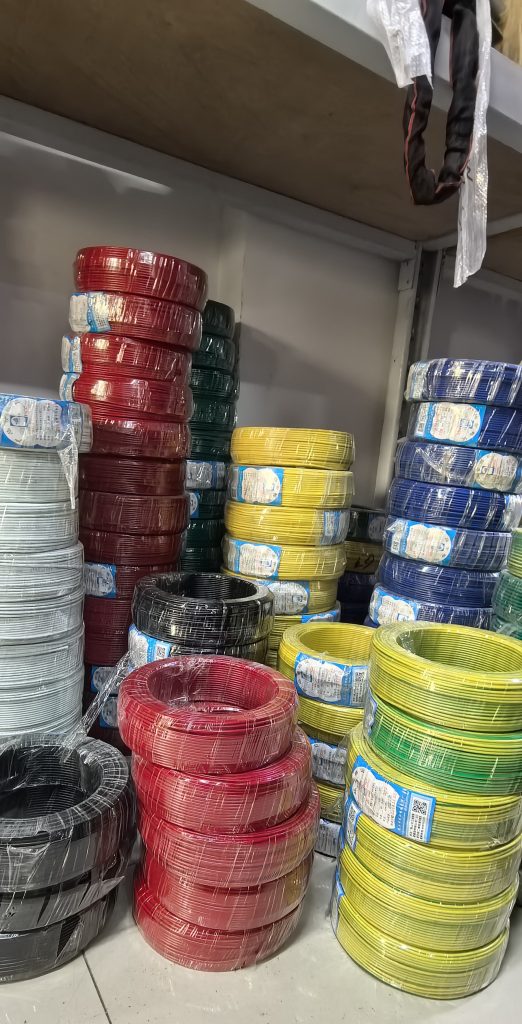
Copper Wire Price Per Meter vs Per Kilogram: How Buyers Should Compare Quotes
When buying copper wire from a Chinese manufacturer, buyers may receive quotations in different units.
One supplier may quote a price per kilogram, while another may quote a price per meter. Some manufacturers may provide prices per roll, coil, or drum.
This can make supplier comparison difficult.
A lower price per kilogram does not necessarily mean a lower price per meter. Likewise, a lower price per meter does not automatically mean better purchasing value.
The correct approach is to convert the quotations to a common basis and compare the actual product specifications.
Why Copper Wire Is Quoted Using Different Units
Copper wire is commonly sold according to weight, length, or packaging quantity.
The quotation method can depend on:
-
Wire type
-
Conductor size
-
Order quantity
-
Packaging method
-
Customer requirements
-
Domestic or export market
-
Manufacturer’s normal sales practice
For some copper products, weight is a practical pricing basis because copper represents a significant portion of the product cost.
For installation projects, however, buyers may think in meters because the project requires a specific cable length.
Both methods can be useful, but they should not be compared directly without conversion.
Price Per Kilogram vs Price Per Meter
Suppose two suppliers provide quotations for the same general type of copper wire.
Supplier A quotes:
USD X per kilogram
Supplier B quotes:
USD Y per meter
You cannot determine which supplier is cheaper simply by comparing X and Y.
The missing information is the weight per meter.
The basic relationship is:
Price per meter = Price per kilogram × Weight per meter
If the wire specification is different, the weight per meter will also be different.
This is why product specifications must be confirmed before comparing quotations.
Why Wire Size Matters
The cross-sectional area of the copper conductor has a direct effect on its weight.
For example, a larger conductor generally contains more copper per meter than a smaller conductor.
This means:
-
Larger conductor → more copper per meter
-
Smaller conductor → less copper per meter
Therefore, a quotation for a larger copper conductor should not be compared directly with a quotation for a smaller conductor.
The buyer should first confirm the exact conductor size.
Important specifications may include:
-
Nominal cross-sectional area
-
Number of strands
-
Individual strand diameter
-
Overall conductor diameter
-
Conductor resistance
-
Solid or stranded construction
For a detailed comparison, see the related copper wire conductor size and cross-sectional area guide on Vlefooena.
A Simple Weight Calculation
For a basic copper conductor, the theoretical weight can be estimated from:
Weight = Volume × Copper Density
The volume depends on the conductor’s cross-sectional area and length.
For a simple cylindrical conductor:
Volume = Cross-sectional Area × Length
Theoretical calculations can provide a useful reference, but the actual finished wire can have additional materials such as insulation, sheath, fillers, or other components.
Therefore, buyers should distinguish between:
Copper conductor weight
and
Finished wire weight
These are not necessarily the same.
Bare Copper Wire vs Insulated Copper Wire
This distinction is especially important when comparing quotations.
A bare copper conductor may be quoted based largely on its copper content.
An insulated electrical wire contains additional materials.
The finished product may include:
-
Copper conductor
-
Insulation
-
Outer sheath
-
Fillers
-
Marking
-
Packaging
Consequently, two products with the same copper conductor size can have different weights per meter.
If one supplier quotes a finished insulated wire per kilogram and another quotes per meter, the buyer needs the complete product specification before making a meaningful comparison.
How to Convert a Kilogram Price to a Meter Price
If the manufacturer provides the actual or agreed weight per meter, the calculation is straightforward.
For example, if:
Price = USD 6 per kg
and:
Weight = 0.20 kg per meter
then:
Price per meter = USD 6 × 0.20
The resulting figure gives an estimated price per meter.
The numbers above are only an example of the calculation method. They are not a market quotation.
When comparing actual supplier quotations, use the weight confirmed by the manufacturer.
How to Convert a Meter Price to a Kilogram Price
The reverse calculation can also be used.
If the supplier provides:
Price per meter
and the confirmed weight is:
Weight per meter
then:
Price per kilogram = Price per meter ÷ Weight per meter
Again, the weight must correspond to the exact product being quoted.
Using an estimated weight for a different specification can produce a misleading result.
Do Not Forget Insulation Weight
For insulated electrical wire, buyers sometimes calculate the copper weight and assume it represents the finished product weight.
This can create errors.
Consider a wire consisting of:
Copper conductor + insulation
The finished wire weighs more than the copper conductor alone.
If the supplier quotes the finished wire by kilogram, the price per meter must be calculated using the finished product weight, not only the copper content.
This is particularly important when comparing products from different manufacturers that use different insulation thicknesses or materials.
Check the Conductor Resistance
Weight is not the only technical factor worth comparing.
For electrical wire, buyers should also consider the conductor’s electrical performance.
Depending on the product and applicable standard, relevant information may include:
-
Conductor resistance
-
Conductor material
-
Cross-sectional area
-
Strand construction
-
Temperature rating
-
Voltage rating
-
Insulation characteristics
A product that weighs more is not automatically a better electrical conductor.
Likewise, a lower weight does not automatically mean that the product is cheaper or more efficient.
The technical specification should always be checked together with the price.
Price Per Roll Can Also Be Misleading
Some suppliers may quote:
USD X per roll
This can be convenient, but the buyer must confirm the length of wire in each roll.
For example, two suppliers could both quote one price per roll while providing different lengths.
Therefore, ask:
-
How many meters per roll?
-
What is the net weight?
-
What is the gross weight?
-
What is the conductor size?
-
What is the insulation specification?
-
How many rolls are included in the quotation?
The buyer can then convert the quotation to a price per meter.
Packaging Should Be Separated From Product Price
International orders may use different packaging methods.
Examples include:
-
Coils
-
Rolls
-
Reels
-
Wooden drums
-
Pallets
-
Cartons
Packaging affects shipping weight and volume.
If one supplier includes export packaging and another does not, the factory prices may not be directly comparable.
Ask suppliers to clearly identify:
Product price + packaging + transportation + other applicable charges
This makes the quotation easier to evaluate.
Compare the Same Trade Term
Another common mistake is comparing quotations with different Incoterms.
For example:
-
EXW
-
FOB
-
CIF
-
Other agreed delivery terms
An EXW quotation may represent a factory-level price, while an FOB quotation can include certain export-side costs.
A CIF quotation can include international freight to the named destination port.
Therefore:
EXW price ≠ FOB price ≠ CIF price
unless the additional costs are separately calculated.
When comparing suppliers, use the same trade term whenever possible.
Consider the Total Landed Cost
For an international buyer, the factory price is only one part of the final cost.
A simplified calculation is:
Total landed cost = Product cost + Packaging + Inland transport + Export costs + International freight + Insurance + Import costs + Other applicable charges
The exact costs depend on the destination country and agreed trade terms.
This is why the supplier with the lowest factory price may not always produce the lowest final cost.
Example of a Supplier Comparison
Imagine that three manufacturers provide quotations for the same required wire specification.
Item |
Supplier A |
Supplier B |
Supplier C |
|---|---|---|---|
Quotation basis |
Per kg |
Per meter |
Per roll |
Conductor |
Same required specification |
Same required specification |
Same required specification |
Weight information |
Provided |
Provided |
Provided |
Packaging |
Included |
Included |
Separate |
Trade term |
FOB |
FOB |
FOB |
Lead time |
Confirmed |
Confirmed |
Pending |
At first glance, the three prices may be difficult to compare.
After converting all quotations to price per meter, and then adding applicable packaging and other costs, the comparison becomes much clearer.
This is the correct way to evaluate supplier quotations.
Ask Suppliers for Both Price and Weight Information
When requesting a quotation, buyers can ask manufacturers to provide:
-
Price per kg
-
Price per meter, where applicable
-
Net weight
-
Gross weight
-
Length per roll or drum
-
Packaging details
-
Product specification
-
MOQ
-
Production lead time
-
Trade term


No reply content