3D Printer Suppliers in Shenzhen China
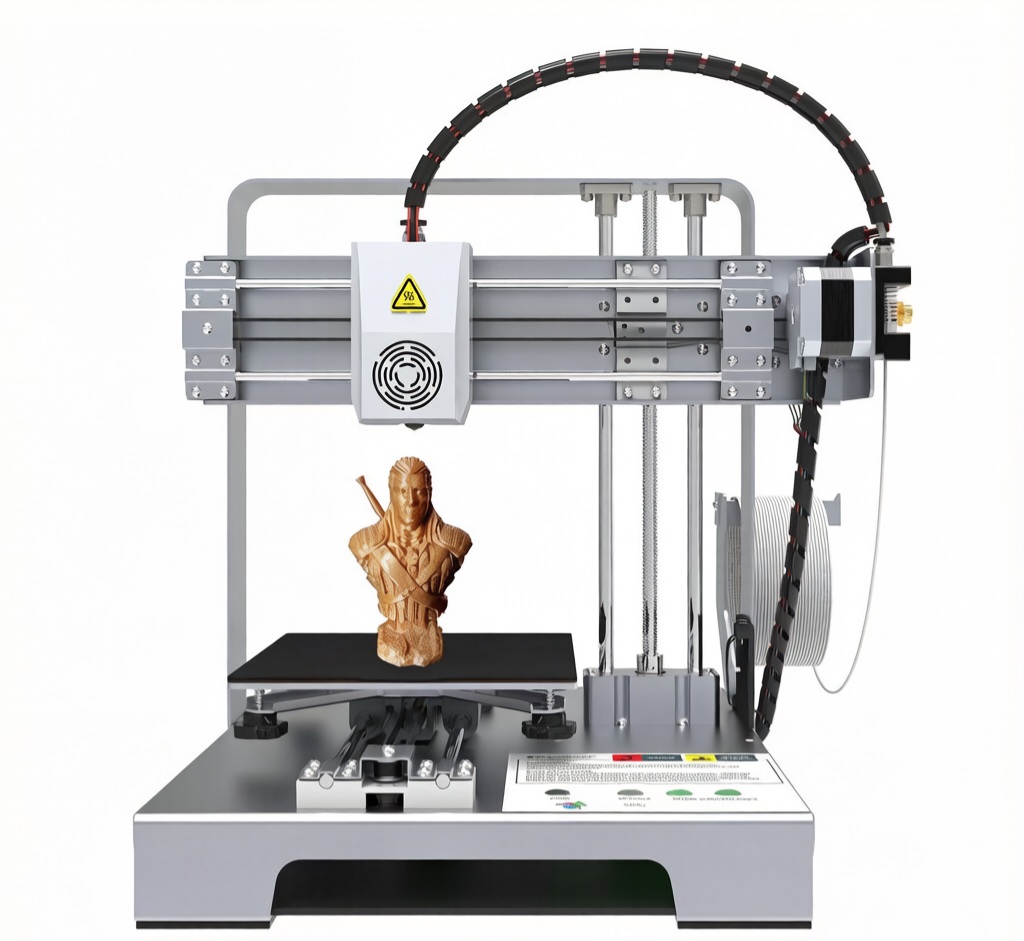
For procurement managers serving enterprises, educational institutions, and medical/dental clinics, sourcing a 3D printer is never just about the machine. It’s about matching the right technology, compliance framework, and service model to a highly specific use case. A corporate R&D lab needs engineering-grade reliability and material diversity. A K-12 STEM program needs safety, curriculum integration, and bulletproof ease of use. A dental clinic needs ISO 13485-certified biocompatible workflows. An aerospace supplier needs AS9100D process control with powder-to-part traceability.
Chinese manufacturers have matured into full-stack solution providers, offering ODM/OEM customization, volume procurement, and integrated services spanning desktop, industrial, dental, and metal printing. Leading players like TronTech operate end-to-end R&D across desktop FDM, industrial FDM, SLA/DLP, and SLM, with self-developed materials and explicit ODM/OEM programs for channel partners. But capability varies wildly by tier, and “rush order” feasibility depends entirely on which industry vertical you’re targeting.
This guide provides a scenario-based procurement framework for the four most demanding buyer segments — enterprise R&D, education, dental/medical, and aerospace — with concrete specs, compliance requirements, realistic lead times, and RFQ checklists.
1. Enterprise R&D & Corporate Innovation Labs
Corporate buyers — from automotive and consumer products to electronics and industrial equipment — use 3D printers for rapid prototyping, functional testing, and low-volume production tooling.
1.1 What Enterprise Buyers Actually Need
-
Engineering-grade FDM (PA, PC, PEEK, carbon-fiber-filled nylons) with chamber temperatures ≥80°C
-
Industrial SLA/DLP for high-detail masters and casting patterns
-
SLM metal printing for end-use parts and tooling
-
Fleet management — centralized control of 10–100+ machines
-
Material openness — ability to use third-party filaments/resins without voiding warranty
1.2 Chinese Manufacturer Capabilities
Companies like TronTech offer “full-link in-house R&D” spanning desktop, industrial, SLA/DLP, and SLM, with proprietary material formulations and ODM/OEM for channel customers. Kings 3D’s industrial metal systems serve tooling and end-use part production.
For rush orders, the timeline reality is:
-
Stock desktop FDM: 7–15 days for batch orders (per leading Shenzhen ODM manufacturers)
-
Education lab customization: 20–30 days for tailored configurations
-
Industrial FDM/SLM: 45–60 days standard; rush available at 20–30% premium
1.3 Enterprise Procurement Checklist
-
[ ] Build volume matches largest part in your portfolio
-
[ ] Chamber temperature ≥ material requirement + 20°C margin
-
[ ] Open material mode with third-party filament support
-
[ ] Fleet management software with remote monitoring
-
[ ] API access for integration with PLM/MES systems
-
[ ] 24-month warranty on host machine; 6-month on hotend
-
[ ] On-site service engineer available within 72 hours (critical failure)
-
[ ] Spare parts provisioning: 3% of order value
2. Education: K-12 STEM and University Makerspaces
Education is the fastest-growing vertical for Chinese 3D printer manufacturers. TronTech specifically markets a “JR100 education-specific model” with industrial-grade features (gradient mixing, constant-temperature chamber, auto-bed leveling) cascaded down to civilian/education equipment.
2.1 The Hard Truth About Education Procurement
Research shows that schools often buy a 3D printer, print one benchmark, and then let it sit in a corner for six months because nobody knows how to keep it running. The solution is treating 3D printing as a program, not a gadget: a set of projects, a material standard, a maintenance plan, and a budget for replacement parts.
2.2 Budget Tiers That Actually Work
Tier
|
Budget (USD)
|
Configuration
|
Best For
|
Entry
|
$200–$350/unit
|
Single FDM, supervised use
|
Middle school skill development
|
Classroom
|
$350–$700/unit
|
1–2 FDM + 1 resin printer, curriculum
|
High school portfolio work
|
Makerspace
|
$700–$1,200/unit
|
Premium FDM fleet + resin + spares
|
College pre-engineering programs
|
Institutional
|
$24,000–$46,000/package
|
Industrial FDM (Stratasys-class) with training
|
University research labs
|
Based on Cobb County Schools’ actual procurement: an F170 1-year education package costs ~$24,300; a 3-year F370 package with installation and training reaches $46,400 — illustrating the enterprise-grade budget required for professional education deployments.
2.3 Safety & Compliance Non-Negotiables
Educational environments demand:
-
Fully enclosed chassis isolating hot ends (nozzles reach 250°C; heated beds reach 100°C)
-
Emergency stop button with one-touch power cutoff
-
Non-toxic materials — PLA is the gold standard (melting point 180–220°C, no odor, biodegradable)
-
No airborne particulates — HEPA filtration recommended
-
No dedicated computer requirement — standalone operation capability
-
Unattended operation with network feedback and remote camera viewing (for higher-end education packages)
2.4 Chinese Education-Specific Programs
Leading manufacturers have developed education-specific offerings:
-
TronTech JR100: Education-specific FDM model with industrial tech cascaded down
-
Curriculum integration: Chinese makers like TronTech provide “education 3D courses + integrated 3D printing services” extending to elementary and secondary schools nationwide
-
Batch order speed: 7–15 days for standard volume orders; 20–30 days for education lab customization
-
Training & support: Free technical training and curriculum support for education clients
2.5 Education RFQ Checklist
-
[ ] Fully enclosed design with lockable door
-
[ ] Auto-bed leveling (eliminates 90% of classroom failures)
-
[ ] WiFi connectivity with teacher dashboard for fleet management
-
[ ] Minimum build volume: 150×150×150mm
-
[ ] Layer resolution: 0.1mm or finer
-
[ ] Curriculum package: ≥20 lesson plans covering CAD → slice → print → post-process
-
[ ] Teacher training: ≥8 hours on-site
-
[ ] Warranty: 2 years (education-specific, longer than standard 1-year)
-
[ ] Bulk order discount: 15–20% for 20+ units
-
[ ] Replacement parts kit included (nozzles, build plates, belts)
3. Dental & Medical: The Compliance-Intensive Vertical
Dental 3D printing is where Chinese manufacturers have made their most significant inroads — today China represents 65% of global dental 3D printer market share. But this vertical is also the most regulated. A single compliance gap results in customs seizure, voided clinic insurance, or patient harm.
3.1 The Non-Negotiable Certification Stack (2026)
Certification
|
Requirement
|
Verification Protocol
|
ISO 13485:2023/2016
|
Medical device QMS with scope explicitly stating “Dental 3D Printers” or “Additive Manufacturing Systems for Dental Applications”
|
Verify via IAF CertSearch; confirm scope matches exactly
|
EU CE MDR (Class IIa)
|
Full Technical File per MDR Annexes VII–X; notified body number matches NANDO database
|
Verify NB number (e.g., TÜV SÜD DE/9397) in EUDAMED
|
US FDA 510(k)
|
K-number verifiable in FDA database
|
“CE Only” printers cannot enter US market
|
ISO 10993-1:2023
|
Biocompatibility test reports for all resins: cytotoxicity, sensitization, intraoral contact duration
|
Request full test reports, not summaries
|
NMPA Class II (China export)
|
Mandatory post-2025 for export
|
Cross-check in China Medical Device database
|
EN ISO/ASTM 52900:2021
|
Harmonized standard for additive manufacturing
|
Referenced in Technical File
|
⚠️ Critical warning: 73% of rejected Chinese dental devices in 2025 failed due to invalid certifications (EU RAPEX Report). Never accept PDF certificates alone — verify through the issuing body’s database.
3.2 Material Traceability Requirements
For dental applications, the manufacturer must demonstrate:
-
Resin biocompatibility per ISO 10993 with full test reports
-
Batch-level traceability from resin lot to printed part
-
Calibration logs for resin tanks and optical systems (laser/LED arrays)
-
Controlled storage with argon/nitrogen environments for sensitive materials
3.3 MOQ & Commercial Terms for Dental 2026
Buyer Type
|
MOQ
|
Payment Terms
|
Warranty
|
Dental Clinics (Direct)
|
1–3 units (entry LCD); 1 unit (high-precision DLP with resin commitment)
|
30% TT deposit, 60% pre-shipment, 10% post-installation (90-day hold)
|
24-month parts/labor; 72-hr critical failure response
|
Distributors
|
50 units (Tier 1, 15% discount); 100+ units (Tier 2, 20% + marketing fund)
|
LC at sight for first order; Net-60 after 3 successful shipments
|
12–24 months hardware; 6 months optics
|
OEM Partners
|
200 print cores/year minimum; firmware customization $8,500 setup
|
NNN Agreement under Singapore/HK law
|
Per contractual SLA
|
3.4 Shipping Terms: DDP vs. FOB for Dental
With 2026 port congestion at Shanghai averaging 72-hour delays, DDP (Delivered Duty Paid) is now preferred for clinics:
-
Cost impact: $2,300–$2,900 all-in per printer (vs. $1,200–$1,800 ex-factory + $450–$600 freight + $200–$350 customs for FOB)
-
Requirements: Temperature-controlled containers (22±2°C for resin systems); ISO-certified crating for optical components; real-time GPS tracking with humidity monitoring
3.5 Chinese Dental 3D Printer Manufacturers
The market leaders combine ISO 13485 certification with ODM/OEM flexibility:
-
TronTech: Self-developed dental resins with RoHS certification; ODM/OEM programs for channel partners
-
Carejoy Medical: ISO 13485:2023 with explicit dental scope; CE MDR via TÜV SÜD; NMPA Class II registration
-
Hifun 3D: 11-year R&D team, 6-year dental industry specialization, 40+ patents, ODM/OEM services to US/European markets
3.6 Dental Procurement Checklist
-
[ ] ISO 13485 certificate verified via IAF CertSearch with dental-specific scope
-
[ ] CE MDR certificate with valid NB number in NANDO
-
[ ] FDA 510(k) K-number (for US-bound shipments)
-
[ ] ISO 10993-1:2023 full test reports for all resins in scope
-
[ ] NMPA Class II registration (post-2025 export requirement)
-
[ ] Factory audit mandatory for orders >$50K
-
[ ] DDP shipping terms for clinics
-
[ ] 24-month warranty with 72-hour on-site response SLA
-
[ ] NNN Agreement governed by Singapore/HK law
-
[ ] Temperature-controlled shipping with humidity monitoring
4. Aerospace & Defense: The AS9100D Regime
Aerospace additive manufacturing operates under the most stringent quality framework of any vertical. AS9100D (soon to transition to IA9100 in 2026) is not a certificate you “add on” — it’s a complete re-architecture of how the manufacturing process is controlled, documented, and audited.
4.1 Why Aerospace AM Is Fundamentally Different
Additively manufactured metal parts exhibit material anisotropy and structural non-uniformity that vary point-by-point as a function of build parameters. This means:
-
Material properties and manufacturing process cannot be decoupled
-
Conventional airworthiness clauses (e.g., FAR 25.603/25.605) are inapplicable
-
Process control must be documented at the parameter level, not just the part level
4.2 The Certification Stack for Aerospace AM
Standard
|
Scope
|
Key Requirements
|
AS9100D
|
Full aerospace QMS
|
Risk management, configuration management, product safety, supplier management
|
IA9100 (2026 revision)
|
Enhanced aerospace QMS
|
Strengthened sub-tier oversight, expanded cybersecurity (secure CAD transfer, encrypted parameter storage), counterfeit parts prevention, APQP integration
|
NADCAP
|
Special process accreditation
|
Per-process certification: NDT, heat treat, welding, plating, chemical processing
|
AS9102 FAIR
|
First Article Inspection
|
Required for each new part number
|
Customer-specific process qualification
|
Alloy-powder combination
|
Required for each material pairing
|
ITAR / CMMC
|
Defense supply chain
|
For US defense primes and their tiers
|
4.3 What Auditors Actually Examine in AM Programs
1. Contract Review & Requirements Definition (8.2)
Auditors ask: What standard/spec applies? Are acceptance criteria defined (porosity, density, mechanicals)? Are inspection methods defined and feasible?
2. Process Planning & Control (8.1 / 8.5.1)
The build plan must identify:
-
Machine and configuration (serial, calibration status)
-
Material identity (powder lot, reuse limits, storage)
-
Parameter set name/version and locked settings
-
Build orientation, supports, scan strategy
-
Environmental controls (humidity, O₂ levels, filters)
-
In-process monitoring and alarms
-
Defined hold points and reaction plans
3. Configuration Management for Digital Manufacturing (7.5 / 8.1.2)
Version control for: CAD model → slicing software → build file → parameter set → printer firmware → post-processing work instructions
4. Material Control & Traceability (8.5.2 / 8.5.4)
Powder lot traceability from incoming material to final part; defined reuse rules (blending ratios, sieve controls); “suspect material” quarantine
5. Verification Strategy (8.6)
Layered evidence: build traveler, machine logs, environment readings, coupon testing (tensile, density, microstructure), NDT/CT inspection, post-process records (HIP/heat treat), final acceptance
4.4 The “Minimum Viable AS9100 AM System”
Leading aerospace AM suppliers build these five elements as a foundation:
-
AM Control Plan — single document defining process inputs, controls, monitoring, and acceptance
-
Digital Configuration Control — version control for all digital artifacts with release authority
-
Material Traceability + Reuse Rules — powder log, storage rules, sieve/conditioning, reuse ratios, quarantine protocol
-
Build Record Package — traveler + machine logs + environment + monitoring + operator sign-offs tied to serial/lot
-
Verification Evidence Strategy — coupons + NDT/CT + post-process records + final acceptance, linked to requirements
4.5 Chinese Manufacturers in Aerospace AM
China’s aerospace AM sector operates under CCAR-25 Article 605, directly analogous to FAR 25.605. Manufacturers serving this vertical must demonstrate:
-
AS9100D certification (IA9100 transition in progress for 2026)
-
NADCAP accreditation for each special process
-
Powder-to-part traceability with single-alloy powder management
-
Documented build direction controls (fracture toughness varies with build orientation in AM metal parts)
-
Proof-load testing capability (radiographic NDI is unreliable for AM metal due to rough surface finish causing X-ray haze)
💡 Critical insight: Boeing’s patented proof-load testing approach enables AM parts to replace cast metal components in structural aerospace roles. This is the new qualification paradigm — deterministic load testing instead of statistical material allowables.
4.6 Aerospace Procurement Checklist
-
[ ] AS9100D certificate with aerospace-specific scope (IA9100 transition planned for 2026)
-
[ ] NADCAP accreditation for all special processes (NDT, heat treat, welding, plating)
-
[ ] AS9102 First Article Inspection Report for each new part number
-
[ ] ITAR compliance (if supplying US defense) or equivalent export control framework
-
[ ] Powder-to-part traceability system with lot-level documentation
-
[ ] Locked parameter sets with version control
-
[ ] Environmental monitoring (humidity, O₂, temperature) with logged records
-
[ ] Proof-load testing capability for flight-critical parts
-
[ ] CT/NDT inspection strategy defined and qualified
-
[ ] Counterfeit parts prevention program per IA9100 2026 requirements
-
[ ] 5-year archival of all build records, machine logs, and inspection data
4.7 Lead Time Reality for Aerospace AM
Unlike desktop FDM rush orders, aerospace AM cannot be rushed:
-
Process qualification: 3–6 months (iterative specimen → finished part verification loops)
-
First article inspection: 4–8 weeks
-
Production lead time: 60–120 days for custom configurations
-
Full compliance documentation: 2–4 weeks additional
Any manufacturer promising “rush” aerospace AM parts in under 45 days is either cutting corners or lying. This is non-negotiable.
5. Rush Orders: What’s Possible, What’s Not
A rush order is a legitimate request — but only within the bounds of what the technology and compliance regime allow.
5.1 Rush Order Feasibility by Vertical
Vertical
|
Standard Lead Time
|
Rush Feasible?
|
Rush Window
|
Premium
|
Corporate FDM (stock)
|
15–25 days
|
✅ Yes
|
7–15 days
|
10–15%
|
Corporate FDM (custom)
|
30–45 days
|
✅ Yes
|
20–30 days
|
15–20%
|
Education (standard)
|
15–25 days
|
✅ Yes
|
7–15 days
|
10–15%
|
Education (custom lab)
|
30–45 days
|
✅ Yes
|
20–30 days
|
15–20%
|
Dental (standard LCD)
|
20–30 days
|
✅ Yes
|
15–20 days
|
15–20%
|
Dental (DLP, certified)
|
30–45 days
|
⚠️ Limited
|
25–35 days
|
20–25%
|
Industrial FDM
|
45–60 days
|
⚠️ Limited
|
35–45 days
|
20–30%
|
Aerospace AM
|
90–180 days
|
❌ No
|
N/A
|
N/A
|
Medical (ISO 13485)
|
60–90 days
|
❌ No
|
N/A
|
N/A
|
5.2 How Chinese Manufacturers Achieve Rush
For qualifying verticals, the mechanisms are:
-
Stock fabric utilization — using existing fabric (not custom-dyed Pantone)
-
Digital printing over screen printing — zero screen setup time
-
Priority production line allocation — factory pauses standard orders
-
Express sampling — 2–3 day PPS via DHL/FedEx
-
Air freight — 3–5 days globally (adds $5–$8/kg)
5.3 The Hidden Cost of Rush
For a 500-unit education FDM order:
-
Standard: $195/unit + sea freight → ~$105,750 landed
-
Rush (7–10 days production + air): $225/unit + air freight ($8–$10/kg) → ~$130,000 landed
-
Premium: 23% increase for speed
⚠️ Never rush aerospace or medical orders. The compliance documentation alone requires 2–4 weeks. Compressing this invites regulatory disaster.
6. Choosing the Right Chinese Manufacturer by Vertical
Corporate R&D
-
Look for: Broad technology portfolio (FDM + SLA + SLM), material openness, fleet management software, APQP capability
-
Examples: TronTech (full-stack R&D), Kings 3D (industrial metal)
Education
-
Look for: Dedicated education models, curriculum packages, teacher training, 2-year warranty, bulk order discounts
-
Examples: TronTech JR100, Creality education series, Anycubic
Dental/Medical
-
Look for: ISO 13485:2023 with dental scope, CE MDR, FDA 510(k), ISO 10993 resin biocompatibility, NMPA Class II
-
Examples: Carejoy Medical, Hifun 3D, TronTech dental resin systems
Aerospace
-
Look for: AS9100D + NADCAP, powder-to-part traceability, locked parameter sets, proof-load testing capability, CT/NDT inspection
-
Examples: Limited Chinese suppliers currently meet full AS9100D + NADCAP; engage only those with verifiable aerospace supply chain references
7. Red Flags: Immediate Disqualification
🚩 Dental: Only “ISO 9001” offered (orthodontic printers require ISO 13485:2016 specific to medical device manufacturing)
🚩 Dental: CE certificate lacks notified body number or scope doesn’t explicitly include “Dental 3D Printers”
🚩 Aerospace: AS9100D claim without NADCAP for special processes
🚩 Aerospace: Manufacturer agrees to “rush” flight-critical parts in under 45 days
🚩 Education: No curriculum package, no teacher training, warranty less than 2 years
🚩 Any vertical: Refuses third-party inspection, refuses NNN agreement, cannot provide component-level BOM
🚩 Any vertical: Certificates cannot be verified through issuing body database
Conclusion
Sourcing 3D printers from China for enterprise, education, dental/medical, and aerospace applications requires radically different procurement frameworks. The same factory that can deliver 500 education FDM printers in 7–15 days cannot — and must not — rush an aerospace AM part or a dental printer requiring ISO 13485:2023 certification.
The winning strategy is to match your vertical to the manufacturer’s certified capability:
-
Corporate R&D: Prioritize technology breadth, material openness, and fleet management
-
Education: Prioritize safety, curriculum integration, and total-cost-of-ownership over spec sheets
-
Dental/Medical: Prioritize verifiable ISO 13485:2023 scope, CE MDR, FDA 510(k), and ISO 10993 biocompatibility
-
Aerospace: Prioritize AS9100D + NADCAP, powder-to-part traceability, and documented process control — and accept that “rush” is not an option
Chinese manufacturers have evolved from simple assembly shops into full-stack solution providers. Companies like TronTech demonstrate the new paradigm: in-house R&D across the full technology spectrum (desktop FDM → industrial → SLA/DLP → SLM), self-developed materials with RoHS certification, and ODM/OEM programs with explicit rush-order capabilities for qualifying verticals. But the buyer’s due diligence must evolve accordingly.
Your RFQ is not a formality — it’s the foundation of a compliant, reliable supply chain. Demand certificate verification through issuing body databases. Mandate third-party inspection. Structure warranties and spare parts provisions by vertical. And above all, calibrate your delivery expectations to the compliance reality of your industry.
Frequently Asked Questions (FAQ)
Q1: Can a Chinese manufacturer really deliver custom 3D printers in 7 days?
A: For stock desktop FDM models in batch orders, yes — leading Shenzhen ODM manufacturers confirm 7–15 day delivery for standard volume orders. For education lab customization, 20–30 days is realistic. However, for dental/medical (ISO 13485) and aerospace (AS9100D) applications, “rush” is not feasible — compliance documentation alone requires 2–4 weeks. Any supplier promising 7-day aerospace or medical delivery is either cutting compliance corners or misrepresenting capability.
Q2: What certifications are absolutely mandatory for importing dental 3D printers?
A: The non-negotiable stack for 2026: (1) ISO 13485:2023 with scope explicitly stating “Dental 3D Printers” — verifiable via IAF CertSearch; (2) CE Marking under EU MDR 2017/745 with valid notified body number in NANDO database; (3) US FDA 510(k) K-number for US-bound shipments; (4) ISO 10993-1:2023 biocompatibility test reports for all resins; (5) NMPA Class II registration (mandatory for export post-2025); (6) EN ISO/ASTM 52900:2021 harmonized standard. 73% of rejected Chinese dental devices in 2025 failed due to invalid certifications — never accept PDF certificates alone.
Q3: What MOQ should I expect for education 3D printer procurement?
A: For education buyers: standard desktop FDM units typically start at MOQ 100 pieces for white-label branding. For private-label education-specific models (like TronTech’s JR100), MOQ starts at 500–1,000 pieces. Bulk order discounts of 15–20% apply for 20+ units. Many manufacturers offer staged MOQ for education distributors: e.g., 10 units initial + 5 quarterly, to reduce capital risk.
Q4: How does AS9100D apply to 3D printing, and what’s changing in 2026?
A: AS9100D builds on ISO 9001:2015 with aerospace-specific requirements: risk management, configuration management, product safety, and supplier oversight. For additive manufacturing, it mandates control of machine parameters, powder lot traceability, environmental conditions, and digital configuration management. In 2026, AS9100 transitions to IA9100 with strengthened sub-tier oversight, expanded cybersecurity (encrypted build parameters, secure CAD transfer), counterfeit parts prevention, and APQP integration. Aerospace buyers should verify their supplier is preparing for IA9100 transition.
Q5: What’s the difference between DDP and FOB for dental/medical shipments?
A: FOB Shanghai costs $1,200–$1,800 ex-factory + $450–$600 freight + $200–$350 customs clearance; buyer bears all risk post-shipment. DDP (Delivered Duty Paid) costs $2,300–$2,900 all-in, with supplier managing all logistics, customs, and taxes. For dental clinics and new distributors, DDP is strongly preferred — it ensures compliance with local import regulations, handles temperature-controlled shipping for resin systems, and simplifies accounting. Experienced distributors with in-house logistics may leverage FOB for 5–8% savings.
Q6: What warranty and service terms should I negotiate for education 3D printers?
A: Education-specific terms differ from standard commercial: (1) 2-year warranty (not the standard 1-year) — educational procurement guides specify warranty not less than 2 years; (2) Teacher training: minimum 8 hours on-site; (3) Curriculum package: ≥20 lesson plans; (4) Spare parts kit included (nozzles, build plates, belts); (5) Bulk order discount: 15–20% for 20+ units; (6) Free technical training and course support (as offered by leading manufacturers like TronTech for education clients).
Q7: How do I verify a Chinese manufacturer’s ISO 13485 certificate is valid?
A: Three-step verification: (1) Request the certificate number and confirm “Dental 3D Printers” or “Additive Manufacturing Systems for Dental Applications” is explicitly listed in the scope; (2) Verify the certificate number through IAF CertSearch or the issuing body’s database (e.g., TÜV SÜD, BSI, SGS); (3) Confirm the issuer is an IAF-MLA signatory with accreditation. Valid ISO 13485 certificates require annual surveillance audits — gaps exceeding 14 months indicate invalidity.
Q8: Can I source just 1–3 units for a dental clinic pilot?
A: Yes. Established Chinese dental OEMs now offer flexible MOQs: entry-level LCD printers at 3-unit MOQ for new clinics; high-precision DLP printers at 1-unit MOQ with resin commitment. Some manufacturers (e.g., Carejoy) offer zero MOQ on specific series with resin purchase commitments. However, for OEM/private-label dental printers, expect 30+ unit MOQ with $8,500 firmware customization setup (often waived at 100 units).
Q9: What lead time should I plan for aerospace additive manufacturing projects?
A: Aerospace AM follows a non-negotiable timeline: (1) Process qualification: 3–6 months (iterative specimen → finished part verification loops per COMAC methodology); (2) First Article Inspection (AS9102): 4–8 weeks; (3) Production lead time: 60–120 days for custom configurations; (4) Documentation: 2–4 weeks. Total realistic timeline: 6–12 months from contract to qualified production part. Any supplier promising faster turnaround is compromising compliance — unacceptable for flight-critical components.
Q10: What’s the total cost of ownership for an education 3D printing program?
A: Beyond hardware, budget for: (1) Filament: $15–30/month for active users (PLA at $18–22/kg); (2) Replacement parts: $50–100/year (nozzles, build surfaces, belts); (3) Training: $1,000–$2,000 per installation; (4) Curriculum development: $500–$1,500 if not included; (5) Maintenance: ~$200–$400/unit/year. For a typical K-12 program with 5 printers at $500/unit: initial $2,500 + ~$1,500/year operating = $4,000 over 3 years. University makerspace with 10 premium units at $1,000/unit: initial $10,000 + ~$4,000/year = $22,000 over 3 years.


No reply content