Custom Forklift Solutions from China: OEM/ODM Manufacturing with Competitive Total Cost of Ownership
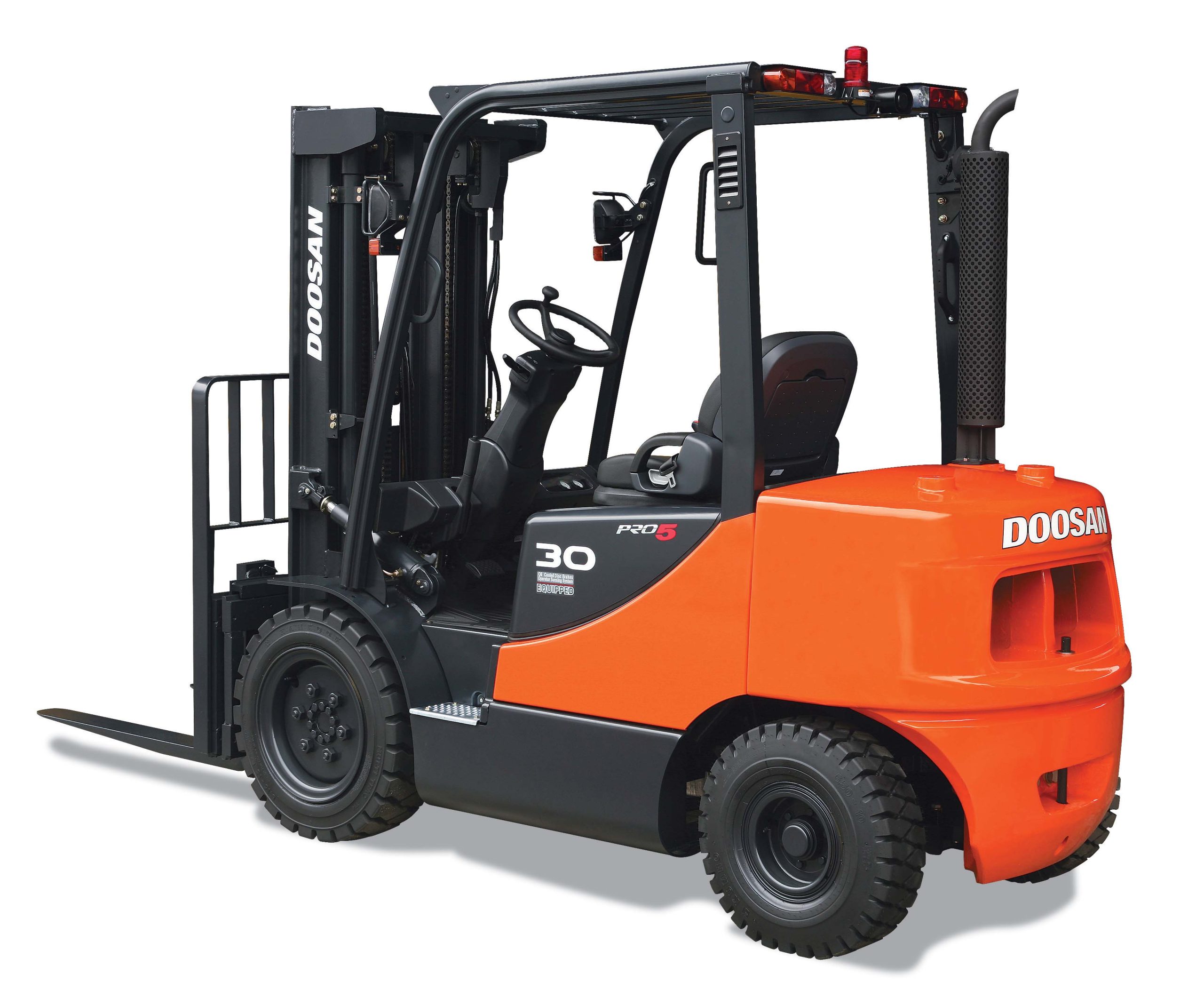
Guangzhou Forklift Manufacturing Factory
For overseas dealers, rental companies, and fleet operators, China is no longer just a source of low-cost standard forklifts—it has become the world’s primary OEM/ODM engineering base for customized material handling equipment. Most established Chinese manufacturers offer OEM and private-label programs, with typical customization spanning brand decals, paint colors, mast configurations, engine options, controller branding, and custom attachment integration . But the real value isn’t the customization itself—it’s how the right OEM/ODM partnership structurally lowers your Total Cost of Ownership (TCO) while letting you build your own brand equity.
This article gives dealers, distributors, and fleet procurement managers a practical framework for evaluating Chinese forklift OEM/ODM partners—what customization really means, how to model TCO accurately, and how to structure contracts that protect your business.
1. OEM vs. ODM: Understanding the Two Models
Before engaging any Chinese manufacturer, understand the distinction—because it determines how much engineering control you retain.
Dimension |
OEM (Original Equipment Manufacturer) |
ODM (Original Design Manufacturer) |
|---|---|---|
Design ownership |
Buyer provides specs/designs; factory executes |
Factory provides base design; buyer co-engineers modifications |
Branding |
Fully private-labeled with your brand |
Private-labeled; underlying platform is factory’s |
Engineering involvement |
You drive chassis/mast/powertrain changes |
Factory’s R&D team adapts existing platform to your specs |
Best for |
Dealers with in-house engineering, strong brand identity |
Dealers wanting custom solutions without full R&D overhead |
Lead time |
60–90 days typical for custom configurations |
60–90 days; faster if platform already exists |
MOQ |
Usually 5–10 units per model for OEM programs |
Flexible; often lower than pure OEM |
Source:
Most Chinese forklift factories market themselves as “OEM/ODM” interchangeably, but the meaningful distinction is engineering depth. A true ODM partner has an in-house R&D team capable of redesigning chassis, mast, and counterweights from the ground up—not just bolting on aftermarket accessories .
💡 When a supplier says “we do OEM/ODM,” ask: “Can your engineering team redesign the mast mounting geometry for my specific attachment, or do you only rebrand standard platforms?” The answer tells you which model you’re actually getting.
2. What Chinese OEM/ODM Forklift Customization Actually Covers
The customization scope from established Chinese manufacturers is far broader than most overseas buyers initially assume:
2.1 Cosmetic & Branding
-
Brand decals, paint colors, and operator compartment badging
-
Your model numbers on data plate and manual
-
Branded seat covers, steering wheel center caps, and key fobs on volume orders
-
Controller and display branding with your logo and UI language
2.2 Structural & Mechanical
-
Mast configurations: 2-stage, 3-stage, specific free-lift heights
-
Chassis dimensions for narrow-aisle applications
-
Fork dimensions (length, width, thickness) and carriage class
-
Tire options: pneumatic, solid, non-marking, or specialized compounds
-
Counterweight adjustments for specific load-center requirements
2.3 Powertrain & Energy Systems
-
Engine options: Isuzu, Kubota, Cummins, or domestic engines (with OEM authorization)
-
Electric configurations: 48V/80V AC drive; LiFePO₄, NMC, or lead-acid battery chemistry
-
Charging protocols: opportunity charging, fast-charging, or standard overnight
-
Special fuel configurations: LPG/dual-fuel, explosion-proof versions, cold-storage adaptations
2.4 Attachments & Integration
-
Paper roll clamps, bale clamps, side shifters
-
Hydraulic quick couplers, fork positioners
-
Telematics integration and IoT sensor suites
-
WMS (Warehouse Management System) connectivity with custom wiring harnesses
2.5 Specialized Variants
-
Cold-storage adaptations: -30°C rated seals, cabin heating, battery thermal management
-
Explosion-proof versions: for chemical, pharmaceutical, and grain handling
-
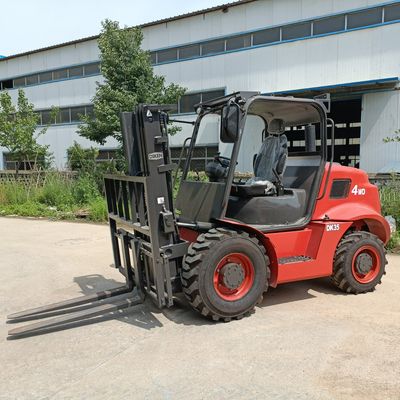
Rough-terrain: all-wheel drive, elevated ground clearance, reinforced axles
-
Narrow-aisle: bespoke chassis for high-density racking
Customization cost premiums vary significantly: minor modifications (paint, specialized tires) may add 10–20%, while fully bespoke chassis and mast designs for extreme environments can cost 50–100% more than a standard unit . However, this upfront cost is usually offset by long-term operational savings and damage reduction.
3. The TCO Advantage: Why Chinese OEM/ODM Wins on Lifecycle Cost
The purchase price is the most visible—but least important—component of forklift economics. For high-utilization equipment, acquisition cost frequently constitutes less than 25% of 5-year TCO .
3.1 Full TCO Component Breakdown
A rigorous TCO model includes :
Cost Category |
What to Include |
|---|---|
Acquisition |
Base vehicle price, battery/charger, attachments, taxes, delivery, setup |
Energy |
Electricity (kWh × rate), fuel, charging infrastructure amortization |
Maintenance |
Scheduled service, unscheduled repairs, component replacement |
Battery/Power system |
Battery replacement cycles, fuel cell pack depreciation |
Labor |
Battery changing/fueling labor, operator training |
Facility |
Infrastructure space (charging rooms, fuel storage, ventilation) |
Downtime |
Unplanned outage cost, emergency service calls |
Residual value |
Salvage/resale value at end of useful life |
3.2 TCO Comparison: Electric vs. Diesel (5-Year Model)
Based on a typical Class I counterbalance forklift operating 2,000 hours annually :
Cost Item |
Diesel Forklift |
Lithium Electric |
|---|---|---|
Purchase price |
$22,000 |
$32,000 |
Fuel/Electricity (5 yr) |
$42,000 |
$7,600 |
Maintenance (5 yr) |
$21,000 |
$5,000 |
Battery replacement |
N/A |
$0 |
5-Year Total |
$85,000 |
$44,600 |
Lithium electric saves ~$40,000 over 5 years in multi-shift operations . For diesel vs. electric comparisons at 1,500 hrs/yr, the 5-year totals are approximately $53,500 (diesel) vs. $38,300 (lithium) .
3.3 How Chinese OEM/ODM Structurally Lowers TCO
Chinese manufacturers deliver TCO advantages through five mechanisms:
1. Lower acquisition cost without compromising Tier-1 components
OEM private-label units are typically 15–25% lower than equivalent brand-name models, because there’s no brand royalty, no marketing overhead, and no multi-tier dealer margin . Critically, the component pool is identical—Chinese OEM factories source from the same global suppliers (Kawasaki hydraulics, Rexroth valves, Cummins/Isuzu engines, ZF transmissions) as major brands .
2. Lithium-ion technology leadership
Chinese manufacturers like BYD, EP, and Noblelift have driven LiFePO₄ adoption. A lithium battery pack achieves 8,000+ cycles (4× lead-acid), with 1.5-hour fast charge and zero maintenance —eliminating the $4,000–$12,000 battery replacement cost that dominates lead-acid TCO .
3. Flexible powertrain matching to duty cycle
Rather than forcing a one-size-fits-all engine, OEM/ODM lets you specify exactly the right powertrain. A facility running 3 shifts saves massively with lithium; a port running 24/7 diesel may optimize for torque. Matching the power system to the duty cycle is the single biggest TCO lever.
4. Attachment integration at factory cost
Adding auxiliary hydraulics or specialized attachments after purchase costs 2–3× factory installation . OEM/ODM lets you integrate paper roll clamps, side shifters, or fork positioners at the production line—at a fraction of retrofit cost.
5. Landed cost transparency
A 5-ton diesel forklift from China typically lands at $25,000–$35,000 (FOB Shanghai/Ningbo + ocean freight $2,500–$6,000 per 40-ft container), compared to $40,000–$60,000 for a comparable European or Japanese unit .
3.4 Landed Cost Example: 5-Ton Diesel Forklift
FOB China (standard model)          $18,000–$25,000

Ocean freight (40-ft container)         $2,500–$6,000

Destination port charges                $500–$1,500

Inland transportation                    $300–$1,000

Import duties (varies by country)     5–12% of FOB

─────────────────────────────────────────────────

Total Landed Cost                  $25,000–$35,000
Comparable European/Japanese unit     $40,000–$60,000
Ocean freight (40-ft container) $2,500–$6,000
Destination port charges $500–$1,500
Inland transportation $300–$1,000
Import duties (varies by country) 5–12% of FOB
─────────────────────────────────────────────────
Total Landed Cost $25,000–$35,000
Comparable European/Japanese unit $40,000–$60,000
Source:
4. Supplier Tier Structure: Who to Engage for OEM/ODM
China’s forklift supply chain is stratified into distinct tiers . Misalignment between your needs and supplier tier is the root cause of most custom project failures.
Tier 1: National OEM Brands (Hangcha, Heli, EP, Lonking)
-
Multi-plant production infrastructure, established global distribution
-
Appropriate for large-volume fleet procurement where brand recognition matters
-
Customization constrained by brand policy and standardized platform architectures
-
MOQs favor large-volume buyers; distributor margins tightly controlled
-
Best for: Large fleets wanting a recognized brand with moderate customization
Tier 2: Category-Specialist Factory-Direct Manufacturers ← Optimal for most OEM/ODM
-
ISO 9001-certified facilities specializing in one or two equipment categories
-
Full OEM/ODM capability with direct engineering team access
-
Pricing flexibility, best combination of engineering depth and documentation quality
-
Examples: Huaye Forklift (30+ years, 10,000-unit annual capacity, 130+ countries), LTMG (120,000 m² facility, 15,000 units/year), RUNTX (35,000 m² Shandong facility, 8,000+ units/year)
-
Best for: Dealers building private-label brands, specialized applications, flexible MOQs
Tier 3: Trading Companies ← Avoid for OEM/ODM
-
Polished websites, wide product ranges, but do not manufacture
-
Source from underlying factories, add margin, creating certification chain-of-custody gaps
-
Customization scope depends entirely on undisclosed factory relationships
-
Best for: Low-stakes, one-off standard purchases only
⚠️ For any procurement involving compliance documentation or private-label customization, factory-direct sourcing is essential . If your supplier can’t provide a live video tour of the production floor where your model is being built, you’re talking to a trading company.
5. The Technical Requirements Document (TRD): Foundation of Successful Customization
The most common failure mode in custom forklift procurement is contacting suppliers before internally resolving specifications . Weeks of back-and-forth are wasted when buyers haven’t defined requirements precisely.
A comprehensive TRD should be structured into six domains :
1. Mechanical Specifications
Load capacity (rated and de-rated at full lift height), mast configuration, lift height, lowered height, overall dimensions, turning radius, ground clearance, fork dimensions, carriage class
2. Powertrain & Energy Systems
For electric: battery chemistry (LiFePO₄/NMC/lead-acid), voltage (48V/80V), capacity (Ah), charging protocol
For IC: engine brand and model, emission standard (EPA Tier 4/EU Stage V), transmission type
3. Hydraulic System
Pump capacity, valve configuration, auxiliary hydraulic circuits for attachments, hose burst pressure ratings
4. Control & Electronics
Controller brand, display language/branding, telematics requirements, safety systems (OPS, e-stop, speed limiting)
5. Environmental & Application
Indoor/outdoor, temperature range, humidity, dust, explosive atmosphere classification, washdown requirements
6. Compliance & Documentation
Target market certifications (CE/UL/EPA), language of manuals, nameplate requirements, Declaration of Conformity specifics
6. Due Diligence: Verifying OEM/ODM Capability
Not every factory that claims “OEM/ODM capability” can deliver. Use this verification framework :
6.1 Legal & Certification Verification
-
Business license: Cross-reference with China’s National Enterprise Credit Information System; scope must include “manufacturing”
-
ISO 9001: Verify against IAF CertSearch or issuing body’s public registry; confirm scope covers forklift manufacturing
-
CE Declaration of Conformity: Must name the production entity, list current harmonized standards (EN ISO 3691-1:2015+A1:2020, EN 1175:2020)
-
Engine certification: EPA Tier 4 Final or EU Stage V; engine family name must match actual engine model
-
Battery certification: UN38.3 test report for lithium packs; IEC safety compliance
6.2 Engineering & Production Verification
-
Factory audit (on-site or via SGS/Bureau Veritas/TÜV SÜD): verify in-house machining, welding capability, crane capacity
-
Annual production records: capacity claims must match facility size
-
Equipment register: CNC machining centers, robotic welding cells, hydraulic test benches
-
R&D team: request organizational chart showing dedicated engineering staff count
6.3 OEM/ODM Track Record
-
Number of active export markets (80+ countries is a strong signal)
-
Years of continuous export activity (15+ years ideal)
-
References from active distributors in comparable markets
-
Past OEM client references (without disclosing brand confidentiality)
6.4 Red Flags
❌ Business scope lists “trade” or “import/export” only—not manufacturing
❌ ISO certificate issued by unknown non-IAF-accredited body
❌ CE Declaration signed by trading entity, not production facility
❌ “Compatible” or “equivalent” language for engines instead of OEM authorization
❌ Cannot provide parts catalog or emergency parts response time
❌ All references are domestic; no verifiable export history in your target market
7. Contract Structure: Protecting Your Investment
When entering an OEM/ODM manufacturing agreement, document everything in writing . Key clauses:
7.1 Bill of Materials (BOM) Freeze
This is the single most important protection. During sample approval, freeze a detailed BOM specifying:
-
Steel grades (Q345B vs. Q235B)
-
Cylinder brands, controller models, battery suppliers
-
Hydraulic hose ratings, welding specifications
Incorporate this BOM as a contractual annex requiring written notification before any substitutions. Commission an unannounced third-party inspection during first mass-production batch to verify supplier labels and steel markings against the approved BOM .
7.2 Quality Control & Inspection Rights
-
Right to adequate and regular samples
-
Right to inspect manufacturer’s facilities
-
Right to return defective products or those not meeting specifications
-
Third-party pre-shipment inspection (SGS/TÜV) at manufacturer’s cost for first 2–3 shipments
7.3 Intellectual Property Protection
-
Acknowledge buyer owns IP rights in the products and any improvements
-
Trademarks used only on buyer’s products
-
Tooling, dies, molds ownership: specify who owns them and what happens at contract end
-
Confidentiality provisions protecting buyer’s confidential information
7.4 Commercial Terms
-
Ordering processes, payment terms (tie to inspection milestones)
-
Delivery terms (Incoterms: FOB/CIF/DAP)
-
Risk and title transfer
-
Warranty: minimum 12 months or 1,200–2,000 hours for major components
-
Liability and termination rights
-
Escrow for warranty period (minimum 18 months recommended)
7.5 Spare Parts Commitment
-
Minimum stock commitment letter for high-consumption items
-
Published parts catalog with part numbers
-
Documented response time for emergency orders
-
Initial spare parts package covering wear parts and key electronic modules
8. The OEM/ODM Engagement Roadmap
A proven 5-step process for successful custom forklift sourcing :
Step 1: Requirements Consultation (Week 1–2)
Detailed discussion of technical specifications, branding needs, target markets, and volume requirements. Present your TRD.
Step 2: Engineering & Proposal (Week 3–6)
Manufacturer’s R&D team develops customized solution with technical drawings, cost estimates, and lead time. Review thoroughly—this is where 80% of future problems are prevented.
Step 3: Sample Production & Approval (Week 7–14)
A pre-production sample is built, tested, and submitted for your approval. Perform full load testing at rated capacity and maximum lift height—not just mid-height trials.
Step 4: Mass Production & QC (Week 15–22)
Full production run with in-line quality control, final inspection, and third-party testing. First batch gets unannounced BOM verification audit.
Step 5: Delivery & After-Sales (Week 23+)
On-time delivery with full documentation, spare parts support, and technical training for your team.
Total timeline: 60–90 days for OEM/custom configurations from project kickoff .
9. TCO Optimization Strategies for Dealers & Fleet Operators
9.1 Right-Specification Matching
Over-specifying wastes capital; under-specifying destroys TCO through premature failure. Use this rule of thumb:
-
Indoor, multi-shift: Lithium electric (lowest TCO by $40,000+ over 5 years)
-
Outdoor, heavy-duty, intermittent: Diesel with Tier-1 engine
-
Cold storage: Lithium with thermal management (lead-acid fails in <0°C)
-
Narrow-aisle: Purpose-built chassis, not retrofitted standard truck
9.2 Battery Strategy
For electric fleets, lithium-ion pays for itself in multi-shift operations through opportunity charging and zero maintenance . Even single-shift operations benefit from 8,000+ cycle life vs. 1,500 cycles for lead-acid.
9.3 Attachment Planning
Plan for attachments upfront. Factory-integrated hydraulic circuits cost 1/3 of retrofit. A side shifter delivers 10–15% efficiency gain; hydraulic quick coupler enables 30-second attachment changes .
9.4 Lifecycle Cost Modeling
Build a TCO spreadsheet with these inputs:
-
Acquisition (including battery, charger, attachments)
-
Energy cost (use your actual electricity/fuel rates)
-
Annual maintenance (electric: $400–$800; diesel: $1,500–$2,500)
-
Battery replacement cycle (lithium: often $0 in first 5 years)
-
Expected residual value at 5–10 years
-
Downtime cost (use your facility’s hourly downtime cost × expected outage hours)
Compare 2–3 configurations side-by-side. The lowest purchase price rarely wins on TCO.
10. Common Pitfalls & How to Avoid Them
Pitfall 1: “Paper” ISO and CE Certificates
Some suppliers present impressive certificates that are expired, issued by non-accredited bodies, or invalid for the actual production site.
Solution: Verify ISO via IAF CertSearch; confirm CE Declaration names the production entity and cites current EN standards .
Pitfall 2: Material Downgrade from Samples to Mass Production
Steel grades, hydraulics, or electronics may be downgraded once mass production starts.
Solution: Freeze BOM during sample approval; unannounced third-party inspection on first mass-production batch .
Pitfall 3: Misleading Capacity Labels
Capacity rated at unrealistic load centers or lift heights creates safety risks.
Solution: Insist capacity data plates show rated load at your specified load centers and lift heights; field-test at maximum racking positions .
Pitfall 4: Ignoring Total Landed Cost
Low ex-works prices can be offset by duties, port charges, and compliance costs.
Solution: Model landed cost under different Incoterms; confirm duty rates with local customs brokers .
Pitfall 5: Weak After-Sales & Spare Parts
Without structured after-sales, downtime wipes out purchase-stage savings.
Solution: Negotiate initial spare parts packages; prefer suppliers with local service partners in your market .
11. When Chinese OEM/ODM Makes Sense—and When It Doesn’t
✅ Ideal Scenarios for Chinese OEM/ODM
-
Dealers building private-label brands in price-sensitive or emerging markets
-
Specialized applications (cold storage, explosion-proof, narrow-aisle, rough terrain) where major brands offer limited flexibility
-
Multi-shift electric operations leveraging China’s lithium-ion leadership
-
Fleet standardization where 15–25% acquisition savings compound across dozens of units
-
Companies with existing parts/service infrastructure wanting to control their own support ecosystem
⚠️ Proceed with Caution When
-
Premium market brand recognition is essential (government tenders, corporate procurement with brand mandates)
-
Immediate local dealer support required in regions where Chinese brands have limited presence
-
Residual value heavily depends on brand prestige (Chinese private-label resale values are still maturing)
-
Ultra-heavy-duty applications (>10T) where established Western/Japanese brands retain engineering advantages
Key Takeaways
Chinese forklift OEM/ODM manufacturing is not a compromise—when executed properly, it’s a strategic sourcing advantage that delivers:
-
15–25% lower acquisition cost through elimination of brand royalty and multi-tier distribution margins, while using the same Tier-1 global component pool
-
$40,000+ TCO savings over 5 years in multi-shift operations by pairing lithium-ion technology with right-spec’d powertrains
-
Unmatched customization depth—from cosmetic branding to bespoke chassis redesign for extreme environments
-
Brand equity building: You own the brand, control pricing, and build long-term equity that stays with your company
-
Flexible engagement: OEM for full control, ODM for engineering partnership, with MOQs as low as 5–10 units
The path to success requires rigor, not luck:
-
Specify precisely via a comprehensive Technical Requirements Document before contacting suppliers
-
Verify authentically—factory-direct Tier 2 specialists outperform Tier 1 for customization
-
Contract comprehensively—freeze BOM, protect IP, secure tooling ownership, mandate third-party inspection
-
Model TCO honestly—acquisition is <25% of 5-year cost; energy and maintenance dominate
-
Plan for lifecycle—spare parts commitments, local service partnerships, and operator training
💡 The dealers and fleet operators who win with Chinese OEM/ODM are those who approach it as engineering partnerships, not transactional purchases. The manufacturers who welcome technical scrutiny—who can discuss steel grades, hydraulic burst pressures, and battery cycle life with precision—are your true partners. Those who deflect to “our quality is very good” are not.


No reply content