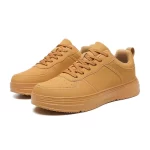

Are you looking for a reliable supplier of men’s casual shoes for your wholesale business, retail stores, or private label brand?
Sourcing men’s casual footwear from China can offer international buyers access to different product styles, materials, and customization options. However, choosing the right supplier requires more than comparing product photos and unit prices.
Buyers should evaluate product specifications, available customization services, minimum order quantities, sample quality, production arrangements, and shipping requirements before placing a bulk order.
For importers, distributors, retailers, and footwear brands, understanding these factors can make the sourcing process more efficient and help reduce purchasing risks.
1. Men’s Casual Shoes for Wholesale Buyers
Men’s casual shoes cover a wide range of footwear styles designed for everyday use, business-casual settings, and leisure activities.
Depending on the supplier’s actual product range, buyers may consider the following categories.
Casual Sneakers
Casual sneakers are popular among retailers and footwear distributors serving everyday fashion markets.
When sourcing casual sneakers, buyers should evaluate:
- Upper material and construction.
- Outsole material and tread design.
- Available colors and size ranges.
- Stitching, bonding, and finishing.
- Private label and packaging requirements.
Buyers should request actual product photos and specifications before confirming an order.
Men’s Slip-On Shoes
Slip-on shoes can suit retailers looking for convenient everyday footwear.
Important purchasing considerations include upper flexibility, foot comfort, outsole construction, available sizes, and the intended retail market.
Canvas Casual Shoes
Canvas shoes may suit fashion retailers, seasonal collections, and casual footwear distributors.
Buyers should confirm the fabric specifications, sole construction, color options, sizing, and packaging before ordering.
Important: Product availability varies by supplier. Buyers should confirm which styles can actually be manufactured or supplied before requesting a quotation.
2. Custom Men’s Casual Shoes for Private Label Brands
Businesses developing their own footwear brands may need products that reflect their designs and brand identity.
Depending on the manufacturer’s capabilities, customization may include several elements.
Upper Materials
Possible materials for casual footwear include canvas, mesh, synthetic leather, microfiber, and genuine leather.
Each material has different characteristics relating to appearance, flexibility, maintenance, durability, and cost.
Before selecting materials, buyers should discuss their target retail price, intended use, and product specifications with the supplier.
Colors and Design Details
Buyers may request specific colors, stitching details, laces, trims, or other design elements.
For custom projects, provide reference images or technical drawings to help the supplier understand the requirements.
Logo and Branding
Private label buyers may want their own logos on footwear or packaging.
Ask the supplier which branding methods are available and whether the logo can be applied to the requested product.
Packaging
Retail brands may require customized shoe boxes, labels, barcodes, or packaging inserts.
Confirm the available packaging options, additional costs, artwork requirements, and any applicable minimum quantities.
Not every supplier offers every customization service. Confirm the available options before making purchasing decisions.
3. OEM and ODM Shoe Manufacturing
OEM and ODM arrangements can help businesses develop footwear products without operating their own factories.
OEM Manufacturing
OEM production generally involves manufacturing footwear according to the buyer’s design, specifications, and agreed requirements.
This option may suit established brands and businesses that already have product designs or technical documentation.
Before starting an OEM project, buyers should prepare:
- Product drawings or reference images.
- Material specifications.
- Size charts.
- Color requirements.
- Logo artwork.
- Packaging specifications.
- Expected order quantities.
ODM Manufacturing
ODM projects generally involve selecting or adapting supplier-developed designs.
This may suit wholesalers, retailers, and new brands that want to develop products without preparing every technical detail themselves.
Ask the supplier what design-development assistance is available and which elements can be customized.
Before proceeding, confirm design ownership, mold ownership where applicable, tooling costs, and the permitted use of product designs.
4. What Is the MOQ for Custom Men’s Casual Shoes?
The minimum order quantity, or MOQ, is the smallest order a supplier is willing to accept under specified conditions.
There is no universal MOQ for all men’s casual shoes.
The required quantity may depend on:
- Whether the product is a standard or fully customized style.
- The selected materials and colors.
- Whether new molds or tooling are required.
- Logo and packaging requirements.
- Production arrangements.
- The number of sizes and colors included in the order.
For example, ordering an existing shoe style with limited customization may involve different requirements from developing a completely new outsole and upper design.
How to Confirm MOQ
When requesting a quotation, ask the supplier to clarify:
- MOQ per style.
- MOQ per color.
- Whether sizes can be mixed within an order.
- Whether different styles can be combined.
- Whether sample orders are available.
- Whether additional setup or tooling charges apply.
Do not assume that a supplier’s MOQ for one product applies to every other style.
Request written confirmation before making purchasing decisions.
5. How to Evaluate Shoe Samples Before Bulk Production
A sample allows buyers to evaluate a product before committing to a larger order.
For men’s casual shoes, consider checking the following areas.
Material quality: Confirm that the materials match the agreed specifications.
Construction: Examine stitching, bonding, seams, and finishing.
Sizing: Compare the sample against the agreed size chart and fit requirements.
Outsole: Inspect the outsole construction, tread pattern, and finishing.
Appearance: Check color consistency, symmetry, and visible defects.
Branding: Confirm that the logo, labels, and packaging match the approved design.
For larger orders, buyers should document the approved sample and key specifications.
If the order requires specific performance or compliance standards, agree on the applicable testing and inspection requirements before production.
A sample review does not guarantee that every pair in a bulk order will be identical. Buyers should also establish appropriate quality-control procedures for mass production.
6. What Affects the Wholesale Price of Men’s Casual Shoes?
The price of custom or wholesale footwear depends on the product specifications and commercial terms.
Important factors include:
| Factor | Potential effect on cost |
|---|---|
| Upper material | Different materials have different costs. |
| Outsole construction | Material, design, and tooling may affect pricing. |
| Order quantity | Production quantities can influence unit costs. |
| Customization | Logos, special colors, and design changes may add costs. |
| Packaging | Customized boxes and labels may increase the total cost. |
| Quality requirements | Additional testing or inspection may involve extra expenses. |
| Shipping terms | Freight, insurance, and other charges depend on the agreed arrangement. |
When comparing quotations, make sure suppliers are quoting the same product specifications.
A low unit price does not necessarily represent the lowest overall purchasing cost.
Ask whether the quotation includes samples, tooling, customized packaging, inspection, and transportation. Confirm the applicable Incoterms and any excluded charges.
7. How to Request a Quotation from a Chinese Shoe Supplier
A clear inquiry helps the supplier understand your requirements and prepare a more relevant quotation.
Before contacting a supplier, prepare the following information.
Product type: Men’s casual sneakers, canvas shoes, slip-ons, or another style.
Reference images: Photos, sketches, or technical drawings.
Order quantity: Estimated pairs per style and color.
Size range: Required sizes and quantities per size.
Materials: Preferred upper, lining, insole, and outsole materials, if known.
Customization: Logo, colors, labels, and packaging requirements.
Destination country: The country where the products will be imported.
Target delivery date: Your expected shipping or arrival schedule.
Target price: Your budget, if available.
You do not need to know every technical detail before making an inquiry. Providing the information you already have can help the supplier identify which details need further discussion.
8. Frequently Asked Questions
Q1. Can I order men’s casual shoes with my own brand logo?
This depends on the supplier’s customization capabilities. Ask which logo application methods are available and whether there are additional costs or minimum quantities.
Q2. Can I order different sizes in one bulk order?
Some suppliers allow mixed sizes within an order, but their policies may vary. Confirm the size breakdown and any quantity restrictions before ordering.
Q3. Can I request a sample before placing a bulk order?
Ask the supplier whether samples are available, how much they cost, and whether the sample fee can be credited against a later order.
Q4. How long does custom shoe production take?
The production schedule depends on the shoe design, material availability, sample approval, order quantity, and customization requirements.
Request separate estimates for sample development and bulk production, and confirm when the production schedule begins.
Q5. How can I compare quotations from different suppliers?
Compare the same shoe specifications, materials, order quantities, packaging requirements, quality standards, and shipping terms.
Also clarify payment terms, sample costs, production lead times, and the handling of defective products.
Q6. What information should I provide for a quotation?
At a minimum, provide the shoe type, reference images if available, estimated quantity, customization requirements, and destination country.
More detailed specifications can help the supplier prepare a more accurate quotation.
9. Request a Custom Men’s Casual Shoes Quotation
Are you sourcing men’s casual shoes for wholesale distribution, retail stores, or your own footwear brand?
Prepare your product requirements and contact the supplier through the Vlefooena platform to discuss product availability, customization options, sample arrangements, MOQ, and pricing.
To help the supplier evaluate your request, include:
- Your required shoe style.
- Estimated order quantity.
- Preferred materials and colors.
- Logo and packaging requirements.
- Size range.
- Destination country.
- Expected delivery schedule.
The supplier can then review your requirements and advise which product options and production arrangements may be suitable.
Ready to discuss your men’s casual shoe project?
Visit the supplier’s profile on Vlefooena to explore the available contact options and submit your inquiry.


No reply content