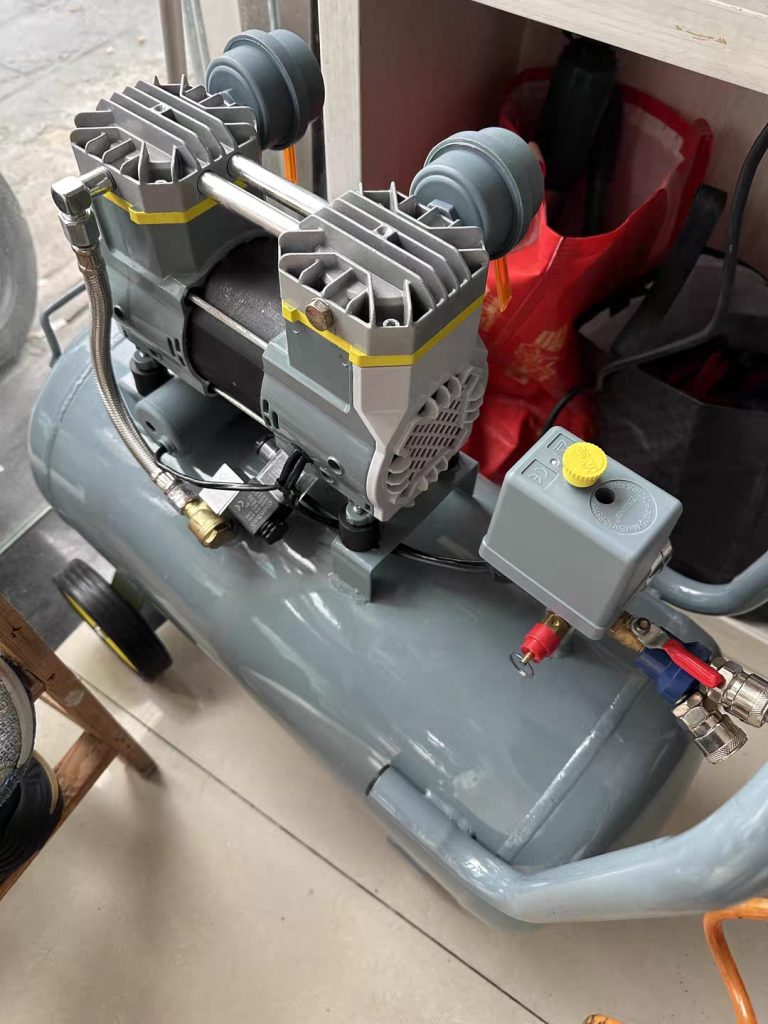
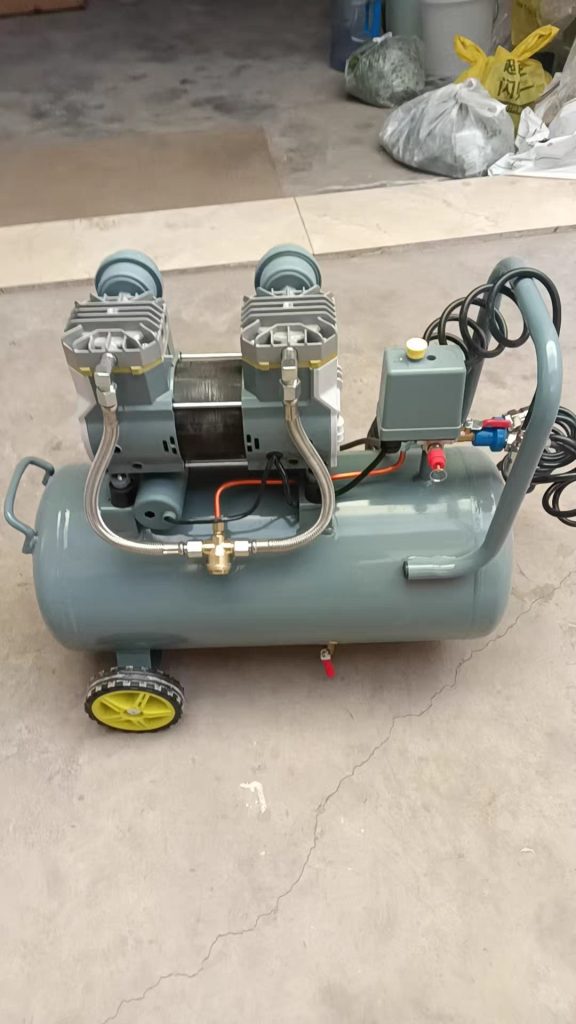
This article serves as a comprehensive guide for industrial procurement officers and engineers, leveraging 20+ years of manufacturing expertise to explore the technical nuances, energy efficiency standards, and systemic reliability of modern industrial air compressors.
In the heart of modern manufacturing, compressed air is often referred to as the “fourth utility.” From powering pneumatic tools on assembly lines to facilitating complex chemical reactions, the reliability of an industrial air compressor is non-negotiable. As a leading manufacturer, we understand that choosing a compressor isn’t just about buying a machine; it’s about investing in a decade of operational efficiency.
1. The Core of Performance: Engineering Superiority
The difference between a standard compressor and a high-performance industrial unit lies in the precision of the airend. In our facility, we utilize advanced CNC grinding technology to ensure that the rotor profiles maintain clearances measured in microns.
- Rotor Profile Optimization: Modern asymmetric profiles reduce internal leakage, ensuring more air is delivered per kilowatt of energy consumed.
- Thermal Management: We integrate oversized cooling systems designed for 45^{\circ}C ambient temperatures, preventing the common “summer shutdowns” that plague lesser units.
2. Energy Efficiency: The LCOA (Levelized Cost of Air)
Energy accounts for approximately 70% to 80% of the total cost of ownership of an air compressor over its lifespan. To address this, our manufacturing process focuses on two critical technologies:
Permanent Magnet Variable Frequency Drive (PM VFD)
Traditional fixed-speed compressors waste energy through “unloading” cycles. Our PM VFD units match motor speed exactly to your demand.
- IE4/IE5 Motors: We utilize ultra-efficient permanent magnet motors that maintain high efficiency even at low speeds.
- Soft Starting: This eliminates peak current demands during startup, protecting your electrical infrastructure.
Two-Stage Compression
For high-pressure applications, two-stage compression is the gold standard. By cooling the air between stages (intercooling), the physics of the process becomes more isothermal.
- The Math of Savings: Two-stage compression can reduce power consumption by up to 10% to 15% compared to single-stage units at the same pressure.
3. The Manufacturing Process: Quality Control and Traceability
Authority and Trust (the ‘T’ in E-E-A-T) are built through transparency. Our factory operates under strict ISO 9001:2015 protocols
|
Stage |
Process Detail |
Quality Benchmark |
|---|---|---|
|
Component Sourcing |
Selection of SKF bearings and Schneider electronics. |
100% Material Inspection |
|
Assembly |
Dust-free assembly environment for airends. |
Torque-calibrated Bolting |
|
Testing |
4-hour full-load performance run. |
Zero-leakage Certification |
|
Finishing |
Anti-corrosion powder coating. |
4. Industry 4.0: Smart Monitoring and Connectivity
The modern factory floor requires data. Our latest generation of compressors features integrated IoT modules that provide:
- Predictive Maintenance: Real-time vibration and temperature analysis to predict bearing failure before it happens.
- Remote Monitoring: Access your compressor’s status via smartphone or PC.
- Auto-Dual Control: Intelligent switching between modulation and start/stop modes based on air consumption patterns.
5. Environmental Responsibility and Sustainability
As manufacturers, we are committed to reducing the carbon footprint of the industrial sector.
- Oil-Free Solutions: For the food, beverage, and pharmaceutical industries, we produce Class 0 certified oil-free compressors to prevent oil contamination in the end product.
- Heat Recovery Systems: Up to 90% of the heat generated by a compressor can be recovered to heat water or factory spaces, effectively turning your compressor into a free boiler.
FAQ: Common Industry Concerns
Q1: How do I choose between a Screw Compressor and a Piston Compressor?
Answer: Screw compressors are designed for 100% duty cycles (continuous operation) and are much quieter. Piston compressors are better suited for intermittent use or very high-pressure, low-volume tasks. If your factory runs more than 4 hours a day, a screw compressor is almost always more cost-effective due to energy savings.
Q2: What is the ideal maintenance interval for a screw air compressor?
Answer: Typically, “minor” services (oil and filters) occur every 2,000 to 3,000 hours. A “major” service (including separator and comprehensive checks) happens at 6,000 hours. However, using our synthetic lubricants can extend these intervals and improve thermal stability.
Q3: Why is my compressor discharge temperature too high?
Answer: The most common culprits are clogged oil coolers, low oil levels, or poor ventilation in the compressor room. Ensure there is at least 1.5 meters of clearance around the unit for proper airflow.
Q4: Does “Variable Frequency” always save money?
Answer: Not necessarily. VFDs are most effective if your air demand fluctuates. If your factory has a constant, 100% load, a high-efficiency fixed-speed machine may actually be slightly more efficient due to the lack of VFD switching losses.
Conclusion: Partnering with Expertise
In the world of industrial air, the “cheapest” machine is often the most expensive over time. By focusing on precision engineering, E-E-A-T principles, and energy-efficient technology, we provide more than just air; we provide the pulse of your production line.
Would you like me to tailor a specific technical specification sheet for one of your product models (e.g., a 75kW VFD Screw Compressor) to include in this article?


No reply content