
The humble umbrella has evolved far beyond a simple emergency shield against rain. Today, it stands as a sophisticated fusion of structural engineering, material science, and high-impact brand storytelling. For global enterprises—ranging from luxury fashion labels and corporate gift distributors to major hospitality groups—sourcing custom umbrellas from dedicated export manufacturers is the gold standard for blending functional durability with bespoke aesthetics.
Modern custom umbrella exporters have elevated production from basic assembly to precision manufacturing, ensuring that every component is built to withstand both the elements and rigorous daily use.
Structural Architecture: Built for the Storm
The true test of a premium umbrella happens under pressure. Wind tunnel performance is a primary focus for modern export manufacturers. To prevent the frustrating, cheap inversion that ruins standard umbrellas, custom exporters utilize advanced structural frameworks:
- Fiberglass Rib Systems: Traditional iron or steel ribs are increasingly replaced with premium fiberglass or carbon fiber composites. These materials possess incredible elastic memory, allowing the frame to bend and flex under heavy wind gusts without snapping or permanently warping.
- Double-Canopy Ventilation: For golf and heavy-duty storm umbrellas, a double-canopy construction allows high-velocity wind to pass safely through engineered vents while keeping water completely locked out, drastically reducing the physical lifting force required to hold the umbrella.
- Precision Opening Mechanisms: From ultra-slim manual frames to heavy-duty, double-action automatic open/close buttons, internal springs and copper rivets are engineered for thousands of smooth, jam-free cycles.
Material Science and Bespoke Tailoring
The canopy serves as both a protective barrier and a pristine canvas for branding. Custom exporters utilize tight-weave, high-density fabrics—primarily Pongee, Polyester, and Nylon—measured by thread count (such as 190T or 210T).
To ensure long-lasting performance, these fabrics undergo specialized chemical treatments. A premium hydrophobic coating (such as Teflon) forces rain to instantly bead and roll off, leaving the umbrella virtually dry within seconds of shaking. For sun protection lines, advanced black UV-blocking inner coatings are applied, achieving a UPF 50+ rating to shield users from harmful ultraviolet radiation.
From a custom design perspective, the printing capabilities are virtually limitless:
- Digital Sublimation Printing: Allows for stunning, photorealistic, panel-spanning designs without affecting the breathability or water-resistance of the fabric.
- Interior Printing: Keeps the exterior a subtle, professional color while hidden interior panels feature vibrant corporate patterns, striking artwork, or sky motifs.
- Bespoke Components: Handles can be custom-molded into ergonomic shapes using genuine wood, hand-stitched leather, brushed aluminum, or soft-touch rubberized plastics, with corporate logos cleanly laser-engraved or stamped into the base.
Frequently Asked Questions (FAQ)
1. What printing methods are used for custom corporate logos on umbrellas?
Depending on the design complexity and order volume, exporters generally use three methods. Silk-screen printing is preferred for sharp, solid-color logos due to its crisp finish and cost-efficiency at scale. Heat transfer printing is utilized for multi-color gradients and smaller intricate logos. For full-canopy artwork or seamless edge-to-edge patterns, digital sublimation printing is deployed before the panels are stitched together.
2. What is “Pongee” fabric, and why is it preferred over polyester?
Pongee is a premium, high-density woven fabric made from fine polyester yarns. Unlike standard polyester, which can feel stiff or look overly shiny, Pongee has a soft, matte, fabric-like texture. It shrinks less, resists wrinkling, holds vivid custom colors much better, and provides superior water repellency, making it the industry standard for high-tier export umbrellas.
3. Can handles and frames be fully customized to match specific brand dimensions or colors?
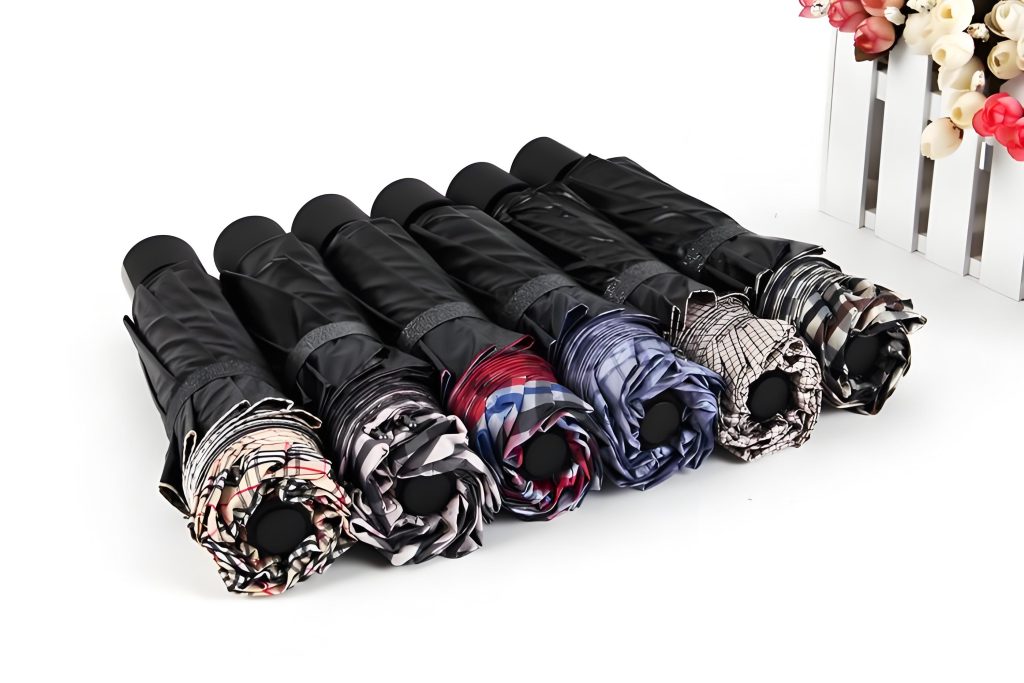
Yes. Beyond selecting fabric colors, buyers can specify frame configurations (e.g., 3-fold compact, inverted/reverse opening, classic straight stick, or oversized golf dimensions). Handles can be custom-injected to match specific Pantone color codes or carved from specific woods, and frames can be color-anodized or coated to tie into a cohesive corporate brand identity.
4. How are umbrellas packed to prevent damage during long-distance ocean transit?
Export-grade packaging is designed to combat both physical crushing and moisture. Each umbrella is placed in a protective sleeve (matching fabric or clear poly-bag). They are then organized into inner boxes with moisture-absorbing silica gel packets to prevent mold during ocean transport. These inner boxes are sealed inside heavy-duty, double-wall corrugated master cartons, which are then palletized and securely shrink-wrapped to ensure they arrive pristine and shelf-ready.


No reply content