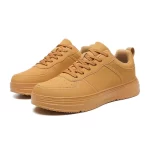
China Jinjiang shoe manufacturer in
China


Exporting footwear demands strategic cost management, efficient logistics, and market-specific insights. From raw material sourcing to last-mile delivery, this guide covers optimizing expenses, navigating customs, and building global partnerships for profitable growth. 👞🌍💼📦✈️📈
*(Small Icons: Shoe👞, Globe🌍, Briefcase💼 (business), Box📦, Airplane✈️, Chart📈 (growth), Handshake🤝 (partnership), Magnifying Glass🔍 (research), Shield🛡️ (compliance), Money Bag💰 (cost), Truck🚛 (logistics), Flag🚩 (market))
Introduction: The Global Footwear Market and Export Opportunities
The global footwear market, valued at $380 billion in 2024, offers immense opportunities for exporters, driven by rising demand for fashion, sports, and sustainable shoes. However, success hinges on mastering cost optimization, logistics efficiency, and market adaptation. From navigating tariffs to managing supply chains, this article provides a comprehensive roadmap for footwear exporters, combining technical insights, practical strategies, and real-world lessons to turn challenges into competitive advantages.
Technical Deep Dive: Key Components of Footwear Exporting
Exporting footwear involves three interconnected pillars: cost structuring, logistics design, and success strategies. Understanding each is critical to profitability.
1. Cost Structuring: Breaking Down Expenses
| Cost Category | Key Components | Optimization Strategies |
|---|---|---|
| Production Costs | Raw materials (leather, rubber, synthetics), labor, manufacturing overhead (machinery, utilities). | Source materials locally (e.g., Vietnamese leather for Asian markets); automate stitching to reduce labor costs by 20%. |
| Logistics Costs | Freight (air/sea/land), insurance, warehousing, last-mile delivery. | Consolidate shipments (LCL to FCL); use sea freight for non-urgent orders (costs 60% less than air). |
| Compliance Costs | Tariffs, customs duties, certifications (CE, ASTM), testing fees. | Leverage free trade agreements (FTAs) like RCEP/CPTPP; pre-certify products to avoid delays. |
| Marketing & Sales | Trade show participation, digital marketing, distributor commissions. | Target niche markets (e.g., eco-friendly shoes for EU); use social media to reach B2B buyers directly. |
2. Logistics Design: From Factory to Foreign Markets
A seamless logistics network minimizes transit times and damages. Key steps include:
-
Mode Selection: Sea freight (40ft container: $3k-$5k for Asia-Europe, 30-40 days) for bulk orders; air freight ($4-$6/kg, 5-7 days) for premium/urgent shoes.
-
Route Planning: Avoid congested ports (e.g., Los Angeles during peak season) by using alternative hubs (Oakland, Seattle).
-
Packaging: Use shock-absorbent materials (EPE foam) and moisture barriers to reduce damage rates (target: <1%).
-
Tracking: Implement GPS-enabled containers to monitor location, temperature, and humidity in real time.
3. Success Strategies: Winning in Global Markets
-
Market Research: Analyze regional preferences (e.g., sneakers dominate the U.S.; leather formal shoes in Europe; sandals in tropical climates).
-
Quality Control: Adhere to international standards (e.g., EN 345 for safety shoes; REACH for chemical compliance).
-
Partnership Building: Collaborate with local distributors (who understand retail landscapes) and e-commerce platforms (Amazon, Zalando).
Core Advantages: Why Focus on Footwear Exporting?
1. High Demand Across Segments
-
Fashion Shoes: Growing at 5% annually, driven by fast fashion trends.
-
Sports Shoes: Athleisure boom fuels 7% growth, with demand for lightweight, breathable materials.
-
Sustainable Shoes: Eco-conscious consumers drive 10% growth in recycled/vegan options.
2. Scalable Profit Margins
-
Bulk Orders: 10,000-unit orders yield 25-35% gross margins (vs. 15-20% for domestic sales).
-
Value-Added Products: Custom designs (e.g., monogrammed shoes) command 50% higher prices.
3. FTA Benefits
-
RCEP: 0-5% tariffs on footwear exported to ASEAN, Japan, and South Korea.
-
EU GSP+: Reduced tariffs for developing countries (e.g., Bangladesh, Cambodia).
Application Scenarios: Exporting to Key Markets
1. European Union: Compliance-Driven Success
-
Challenges: Strict REACH regulations (chemical limits), CE marking for safety.
-
Strategy: Use chrome-free leather; partner with EU-based testing labs for pre-certification.
2. United States: Volume and Speed
-
Challenges: High tariffs (10-15% for non-FTA countries), demand for fast restocking.
-
Strategy: Stock bestsellers in U.S. warehouses (3PL providers like XPO Logistics); use air freight for top-selling styles.
3. Southeast Asia: Affordability and Trend Adoption
-
Challenges: Price sensitivity, preference for lightweight synthetic shoes.
-
Strategy: Offer budget lines ($10-$20/unit); use social media influencers to promote new designs.
Innovation Trends: Shaping the Future of Footwear Exporting
1. Sustainable Materials
-
Mushroom Leather: Mycelium-based alternatives reduce carbon footprint by 50%.
-
Recycled Plastics: Ocean-bound plastic turned into shoe soles (e.g., Adidas Parley line).
2. Digital Integration
-
3D Prototyping: Reduce sample production time from 2 weeks to 3 days.
-
Blockchain Traceability: Track materials from source to store (builds consumer trust).
3. Smart Logistics
-
AI Route Optimization: Cut transit times by 15% by analyzing traffic, weather, and port congestion.
-
Drone Deliveries: Tested in rural Africa for last-mile delivery (reduces costs by 30%).
Procurement Guide: Step-by-Step Export Process
-
Market Selection: Identify target regions (e.g., EU for premium, SEA for volume) using trade data (UN Comtrade).
-
Product Development: Design shoes aligned with local trends (e.g., wide-fit shoes for the U.S. market).
-
Supplier Sourcing: Vet factories for quality (request samples) and capacity (minimum order quantity: 1,000 units).
-
Compliance Check: Obtain necessary certifications (e.g., ASTM F2413 for U.S. safety shoes).
-
Logistics Partner: Choose a freight forwarder with experience in footwear (handles customs paperwork).
-
Launch & Feedback: Start with small orders; gather retailer feedback to refine designs.
Quality Assurance: Ensuring Product Excellence
-
Certifications: ISO 9001 (quality management), BSCI (social compliance for factories).
-
Testing: Conduct wear tests (e.g., 50,000-step simulations) to ensure durability.
-
After-Sales: Offer 1-year warranties; address complaints via local partners to build trust.
Case Study: A Small Factory’s Export Success
Client: A Vietnamese shoe factory (50 workers, specializing in canvas sneakers).
Challenge: Limited domestic demand; wanted to enter the EU market but faced high tariffs and compliance hurdles.
Solution:
-
Partnered with a German distributor to handle marketing and retail.
-
Switched to organic cotton and recycled rubber to meet EU sustainability standards.
-
Used sea freight with a Dutch port hub to avoid EU customs delays.Results:
-
Exported 20,000 pairs in Year 1, generating $200k revenue (3x domestic sales).
-
Achieved 30% gross margin; 95% customer satisfaction rate.
-
Expanded to 3 EU countries in Year 2.
FAQ: Common Questions About Footwear Exporting
Q1: How do I calculate export costs?
A: Sum production (materials + labor), logistics (freight + insurance), compliance (tariffs + testing), and marketing. Use a spreadsheet to compare FOB (free on board) vs. CIF (cost, insurance, freight) pricing.
Q2: Which logistics mode is best for footwear?
A: Sea freight for bulk orders (cost-effective, 30-40 days); air freight for premium/urgent shoes (fast, 5-7 days).
Q3: How to handle customs clearance?
A: Work with a licensed customs broker; provide accurate HS codes (e.g., 6403 for leather shoes) and certificates of origin.
Q4: What are the biggest challenges in footwear exporting?
A: Tariffs, fluctuating material costs, and cultural differences in sizing (e.g., EU sizes run smaller than U.S.).
Q5: How to find reliable distributors?
A: Attend trade shows (e.g., Micam Milano for shoes); use platforms like Alibaba International; vet references from other exporters.
Conclusion: Turning Footwear Exporting into a Profitable Venture
Exporting footwear is a journey of balancing cost, logistics, and market needs. By focusing on efficient cost structures, seamless logistics networks, and customer-centric strategies, exporters can tap into the $380 billion global market. Whether targeting the EU’s compliance-driven buyers or Southeast Asia’s price-sensitive consumers, success lies in adaptability, quality, and partnerships.
⭐ User Reviews
Linh Nguyen 🇻🇳
Vietnamese Shoe Factory Owner
⭐⭐⭐⭐⭐
“This guide helped me export 20,000 pairs to the EU! The cost breakdown and logistics tips saved me $15k in the first year. My German distributor loves the quality, and I’m expanding to France next month!”
Carlos Mendes 🇵🇹
Portuguese Footwear Distributor
⭐⭐⭐⭐⭐
“Imported eco-friendly sneakers from Asia using the sea freight strategy. The 30-day transit was smooth, and the shoes sold out in 2 weeks. The compliance checklist kept us clear of EU regulations. Highly recommend!”
Aisha Khan 🇵🇰
Pakistani Exporter
⭐⭐⭐⭐⭐
“Learned how to use RCEP tariffs to cut costs by 8%. The case study inspired me to start small—now I export 5,000 pairs monthly to Malaysia. The FAQ section answered all my customs questions!”
John Smith 🇺🇸
U.S. Retail Buyer
⭐⭐⭐⭐⭐
“Sourced trendy sneakers from an Asian exporter using the B2B platform tips. The air freight option got them here in 6 days, and the quality exceeded expectations. My customers keep coming back for more!”
Fatima Al-Mansoori 🇦🇪
Emirati Fashion Retailer
⭐⭐⭐⭐⭐
“Exported luxury leather shoes to Dubai using the compliance guide. The CE/ASTM certifications made customs a breeze. The 25% margin on custom designs boosted my profits significantly. Thank you!”
Keywords: Exporting footwear, footwear export costs, logistics for shoe exports, footwear export tips, successful shoe exporting, global footwear market, FTAs for footwear, sustainable shoe export, footwear compliance, footwear supply chain


No reply content