
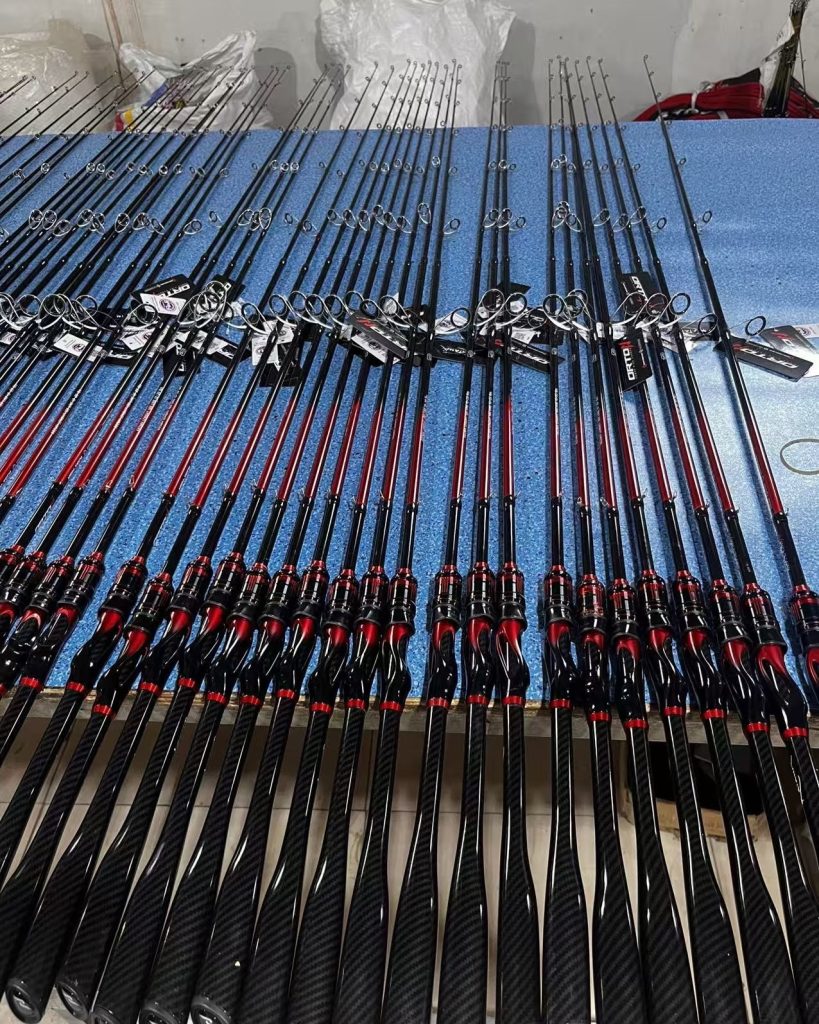
When developing a private-label fishing rod line, one of the first strategic decisions brands face is whether to work under an OEM or ODM model.
Both approaches allow international buyers to create products under their own brand, but they differ significantly in design ownership, development responsibility, cost structure, lead time, and level of control. Understanding these differences helps private-label brands, wholesalers, and importers choose the most suitable cooperation model with Chinese manufacturers.
This guide explains the key differences between Fishing Rod OEM and ODM and outlines what buyers should consider before starting a project.
### 1. What Is Fishing Rod OEM?
OEM (Original Equipment Manufacturer) means the buyer provides the complete product design and specifications, and the manufacturer produces the rods according to those requirements.
In a typical fishing rod OEM project:
– The buyer owns or controls the design (blank specifications, action, power, cosmetics, components, etc.)
– The manufacturer follows the buyer’s technical drawings, samples, or detailed specifications
– The final product is produced under the buyer’s brand
– The buyer usually retains stronger control over product identity and intellectual property
OEM is suitable when a brand already has clear product designs or wants full control over performance and appearance.
### 2. What Is Fishing Rod ODM?
ODM (Original Design Manufacturer) means the manufacturer provides an existing or modified design, and the buyer brands it as their own product.
In a typical fishing rod ODM project:
– The manufacturer already has ready-made or semi-ready designs
– The buyer selects a base model and requests modifications (logo, color, minor cosmetic changes, packaging, etc.)
– Development time is usually shorter than full OEM
– The manufacturer often retains ownership of the core design
ODM is commonly used by brands that want to enter the market faster or do not have in-house rod design capability.
### 3. OEM vs ODM: Main Differences
**Design Ownership**
– OEM: Buyer typically owns or controls the design
– ODM: Manufacturer usually owns the base design
**Development Responsibility**
– OEM: Buyer provides detailed specifications or samples
– ODM: Manufacturer provides the base design; buyer requests modifications
**Customization Level**
– OEM: High — almost every aspect can be customized
– ODM: Medium to limited — mainly cosmetic, logo, color, and packaging changes
**Lead Time**
– OEM: Longer, especially for new blank development and tooling
– ODM: Shorter, because the base design already exists
**Cost Structure**
– OEM: Higher development cost and often higher MOQ
– ODM: Lower development cost and generally more accessible MOQ
**Intellectual Property**
– OEM: Buyer has stronger claim to the product design
– ODM: Core design usually belongs to the manufacturer
**Best For**
– OEM: Brands with clear product vision and longer-term brand building plans
– ODM: Brands seeking faster time-to-market or lower initial investment
### 4. Which Model Is Better for Private Label Brands?
There is no universal answer. The better choice depends on your resources, timeline, and brand strategy.
**Choose OEM when:**
– You have specific performance or design requirements
– You want strong differentiation from competitors
– You plan to build a long-term proprietary product line
– You are willing to invest more time and development cost
**Choose ODM when:**
– You want to launch products faster
– You have limited design resources
– You prefer lower initial investment and lower risk
– You are testing a new market or product category
Many brands start with ODM to enter the market and later move toward OEM for more differentiated products.
### 5. What Buyers Should Confirm Before Starting an OEM or ODM Project
Regardless of the model, clarify the following points with the manufacturer:
**Product Specifications**
– Material (carbon fiber, fiberglass, or hybrid)
– Length, power, action
– Number of pieces
– Guide type and quality
– Reel seat and handle material
– Cosmetic details (color, wrapping, logo placement)
**Design and Intellectual Property**
– Who owns the final design?
– Can the manufacturer sell the same or similar design to other clients?
– Will a confidentiality or OEM/ODM agreement be signed?
**Sampling Process**
– Sample development lead time
– Sample cost and whether it is refundable
– Number of revision rounds included
– Pre-production sample approval process
**MOQ and Pricing**
– Minimum order quantity per model
– Price structure for different quantities
– Additional costs for custom packaging or special components
**Production and Quality Control**
– Production lead time after sample approval
– Quality control checkpoints
– Inspection options (including third-party inspection)
**Packaging and Branding**
– Custom packaging design support
– Logo application methods
– Labeling and instruction requirements
### 6. Cost and Risk Considerations
**OEM Projects**
– Higher upfront development cost
– Longer timeline
– Higher risk if the design does not perform as expected in the market
– Stronger long-term brand control
**ODM Projects**
– Lower development cost
– Faster launch
– Risk that similar products appear under other brands
– Less differentiation unless significant modifications are made
Buyers should balance speed, cost, differentiation, and intellectual property protection according to their business goals.
### 7. How to Request a Quotation for OEM or ODM Fishing Rods
A clear RFQ should include:
– Preferred cooperation model: OEM or ODM
– Target rod type and material
– Key performance requirements (length, power, action)
– Component preferences
– Logo and branding requirements
– Packaging expectations
– Estimated order quantity
– Destination market
– Timeline expectations
– Sample requirements
The more precise the information, the more accurate the manufacturer’s response will be.
### 8. How to Evaluate Manufacturers for OEM/ODM Projects
When selecting a partner:
1. Confirm their experience with both OEM and ODM fishing rod projects.
2. Review their design and sampling capability.
3. Check blank production and quality control standards.
4. Assess communication clarity and project management ability.
5. Clarify intellectual property and confidentiality terms.
6. Evaluate previous private-label experience (where possible).
A reliable manufacturer should be able to explain the differences between OEM and ODM clearly and guide you toward the more suitable model for your situation.
### 9. Frequently Asked Questions
**Is OEM always better than ODM?**
No. OEM offers more control and differentiation but requires more time, cost, and design input. ODM is often better for faster market entry and lower risk.
**Can I start with ODM and later switch to OEM?**
Yes. Many brands begin with ODM models and gradually develop fully custom OEM products as their brand grows.
**Who owns the design in an ODM project?**
In most cases, the manufacturer owns the base design. Confirm this point in writing before starting the project.
**What is a typical MOQ for OEM fishing rods?**
OEM MOQs are usually higher than standard wholesale MOQs because of development and setup costs. Exact numbers vary by factory and complexity.
**Is a formal agreement necessary?**
Yes. Especially for OEM projects, a clear manufacturing agreement covering specifications, intellectual property, quality standards, and delivery terms is strongly recommended.
**How long does an OEM fishing rod project usually take?**
From initial discussion to bulk production, OEM projects often take several months, depending on design complexity and sampling rounds. ODM projects are typically faster.
### 10. Request a Discussion for Your OEM or ODM Fishing Rod Project
Are you planning to develop private-label fishing rods and deciding between OEM and ODM?
Prepare your target product concept, performance requirements, quantity estimates, and timeline before contacting manufacturers. Clear information helps suppliers recommend the most suitable cooperation model and provide realistic quotations.
Through Vlefooena, international buyers can explore fishing rod manufacturers and submit detailed project inquiries.
**Contact suitable manufacturers with your product requirements to discuss OEM vs ODM options, sampling, intellectual property terms, packaging, and wholesale production.**


No reply content