Buying a forklift is not simply a matter of choosing 2 tons, 3 tons, or 5 tons.
The same rated capacity can perform very differently depending on the load center, lifting height, mast configuration, tire type, power system, attachments, working surface, operating hours, and maintenance conditions.
For importers, distributors, warehouse operators, manufacturers, and construction businesses, the more important question is not only which forklift to buy, but which forklift manufacturer can build the right machine for the actual application.
A reliable forklift manufacturer should be able to help buyers define the required specification, explain the limitations of each configuration, provide consistent production quality, support spare parts, and prepare the documentation required for the destination market.
This guide explains how to evaluate a forklift manufacturer before placing an order.
What Does a Forklift Manufacturer Actually Produce?
A professional forklift manufacturer may produce several categories of material-handling equipment rather than one standard truck.
Common product ranges include:
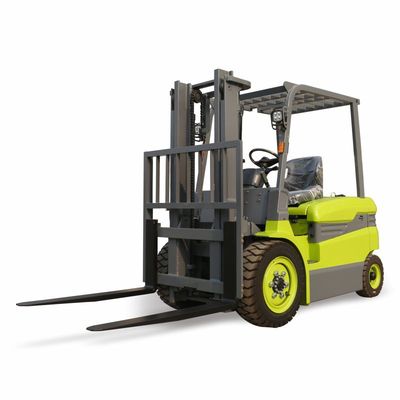
Electric forklifts
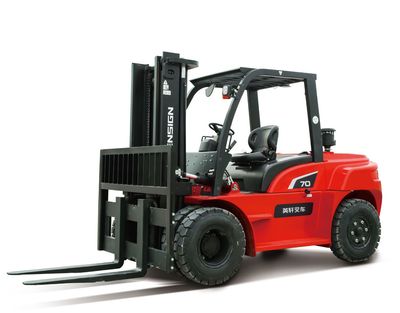
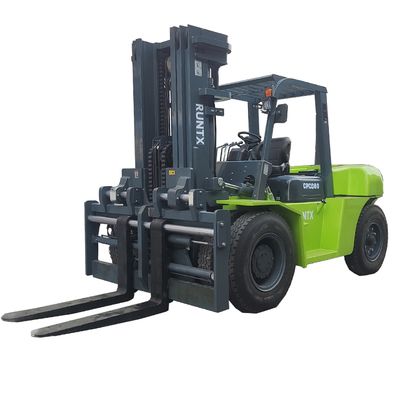
Diesel forklifts
LPG or gasoline forklifts
Rough-terrain forklifts
Reach trucks
Electric stackers
Pallet trucks
Side loaders
Heavy-duty forklifts
Container handling equipment
Forklift attachments
Customized material-handling equipment
Electric forklifts are particularly common in warehouses and indoor facilities because they produce no direct exhaust emissions during operation and generally have lower routine mechanical maintenance requirements than internal-combustion trucks.
Diesel forklifts remain useful for outdoor yards, construction sites, ports, factories, and applications involving rough surfaces or heavy loads.
LPG forklifts can be considered when a business needs a compromise between indoor and outdoor operation, provided the local operating environment and regulations permit their use.
The correct choice depends on the workplace rather than simply the forklift’s advertised specifications.
Start With the Load, Not the Forklift Model
One of the most common purchasing mistakes is choosing a forklift according to the average load.
The better approach is to start with the heaviest realistic load.
Before contacting a manufacturer, record:
Maximum load weight
Typical load weight
Load dimensions
Load center
Pallet dimensions
Maximum lifting height
Required travel distance
Indoor or outdoor operation
Floor condition
Ramp gradients
Working hours per day
Number of shifts
Required attachments
Forklift capacity is not determined by the nameplate capacity alone.
As the load center increases or the load is lifted higher, the available capacity can decrease. Attachments can also affect the remaining lifting capacity.
For example, a buyer may think a 3-ton forklift is automatically suitable for a 3-ton load. That assumption can be wrong if the load is unusually deep, off-center, lifted to a significant height, or handled with a heavy attachment.
A good manufacturer should therefore ask questions about the load before recommending a model.
Electric, Diesel or LPG Forklift?
The power source should be selected according to the operating environment.
Electric Forklift
Electric forklifts are commonly used for:
Warehouses
Distribution centers
Manufacturing facilities
Food-related operations
Indoor logistics
Narrow working areas
Multi-shift warehouse applications
The major advantages are quiet operation, no direct exhaust emissions and relatively simple drivetrain maintenance.
However, buyers need to consider battery capacity, charging infrastructure, charging time, battery replacement, operating temperature, and shift requirements.
Lithium-ion systems can offer faster charging and different operating characteristics from traditional lead-acid batteries, but the initial equipment cost and battery specification need to be evaluated as part of the complete package.
Diesel Forklift
Diesel forklifts are often selected for:
Outdoor yards
Construction
Steel handling
Timber
Ports
Heavy manufacturing
Rough surfaces
Heavy loads
Their main advantage is strong performance under demanding outdoor conditions.
The trade-offs include fuel consumption, engine maintenance, noise and exhaust emissions.
A diesel forklift that is excellent for an outdoor yard may be a poor choice for an enclosed warehouse.
LPG Forklift
LPG forklifts can be useful for operations requiring frequent refueling and a combination of indoor and outdoor work.
However, the suitability of LPG depends on ventilation, local regulations, fuel availability and the specific working environment.
The important point is that there is no universally best forklift power source.
There is only a more appropriate power source for a particular application.
Why Mast Height Matters More Than Many Buyers Expect
A forklift’s maximum lift height is only one part of the mast specification.
The buyer should also consider:
Overall collapsed height
Free lift
Two-stage or three-stage mast
Door clearance
Container clearance
Warehouse ceiling height
Rack height
Load stability at maximum lift
A forklift may have enough lifting height for a warehouse but still be unsuitable because the mast cannot pass through the building entrance when lowered.
This is why manufacturers should receive the buyer’s maximum lift height and lowest overhead clearance, rather than only a request such as “3-ton forklift.”
Counterbalance Forklift vs Warehouse Equipment
Not every warehouse needs a conventional counterbalance forklift.
Depending on the aisle width and load-handling process, a buyer may need:
Counterbalance forklift
Reach truck
Electric stacker
Pallet truck
Narrow-aisle equipment
For example, a conventional counterbalance forklift can be highly productive in open warehouse areas but may waste valuable space in a narrow aisle.
A reach truck or specialized warehouse truck may be more suitable where storage density is a priority.
The manufacturer should evaluate the complete material flow rather than simply sell the highest-capacity machine.
Tires Are Part of the Specification
Tires are sometimes treated as a minor option, but they can significantly affect forklift performance.
Common choices include:
Solid Tires
Suitable for many smooth indoor surfaces.
Advantages include:
Good puncture resistance
Stable operation
Low risk of air loss
Suitable for many warehouse applications
Pneumatic Tires
Often selected for outdoor or uneven surfaces.
Advantages include:
Better ability to absorb surface irregularities
Suitable for yards and rougher ground
Better adaptability to outdoor environments
The manufacturer should know whether the forklift will operate primarily on concrete, asphalt, gravel, ramps, uneven ground, or mixed surfaces before recommending the tire configuration.
Attachments Can Change the Entire Machine Specification
A forklift used only with standard forks is very different from one equipped with specialized attachments.
Possible attachments include:
Side shifter
Fork positioner
Bale clamp
Paper roll clamp
Drum clamp
Carton clamp
Rotator
Telescopic forks
Specialized lifting equipment
An attachment adds weight and can move the effective load center forward.
Therefore, buyers should not ask for the forklift first and the attachment later.
The manufacturer should calculate the complete configuration together.
What Should a Forklift Manufacturer Be Able to Customize?
For wholesale, distribution and OEM projects, customization may include:
Brand name
Paint color
Decals
Load capacity
Mast height
Fork length
Tire configuration
Battery type
Battery capacity
Charger
Controller
Seat
Cab
Attachments
Lighting
Warning systems
Packaging
User manuals
Spare-parts packages
Some manufacturers also offer deeper OEM/ODM cooperation involving control systems, battery configuration, mast design, branding and market-specific product specifications.
However, customization should not be treated as unlimited.
A serious manufacturer should clearly distinguish between:
standard configuration → optional configuration → engineering modification → completely new development.
This distinction prevents misunderstandings about MOQ, tooling cost, development time and production lead time.
How to Compare Forklift Manufacturers
Do not compare factories only by quotation.
Create a comparison sheet containing:
Item
Manufacturer A
Manufacturer B
Manufacturer C
Forklift type
Rated capacity
Load center
Maximum lift height
Mast type
Overall height
Power system
Battery/engine
Tire type
Attachment
Warranty
Spare parts
OEM options
MOQ
Production lead time
Packaging
Export documents
Total price
This comparison often reveals why one quotation appears much cheaper.
One supplier may exclude the charger.
Another may quote a lower-capacity battery.
Another may provide a different mast.
Another may exclude attachments or spare parts.
The lowest initial quotation is therefore not necessarily the lowest total cost.
What Should You Ask a Forklift Factory Before Ordering?
A serious RFQ should include much more than:
“Please send me your forklift price.”
A better inquiry would specify:
Required capacity
Maximum load weight
Load dimensions
Load center
Required lift height
Indoor/outdoor application
Working surface
Working hours per day
Number of shifts
Preferred power source
Tire requirements
Fork dimensions
Attachments
Destination country
Required certification
Quantity
Branding requirements
Spare-parts requirements
Warranty expectations
Target delivery schedule
The more accurately the buyer describes the application, the easier it is for the manufacturer to recommend the correct configuration.
How to Verify a Forklift Manufacturer
Before paying a deposit, verify the factory rather than relying only on product photographs.
Ask for:
Company registration information
Factory address
Production facility photos
Manufacturing equipment
Product specifications
Quality-control process
Test records
Certification documents
Warranty terms
Spare-parts policy
User manual
Packaging details
Previous export experience
Production lead time
Inspection arrangements
If possible, request a video inspection or factory visit.
More importantly, make sure the company you are negotiating with is actually capable of controlling production.
A trading company may be able to supply forklifts, but its production control, customization ability, spare-parts access and after-sales responsibility can be different from those of a manufacturer.
Certifications: Ask for the Actual Documents
Do not simply ask:
“Is the forklift CE certified?”
Ask for the actual certification and determine:
Which model does it cover?
Which configuration does it cover?
Is the certificate current?
Who is the certificate holder?
Does it correspond to the actual manufacturer?
Does it apply to the exact machine being purchased?
Certification requirements can vary according to the destination market and forklift configuration.
For international orders, buyers should determine the applicable requirements before production rather than discovering documentation problems after the machine reaches the port.
Spare Parts Can Matter More Than the Purchase Price
A forklift is a working asset.
If it stops operating, the cost is not limited to a replacement component.
It may also cause:
Warehouse delays
Production interruptions
Labor downtime
Missed deliveries
Emergency repair costs
Customer complaints
For this reason, buyers should ask the manufacturer for a recommended spare-parts list.
Typical spare parts may include:
Filters
Brake components
Hydraulic seals
Forks
Wheels
Electrical components
Controllers
Contactors
Sensors
Chargers
Hydraulic hoses
Mast components
For distributors, a spare-parts strategy should be discussed before the first container is shipped.
Warranty Is Not Enough
A “one-year warranty” sounds useful, but the actual terms matter.
Ask:
Which components are covered?
Are batteries covered?
Are wearing parts excluded?
Who pays for replacement parts?
Who pays shipping?
How are technical problems diagnosed?
Is remote technical support available?
How quickly are spare parts dispatched?
What happens if the machine cannot operate?
A manufacturer with a slightly higher purchase price but better technical support can be cheaper over the entire service life.
OEM Forklift Orders Need More Planning
OEM buyers should not begin by asking only for their logo on the forklift.
For example, a distributor may need the same basic forklift platform with different battery capacities, mast heights, colors and attachments for several customer groups.
That is a product-line planning issue rather than a simple logo customization request.
Manufacturers offering OEM/ODM services commonly support variations such as branding, color, mast configuration, battery type and other specifications.
How Much Does a Forklift Cost?
There is no useful universal forklift price without knowing the configuration.
The final quotation can be affected by:
Rated capacity
Power source
Battery
Motor or engine
Mast
Lift height
Tires
Attachments
Cab
Controller
Charger
Certification
Branding
Packaging
Quantity
Destination
Shipping method
Spare parts
A 2-ton electric forklift and a 2-ton diesel forklift should not be compared purely by purchase price because their energy systems, maintenance requirements and operating environments are different.
For an importer, the better calculation is:
Forklift purchase price + customization + spare parts + packaging + freight + insurance + import costs + local handling + maintenance + energy cost = actual acquisition cost
This is the number that should be compared.
Common Mistakes When Buying From a Forklift Manufacturer
Mistake 1: Choosing Capacity From the Average Load
Always size around the heaviest realistic working load.
Mistake 2: Ignoring Load Center
A deep or irregular load can change the usable capacity.
Mistake 3: Choosing the Wrong Mast
Check both maximum lift height and collapsed height.
Mistake 4: Selecting Power Based Only on Purchase Price
Consider the complete operating environment.
Mistake 5: Forgetting the Battery
For electric forklifts, battery specification can significantly affect performance and operating cost.
Mistake 6: Buying Without Spare Parts
A cheap forklift becomes expensive if critical components are unavailable.
Mistake 7: Treating Certification as a Checkbox
The document should correspond to the actual model and configuration.
Mistake 8: Comparing Incomplete Quotations
Always compare the same configuration.
Mistake 9: Ordering Before Confirming Drawings
For customized forklifts, confirm dimensions, mast, forks, battery, attachments and other key specifications in writing.
Mistake 10: Choosing the Cheapest Factory
The right manufacturer is the one that can provide the required machine consistently, not simply the lowest initial quotation.
Forklift Manufacturer Buyer Checklist
Before placing an order, confirm:
[ ] Rated capacity
[ ] Load center
[ ] Maximum lifting height
[ ] Mast type
[ ] Collapsed mast height
[ ] Fork dimensions
[ ] Tire type
[ ] Power source
[ ] Battery or engine specification
[ ] Charger
[ ] Attachments
[ ] Overall dimensions
[ ] Turning radius
[ ] Working environment
[ ] Certification
[ ] Warranty
[ ] Spare parts
[ ] Packaging
[ ] MOQ
[ ] Lead time
[ ] Payment terms
[ ] Export documentation
[ ] Final inspection
FAQ About Forklift Manufacturers
What type of forklift is best for a warehouse?
Electric forklifts are often suitable for indoor warehouses because they operate quietly and without direct exhaust emissions. However, aisle width, load weight, lift height, floor conditions and operating hours still need to be evaluated.
What forklift capacity should I choose?
Start with the heaviest realistic load, its dimensions and load center. Do not select capacity based only on the average pallet weight.
Is an electric forklift better than a diesel forklift?
Neither is universally better. Electric forklifts are often better suited to indoor applications, while diesel forklifts can be more appropriate for heavy outdoor work and rough conditions.
Can a forklift manufacturer provide OEM service?
Many manufacturers support OEM or ODM programs, including branding, colors, mast configurations, battery options and attachments. The available customization depends on the manufacturer’s engineering and production capabilities.
What should I ask a forklift manufacturer for a quotation?
Provide capacity, load center, lifting height, mast type, power source, tire type, attachment requirements, quantity, destination and branding requirements.
How can I verify a forklift factory?
Check the company’s legal information, factory, production capabilities, quality-control process, certificates, product documentation, warranty, spare-parts support and export experience.
What is more important, forklift price or quality?
For commercial and industrial use, total operating cost is more important than purchase price alone. Downtime, maintenance, energy consumption, spare parts and service can significantly affect the long-term cost.
Final Advice for Forklift Buyers
A forklift is not just a vehicle with two forks.
It is a combination of lifting capacity, load center, stability, hydraulics, mast design, power system, tires, battery or engine, attachments, operator environment and after-sales support.
That is why a good forklift manufacturer should not simply send a price list.
The manufacturer should first understand what you are lifting, where you are lifting it, how high you need to lift it, how often the machine will operate, and what conditions it will face.
For importers and distributors, the best supplier is not necessarily the factory with the lowest quotation. It is the manufacturer that can provide the correct specification, consistent production, reliable documentation, spare-parts support and a realistic long-term service plan.
When comparing forklift manufacturers, compare the complete machine and complete ownership cost, not just the number at the bottom of a quotation.


No reply content