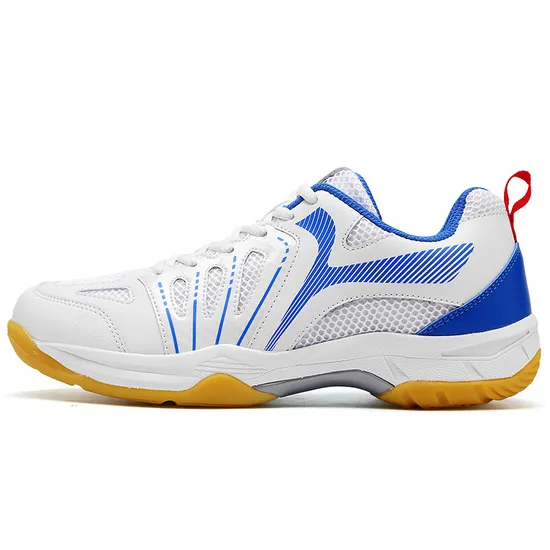
Custom Shoe OEM Manufacturer China | Low MOQ & Fast Sample
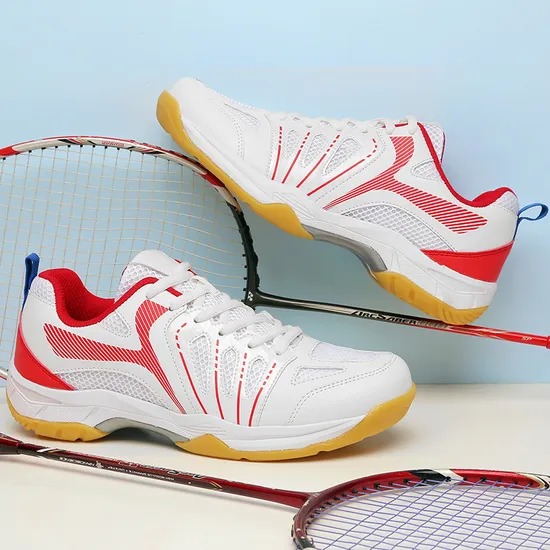
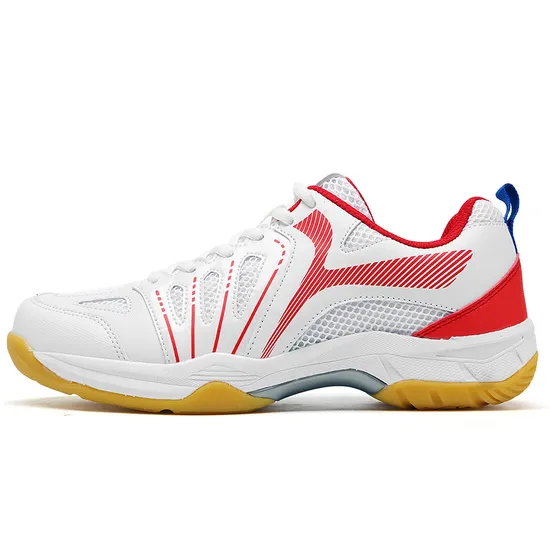
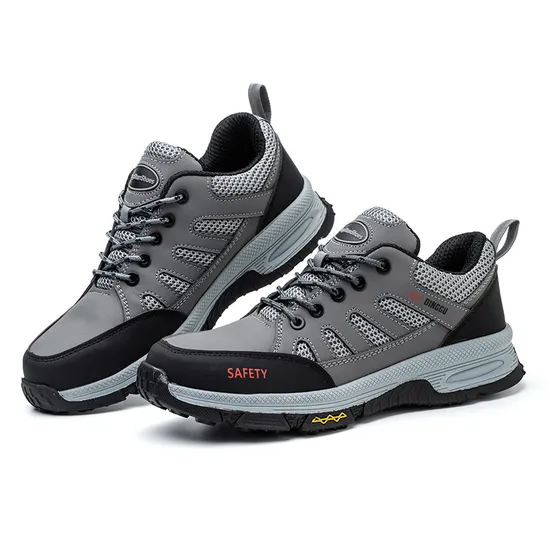
China produces roughly 13 billion pairs of shoes a year — more than 60% of global output — so the question for most overseas buyers is not whether to source here, but which factory to trust. The hard part is that Alibaba, Made-in-China and trade-show booths are crowded with intermediaries. Industry audits routinely find that a large share of “manufacturers” listed online are actually trading companies. This guide walks through a field-tested six-step process to separate real factories from middlemen and lock in a reliable OEM/ODM partner.
Author’s note (based on vlefooena.com/author/20/): For a practical look at what a full-service supplier offers — from casual and athletic shoes to hiking boots and children’s footwear, plus OEM/ODM and private label — see the overview on the manufacturer profile. We’ll link to specific service pages throughout.
Step 1: Define your requirements before you contact anyone
The single biggest sourcing mistake is starting the search before the brief is finished. A vague inquiry (“I want to make sneakers, around $20”) forces factories to guess — and their quotes become useless to compare.
Pin down the following before you send a single email:
| Item | What to specify |
|---|---|
| Product | Category, construction method, target retail price and FOB budget |
| Volume | Annual projection + first-order quantity (drives MOQ fit) |
| Materials | Upper, outsole, insole, with target specs and Pantone codes |
| Compliance | Target markets and required testing (EU / US / kids’ standards) |
| Deliverables | Tech pack, sizing chart, logo/label/box requirements |
OEM vs ODM matters here. If you already have designs and a tech pack, you need OEM (the factory builds to your spec). If you only have a market idea, you need ODM (the factory develops the style for you). For a clear breakdown of the two models and the customization options each unlocks, see the Custom Shoe Manufacturing – OEM/ODM Supplier page.
💡 Tip: include a tech pack even if it’s rough. A factory that can turn a sketch into manufacturable engineering drawings is an OEM partner; one that just nods and quotes is a job shop.
Step 2: Build a shortlist of 5–10 factories through multiple channels
Don’t rely on one platform. Combine these sources:
-
B2B platforms — Alibaba, Made-in-China, Global Sources (expect to filter heavily)
-
Trade shows — Canton Fair, Jinjiang International Shoe Fair, ACLE
-
Industry referrals & LinkedIn — often the highest-quality leads
-
Google / sourcing directories — for background checks
As you screen profiles, look for: factory age (5+ years is a reasonable floor), real production photos (not catalog stock), named brand references, relevant certifications, and an English-speaking sales contact who answers technical questions.
The four big production hubs are not interchangeable — matching your category to the cluster sharply improves results:
-
Fujian (Jinjiang / Putian) — sports, running, hiking, outdoor; strong mass-production scale and lower-cost ODM
-
Guangdong (Dongguan / Foshan / Huizhou) — premium leather dress shoes, fashion footwear, precise craftsmanship
-
Zhejiang (Wenzhou) — genuine-leather dress shoes, flexible small-batch MOQs
-
Shandong (Qingdao) — safety/work boots and certified footwear
For athletic and performance categories, start with the Custom Athletic Shoes – Private Label OEM/ODM supplier page; for everyday lifestyle and fashion, the Premium Lifestyle Sneakers Manufacturer and Sports & Casual Source Factory pages give a sense of capability range.
Step 3: Vet the factory — the 5-point audit that filters out middlemen
This is where most buyers skip steps and pay for it later. Quoting from a verified sourcing benchmark: “68% of ‘factories’ on Alibaba are traders” — and traders typically add 15–40% margin while giving you a single lump-sum price with no cost breakdown.
Run these checks in order:
1. Legal legitimacy. Request the business license (营业执照) and verify it through China’s National Enterprise Credit Information system (or Qichacha / Tianyancha). The registered business scope must explicitly include shoe manufacturing (制鞋) — not just wholesale or trading. Cross-check that company name, website and bank account all match exactly.
2. Physical-asset proof. Ask for a live, unscheduled video walkthrough of the workshop during working hours — not a pre-arranged tour. A genuine factory will show you the cutting room, stitching floor, sole-pressing line, QC station, material warehouse and packing area. Shell traders will deflect or only show an office. Asking for a recent industrial electricity bill is a surprisingly effective tell: a real production factory has meaningful power costs; a trading office shows only a few hundred RMB.
3. Capability stress test. A good manufacturer asks intelligent clarifying questions about your design. Ask yours: “What’s your optimal injection pressure for EVA midsoles?” or “How do you control stitch density on the upper?” — engineers answer in specifics; traders get vague. Demand itemized cost sheets (material / labor / overhead / mold), monthly capacity per line, and a no-subcontracting clause in the contract. Mold ownership must be stated in writing — it’s one of the two most common sources of quality failure in this industry.
4. Export history. Ask for B/L, packing lists or customs references for past shipments of the same category. Stable exports to your target region over 2+ years is the standard you want. Verify certifications (ISO 9001, BSCI/Sedex, REACH, CPSIA for children’s shoes) against the issuing body’s database — never trust a scanned copy alone.
5. Compliance & labor. For EU: BSCI or Sedex audit plus REACH. For the US: CPSC, and Proposition 65 for California. Children’s footwear requires CPSIA. Safety/work shoes need CE EN ISO 20345. The Custom Shoes Manufacturing Guide (Private Label, OEM, Made-to-Order) page outlines how a structured supplier handles compliance, private labeling and material selection across categories.
Step 4: Evaluate samples like your business depends on it — because it does
Never commit to bulk without a physical sample. Many factories make beautiful prototypes and substitute materials in mass production; if corners are cut at sample stage, they will not improve in production.
Order a development sample first, then a sales sample (the “golden sample”) that becomes your quality reference. Evaluate across five dimensions:
-
Construction — stitch density and consistency, clean glue lines, no excess at the sole joint
-
Materials — match to spec, no off-odors (a chemical-smell red flag), correct leather/PU grade
-
Bonding & durability — sole adhesion, flex testing, abrasion resistance (SGS/BV lab test if needed)
-
Fit & comfort — last shape, sizing against your chart, midsole firmness, flexion feel
-
Brand fidelity — logo placement, Pantone color accuracy, box and label details
Typical sampling: 3–7 days for ODM stock-mold styles, 7–15 days for standard OEM, 10–20 days when a new outsole mold is involved. Stock-mold ODM is the fastest way to test a market because there is no mold fee.
For sport-specific needs, the spec tables on the Elite Sports Sneakers Manufacturer and Professional Basketball Sneakers Manufacturer pages are useful references for the upper / midsole / outsole / size-range decisions you’ll need to lock in.
Step 5: Negotiate terms — and lock the BOM before production starts
Once the sample is approved, formalize everything. Standard terms in this industry are 30% deposit / 70% balance against the Bill of Lading copy; be wary of anyone demanding 100% upfront or offering zero deposit with no track record. Only pay into a corporate bank account — never a personal WeChat or Alipay account, regardless of any discount.
Before the first cut, write-lock the Bill of Materials (BOM) including:
-
Exact materials and +/- tolerances (e.g. leather grade, mesh type, EVA density)
-
Pantone colors and size grading
-
AQL standard (AQL 2.5 / 4.0 is the common choice)
-
Mold fees, last revisions and testing surcharges (all fixed up front)
-
No-subcontracting clause and mold-ownership terms
MOQ and lead time — real numbers to budget with:
| Scenario | Typical MOQ | Bulk lead time* |
|---|---|---|
| Standard/sport sneakers | 300–500 pairs/design | 15–25 days |
| Leather & casual shoes | 200–300 pairs/design | 25–40 days |
| New custom outsole mold | 800–1,200 pairs | up to 60 days |
| Premium / fully custom | 300–500+ pairs | 25–40 days |
*Lead time starts after sample approval + deposit. Add 15–30 days during peak season (Aug–Dec) — plan launch timelines accordingly.
For an export-ready baseline across categories, the Premium China Shoes – Customizable, Export-Ready Footwear page summarizes materials, production flow, QC and international shipping in one place.
Step 6: Manage production and QC through to shipment
With terms signed, your job shifts to visibility. A structured factory assigns a project manager, shares a production schedule, and sends progress photos/video; this transparency is as important as the manufacturing itself.
Insist on the three inspection gates:
-
Pre-production inspection (PPI) — materials and golden sample confirmed
-
During-production inspection (DUPRO) — stitching, glue, sole bonding, logo placement checked while there’s still time to fix them
-
Final random inspection (PSI) — quantity, packing, labeling, AQL sampling
Only release the 70% balance after the PSI report is clean. Pair this with proper Incoterms (FOB is standard; CIF if you want freight included) and a complete document pack: commercial invoice, packing list, CO, test reports and carton markings matched to your destination country.
The One-Stop China Footwear Factory for Custom & Wholesale Shoes page covers how a full-service supplier structures OEM/ODM, quality control and export logistics under one roof — useful as a checklist against your own vendor.
Red flags — walk away immediately if you see these
-
🚩 Refuses to share factory GPS coordinates or blocks unscheduled video
-
🚩 “Sample made here, bulk made there” — facility switching = most quality deviations
-
🚩 Unwilling to give an itemized cost breakdown (“factory price” is opaque)
-
🚩 Quotes differ 15–40% from peers with no explanation
-
🚩 Requests payment to a personal account, or full payment up front
-
🚩 Business license scope lists only trading/wholesale
-
🚩 Deflects technical questions to “our partners”
-
🚩 Certificates supplied only as scans, no verifiable certificate number
Putting it together: a reliable sourcing workflow for 2026
-
Finish your tech pack and decide OEM or ODM
-
Shortlist 5–10 factories across the right clusters (Fujian / Guangdong / Zhejiang / Shandong)
-
Run the 5-point audit — license, live video, capability Q&A, export proof, certifications
-
Order and rigorously evaluate two rounds of samples
-
Lock the BOM, AQL level, mold ownership and payment terms in writing
-
Monitor PPI → DUPRO → PSI, release final payment only after clean PSI
The cheapest quote is rarely the cheapest outcome. A professional OEM partner protects your brand equity through consistent sizing, documented QC, IP confidentiality and reliable lead times — the things that actually determine whether your launch succeeds.
Ready to start sourcing? Browse the verified footwear categories and request a tailored quote:
-
🏃 Athletic / Running / Basketball — Custom Athletic Shoes (Private Label OEM/ODM)
-
👟 Lifestyle Sneakers — Premium Lifestyle Sneakers for Global Brands
-
🥾 Hiking & Outdoor — High-Quality Shoe Supplier (Private Label & Bulk)
-
👠 Women’s & Fashion Footwear — Shoe Manufacturer for Global Brands (Custom + Global Shipping)
-
🧒 Children’s Footwear — Sports & Casual Source Factory (OEM/ODM)
-
📦 Full capability overview — Custom Shoe Manufacturing (OEM/ODM), Custom Shoes Manufacturing Guide, One-Stop Footwear Factory, Premium China Shoes
Send us your design reference, target market, quantity, logo artwork and packaging requirements — we’ll prepare a tailored production plan and wholesale pricing within one business day.


No reply content