
China Diesel Generator Manufacturer

In the procurement of capital equipment like diesel generators, “When can I get it?” is just as important as “How much does it cost?” International buyers often face unexpected delays because they failed to clarify the nuances of Lead Time, Minimum Order Quantity (MOQ), and Customization with their Chinese suppliers.
Understanding these factors is crucial for project planning, especially when dealing with ocean freight schedules and site commissioning deadlines. Here is what you need to know to keep your project on track.
1. Decoding Lead Time: It’s Not Just Assembly
Suppliers often quote a “production time” of 10 to 15 days. However, this rarely includes the total time required to get the unit ready for shipment. You must break the timeline down into three phases:
-
Sourcing Phase (The Hidden Variable): If the factory doesn’t have the specific Cummins or Perkins engine in stock, they must order it from the engine manufacturer. This can add 7–10 days to the lead time.
-
Assembly & Testing: Standard open-frame generators typically take 7–15 days. Silent canopies or weather-proof enclosures require additional fabrication and painting, pushing this to 15–25 days.
-
Pre-Shipment Inspection (PSI): If you hire a third party (like SGS) for a pre-shipment check, add another 2–3 days.
Pro Tip: Always ask: “Is this lead time contingent upon receiving the deposit and confirmed technical drawings?” Lead times only start ticking once payment is cleared and specs are locked.
2. MOQ: When One Unit is Too Few
Most buyers assume they can order a single generator. While many factories accept a MOQ of 1 unit for standard models, this changes drastically with customization.
-
Standard Units: MOQ is usually 1 set.
-
Custom Voltages/Frequencies: If you require a non-standard voltage (e.g., 440V instead of 415V) or a specific frequency (60Hz instead of 50Hz), the factory may require an MOQ of 3 to 5 sets to justify changing the production line settings.
-
OEM Branding: If you want your own logo on the canopy and controller (OEM service), some factories require an MOQ of 5 to 10 sets per quarter to cover the cost of molds and printing plates.
3. The Customization Maze: Voltage, Frequency, and More
China’s domestic market primarily uses 380V/400V / 50Hz. If you are importing to the Americas (USA, Brazil, Chile), you need 208V/480V / 60Hz. If you are going to specific regions in the Middle East, you might need 415V / 50Hz.
-
Frequency Change (50Hz vs. 60Hz): This is not just a software setting. It affects the engine speed (1500 rpm vs. 1800 rpm) and the size of the alternator windings. A 50Hz generator derates significantly when forced to run at 60Hz.
-
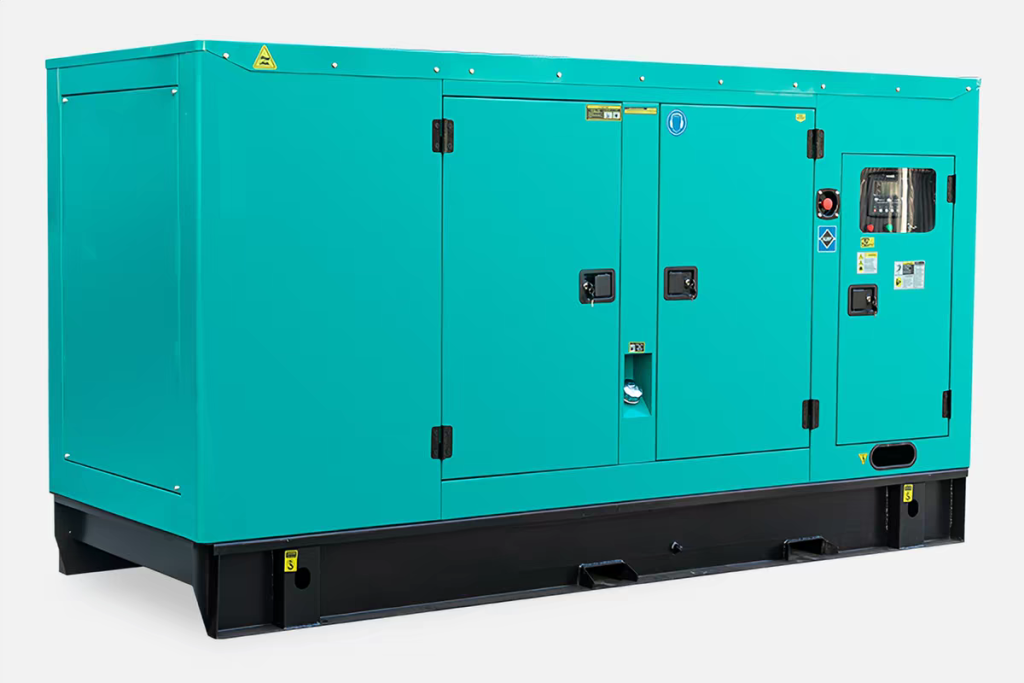
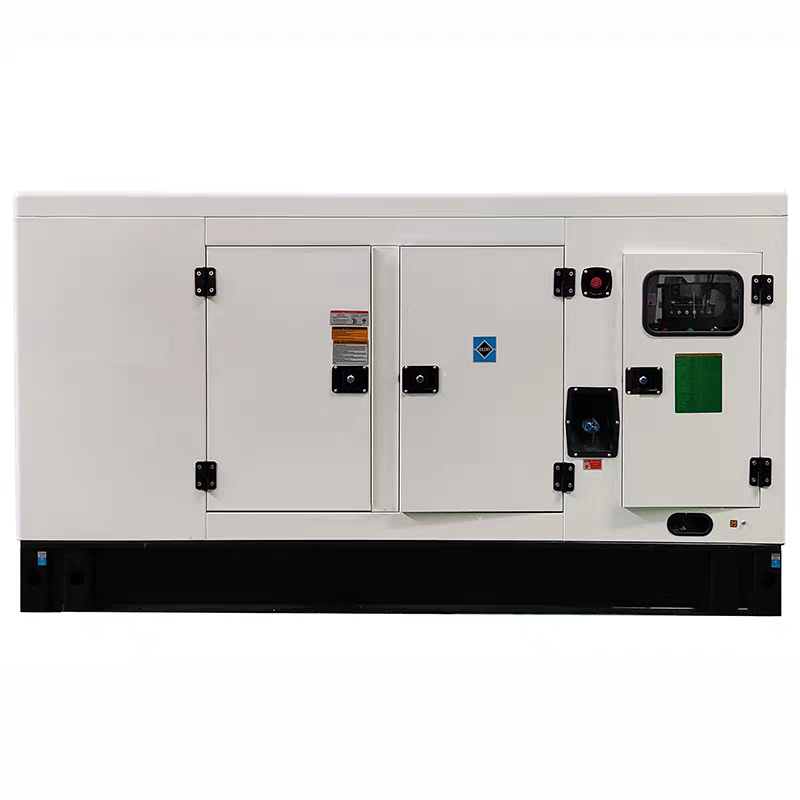
Silent Canopies: Do you need a trailer-mounted mobile generator? Or a sound-attenuated canopy rated at 65dB @ 7 meters for a hospital or residential area?
-
Containerized Units: For large-scale mining or data center projects, 20ft or 40ft High Cube containers are common. These require significant engineering for cooling and exhaust systems and typically have a lead time of 30–45 days.
4. Stock Availability: The “Golden” Models
To save time, ask your supplier: “Which models do you keep in stock?”
Most large Chinese manufacturers maintain stock of their best-selling models, such as:
-
20kVA, 50kVA, 100kVA, and 200kVA open/silent sets with standard voltages.If your project timeline is tight, opting for a stock model can reduce the lead time to just 3–5 days for inspection and packing.
5. The Logistics Buffer
Never schedule your site installation date based on the factory’s completion date. Ocean freight from China to the U.S. or Europe typically takes 30–45 days. To Africa or South America, it can take 45–60 days.
Always build a buffer of at least two weeks between the estimated time of arrival (ETA) and your project deadline.
Conclusion
Effective supply chain management requires looking beyond the price tag. By clarifying whether a unit is built-to-order or in-stock, understanding the impact of voltage customization on MOQ, and accounting for ocean freight transit times, you prevent costly downtime. Always treat the “Lead Time” as a flexible estimate rather than a hard promise—and get it in writing.


No reply content