


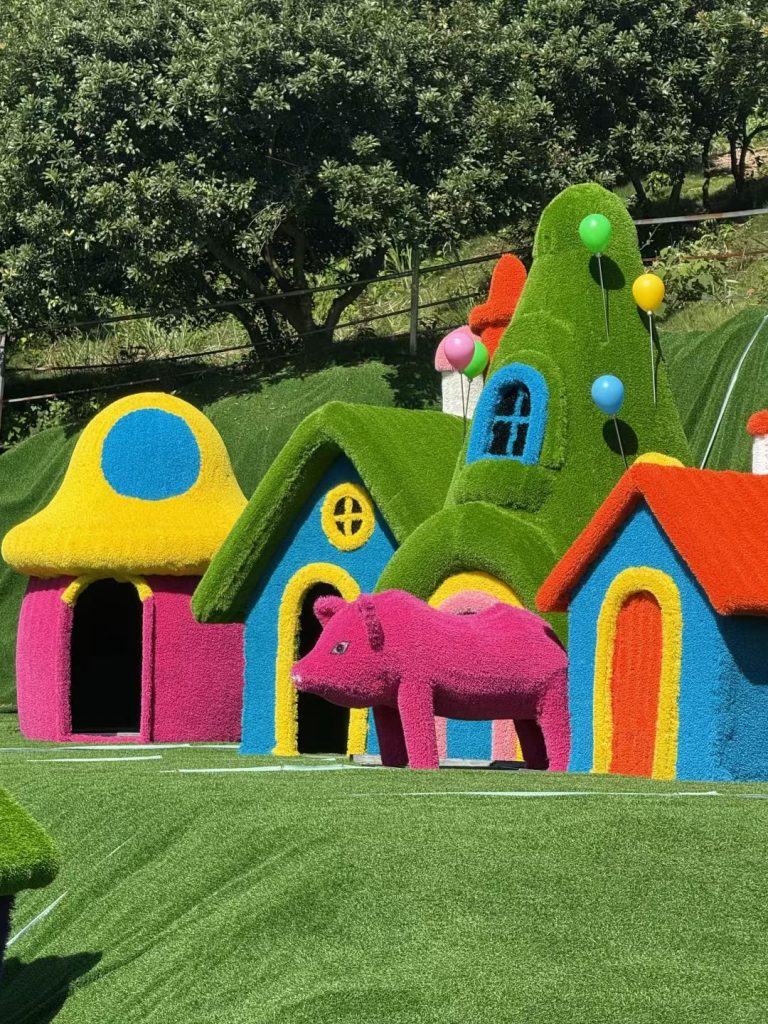

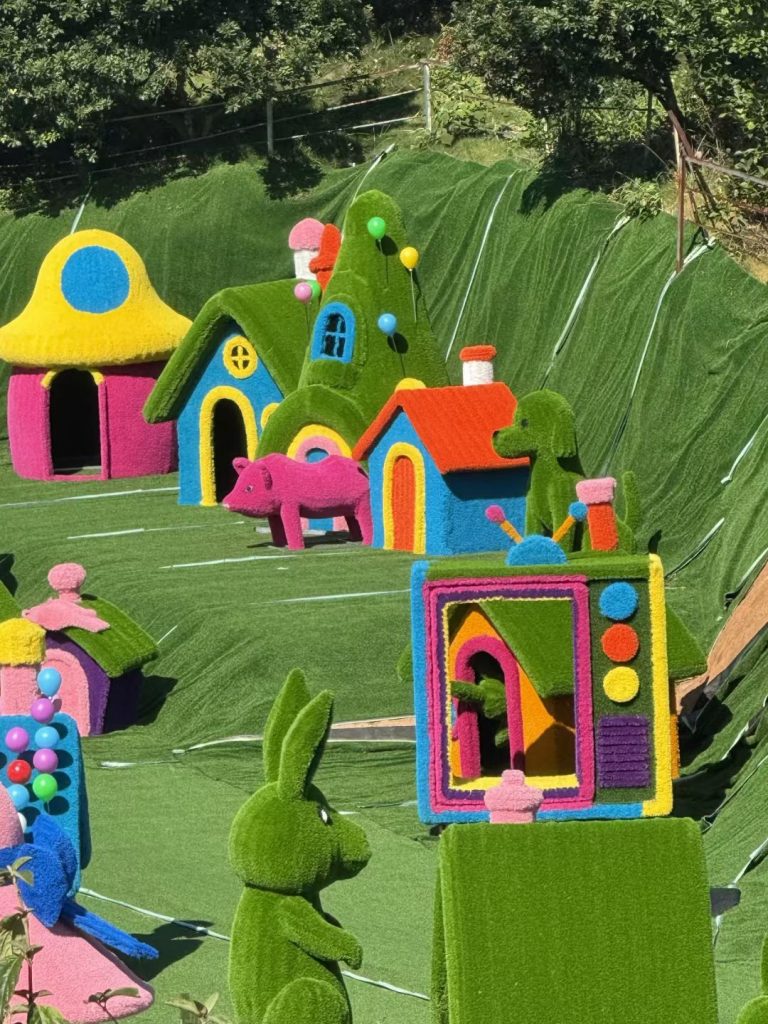
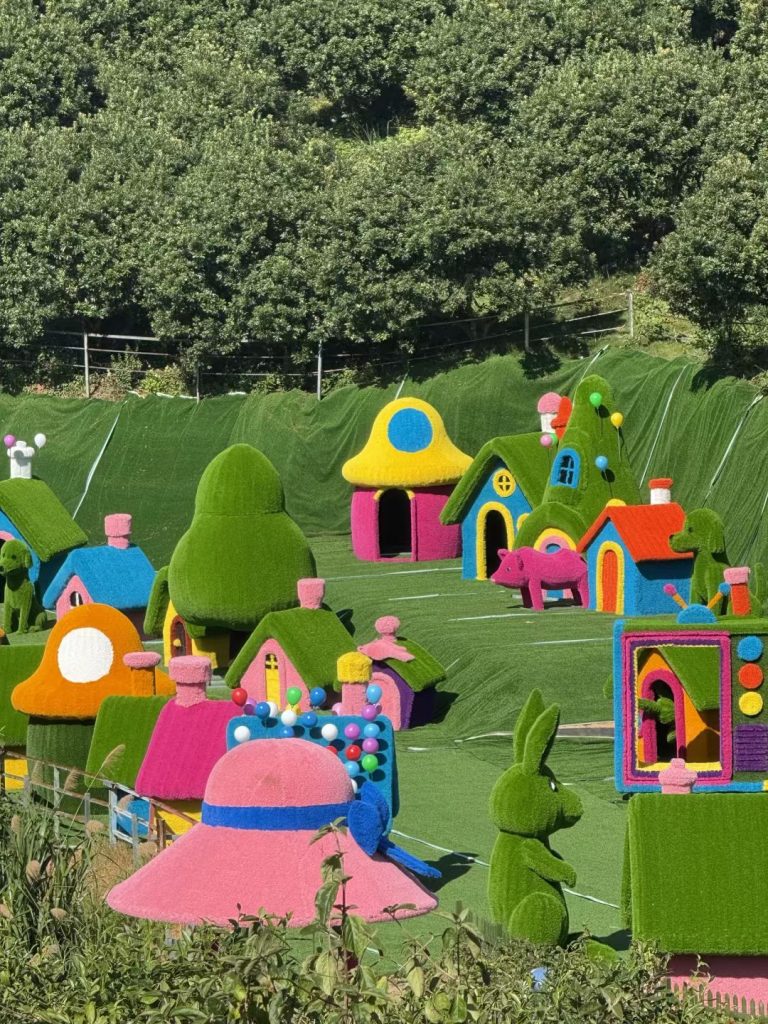

China has emerged as a global production hub for oversized decorative art installations. From commercial plazas and luxury hotels to theme parks and municipal projects, international buyers increasingly rely on Chinese manufacturers for custom large-scale sculptures, engineered decorative structures, and export-ready monumental art pieces.
This comprehensive guide explains how large decorative installations are designed, engineered, manufactured, inspected, and exported — helping global importers make informed sourcing decisions.
1. The Rise of Large-Scale Decorative Manufacturing in China
Over the last two decades, China’s decorative craft industry has transformed from small artisan workshops into industrial-scale fabrication ecosystems capable of producing:
- 3–10 meter fiberglass sculptures
- Steel-framed commercial art installations
- Giant seasonal decorations
- Landscape statement pieces
- Themed entertainment park structures
This evolution was driven by three major factors:
- Export demand growth
- Advancements in composite materials
- Integration of engineering and traditional craftsmanship
Today, the industry combines art, structural engineering, and export logistics into one streamlined process.
2. Core Materials Used in Mega Decorative Installations
2.1 Fiberglass Reinforced Plastic (FRP)
FRP remains the dominant material for large installations due to:
- Lightweight properties
- Corrosion resistance
- Structural adaptability
- Long-term outdoor durability
It is particularly suitable for complex shapes such as cartoon figures, animals, and abstract sculptures.
2.2 Reinforced Steel Structures
For oversized projects, internal steel frameworks are essential.
These provide:
- Load-bearing strength
- Wind resistance
- Structural longevity
- Stability during transportation
Engineering calculations are typically performed before frame fabrication.
2.3 Resin and Polyresin Applications
Resin is commonly used for:
- Medium-large decorative statues
- Detailed surface textures
- Indoor installations
Its strength lies in precision molding and surface detail reproduction.
2.4 Stainless Steel & Corten Steel
Public art projects often require:
- Mirror-polished stainless steel
- Brushed metal finishes
- Weathering steel (Corten)
These materials offer a premium architectural appearance and long service life.
3. Step-by-Step Production Workflow
Understanding the production pipeline helps buyers evaluate supplier professionalism.
3.1 Concept & Engineering Design
Clients provide:
- Design drawings
- 3D models
- Concept art
Manufacturers then:
- Convert files into structural drafts
- Analyze weight distribution
- Calculate reinforcement requirements
- Simulate assembly feasibility
Large projects require engineering validation before mold production begins.
3.2 Prototype Development
Before mass production:
- Clay modeling or CNC foam carving
- Surface detailing refinement
- Client approval
This stage ensures dimensional accuracy and artistic consistency.
3.3 Mold Fabrication
High-quality molds are critical.
Steps include:
- Silicone mold layering
- Fiberglass shell reinforcement
- Frame stabilization
Durable molds ensure repeat production consistency and surface precision.
3.4 Structural Assembly
Oversized sculptures often include:
- Internal steel skeleton welding
- Modular segment construction
- Bolt connection systems
For projects exceeding container size limits, modular engineering is essential.
3.5 Surface Treatment & Finishing
Professional finishing involves:
- Multi-layer sanding
- Primer coating
- UV-resistant paint
- Protective sealant application
For outdoor installations, weather-resistant coatings are mandatory.
4. Quality Control Systems
Reliable Chinese manufacturers implement multi-level inspection systems.
4.1 Structural Testing
- Weld integrity check
- Load simulation
- Stability testing
4.2 Surface Inspection
- Paint consistency
- Crack detection
- Texture uniformity
4.3 Pre-Shipment Inspection
- Dimensional verification
- Assembly test
- Packaging validation
Professional factories document inspection processes to minimize international shipping risk.
5. Customization & Project Flexibility
Large decorative manufacturers typically support:
- Custom size scaling
- Brand logo integration
- Corporate color matching
- Lighting system installation
- Interactive feature integration
OEM and project-based production are standard practices in this industry.
6. Packaging & International Logistics
Oversized decorative products require specialized export handling.
Common solutions include:
- Wooden export crates
- Steel base reinforcement
- Shock-absorbing foam layers
- Detachable modular components
Shipping options:
- Full Container Load (FCL)
- Flat rack containers
- Break bulk cargo
Proper packaging significantly reduces damage claims.
7. Common Buyer Challenges
International buyers often face:
- Inconsistent surface quality
- Structural misalignment
- Poor communication
- Inadequate packaging
These issues can be minimized by:
- Requesting detailed production photos
- Approving samples before bulk orders
- Signing clear engineering specifications
- Conducting third-party inspections
8. Cost Structure Overview
Large installation pricing typically includes:
- Design & engineering cost
- Mold creation fee
- Material cost
- Labor & finishing
- Packaging
- Freight
Oversized custom projects are priced based on:
- Height & volume
- Structural complexity
- Surface detailing requirements
- Coating type
Price transparency improves long-term cooperation.
9. Global Market Applications
Chinese mega decorative installations are widely used in:
- Shopping malls
- Theme parks
- Hotel lobbies
- Exhibition centers
- Real estate developments
- Municipal public spaces
Increasing demand comes from commercial environments seeking distinctive visual identity.
10. Industry Trends
Trend 1: Sustainable Materials
Eco-friendly coatings and recyclable composites are becoming more common.
Trend 2: Modular Design
Segmented structures reduce shipping cost and simplify on-site assembly.
Trend 3: Smart Integration
LED systems and motion sensors enhance interactive experiences.
Trend 4: Large-Scale Seasonal Installations
Retail and entertainment venues invest heavily in seasonal thematic decor.
11. How to Select a Reliable Manufacturing Partner
When evaluating suppliers, consider:
- Workshop scale
- Engineering capability
- Export experience
- Communication efficiency
- Project portfolio
Ask for:
- Real project case photos
- Production videos
- Material test reports
- Sample evaluation
A reliable partner should demonstrate both artistic skill and engineering discipline.
12. Long-Term Strategic Cooperation
For distributors, contractors, and developers:
- Build annual purchase agreements
- Develop exclusive molds
- Standardize quality requirements
- Plan seasonal production schedules
Stable partnerships reduce risk and improve cost efficiency.
Conclusion
China’s large decorative installation manufacturing industry represents a fusion of craftsmanship, structural engineering, and global logistics expertise. For international buyers, the key to successful sourcing lies in selecting a manufacturer that combines artistic creativity with industrial reliability.
By understanding material options, structural requirements, quality systems, and export logistics, buyers can confidently manage large-scale decorative projects while maintaining cost control and consistent quality.
FAQ
Q1: What is the average lead time for large installations?
Typically 30–60 days depending on size and complexity.
Q2: Can oversized sculptures be customized with lighting?
Yes, LED systems and internal wiring can be integrated during production.
Q3: Are outdoor sculptures weather-resistant?
With UV-protective coatings and proper structural reinforcement, they can last many years.
Q4: What is the safest way to ship oversized pieces?
Modular design with reinforced wooden crate packaging is recommended.
Q5: Can I request exclusive design molds?
Yes, most professional manufacturers support exclusive mold agreements.


No reply content