
Finding a garlic supplier is easy.
Finding a supplier that can consistently deliver the same garlic size, quality, packaging, quantity and food-safety standard is much harder.
For an importer, wholesaler, supermarket distributor or food-processing company, buying garlic is not simply a matter of asking for the lowest price per kilogram. Fresh garlic is an agricultural product, so quality changes with harvest season, storage conditions, sorting standards and market demand. The supplier’s ability to control these variables can have a much greater effect on your final cost than the initial quotation.
A serious garlic purchasing decision should therefore start with a clear specification.
Before asking for a price, determine:
-
Fresh, peeled or dehydrated garlic
-
Garlic variety
-
Bulb size
-
Quality grade
-
Origin
-
Harvest or crop year
-
Quantity
-
Packaging
-
Destination country and port
-
Food-safety requirements
-
Required certificates
-
Delivery schedule
The more specific the requirement, the easier it is to identify whether a garlic supplier can actually meet it.
A Garlic Supplier Is Not Necessarily a Garlic Farm
One of the first things buyers should understand is that the term “garlic supplier” can describe several different businesses.
A supplier may be:
-
A garlic farmer
-
A farming cooperative
-
A processing factory
-
A cold-storage operator
-
An exporter
-
A trading company
-
An integrated agricultural supplier
These business models are not automatically better or worse.
A farmer may have excellent access to raw garlic but limited export experience.
A processing factory may have better sorting, grading and packing equipment.
An exporter may have stronger documentation and logistics capabilities.
A trading company may be able to source different grades from multiple producers.
The important question is not simply:
“Are you a factory?”
The better question is:
“Where does this specific garlic come from, where is it stored, where is it processed, and who controls the quality before shipment?”
That question gives you a much clearer picture of the actual supply chain.
Start With Garlic Specifications Instead of Price
A quotation such as:
Fresh garlic — $X per kg
does not provide enough information to make a purchasing decision.
Two products can both be called “fresh garlic” while having very different commercial values.
Your RFQ should specify:
Product: Fresh Garlic
Variety: White / Pure White / Purple / other
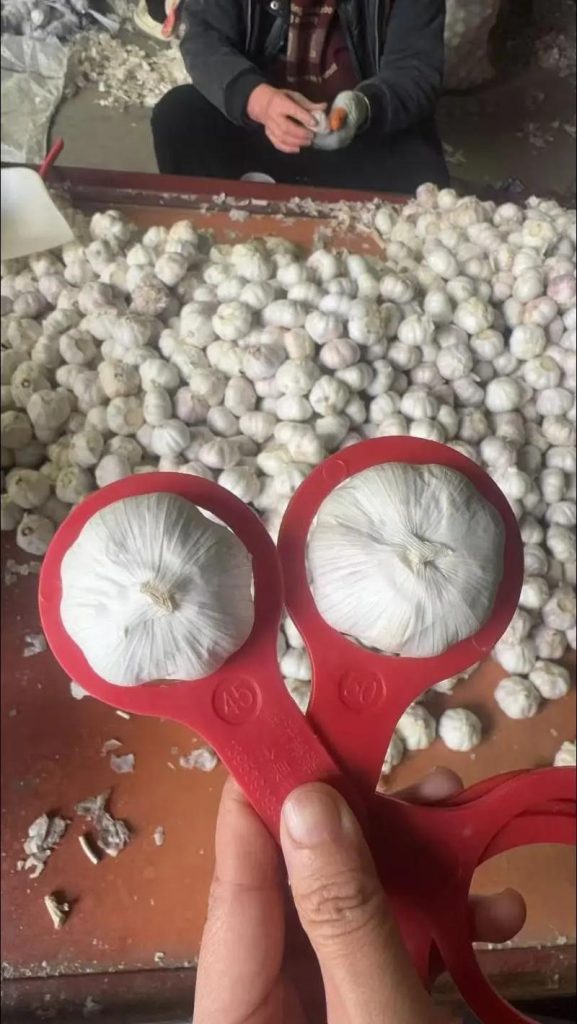
Size: 4.5 cm, 5.0 cm, 5.5 cm, 6.0 cm, etc.
Grade: Export grade
Crop: Current crop / specified crop
Packing: Mesh bag / carton / customized
Net weight: Required weight per package
Quantity: Required metric tons
Destination: Port and country
Incoterm: FOB / CFR / CIF
Inspection: Pre-shipment inspection if required
Documents: Phytosanitary certificate and other destination-market documents
Garlic suppliers commonly grade fresh bulbs according to diameter, with commercial offerings including different size ranges.
Once these specifications are fixed, supplier quotations become much easier to compare.
Garlic Size Can Change the Buying Decision
Size is one of the most visible differences between garlic products.
Depending on the supplier and market, fresh garlic may be sorted into size categories such as:
-
4.5 cm
-
5.0 cm
-
5.5 cm
-
6.0 cm
-
6.5 cm and above
Larger bulbs generally have a different market position from smaller bulbs.
But bigger is not automatically better.
A food-processing customer may prioritize:
-
Yield
-
Peeling efficiency
-
Consistent cloves
-
Price per kilogram
A supermarket buyer may care more about:
-
Bulb appearance
-
Size consistency
-
Clean outer skin
-
White color
-
Lack of defects
A restaurant distributor may have completely different requirements.
Therefore, don’t tell the supplier only:
“Send me the best garlic.”
Tell the supplier what the garlic needs to accomplish in your business.
Fresh Garlic, Peeled Garlic and Dehydrated Garlic Are Different Products
A buyer searching for a “garlic supplier” may actually need a completely different type of product.
Fresh Garlic
Whole bulbs with the skin intact.
Typical buyers include:
-
Wholesalers
-
Supermarkets
-
Produce distributors
-
Restaurants
-
Foodservice companies
Peeled Garlic
Garlic cloves are mechanically or manually peeled and usually require controlled packaging and cold-chain handling.
This format can be attractive to:
-
Foodservice companies
-
Restaurants
-
Food factories
-
Ready-to-cook food manufacturers
Dehydrated Garlic
This can include:
-
Garlic flakes
-
Garlic granules
-
Garlic powder
It is commonly used by seasoning manufacturers, food processors and industrial ingredient buyers.
Dehydrated garlic has a different specification system from fresh bulbs, including parameters such as particle size, moisture and packaging. Some suppliers specify moisture limits around 6% for dehydrated products.
Do not compare the price of these products as if they were interchangeable.
What Makes Fresh Garlic Acceptable for Export?
Appearance matters, but it is not the only quality factor.
International standards for fresh garlic emphasize characteristics such as sound and firm bulbs, cleanliness, freedom from visible mold, abnormal moisture, foreign odor and visible sprouting, as well as the ability of the product to withstand transportation and handling.
When inspecting a sample, buyers should look at:
-
Bulb size consistency
-
Outer skin condition
-
Mold
-
Sprouting
-
Mechanical damage
-
Rotten cloves
-
Excess moisture
-
Foreign material
-
Unusual odor
-
Root trimming
-
Stem condition
-
Clove development
A photograph is useful for an initial evaluation, but it should not replace a physical sample or pre-shipment inspection for a large order.
Garlic Storage Is a Major Part of Supplier Quality
Harvest timing does not necessarily determine when you can buy garlic.
A professional garlic supply chain may combine new-crop production with controlled storage to provide product outside the main harvest period.
This matters because garlic quality can change during storage.
Ask the supplier:
-
When was the garlic harvested?
-
Where has it been stored?
-
How long has it been stored?
-
What storage conditions are used?
-
Is the stock from one crop or mixed crops?
-
How is sprouting controlled?
-
How is moisture loss monitored?
-
Is the garlic sorted again before shipment?
Some Chinese garlic suppliers in Shandong describe controlled cold-storage systems and year-round supply programs.
However, buyers should verify the actual storage arrangement rather than accepting a generic “year-round supply” statement.
China Garlic Sourcing: Why Origin Matters
If you are sourcing garlic from China, origin can be commercially important.
Shandong is one of China’s major garlic-producing and processing regions, with Jinxiang being particularly prominent in the garlic trade. Current supplier and industry sources describe extensive local processing, storage and export infrastructure in the region.
For an importer, the advantage of sourcing from a concentrated production area is not simply geographical.
A mature garlic-producing region can offer access to:
-
Multiple growers
-
Sorting facilities
-
Processing factories
-
Cold storage
-
Packaging suppliers
-
Exporters
-
Inspection services
-
Port logistics
This can make it easier to compare different grades and maintain supply when market conditions change.
Don’t Choose a Garlic Supplier Based on One Sample
A beautiful sample does not prove that the supplier can deliver a consistent container.
This is one of the most important differences between sample purchasing and commercial purchasing.
For a large order, ask how the supplier controls the goods between:
Farm → Harvest → Storage → Sorting → Grading → Packing → Inspection → Container Loading
You want to know where quality can change.
For example, if the approved sample contains mostly 6.0 cm garlic but the production shipment contains a much larger percentage of smaller bulbs, you have a specification-control problem.
The purchase contract should therefore define measurable quality requirements instead of relying on phrases such as “high quality” or “premium garlic.”
Food Safety Should Be Checked Before the Price Is Finalized
Garlic is a food product, so import compliance should be considered before placing the order.
Depending on the destination market and product type, buyers may need documentation related to:
-
Phytosanitary requirements
-
Pesticide residue compliance
-
Certificate of origin
-
Health or food-safety documentation
-
Packing information
-
Traceability
-
Organic certification, if claimed
-
Other destination-specific requirements
Do not assume that a certificate held by a supplier automatically covers every product or every shipment.
Ask:
Does this document apply to the exact product, facility and shipment we are purchasing?
This is particularly important for buyers supplying supermarkets, food manufacturers and regulated markets.
Food-safety failures can result in rejected shipments, destruction, return or significant financial loss. For example, Taiwan’s food-safety authority publishes border inspection cases involving imported fresh garlic where pesticide residues exceeded permitted limits.
For serious import programs, food-safety verification should happen before the purchase order—not after the container reaches the destination.
Packaging Is Part of the Product Specification
Garlic packaging should be selected according to the market and logistics requirements.
Common formats can include:
-
Mesh bags
-
Cartons
-
Bulk packing
-
Private-label retail packaging
-
Custom printed bags
-
Vacuum packaging for specific processed garlic products
Current wholesale garlic suppliers offer packaging such as 5 kg, 10 kg and 20 kg mesh bags and various carton configurations, but the appropriate format depends on the buyer’s distribution model.
For example:
A wholesaler may prefer larger mesh bags.
A supermarket distributor may require smaller retail-ready packages.
A food processor may prefer bulk packaging to reduce handling costs.
When requesting a quotation, specify both net weight and packaging format.
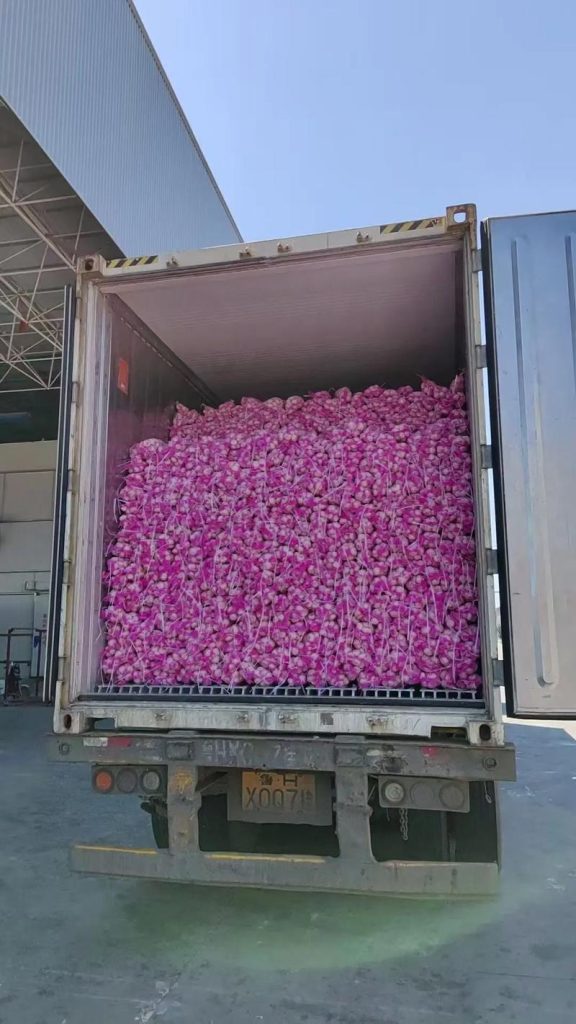
How Much Garlic Fits in a Container?
Container quantity should never be estimated from the product name alone.
The actual loading quantity depends on:
-
Garlic size
-
Packaging
-
Carton or bag dimensions
-
Palletization
-
Container type
-
Maximum cargo weight
-
Destination regulations
-
Loading method
Some current supplier specifications quote approximately 24–28 metric tons for a 40-foot refrigerated container, but actual loading should be confirmed against the final packaging and shipping plan.
Ask your supplier to provide:
-
Quantity per bag/carton
-
Net weight
-
Gross weight
-
Carton dimensions
-
Number of cartons per container
-
Total net weight per container
-
Total gross weight
-
Loading photos or loading plan if necessary
This prevents surprises when the shipping order is prepared.
The Cheapest Garlic Supplier May Be the Most Expensive
Consider two quotations:
Supplier A: Lower price per kilogram
Supplier B: Higher price per kilogram
At first glance, Supplier A appears better.
But imagine that Supplier A has:
-
More undersized bulbs
-
Higher defect rates
-
Less consistent packing
-
Higher weight loss
-
Weak documentation
-
Poor shipment inspection
Supplier B provides more consistent specifications and fewer rejected products.
If your customers pay for a specific grade, the cheaper purchase price may not produce the lower business cost.
For agricultural products, the real calculation should be closer to:
Purchase Cost + Freight + Import Costs + Inspection + Losses + Rejected Goods + Repacking + Customer Claims
That is the number procurement teams should compare.
How to Verify a Garlic Supplier Before Ordering
You don’t need to investigate every supplier for weeks.
A practical verification process can be completed in several stages.
Step 1: Verify the company
Check:
-
Registered company name
-
Business address
-
Export experience
-
Contact information
-
Bank account consistency
Step 2: Identify the actual source
Ask:
Are you the grower, processor, factory, exporter or trading company?
If they source from another factory, ask where the product is processed and packed.
Step 3: Request product specifications
Get written confirmation of:
-
Variety
-
Size
-
Grade
-
Crop
-
Origin
-
Packing
-
Quantity
-
Tolerance
-
Storage condition
Step 4: Request samples
Compare the physical product against the written specification.
Step 5: Confirm documents
Ask for the documents required for your destination market.
Step 6: Arrange inspection
For a significant shipment, consider independent pre-shipment inspection.
Step 7: Confirm loading
The final shipment should match the approved specification and packing requirements.
This process is much safer than choosing a supplier solely because its website has attractive photographs.
What to Include in a Garlic Supplier RFQ
A good inquiry might look like this:
Product: Fresh White Garlic
Origin: China
Size: 5.5–6.0 cm
Grade: Export Grade
Crop: Current Crop
Packing: 10 kg mesh bags
Quantity: 1 × 40HQ
Destination: [Your Port]
Incoterm: FOB / CFR / CIF
Required Documents: Phytosanitary certificate + destination-market documents
Inspection: Pre-shipment inspection required
Packaging: Neutral or private label
Target Shipment: [Month]
Then ask the supplier to quote:
-
Price per kg
-
Total container value
-
Estimated loading quantity
-
Packing cost
-
Lead time
-
Available stock
-
Crop date
-
Storage condition
-
Payment terms
-
Available certificates
This produces a much more useful quotation than simply asking:
“How much is garlic?”
Garlic Supplier Comparison Sheet
For serious procurement, compare suppliers using the same criteria.
Item |
Supplier A |
Supplier B |
Supplier C |
|---|---|---|---|
Origin |
|||
Variety |
|||
Size |
|||
Grade |
|||
Crop |
|||
Storage |
|||
Packing |
|||
MOQ |
|||
Price/kg |
|||
Container Quantity |
|||
Documents |
|||
Inspection |
|||
Lead Time |
|||
Payment Terms |
|||
Incoterm |
|||
Estimated Landed Cost |
This makes it much easier to identify whether a low quotation is genuinely competitive.
Questions to Ask a Garlic Supplier
Before placing a commercial order, ask:
-
Where is the garlic grown?
-
Where is it processed?
-
Are you the producer or exporter?
-
What variety is being supplied?
-
What size grades are available?
-
What is the crop date?
-
How has the garlic been stored?
-
What percentage tolerance applies to the size grade?
-
What is the expected defect tolerance?
-
What packaging options are available?
-
What is the MOQ?
-
How many tons fit in the proposed container?
-
What certificates can you provide?
-
Can you provide a sample?
-
Can an independent inspection company inspect the shipment?
-
What is the production or loading lead time?
-
Which port will the shipment depart from?
-
Can you provide FOB, CFR and CIF prices?
-
What happens if the delivered quality does not match the agreed specification?
-
Can you maintain the same specification for repeat orders?
A supplier’s answers to these questions can tell you far more than a polished product catalog.
When Should You Choose a Long-Term Garlic Supplier?
If garlic is a recurring product in your business, changing suppliers for every shipment may not be the best strategy.
A long-term supplier can become more valuable when they understand:
-
Your preferred size
-
Your packaging
-
Your customer market
-
Your seasonal demand
-
Your documentation requirements
-
Your acceptable tolerances
-
Your shipping schedule


No reply content