When a company starts looking for a gift box manufacturer, the first question is usually:
How much does a custom gift box cost?
That is understandable, but it is not the best place to start.
A gift box is not simply a printed container. Its structure, board thickness, paper, insert, closure, finishing, assembly and packing method all affect the final product.
A box that looks excellent in a digital rendering may feel weak in the customer’s hands. A beautifully printed box may not protect the product during international transportation. A low quotation may become expensive after adding inserts, finishing, tooling, assembly and freight.
For this reason, choosing a gift box manufacturer should begin with the product inside the box.
You need to determine:
-
What product will the box hold?
-
How heavy is it?
-
What are its exact dimensions?
-
Does it need protection during shipping?
-
Is the box intended for retail or gifting?
-
Does it need to be reused?
-
What opening experience do you want?
-
What surface finish represents the brand?
-
How many boxes do you need?
-
Where will the finished packaging be shipped?
Once these questions are answered, it becomes much easier to select the right packaging structure and factory.
A Gift Box Manufacturer Does More Than Print Boxes
A capable packaging manufacturer may be involved in much more than printing.
Depending on the project, the factory may handle:
-
Structural design
-
Dieline development
-
Material selection
-
Prototype production
-
Printing
-
Die cutting
-
Lamination
-
Foil stamping
-
Embossing
-
Debossing
-
Spot UV
-
Window installation
-
Magnetic closure
-
Ribbon assembly
-
Product inserts
-
Manual assembly
-
Quality inspection
-
Export packing
This matters because custom packaging usually involves several processes.
If the box manufacturer only prints the outside and relies on several unrelated suppliers for the rest, quality control can become more complicated.
For example, the printed color may be correct while the box structure is wrong. The box may be structurally accurate while the insert does not fit the product. Or the finished box may look good but arrive damaged because it was packed poorly for export.
Current custom rigid-box manufacturers commonly offer combinations of magnetic, drawer, lid-and-base and book-style structures together with custom inserts and finishing options.
Choose the Box Structure Before Choosing the Finish
Many buyers begin by asking for gold foil, embossing or a luxury paper.
That is backwards.
First decide how the box should function.
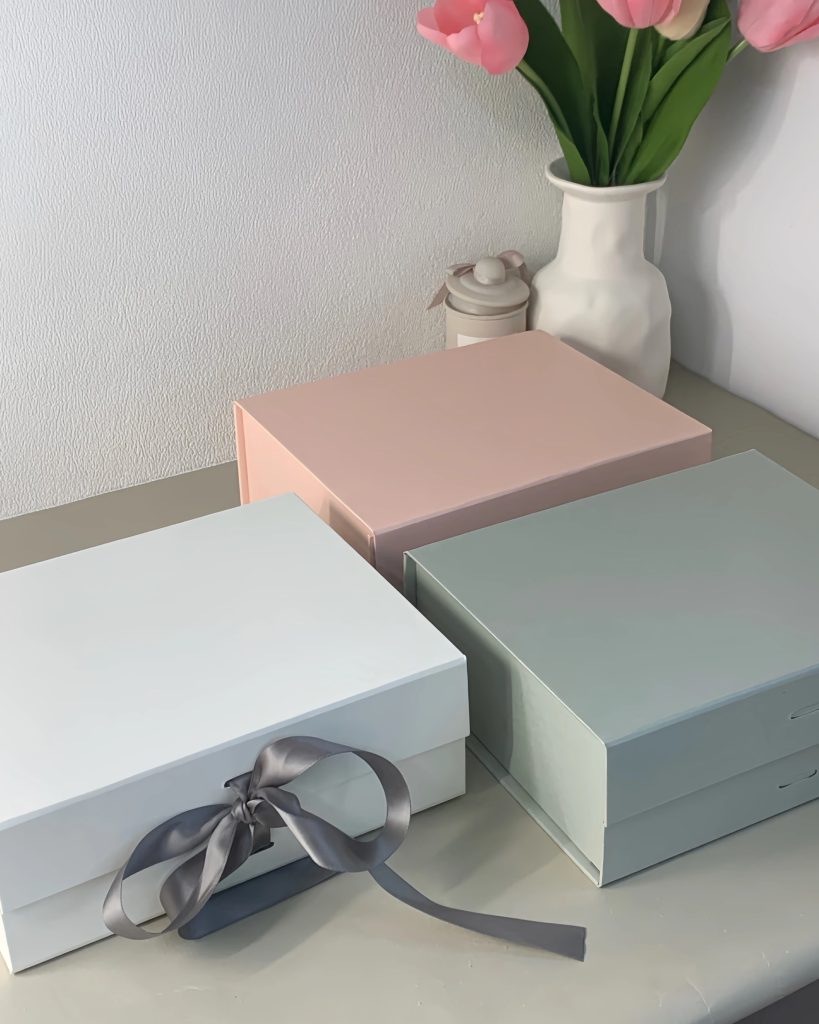
Magnetic Gift Boxes
Magnetic boxes usually have a hinged lid with concealed magnets.
They work well for:
-
Cosmetics
-
Jewelry
-
Watches
-
Corporate gifts
-
Premium food
-
Gift sets
-
Electronics accessories
The opening action can feel more premium than a basic folding carton.
However, the magnet placement, board construction and lid alignment need to be controlled carefully.
Lid-and-Base Boxes
This is the classic two-piece rigid box.
It is relatively straightforward and works for many products.
It can be appropriate when you want:
-
A traditional premium appearance
-
Strong structure
-
Simple opening
-
Lower structural complexity
Drawer Boxes
A drawer box uses an inner tray that slides from an outer sleeve.
It can work particularly well for:
-
Tea
-
Chocolate
-
Jewelry
-
Small gifts
-
Beauty products
-
Promotional sets
The pull ribbon or finger notch becomes part of the opening experience.
Book-Style Boxes
These open like a book and can provide additional printable surfaces on the inside.
They can be useful for premium products where storytelling and presentation are important.
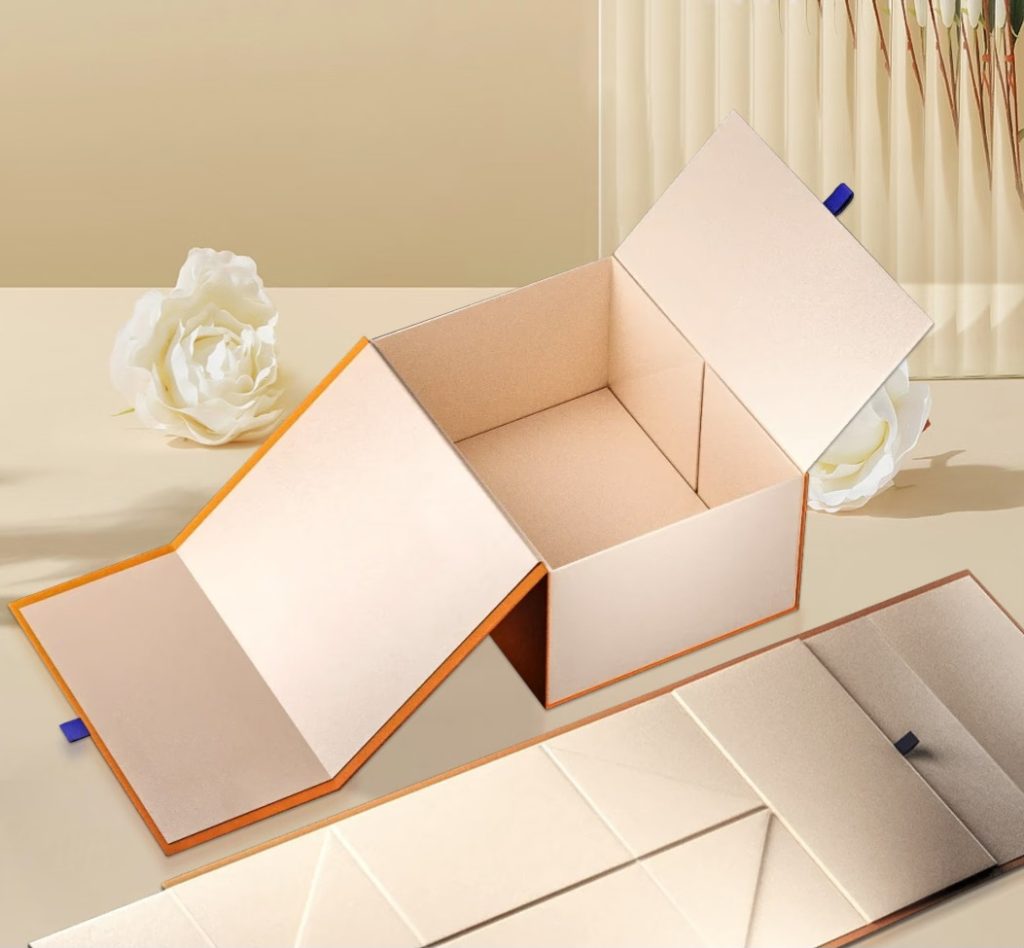
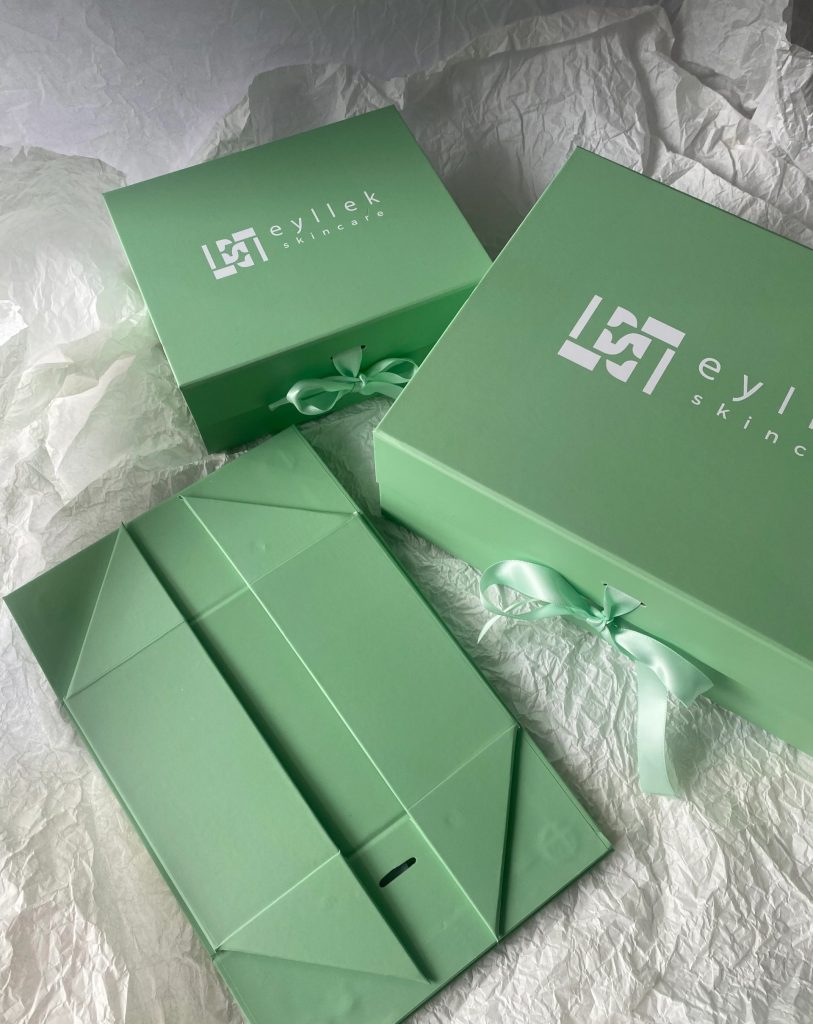
Foldable Rigid Boxes
Foldable rigid boxes combine a rigid-box appearance with a structure that can be folded for transportation and storage.
For international buyers, this can be worth considering because packaging volume can affect freight costs.
The correct structure depends on the product, not simply on which box looks most luxurious in a catalog.
The Product Dimensions Should Drive the Design
A common purchasing mistake is asking a factory:
“Can you make this box in 20 × 15 × 8 cm?”
without providing the actual product.
A better approach is to provide:
-
Product length
-
Product width
-
Product height
-
Product weight
-
Product shape
-
Fragile components
-
Accessories
-
Required presentation position
The manufacturer can then determine the internal clearance, insert design and structural dimensions.
For example, a perfume bottle should not simply be placed inside an empty box.
It may need:
-
Bottle support
-
Neck clearance
-
Base support
-
EVA or paper insert
-
Anti-movement structure
Similarly, a jewelry box may need a completely different internal construction.
The box should be engineered around the product.
The Insert Is Part of the Packaging, Not an Accessory
The outside of a gift box gets most of the attention, but the insert can determine whether the product actually survives transportation.
Possible insert materials include:
-
EVA foam
-
Paperboard
-
Molded pulp
-
Sponge
-
Cardboard dividers
-
Fabric-covered trays
-
Plastic inserts
-
Custom-cut foam
The correct choice depends on the product.
A heavy glass bottle needs different protection from a lightweight clothing accessory.
A jewelry set may prioritize presentation.
A cosmetic gift set may need several compartments.
An electronics product may need both impact protection and precise positioning.
Before approving the insert, put the actual product inside the sample and test whether it moves.
A box should not be approved simply because the empty packaging looks good.
Rigid Box Material Affects the Entire Product
Rigid gift boxes are commonly built around a dense board core that is wrapped with printed or specialty paper. Some manufacturers specify greyboard in thicknesses such as 2–3 mm depending on the box structure and application.
The board thickness affects:
-
Rigidity
-
Weight
-
Edge appearance
-
Lid fit
-
Durability
-
Perceived quality
-
Shipping cost
But thicker is not automatically better.
If the box is unnecessarily heavy, you may pay more for both materials and international freight.
The better question is:
What board construction provides the required strength without adding unnecessary weight?
That is where an experienced packaging manufacturer can add real value.
Paper Choice Changes the Appearance More Than Many Buyers Expect
Two boxes can use the same artwork and still look completely different because of the wrapping paper.
Possible materials include:
-
Coated art paper
-
Kraft paper
-
Textured paper
-
Linen-textured paper
-
Specialty paper
-
Fabric
-
Recycled paper
-
FSC-certified paper options
The surface affects:
-
Color reproduction
-
Texture
-
Touch
-
Foil performance
-
Embossing
-
Brand perception
For a premium jewelry brand, a textured paper may communicate more than an inexpensive glossy coating.
For an environmentally focused brand, recycled or responsibly sourced paper may be more appropriate.
For a mass-market promotional campaign, a simpler paper may produce a better cost structure.
The material should match the brand position and budget.
Printing Is Only One Part of the Visual Design
Custom gift boxes can use different printing methods depending on the artwork and production volume.
Common options include:
-
Offset printing
-
Digital printing
-
Flexographic printing
-
Pantone color matching
-
CMYK printing
The important issue is not simply choosing a printing method.
You need to decide how accurately the final production needs to match the approved artwork.
For branded packaging, ask the manufacturer:
-
What color standard will be used?
-
Can a physical color proof be provided?
-
How is color consistency checked between production batches?
-
Does the paper surface affect the final color?
-
How will dark colors behave after lamination?
This is particularly important for brands with a recognizable corporate color.
A screen image on a computer is not a reliable color standard for mass production.
Premium Finishing Should Have a Purpose
There are many ways to make a gift box look more expensive:
-
Hot foil stamping
-
Silver foil
-
Embossing
-
Debossing
-
Spot UV
-
Soft-touch lamination
-
Matte lamination
-
Gloss lamination
-
Metallic effects
-
Window cut-outs
But using every available technique on one box rarely produces the best result.
A strong design may use one or two details strategically.
For example:
Matte black box + subtle gold foil logo
can communicate luxury without covering the entire surface in decorative effects.
Or:
Natural textured paper + blind embossing
can create a premium appearance without heavy printing.
Ask the manufacturer to produce a physical sample before approving complex finishing combinations.
Current packaging manufacturers offer combinations such as foil stamping, embossing, spot UV, soft-touch lamination and custom inserts.
The Box Opening Experience Should Match the Product
A luxury box is partly about what happens during opening.
Think about:
How does the customer open it?
What do they see first?
Does the lid stay open?
Is the product centered?
Does the insert reveal the product naturally?
Is there a ribbon or pull tab?
Does the lid close with the right amount of resistance?
These details matter for premium products.
For example, a magnetic box can create a clear opening action, while a drawer box creates a different sequence of reveal.
The box should support the customer’s experience rather than simply hold the product.
How Much Does a Custom Gift Box Cost?
There is no single standard price for a custom gift box.
The quotation depends on several variables:
Box structure + dimensions + material + board thickness + printing + finishing + insert + accessories + quantity + assembly + packing
A simple folding carton can be much cheaper than a rigid magnetic box.
A rigid box with a custom insert and multiple finishing processes can cost considerably more.
Order quantity also has a significant effect on unit economics because tooling, setup and production costs are distributed across more pieces.
Some current packaging suppliers publish indicative prices or MOQs, but these figures should be treated only as reference points because actual quotations depend heavily on specifications.
Therefore, asking:
“How much is a gift box?”
is not enough.
A useful RFQ needs dimensions, structure, material, quantity, printing, finishing and insert requirements.
MOQ Is Not the Only Number You Should Compare
Different manufacturers may offer very different minimum order quantities.
Some suppliers advertise MOQs of several hundred pieces, while others offer smaller quantities for selected box types.
A low MOQ can be attractive for:
-
New brands
-
Product testing
-
Seasonal launches
-
Limited editions
-
Small e-commerce businesses
But a higher MOQ may provide a lower unit price.
Therefore, calculate the total inventory cost.
For example:
500 boxes × $2.00 = $1,000
may appear better than:
3,000 boxes × $1.10 = $3,300
if you are testing a new product.
But if you already know you will sell 3,000 units, the second option may provide better unit economics.
MOQ should be evaluated against actual demand.
Always Request a Physical Sample
For custom packaging, a physical sample is one of the most valuable steps in the buying process.
You should check:
Structure
-
Is the box square?
-
Are the corners aligned?
-
Does the lid fit correctly?
-
Does the magnetic closure work?
-
Does the drawer slide smoothly?
Material
-
Does the board feel sufficiently rigid?
-
Is the paper surface correct?
-
Is the texture consistent?
Printing
-
Is the color accurate?
-
Is the logo sharp?
-
Are edges clean?
Finishing
-
Is the foil positioned correctly?
-
Is embossing deep enough?
-
Is the lamination uniform?
-
Are there scratches or bubbles?
Insert
-
Does the product fit?
-
Does it move?
-
Is it easy to remove?
-
Does it protect the product?
Do not approve mass production based only on a 3D rendering.
A Sample Is Not Enough: Test the Packaging With the Actual Product
Put the real product inside the box.
Then check:
-
Product fit
-
Product movement
-
Closing pressure
-
Insert stability
-
Lid alignment
-
Opening experience
-
Protection during handling
If the box will be shipped internationally, conduct a basic transportation test.
Drop testing, vibration testing and compression testing may be appropriate depending on the product and shipping environment.
The required testing should be proportional to the value and fragility of the product.
How to Verify a Gift Box Manufacturer
A supplier’s website can tell you what the company claims to manufacture.
It does not necessarily tell you how the factory actually operates.
Before placing a large order, ask for:
-
Factory address
-
Production photos
-
Machinery information
-
Product samples
-
Material specifications
-
Quality-control process
-
Production capacity
-
Previous packaging samples
-
Export experience
-
Packaging and loading method
More importantly, determine whether the company can control the complete production process.
Ask:
Who makes the rigid box?
Who produces the inserts?
Who handles the printing?
Who performs final assembly?
Who performs final inspection?
A company can outsource certain processes and still be a reliable packaging supplier. The important point is transparency.
How to Compare Gift Box Manufacturers
Do not compare factories using unit price alone.
Create a purchasing table:
Item |
Supplier A |
Supplier B |
Supplier C |
|---|---|---|---|
Box structure |
|||
Dimensions |
|||
Board material |
|||
Board thickness |
|||
Wrap paper |
|||
Printing |
|||
Surface finish |
|||
Insert |
|||
Magnetic closure |
|||
MOQ |
|||
Sample cost |
|||
Sample lead time |
|||
Production lead time |
|||
QC process |
|||
Packing method |
|||
Carton dimensions |
|||
Shipping quantity |
|||
Unit price |
|||
Total order cost |
This can reveal why one supplier is cheaper.
Perhaps Supplier A uses a thinner board.
Perhaps Supplier B includes the insert.
Perhaps Supplier C includes premium finishing but has a higher MOQ.
Without standardizing the specification, price comparison is misleading.
A Better RFQ for Custom Gift Boxes
Instead of sending:
Please quote custom gift boxes.
Send something like:
Product: Custom Rigid Gift Box
Structure: Magnetic closure
External Size: 250 × 180 × 80 mm
Product Size: 230 × 160 × 60 mm
Product Weight: 1.2 kg
Board: Rigid greyboard
Wrap: Matte printed paper
Printing: CMYK + logo
Finish: Matte lamination + gold foil
Insert: Custom EVA / paperboard insert
Color: Pantone reference
Logo: Customized
Quantity: 1,000 / 3,000 / 5,000 pcs
Destination: [Country / Port]
Sample: Required before bulk production
Packaging: Export carton
Target Delivery: [Date]
Then ask the manufacturer to provide:
-
Unit price
-
Sample cost
-
Tooling cost
-
Production lead time
-
Packaging details
-
Carton quantity
-
Gross weight
-
Shipping volume
-
Payment terms
-
Incoterm
A detailed RFQ can dramatically reduce back-and-forth communication.
Shipping Cost Can Change the Best Packaging Choice
Packaging is large but relatively lightweight.
That means shipping volume can become an important part of the total cost.
For international buyers, ask the factory:
-
How many boxes per carton?
-
Carton dimensions?
-
Gross weight?
-
Net weight?
-
How many cartons per pallet?
-
How many cartons fit in a 20-foot container?
-
How many fit in a 40-foot container?
-
Can the boxes be shipped flat?
-
Can the structure be optimized to reduce volume?
A foldable rigid box may have a higher manufacturing cost but lower transportation volume.
For a large international order, that trade-off should be calculated rather than guessed.
Sustainability Is Becoming a Purchasing Requirement
Many brands now want packaging that reduces unnecessary material without making the box feel cheap.
Possible approaches include:
-
Recycled board
-
FSC-certified paper
-
Recyclable paper structures
-
Reduced plastic components
-
Paper-based inserts
-
Smaller packaging dimensions
-
Foldable rigid structures
-
Water-based or lower-impact finishing options where suitable
However, sustainability claims should be specific.
Instead of simply asking:
“Is this eco-friendly?”
ask:
What material is used?
Is the board recycled?
Is the paper certified?
Can the finished box be recycled?
Are magnets or plastic components included?
Is the insert recyclable?
A packaging solution is more useful when its environmental characteristics can be clearly documented.
Common Mistakes When Buying Custom Gift Boxes
Mistake 1: Choosing the Factory With the Lowest Price
A low quotation may hide differences in board thickness, insert material, finishing or assembly.
Mistake 2: Approving From Digital Images
A rendering cannot show the actual paper texture, rigidity or finishing quality.
Mistake 3: Designing the Box Before Measuring the Product
This often causes poor fit and unnecessary internal space.
Mistake 4: Ignoring the Insert
A beautiful box with a poor insert can still produce damaged products.
Mistake 5: Using Too Many Finishing Techniques
More decoration does not automatically mean better design.
Mistake 6: Forgetting Shipping Volume
A packaging design that looks inexpensive at the factory may be expensive to transport.
Mistake 7: Not Defining Color Standards
“Dark blue” is not a sufficient specification for brand packaging.
Mistake 8: Not Checking Mass Production
A sample may be excellent while the production batch has inconsistent color, corners or finishing.
What a Reliable Gift Box Manufacturer Should Be Able to Do
A strong supplier should be able to discuss your packaging project in practical terms.
They should ask about:
-
Product dimensions
-
Product weight
-
Fragility
-
Quantity
-
Market
-
Retail environment
-
Shipping method
-
Target price
-
Required appearance
-
Internal protection
-
Delivery schedule


No reply content